
Marketing automation is one of those categories where the gap between the best and worst tools is enormous. Some platforms let you build multi-step workflows with conditional logic, behavioral triggers, and predictive sending for $15/month . Others charge $800/month for roughly the same thing with a fancier dashboard.
I evaluated 15 marketing automation platforms across every use case: ecommerce, B2B, creators, agencies, and bootstrapped businesses. This is not a list of every tool that has an "automation" tab. These are platforms where automation is the core product, not an afterthought.
If you are new to automation, my complete guide to marketing automation covers the strategy, core workflows, and setup steps. For email platform comparisons specifically, check my best email marketing software roundup.
This page may contain affiliate links.
Some links on this page are affiliate links, meaning I may earn a commission if you sign up (at no extra cost to you). This never influences my ratings or recommendations.
Audience
Who is this guide for?
- ✓Ecommerce stores that need automated cart recovery, post-purchase flows, and segmentation
- ✓B2B teams building lead nurturing sequences and scoring models
- ✓Creators and solopreneurs who want to automate email without enterprise complexity
- ✓Agencies managing automation across multiple client accounts
- ✓Growing businesses that have outgrown basic email blasts and need real workflows
Which one is right for you
One tool leads every kind of buyer here
Unusually, the same tool tops Marketing Automation for all four. I ranked every tool here against each buyer separately and it still came out first each time.
Agency · Consultant · Solo builder, either kind
Ranked first for all four

from $20/mo per seat
Industry standard for automation, they basically developed the whole term marketing automation. but if you need basic setup, there are cheaper alternatives for this.
Exclusive reader deal
30% off Omnisend for 3 months
Affiliate link. I may earn a commission at no extra cost to you.
Quick verdict
ActiveCampaign is the best marketing automation platform for most businesses. The automation builder is more powerful than tools costing 5x more, starting at $15/month. For ecommerce specifically, Klaviyo is the move if you are on Shopify. For budget-conscious teams, Brevo gives you CRM plus email plus SMS automation on a free plan.
And if you want everything in one subscription (funnels, email, courses, checkout), Kartra or Systeme.io eliminate the need for multiple tools.
Overview
Quick comparison
| # | Tool | Price | Rating |
|---|---|---|---|
| 1 | $15/mo | 8.9/10 | |
| 2 | $19/mo | 8.2/10 | |
| 3 | $9/mo | 8.6/10 | |
| 4 | $45/mo | 8.8/10 | |
| 5 | $16/mo | 8.7/10 |
Show all 15 tools
| 6 | $39/mo | 7.6/10 | |
| 7 | $9/mo | 8.6/10 | |
| 8 | $7/mo | 8.4/10 | |
| 9 | $10/mo | 8.8/10 | |
| 10 | $39/mo | 8.6/10 | |
| 11 | $59/mo | 8.8/10 | |
| 12 | $17/mo | 8.7/10 | |
| 13 | From $20/mo per seat | 7.8/10 | |
| 14 | $97/mo | 7.8/10 | |
| 15 | $299/mo | 8.2/10 |
Rankings
My Top Picks

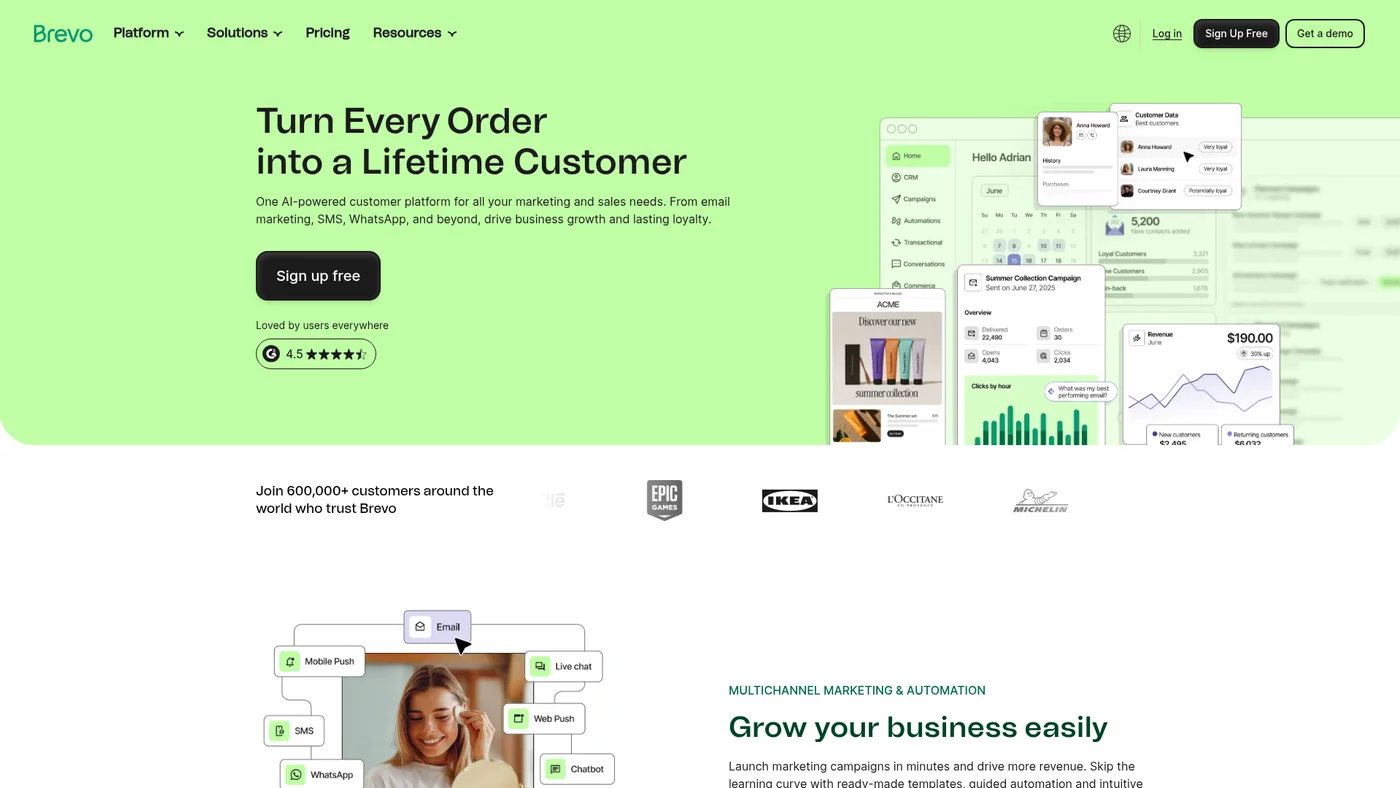
ActiveCampaign
AI-powered email marketing and automation platform for businesses serious about personalized campaigns
Key Features
Solid agent-fit with official MCP support and documented API access. ActiveCampaign's official MCP server and native Claude integration create a direct path for agents to manage email campaigns and automation workflows. The lack of published OpenAPI specs and structured outputs will require more manual prompt engineering to ensure reliable data handling.
✓Pros
- Best automation builder under $100/month
- CRM included on all plans
- Machine learning for send time optimization
- 900+ integrations
✗Cons
- No free plan (14-day trial)
- Landing page builder is basic
- Reporting takes time to learn
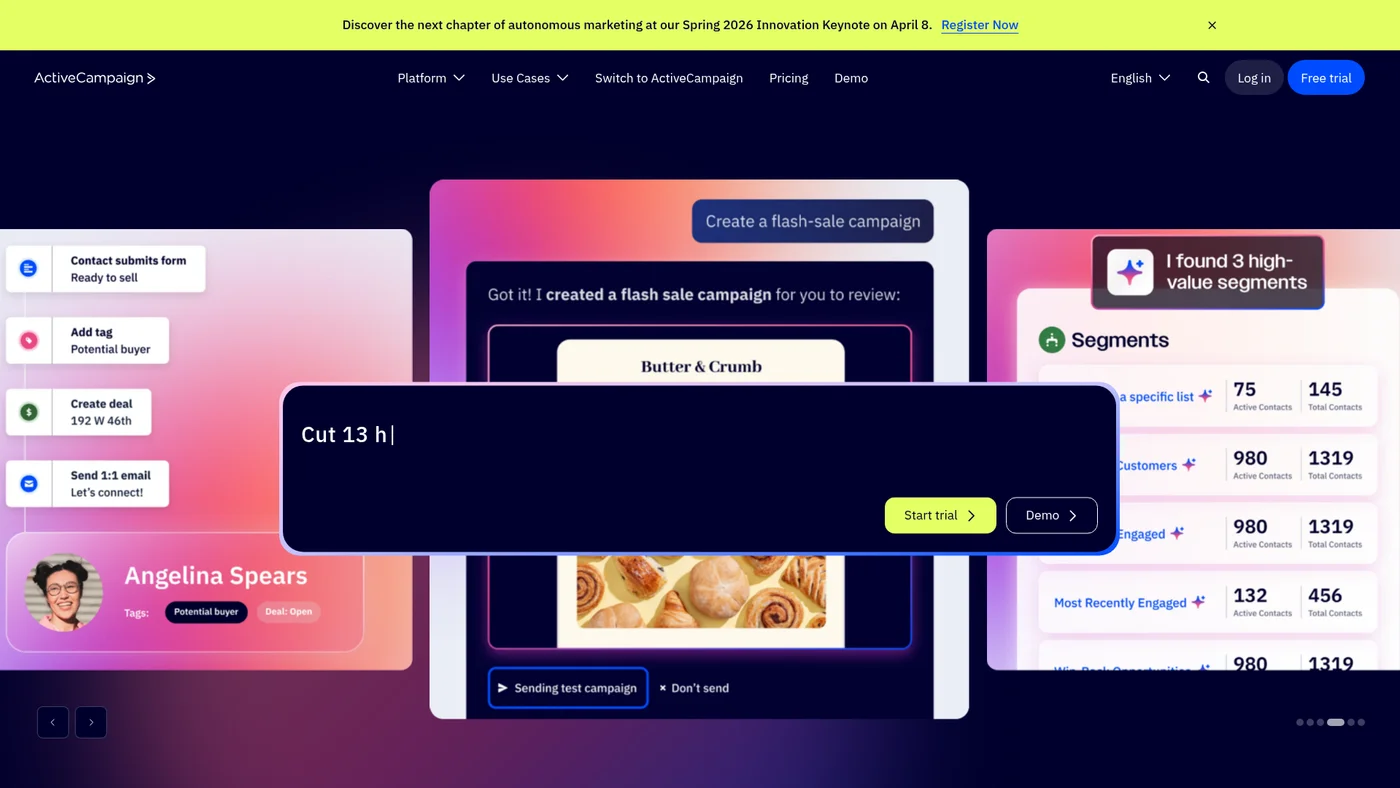

GetResponse
AI-powered email marketing platform with automation, landing pages, and webinars starting at $19/month
Key Features
Limited agent-fit without official backing. GetResponse has a community MCP server and documented public API, but lacks OpenAPI specs, SDKs, and native integrations with Claude or ChatGPT. The missing structured outputs and webhook support make it harder to build reliable agent workflows compared to platforms with first-party MCP implementations.
✓Pros
- Built-in webinar hosting (unique feature)
- Full automation on all paid plans
- Generous free plan up to 500 contacts
- 30-day money-back guarantee
✗Cons
- Automation less advanced than ActiveCampaign
- No built-in CRM on lower plans
- Webinar quality is basic compared to dedicated tools
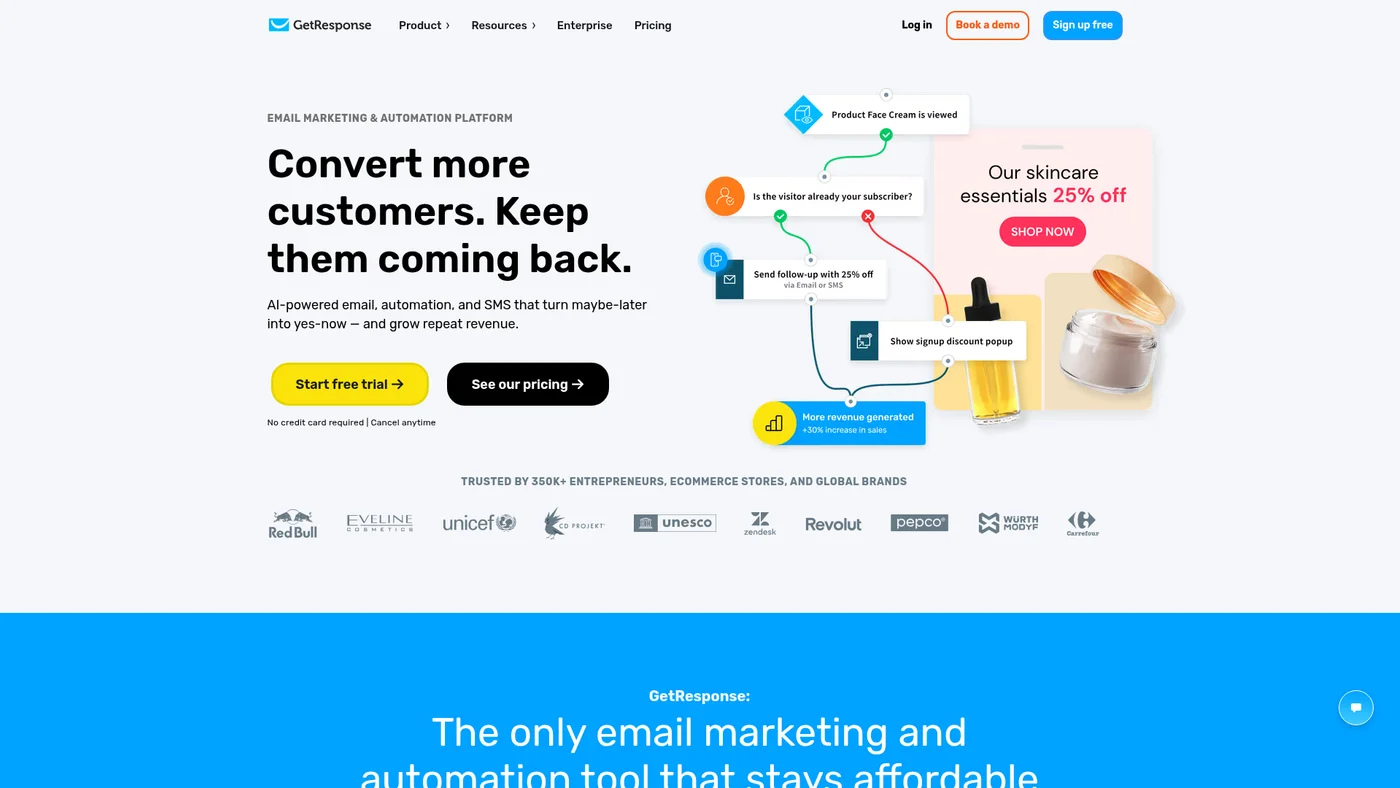

Brevo
All-in-one email marketing platform with SMS, automation, and AI features at competitive prices
Key Features
Weak agent-fit without official tooling. Brevo has a community MCP server and documented public API, but lacks OpenAPI specs, SDKs, and native integrations with Claude or ChatGPT. The missing structured outputs and webhook support make it difficult to build reliable agent workflows that require real-time triggers or predictable JSON responses.
✓Pros
- Free CRM + email marketing
- SMS and WhatsApp built in
- Pay by email volume, not contacts
- Transactional email support
✗Cons
- CRM less powerful than HubSpot free CRM
- Email editor can feel clunky
- Brevo branding on free plan

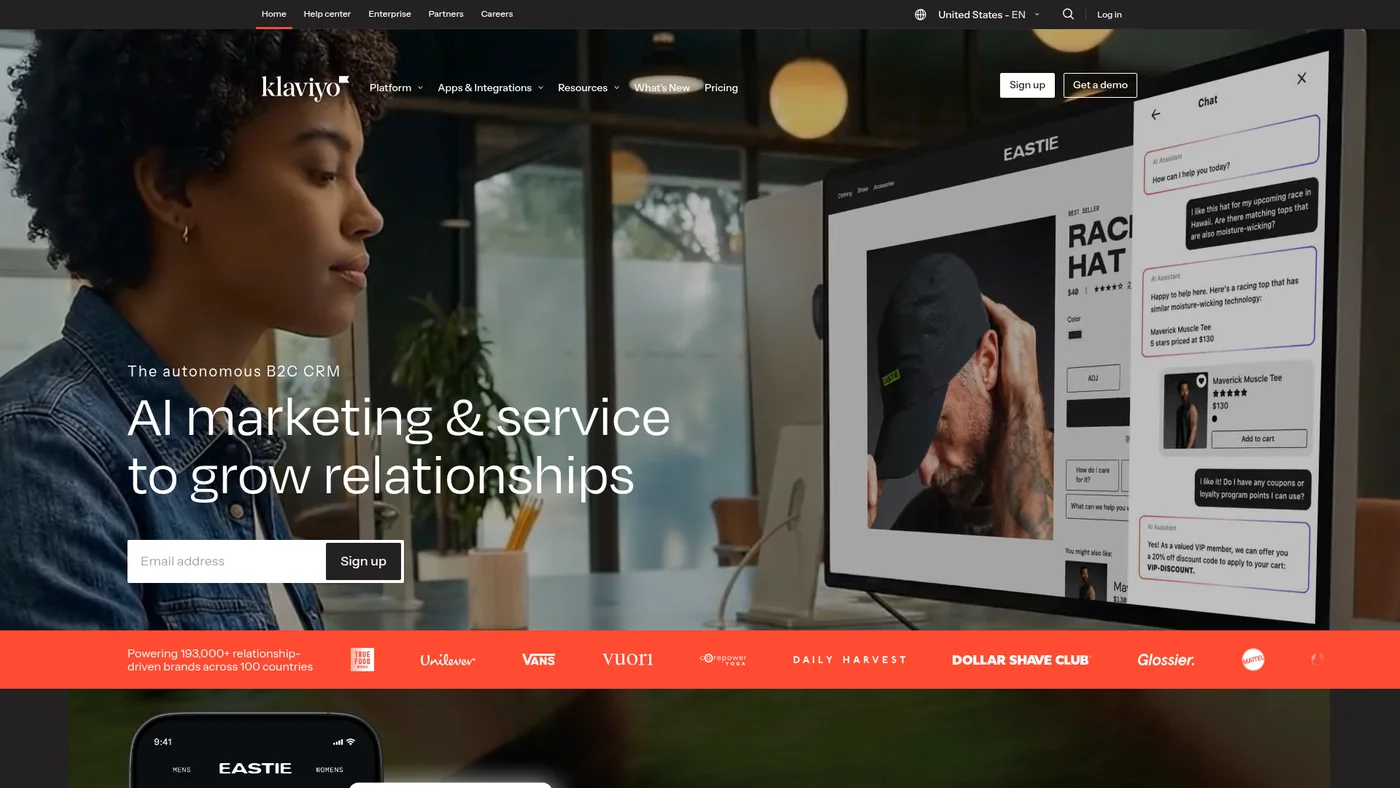
Klaviyo
AI-powered marketing automation platform for ecommerce businesses with unified customer data and omnichannel campaigns
Key Features
Good agent fit with official MCP support. Klaviyo offers an official MCP server and documented public API with native Claude and ChatGPT integration, making it straightforward to add to agentic workflows. The missing OpenAPI spec and lack of webhooks limit some automation patterns, but the MCP availability handles most agent use cases.
✓Pros
- Deepest Shopify integration available
- Predictive analytics on all paid plans
- Pre-built ecommerce automation flows
- Strong revenue reporting
✗Cons
- Expensive above 10,000 contacts
- Free plan limited to 250 contacts
- Steep learning curve for advanced features
- Overkill for non-ecommerce

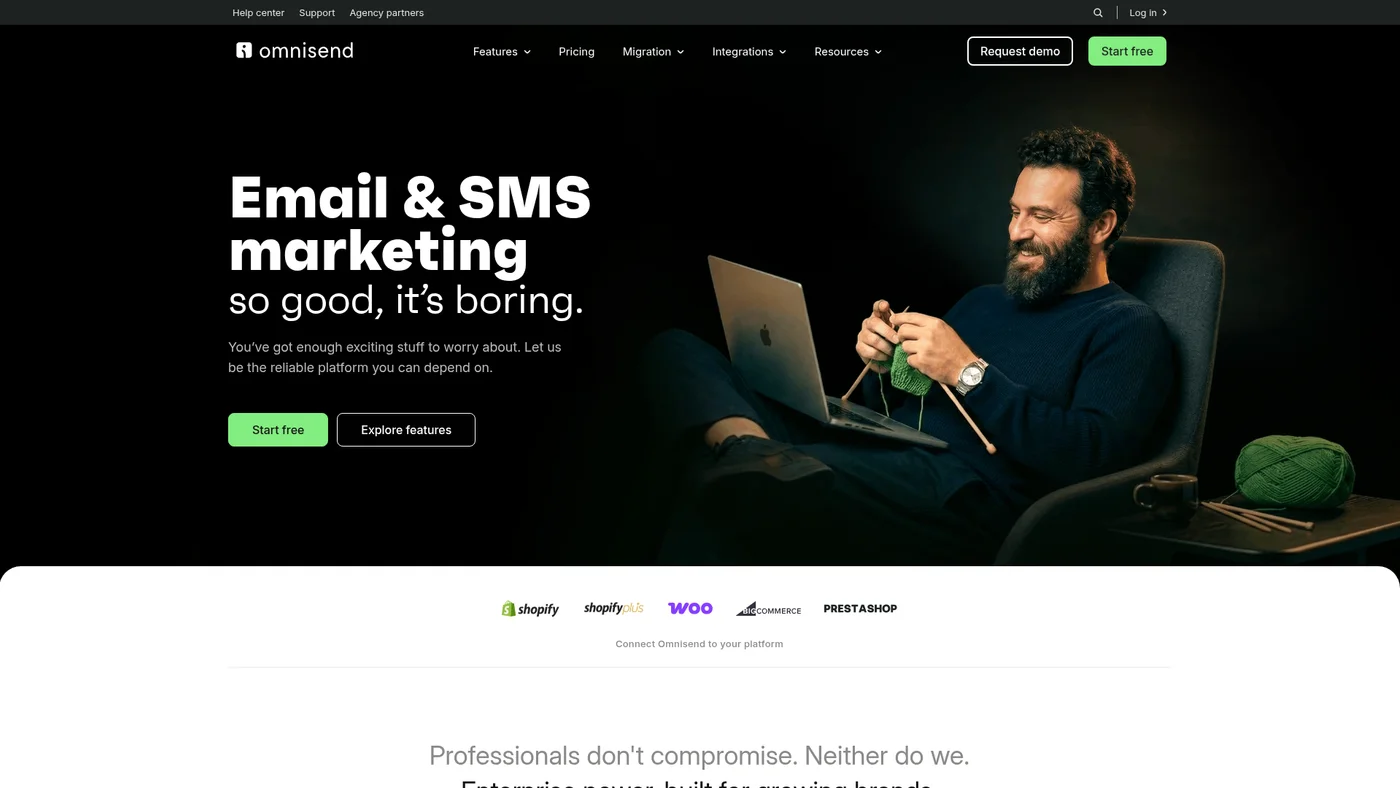
Omnisend
Ecommerce-focused email and SMS marketing platform with powerful automation and 160+ integrations
Key Features
Solid agent fit with a first-party MCP server and a clean REST API. Omnisend hosts an official MCP server at mcp.omnisend.com/mcp, authenticated over OAuth, so an agent can create campaigns, build automations, recommend and edit segments, and pull revenue reporting from Claude or ChatGPT. The REST API (api.omnisend.com/api) is date-versioned via an Omnisend-Version header, uses cursor pagination and RFC 9457 error bodies, and spans contacts, events, products, campaigns, segments, automations, and reports. It sits below the GA-official tier because the one-click Claude connector is still coming soon (custom connector for now), there are no official SDKs, and webhooks are an automation-workflow action rather than a subscription API.
✓Pros
- More affordable than Klaviyo
- Free plan includes all features
- Email + SMS + push in one builder
- Good ecommerce templates
✗Cons
- Predictive analytics less advanced than Klaviyo
- Smaller integration ecosystem
- SMS credits cost extra on Standard plan
- Reporting could be deeper

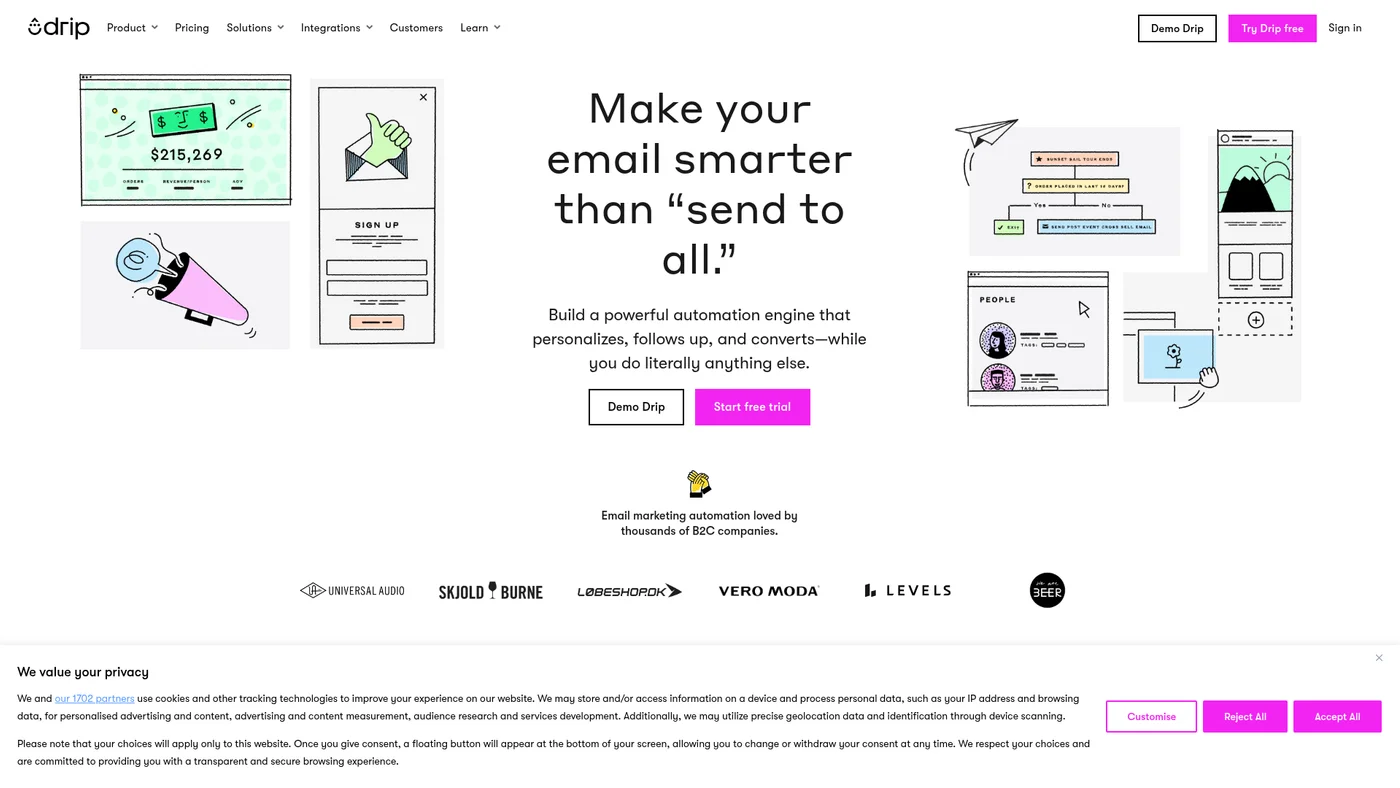
Drip
Advanced email marketing automation for B2C businesses with powerful segmentation and workflows starting at $39/mo
Key Features
Moderate agent-fit with community support. Drip has a public API with documentation and a community MCP server, plus Node SDK support, but lacks an official MCP on its own domain and OpenAPI spec for seamless integration. The absence of webhooks and structured outputs limits real-time automation and reliable data parsing in agent workflows.
✓Pros
- Clean, intuitive automation builder
- Revenue attribution on all plans
- Only charges for active contacts
- Strong Shopify and WooCommerce integration
✗Cons
- No free plan (14-day trial only)
- Smaller feature set than Klaviyo
- No SMS automation
- Limited template library

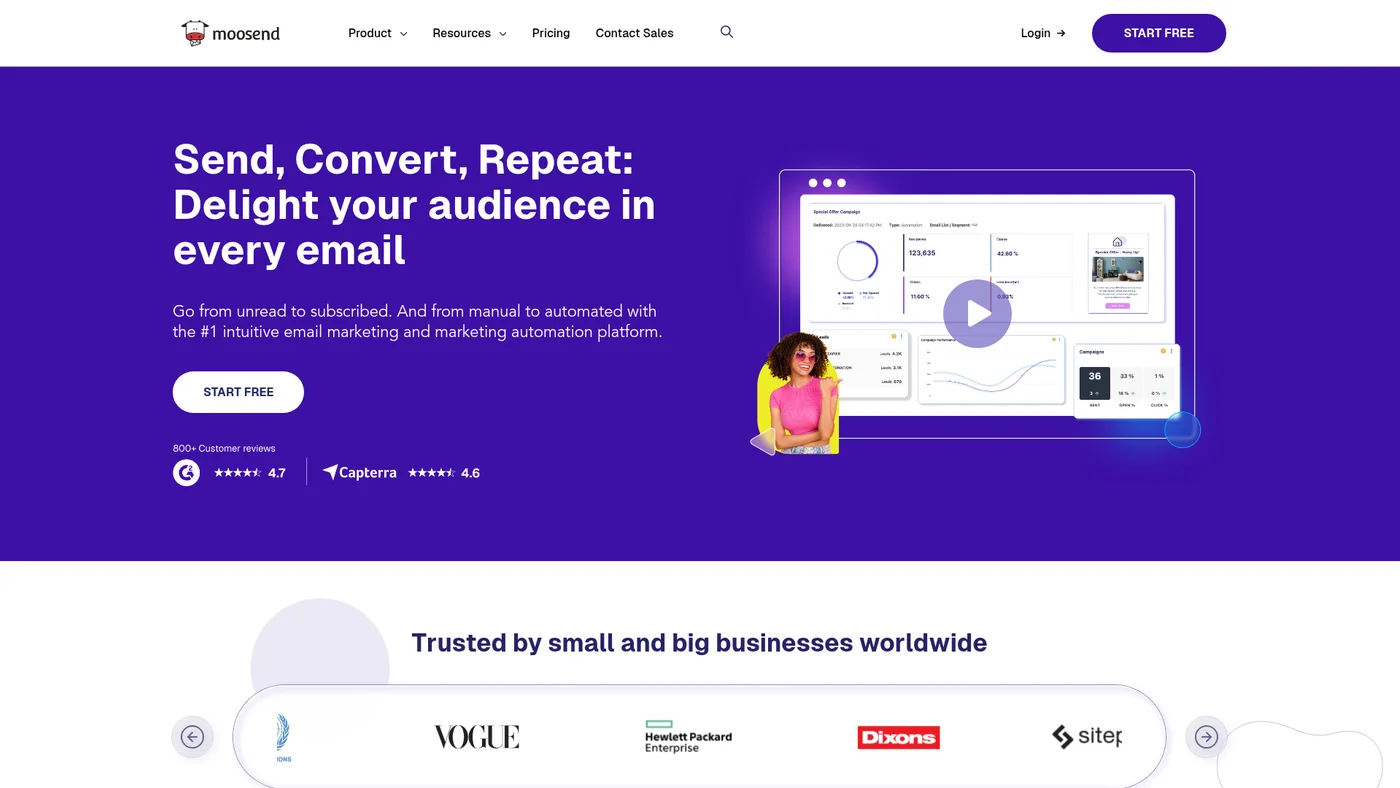
Moosend
Email marketing platform with powerful automation, landing pages, and forms at budget-friendly pricing
Key Features
Skip for agent workflows. Moosend has public API docs but no MCP server, OpenAPI spec, or SDKs, leaving little for Claude or Cursor to grip. You'd be building integrations from scratch against undocumented auth and no structured outputs.
✓Pros
- Starts at just $9/month
- Good automation for the price
- Landing pages included
- 30-day free trial
✗Cons
- No free plan
- Smaller template library
- Less known brand
- No built-in CRM

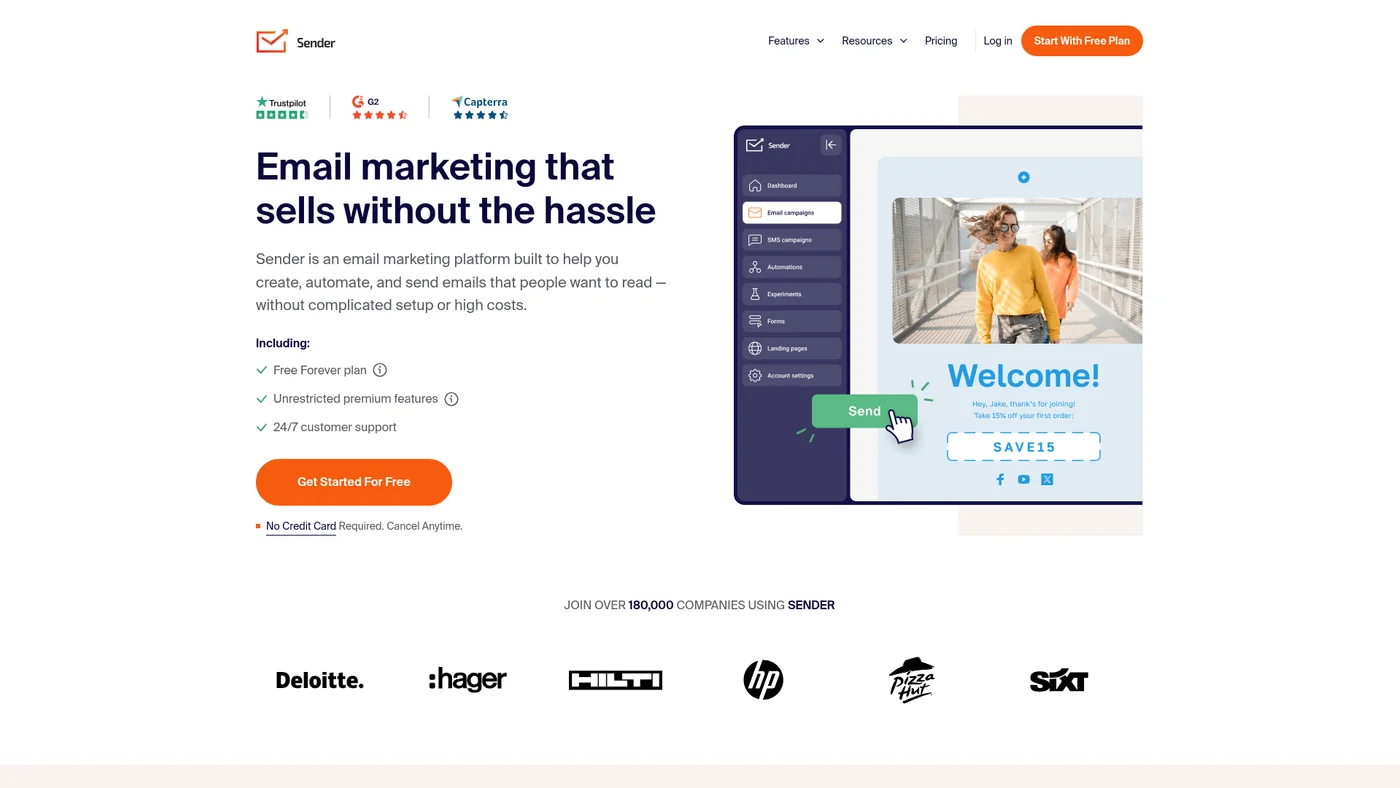
Sender
Affordable email marketing platform with generous free plan and multichannel automation
Key Features
Official MCP server at mcp.sender.net/mcp, verified 2026-08-24: OAuth, 40 documented tools spanning subscribers, segments, campaigns and workflows, reads and writes, with a hard guarantee that campaigns are never sent through the connection. Claude, ChatGPT and Cursor are all documented clients. Account webhooks exist on the REST API. What keeps it off the top tier is the missing public OpenAPI spec and the lack of official server-side SDKs.
✓Pros
- Generous free plan (2,500 subscribers)
- Email + SMS on all plans
- Automation included for free
- Easy to set up
✗Cons
- Automation builder is basic
- Smaller integration ecosystem
- Sender branding on free plan
- Limited reporting

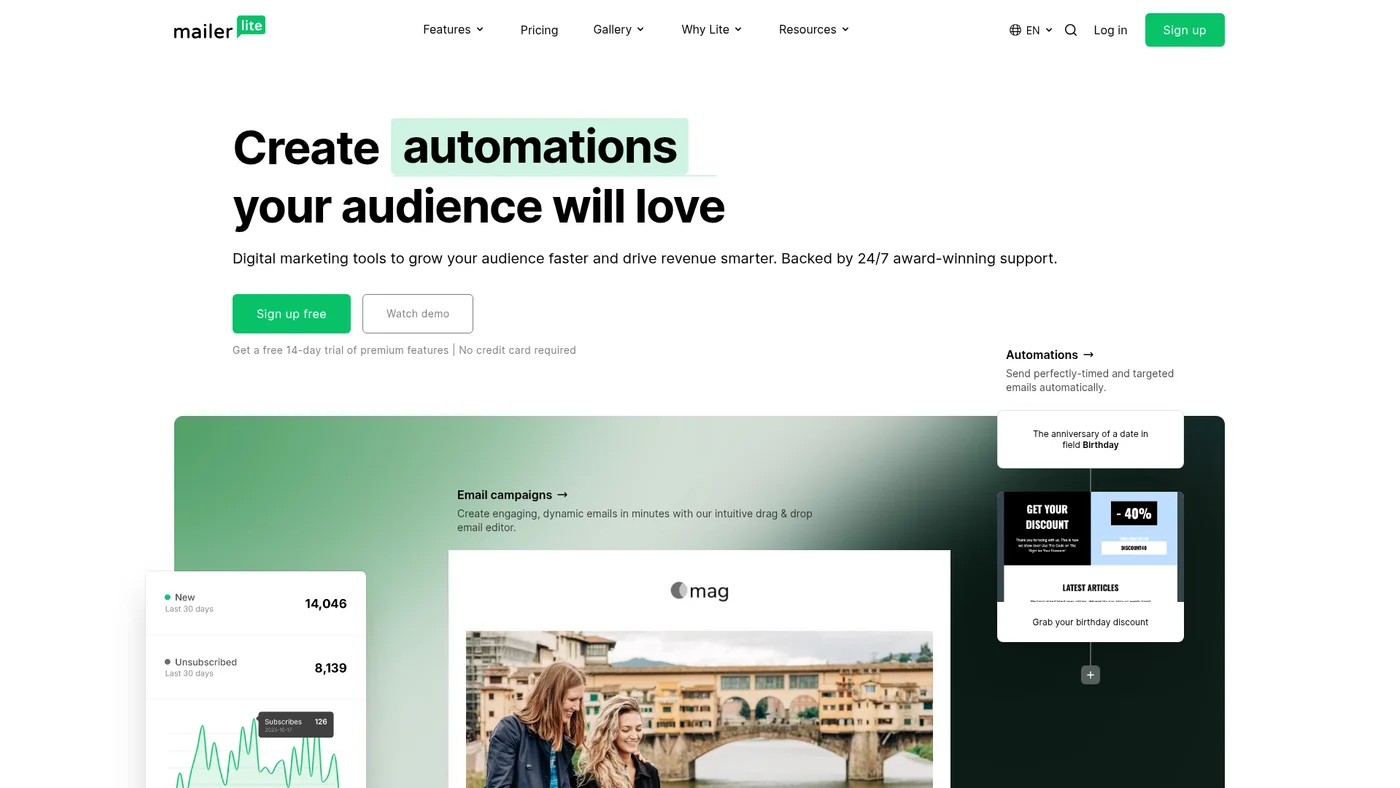
MailerLite
Affordable email marketing with surprisingly powerful features and stellar support
Key Features
Moderate agent-fit with community support. MailerLite has a public API with docs and a working community MCP server, plus native Claude integration, but lacks official MCP hosting, OpenAPI spec, and webhooks for event-driven workflows. The missing structured outputs and single-language SDK options limit automation complexity.
✓Pros
- Free plan with 1,000 subscribers
- Beautiful, fast interface
- Automation on all plans
- Excellent deliverability
✗Cons
- No CRM
- Automation less powerful than ActiveCampaign
- Limited integrations compared to bigger tools
- No SMS

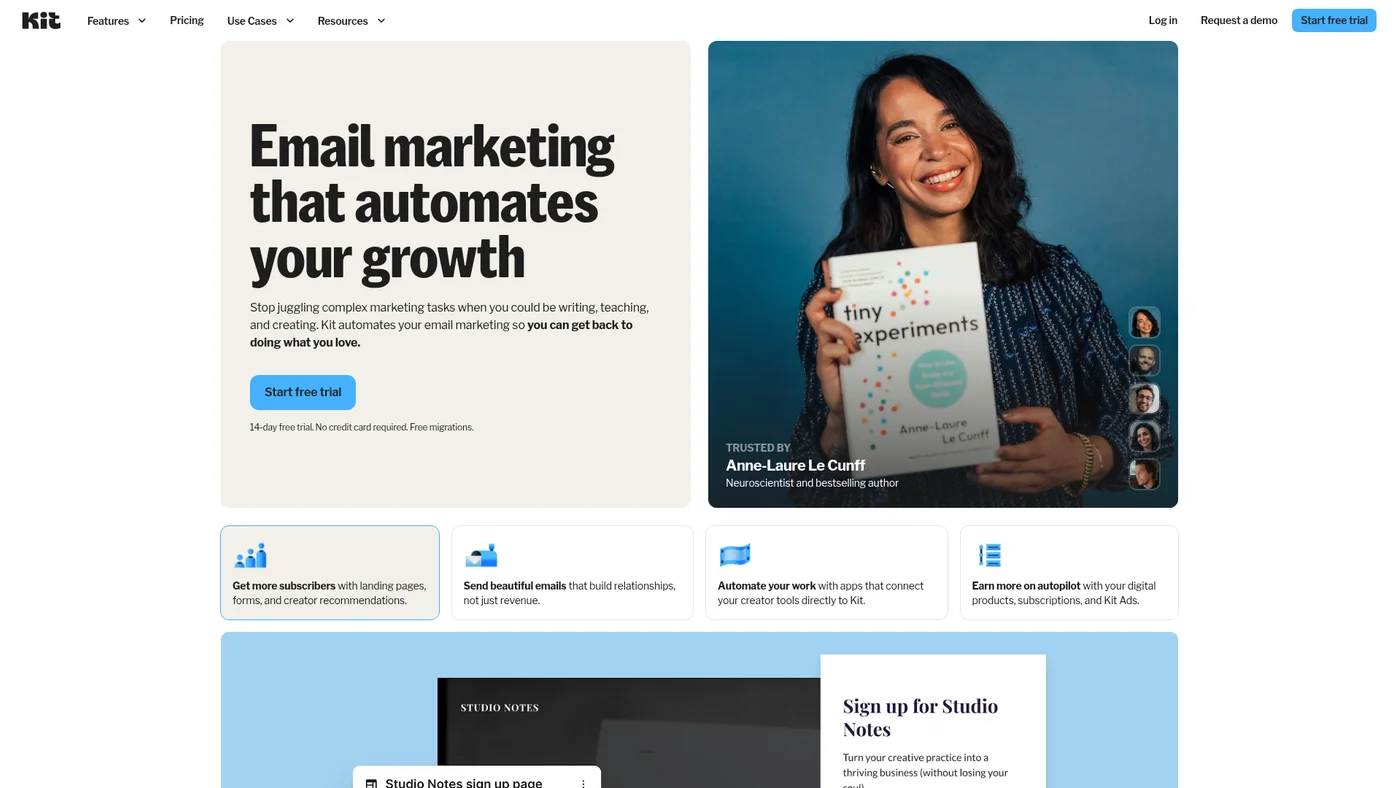
Kit
Creator-focused email marketing platform with powerful automations and integrated monetization tools
Key Features
Official MCP at app.kit.com/mcp verified 2026-07-07: OAuth, full v4 surface incl. writes w/ safety annotations, ChatGPT+Claude+Cursor, paid plans, 120rpm. Second Developer Docs MCP at developers.kit.com/mcp. llms.txt live. Score 7->8 (Joonas approved).
✓Pros
- Free plan for up to 10,000 subscribers
- Creator-focused commerce tools
- Excellent tagging and segmentation
- Built-in paid newsletter support
✗Cons
- Limited email design options
- No CRM or sales features
- Automation less powerful than ActiveCampaign
- Not suited for ecommerce

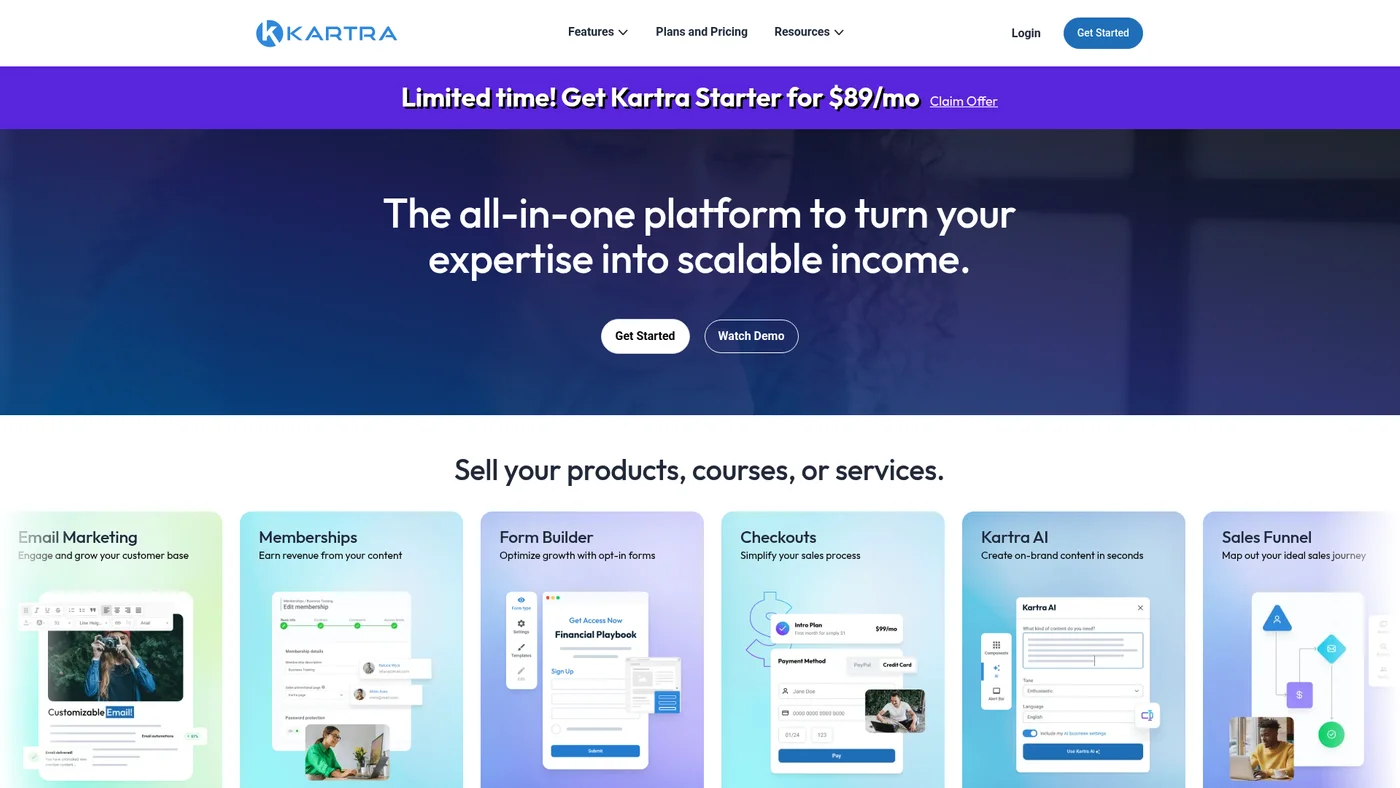
Kartra
True all-in-one marketing platform with advanced funnels, email automation, and membership hosting
Key Features
Skip for agent workflows. Kartra has a documented public API, but lacks MCP support, OpenAPI specs, webhooks, and structured outputs - all critical for Claude/Cursor integration. Without these primitives, you'll need heavy custom glue code to make it talk to modern AI agents.
✓Pros
- Everything in one subscription
- Behavioral automation triggers
- Built-in checkout and memberships
- No third-party integrations needed
✗Cons
- Interface feels dated
- Smaller template library
- No free plan
- Learning curve for the full platform

Systeme.io
Complete marketing platform with sales funnels, email marketing, courses, and more at budget-friendly prices
Key Features
Official MCP verified 2026-07-08: mcp.systeme.io/mcp, API-key auth (X-MCP-Key header or mcpKey param, 90-day keys, max 2), FREE PLAN, ChatGPT+Claude, contacts/tags/newsletters/opt-in-funnels write tools, rate-limited. OAuth planned. 4->7 Joonas approved.
✓Pros
- Free plan with real features
- Funnels, email, and courses included
- Simple to set up
- Paid plans are very affordable
✗Cons
- Less polished interface
- Limited design customization
- Fewer integrations
- Email deliverability not as strong
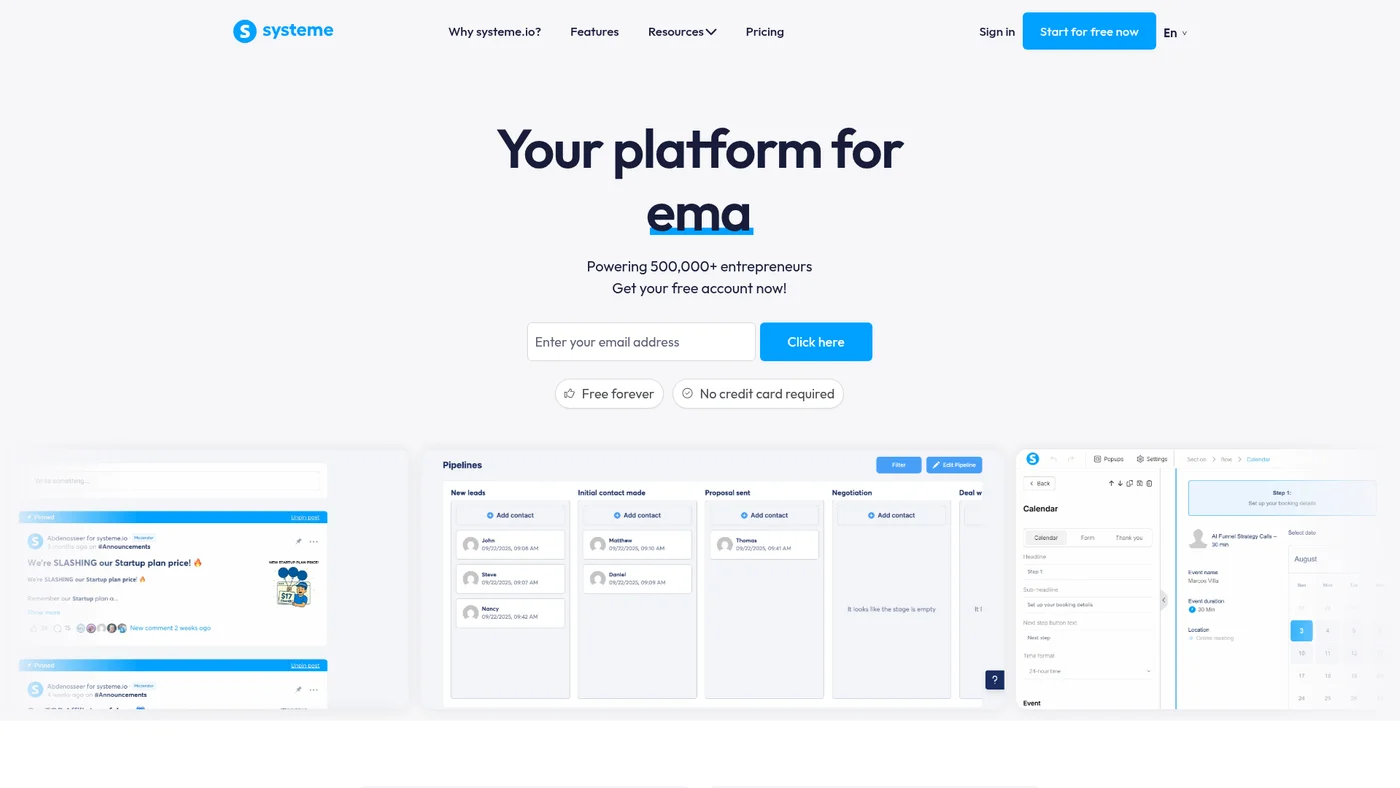

HubSpot
All-in-one CRM and marketing platform with a real free tier, per-seat paid plans, and credit-metered AI features.
Key Features
Strong agent fit with an official, HubSpot-hosted MCP server. The remote CRM MCP server at mcp.hubspot.com is generally available, connects any MCP client over streamable HTTP, and authenticates with OAuth 2.1 (PKCE), with read and write access across contacts, companies, deals, tickets, and more. An official npm package and a large documented API round it out. Agents get a first-party, well-supported integration path here.
✓Pros
- Free CRM is best-in-category with unlimited contacts
- Workflow automation is powerful at Professional and above
- 2,000+ integrations bridge most stack gaps
✗Cons
- Professional starts at $800/mo plus $3,000 onboarding fee
- Real automation requires Pro tier; Starter has none of it
- Per-seat scaling plus credit metering compound monthly cost
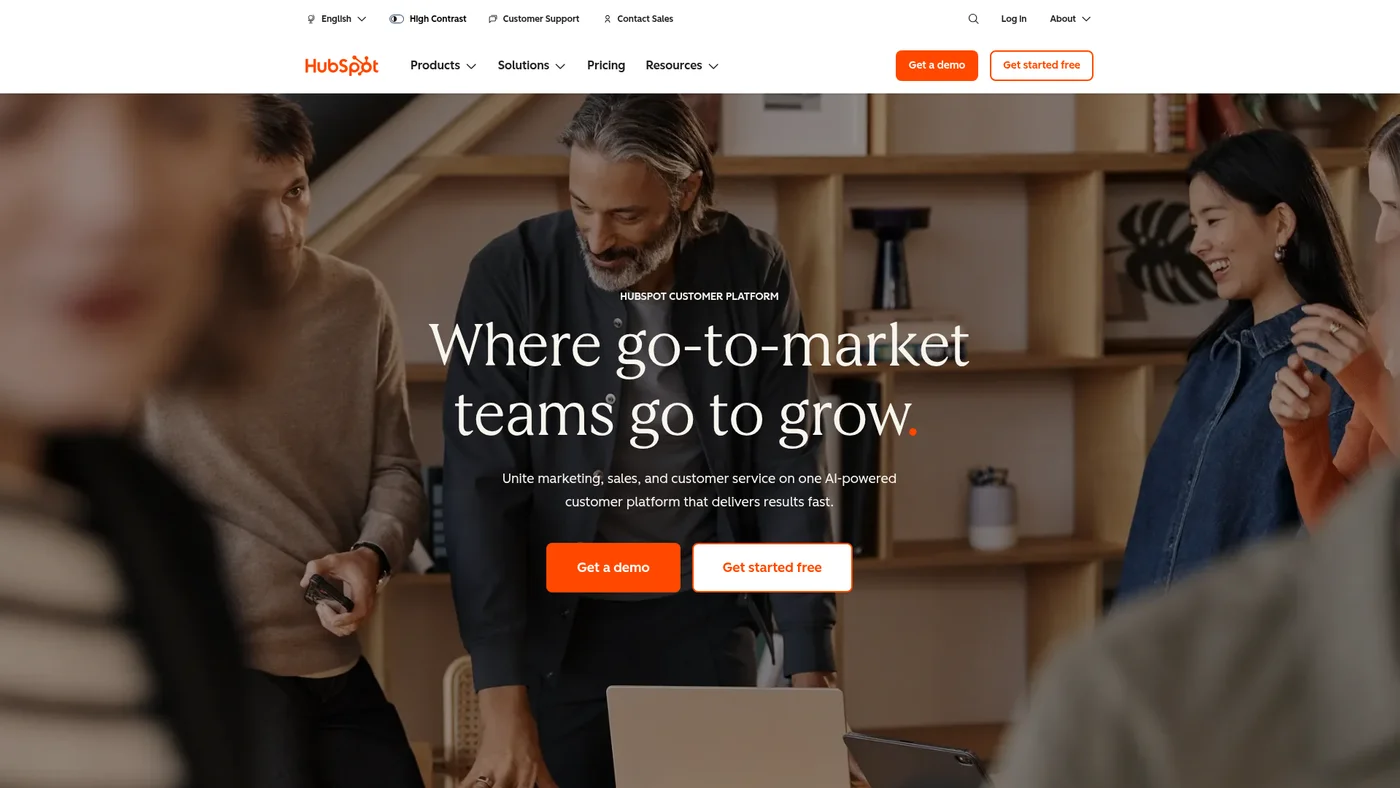

GoHighLevel
All-in-one CRM and marketing platform designed for agencies. Replaces multiple tools but has a steep learning curve.
Key Features
Strong agent fit with an official MCP server. HighLevel runs a hosted MCP server on its own marketplace domain exposing 36 tools across contacts, conversations, opportunities, payments, and calendars, authenticated with private integration tokens. Paired with published OpenAPI specs, that gives agents a documented, first-party path to automate an account. The main gap is structured-output reliability, so expect some custom error handling.
✓Pros
- Flat pricing, unlimited clients
- White-label everything
- Replaces 5+ tools
- Built-in SMS and voice
✗Cons
- Steep learning curve
- Interface not as polished
- Support can be slow
- Not ideal for non-agency users
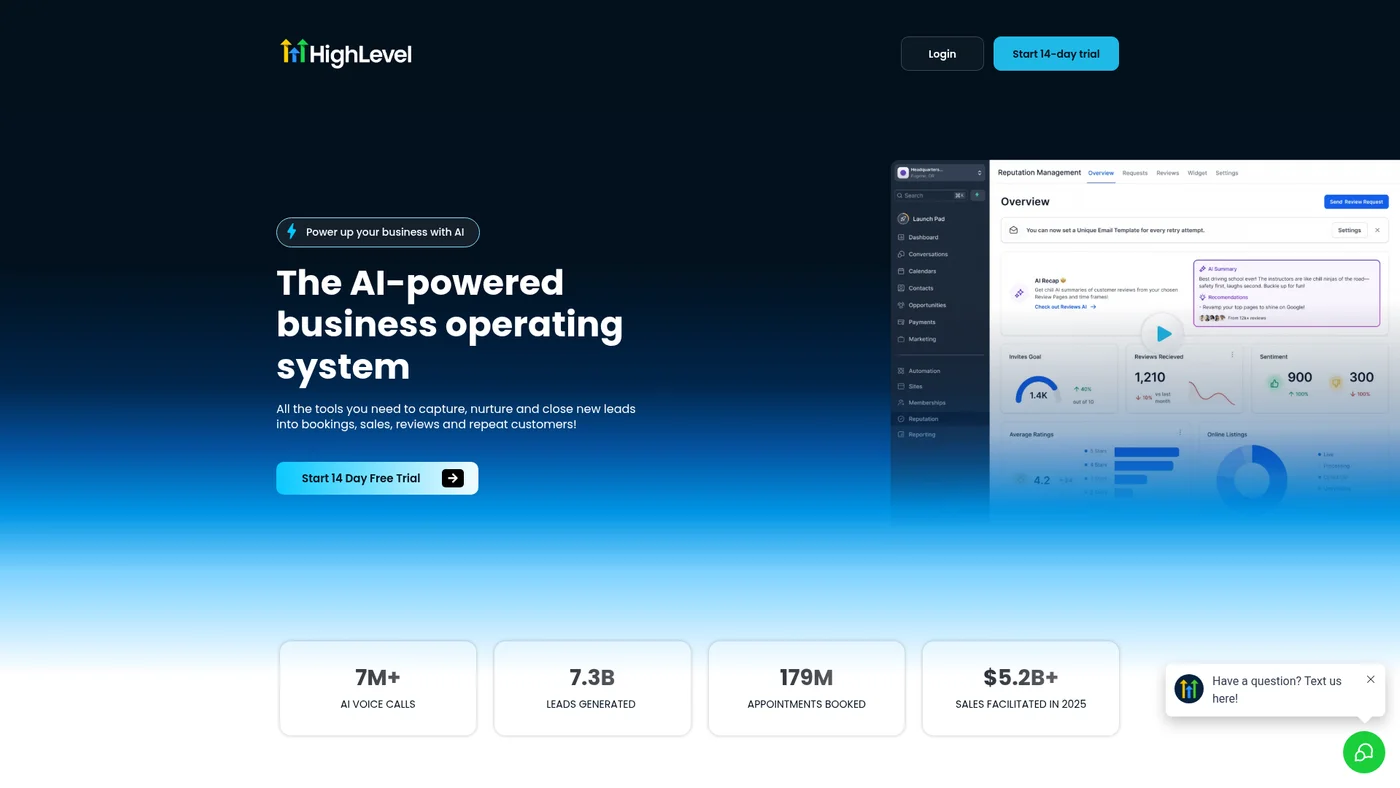

Keap
All-in-one CRM and marketing automation platform for small businesses ready to scale operations
Key Features
Agent workflows possible but limited. Keap has a community MCP server and documented public API, but lacks OpenAPI specs, official MCP support, and structured outputs that would let agents reliably parse and act on data. Integration requires custom parsing and error handling.
✓Pros
- 20+ years in small business automation
- CRM and invoicing in one platform
- Strong sales-marketing integration
- Reliable deliverability
✗Cons
- $249/month starting price is steep
- Mandatory $500+ implementation fee
- Dated interface in places
- Better alternatives exist for less money
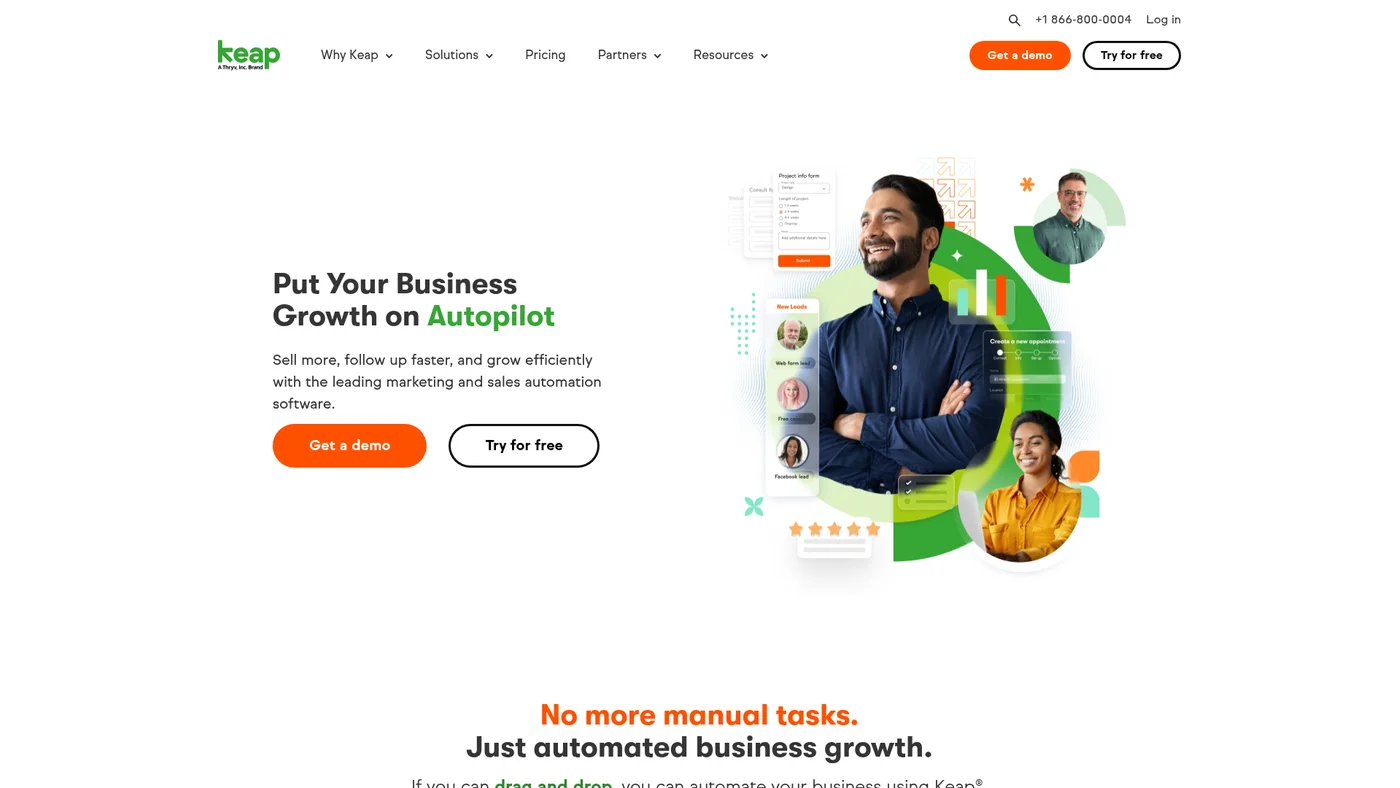
Price landscape
How prices compare
Starting prices across all 8 tools in this category.


At scale
How prices change as you grow
Pricing at 1K, 5K, and 10K contacts for tools reviewed in this guide.
| Tool | 1K | 5K | 10K |
|---|---|---|---|
| ActiveCampaign | $15/mo | $79/mo | $149/mo |
| Drip | – | $89/mo | – |
| HubSpot | $20/mo | $220/mo | $470/mo |
| Keap | – | $449/mo | $539/mo |
Methodology
How I chose these
I evaluated each platform on five criteria: automation builder depth (conditional logic, branching, triggers), ease of setup for non-technical users, pricing transparency and value at scale, integration ecosystem, and deliverability reputation. I also factored in G2 and Capterra ratings, community feedback, and how each tool handles the shift toward AI-powered personalization.
Tools that gate basic automation features behind expensive plans got penalized. Tools that include automation on every plan got rewarded.
FAQ
Frequently Asked Questions
Marketing automation software lets you set up workflows that run automatically based on triggers. When someone signs up for your newsletter, the tool sends a welcome sequence. When someone abandons a cart, it sends a recovery email. When a lead visits your pricing page three times, it alerts your sales team. Instead of manually sending each message, you build the workflow once and it runs 24/7.
Sender offers a free plan with 2,500 subscribers and automation included. Systeme.io's free plan includes automation plus funnels and courses. MailerLite's free plan covers 1,000 subscribers with automation. For paid plans, Sender starts at $7/month and Moosend at $9/month, both with solid automation builders.
Klaviyo if you are on Shopify. The native integration is deeper than anything else available. Omnisend if you want similar features at a lower price. Drip if you want a cleaner interface with strong revenue attribution. All three are built specifically for ecommerce automation flows like cart recovery, post-purchase sequences, and browse abandonment.
HubSpot's free CRM is excellent. But real marketing automation requires Marketing Hub Professional at $800/month. For most small and mid-size businesses, ActiveCampaign delivers comparable automation at $15/month. HubSpot becomes worth it when you need deep CRM-marketing-sales alignment and have the budget for enterprise tools.
Contact migration is easy (CSV export). The painful part is rebuilding automation workflows. Simple welcome sequences take minutes. Complex multi-step workflows with conditional logic can take a weekend to rebuild. Export your workflow screenshots before switching so you have a reference. Most platforms offer migration support or guides for switching from major competitors.
Continue reading






10+ years in digital marketing. I review SEO and AI visibility software for small business owners and solo operators: what each plan really costs, which one actually covers the job, and where a tool stops being worth it. Checked against vendor documentation and real user feedback, and against my own use where I have it.