
The best all-in-one marketing and sales platforms give a growing business email, a sales CRM, pipelines, landing pages, automation and analytics in one tool, instead of stitching together five subscriptions that barely sync.
I compared 18 platforms on how well they handle both marketing and sales as you scale, from free starters like Systeme.io to full suites like HubSpot, with the price and automation trade-offs called out for each. I also weigh AI-stack fit now: several of these run official MCP servers, so your AI assistant can operate them directly instead of you clicking through dashboards.
This page may contain affiliate links.
Some links on this page are affiliate links, meaning I may earn a commission if you sign up (at no extra cost to you). This never influences my ratings or recommendations.
Overview
The landscape
I track 18 tools in this category. Prices range from $7/mo (Sender) to $139/mo (Semrush). The median starting price is $49/mo, so anything below that is a good deal.
5 tools offer free plans: Sender, Brevo, Systeme.io, Kit, and 1 more.
This roundup covers the 18 I consider worth a serious look. Each one is ranked with real pricing data, aggregated user ratings, and my honest take.
Audience
Who is this guide for?
- ✓Small business owners tired of managing multiple marketing subscriptions
- ✓Course creators and coaches who need to sell, deliver, and market from one platform
- ✓Marketing agencies managing multiple client accounts
- ✓E-commerce brands running email, SMS, and push notification campaigns
- ✓Bootstrapped entrepreneurs looking for free or low-cost marketing tools
- ✓Growing businesses evaluating whether to upgrade from basic email marketing
Which one is right for you
The right pick depends on who you are
Four buyers, four answers, all within All-in-One Marketing. I ranked every tool here against each of them, and the reason under each pick is mine rather than the vendor's.
For an agency
3 to 30 people, multiple client accounts

from $20/mo per seat
Industry standard for bigger companies, but gets expensive quickly, and you'll have features that you dont use.
For a consultant
solo, juggling 5 to 15 clients

from $17/mo
Cheapest capable all-in-one and really good value for money. You can plug it into your AI stack or work in the dashboard. Best for solo consultants and small businesses, not for agencies. Strong community around it.
For a solo builder who lives in AI
wires tools into Claude Code or Cursor
from $17/mo
Cheapest capable all-in-one and really good value for money. You can plug it into your AI stack or work in the dashboard. Best for solo consultants and small businesses, not for agencies. Strong community around it.
For a solo builder who wants it simple
one tool, no wiring
from $17/mo
Cheapest capable all-in-one and really good value for money. You can plug it into your AI stack or work in the dashboard. Best for solo consultants and small businesses, not for agencies. Strong community around it.
Quick picks
Which tool is right for you?
Skip the scroll. Pick your situation:
Exclusive reader deal
30% off Omnisend for 3 months
Affiliate link. I may earn a commission at no extra cost to you.
Quick verdict
For a growing business that wants marketing and sales in one platform, the best all-around pick is ActiveCampaign: strong marketing automation with a built-in sales CRM at a mid-market price, and it now runs an official MCP server. If budget is not the constraint, HubSpot is the most complete marketing and sales platform. Agencies save the most with GoHighLevel.
For affordable marketing plus a light CRM, Brevo starts at $9/month, and Systeme.io lets you launch free. Running an online store? Omnisend is the multi-channel pick, with email, SMS, and an official MCP server. Course businesses should look at Kajabi or Kartra.
What to Look For in an All-in-One Marketing Platform
The term "all-in-one" gets used loosely in marketing software. Some tools slap a basic landing page builder onto an email tool and call it all-in-one. Here is what actually matters when evaluating these platforms.
Core features to look for: email marketing with automation workflows, landing page or website builder, CRM or contact management, and some form of sales funnel or conversion path builder. Beyond the basics, many platforms now include course hosting, membership sites, SMS marketing, chatbots, webinar hosting, and appointment scheduling.
The most important factor is how well the features work together. A platform where your CRM data automatically triggers email sequences, which lead to landing pages that feed into sales funnels, is far more valuable than one where each feature operates in isolation. This integration is what saves you from needing Zapier to connect five different tools.
Pricing models vary dramatically. Some charge by contacts (ActiveCampaign, Kit), others by email volume (Brevo), and some offer flat-rate pricing (Systeme.io, Builderall). Pay attention to what is included in each tier and watch for hidden costs like transaction fees, mandatory onboarding, or charges for inactive contacts.
Overview
Quick comparison
| # | Tool | Price | Rating |
|---|---|---|---|
| 1 | $15/mo | 8.9/10 | |
| 2 | $16/mo | 8.7/10 | |
| 3 | $17/mo | 8.7/10 | |
| 4 | $59/mo | 8.8/10 | |
| 5 | $9/mo | 8.6/10 |
Show all 18 tools
| 6 | $39/mo | 8.6/10 | |
| 7 | $97/mo | 8.4/10 | |
| 8 | $19/mo | 8.2/10 | |
| 9 | $299/mo | 8.2/10 | |
| 10 | $97/mo | 7.8/10 | |
| 11 | From $20/mo per seat | 7.8/10 | |
| 12 | From $13/mo | 7/10 | |
| 13 | From $13/mo | 6.8/10 | |
| 14 | $179/mo | 8.6/10 | |
| 15 | $14.99/month | 7.6/10 | |
| 16 | $83/mo (billed annually) | 7.7/10 | |
| 17 | From $27/mo | 7.6/10 | |
| 18 | $99/mo | 8.2/10 |
Rankings
My Top Picks

ActiveCampaign
AI-powered email marketing and automation platform for businesses serious about personalized campaigns
Key Features
Solid agent-fit with official MCP support and documented API access. ActiveCampaign's official MCP server and native Claude integration create a direct path for agents to manage email campaigns and automation workflows. The lack of published OpenAPI specs and structured outputs will require more manual prompt engineering to ensure reliable data handling.
✓Pros
- Best automation engine in the industry
- Excellent email deliverability rates
- CRM included on Plus plan and above
✗Cons
- No built-in landing page builder (requires integration)
- Now charges for inactive contacts, increasing costs
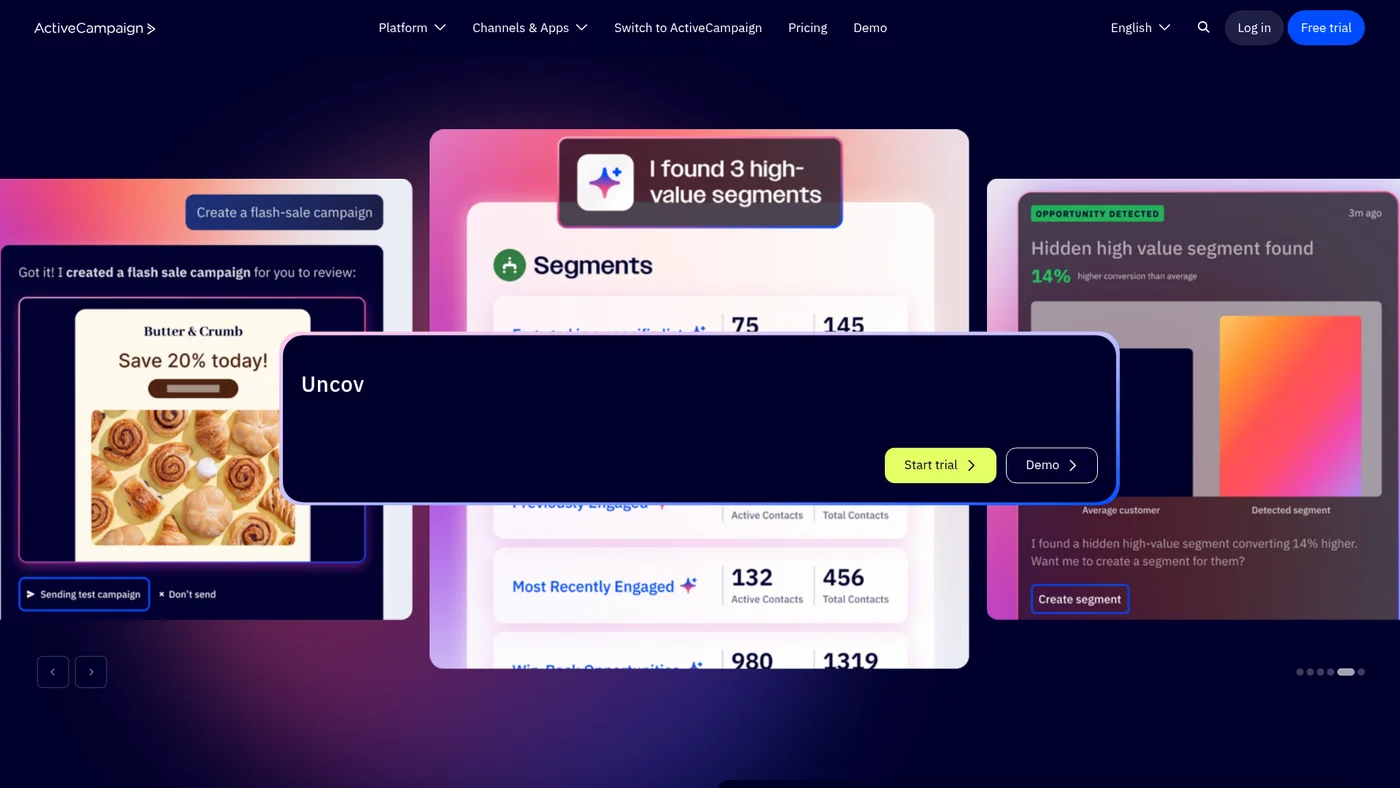

Omnisend
Ecommerce-focused email and SMS marketing platform with powerful automation and 160+ integrations
Key Features
Solid agent fit with a first-party MCP server and a clean REST API. Omnisend hosts an official MCP server at mcp.omnisend.com/mcp, authenticated over OAuth, so an agent can create campaigns, build automations, recommend and edit segments, and pull revenue reporting from Claude or ChatGPT. The REST API (api.omnisend.com/api) is date-versioned via an Omnisend-Version header, uses cursor pagination and RFC 9457 error bodies, and spans contacts, events, products, campaigns, segments, automations, and reports. It sits below the GA-official tier because the one-click Claude connector is still coming soon (custom connector for now), there are no official SDKs, and webhooks are an automation-workflow action rather than a subscription API.
✓Pros
- Designed specifically for e-commerce with excellent automation templates
- SMS included with easy setup
- Overhauled reporting with revenue attribution
✗Cons
- Not suitable for non-e-commerce businesses
- Landing pages are basic (signup-focused only)
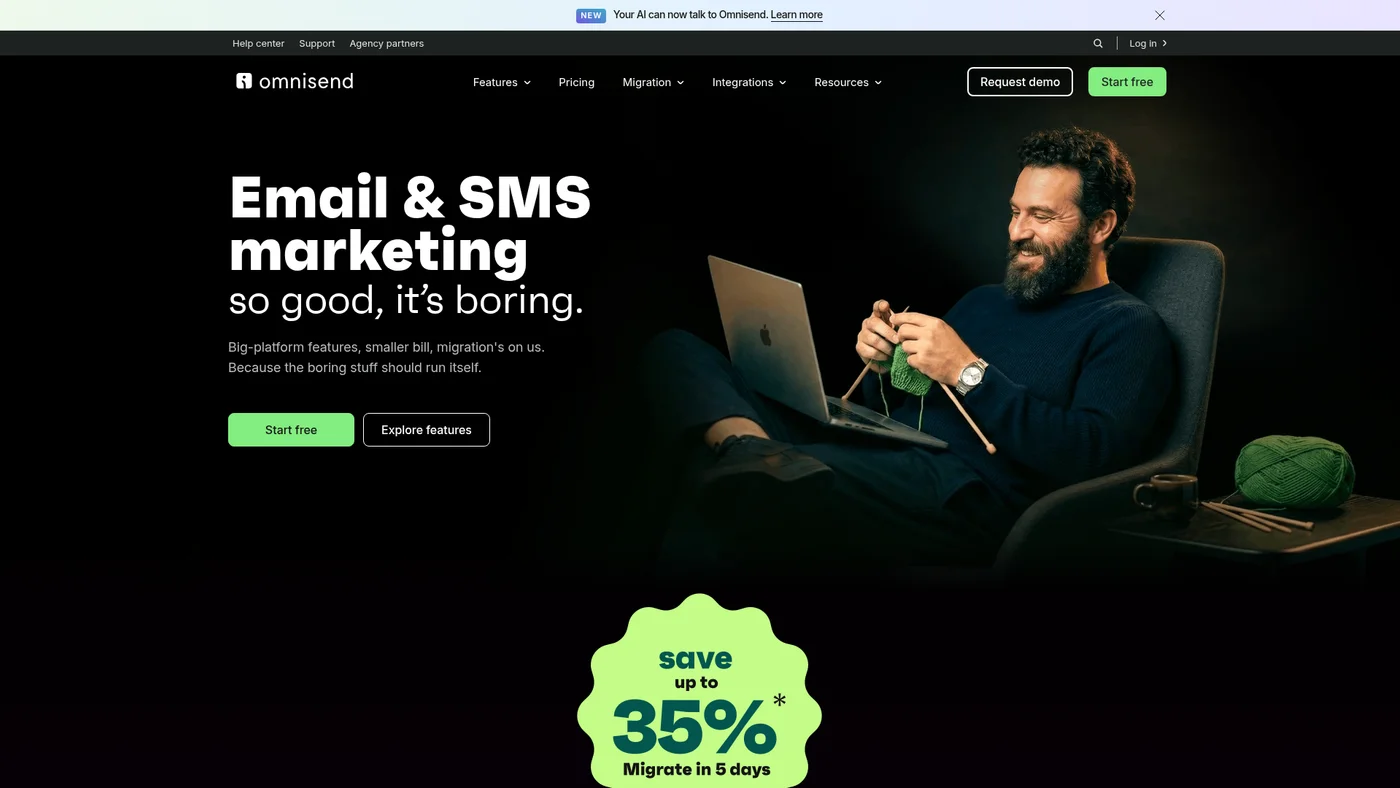

Systeme.io
Complete marketing platform with sales funnels, email marketing, courses, and more at budget-friendly prices
Key Features
Official MCP verified 2026-07-08: mcp.systeme.io/mcp, API-key auth (X-MCP-Key header or mcpKey param, 90-day keys, max 2), FREE PLAN, ChatGPT+Claude, contacts/tags/newsletters/opt-in-funnels write tools, rate-limited. OAuth planned. 4->7 Joonas approved.
✓Pros
- Best free plan for an all-in-one platform (2,000 contacts)
- No transaction fees on any plan
- Incredibly affordable paid plans starting at $17/month
✗Cons
- Limited design customization options
- Fewer integrations than competitors

Kartra
True all-in-one marketing platform with advanced funnels, email automation, and membership hosting
Key Features
Skip for agent workflows. Kartra has a documented public API, but lacks MCP support, OpenAPI specs, webhooks, and structured outputs - all critical for Claude/Cursor integration. Without these primitives, you'll need heavy custom glue code to make it talk to modern AI agents.
✓Pros
- Everything integrated with no plugins needed
- Checkout supports Apple Pay, Google Pay, and buy-now-pay-later
- New Essentials plan makes it more accessible at $59/month
✗Cons
- Learning curve for beginners
- Limited integrations outside the Kartra ecosystem

Brevo
All-in-one email marketing platform with SMS, automation, and AI features at competitive prices
Key Features
Weak agent-fit without official tooling. Brevo has a community MCP server and documented public API, but lacks OpenAPI specs, SDKs, and native integrations with Claude or ChatGPT. The missing structured outputs and webhook support make it difficult to build reliable agent workflows that require real-time triggers or predictable JSON responses.
✓Pros
- Unlimited contacts on every plan is a huge cost saver
- Very affordable entry point ($9/month Starter)
- Multi-channel marketing out of the box
✗Cons
- Landing pages only on Standard plan ($18/month) and above
- Free plan limited to 300 emails per day

Kit
Creator-focused email marketing platform with powerful automations and integrated monetization tools
Key Features
Official MCP at app.kit.com/mcp verified 2026-07-07: OAuth, full v4 surface incl. writes w/ safety annotations, ChatGPT+Claude+Cursor, paid plans, 120rpm. Second Developer Docs MCP at developers.kit.com/mcp. llms.txt live. Score 7->8 (Joonas approved).
✓Pros
- Most generous free plan by subscriber count
- Built specifically for creators with course and product tools
- Clean, simple interface
✗Cons
- Limited design customization
- No CRM or sales pipeline

Clickfunnels
All-in-one marketing platform for building sales funnels, hosting courses, and managing customers
Key Features
Strong agent fit with an official MCP server in technical preview. ClickFunnels exposes a Labs MCP endpoint (mcp.myclickfunnels.com) with roughly 100 tools across contacts, orders, products, courses, and webhooks, backed by a published OpenAPI spec, an llms.txt index, webhooks, and a Node SDK. The caveats are real: it is beta and currently Claude Desktop only, so treat it as early but legitimate.
✓Pros
- Best funnel-building experience on the market
- Strong community and training resources
- 44-day risk-free trial (14-day free + 30-day money-back)
✗Cons
- Expensive starting at $97/month
- Email marketing is basic compared to dedicated tools

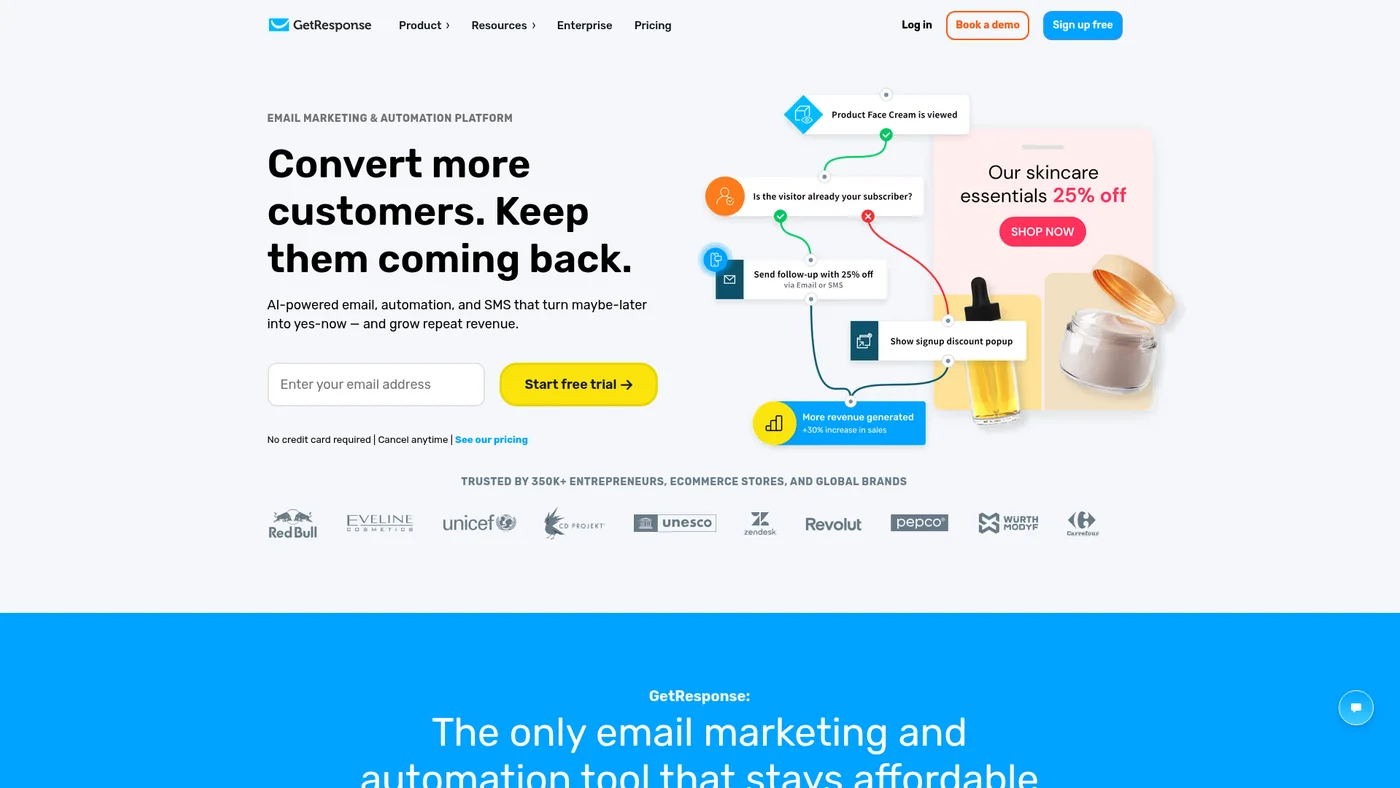
GetResponse
AI-powered email marketing platform with automation, landing pages, and webinars starting at $19/month
Key Features
Limited agent-fit without official backing. GetResponse has a community MCP server and documented public API, but lacks OpenAPI specs, SDKs, and native integrations with Claude or ChatGPT. The missing structured outputs and webhook support make it harder to build reliable agent workflows compared to platforms with first-party MCP implementations.
✓Pros
- Webinar integration saves a separate subscription
- New Creator plan for content monetization
- Good automation capabilities for the price
✗Cons
- Free plan is very limited (2,500 sends/month)
- Interface can feel cluttered

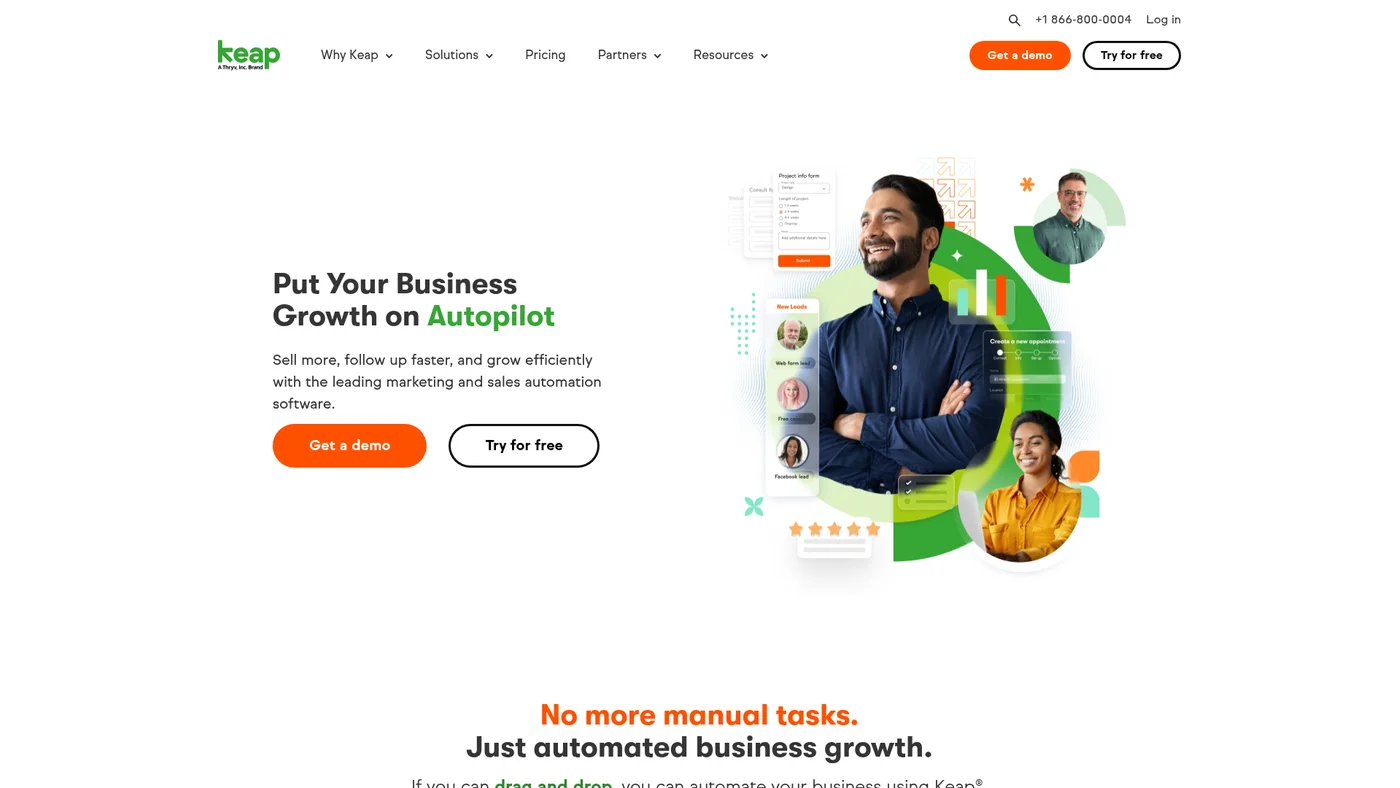
Keap
All-in-one CRM and marketing automation platform for small businesses ready to scale operations
Key Features
Agent workflows possible but limited. Keap has a community MCP server and documented public API, but lacks OpenAPI specs, official MCP support, and structured outputs that would let agents reliably parse and act on data. Integration requires custom parsing and error handling.
✓Pros
- Excellent CRM for service businesses
- Built-in payments and invoicing
- Strong automation for sales follow-ups
✗Cons
- Very expensive starting point ($299/month)
- Mandatory $500 onboarding fee

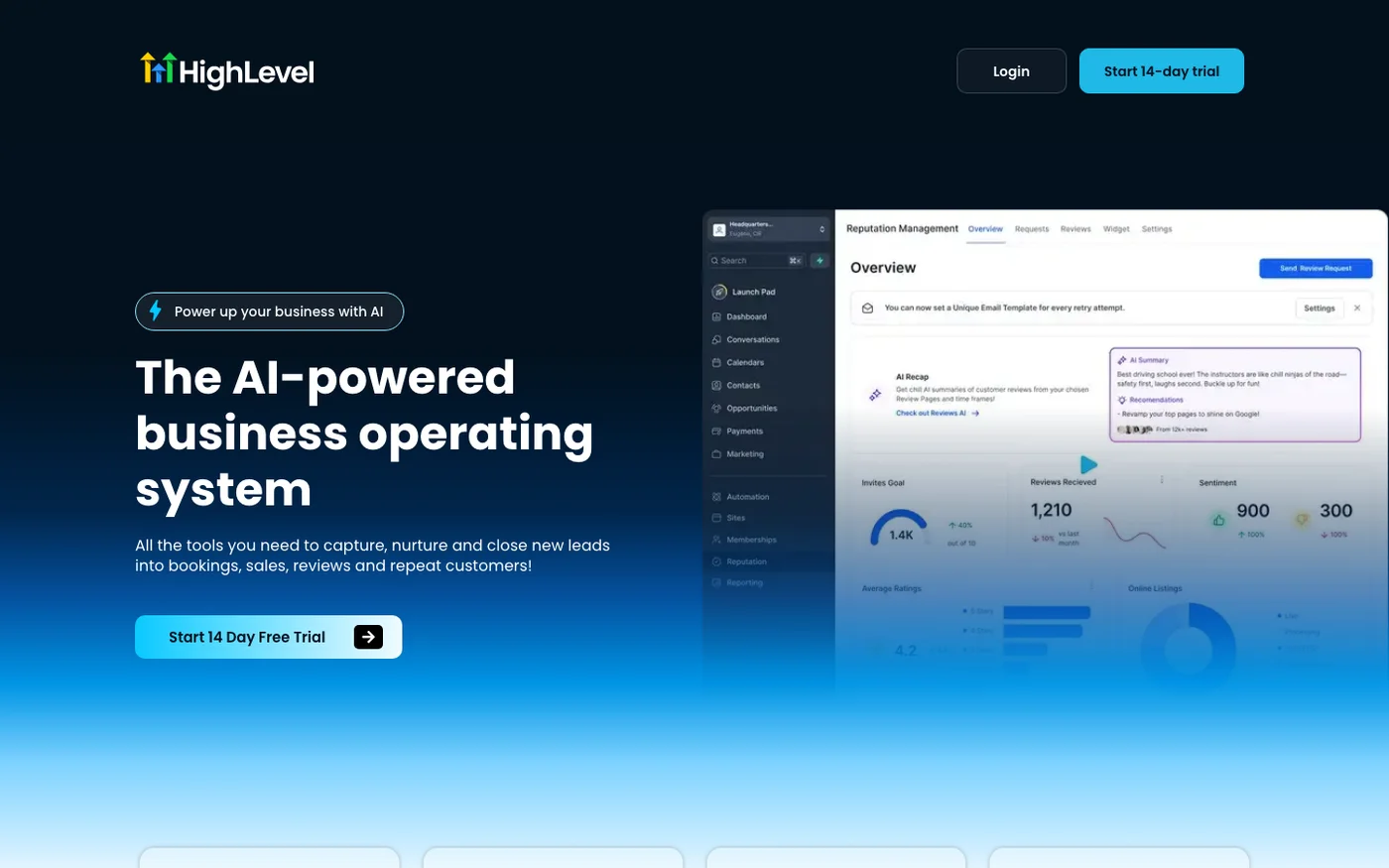
GoHighLevel
All-in-one CRM and marketing platform designed for agencies. Replaces multiple tools but has a steep learning curve.
Key Features
Strong agent fit with an official MCP server. HighLevel runs a hosted MCP server on its own marketplace domain exposing 36 tools across contacts, conversations, opportunities, payments, and calendars, authenticated with private integration tokens. Paired with published OpenAPI specs, that gives agents a documented, first-party path to automate an account. The main gap is structured-output reliability, so expect some custom error handling.
✓Pros
- Unmatched value for agencies (unlimited clients on $297 plan)
- White-label everything including the mobile app
- Replaces 10+ separate tools in one platform
✗Cons
- Significant learning curve
- Usage-based costs for SMS/calls can add up fast

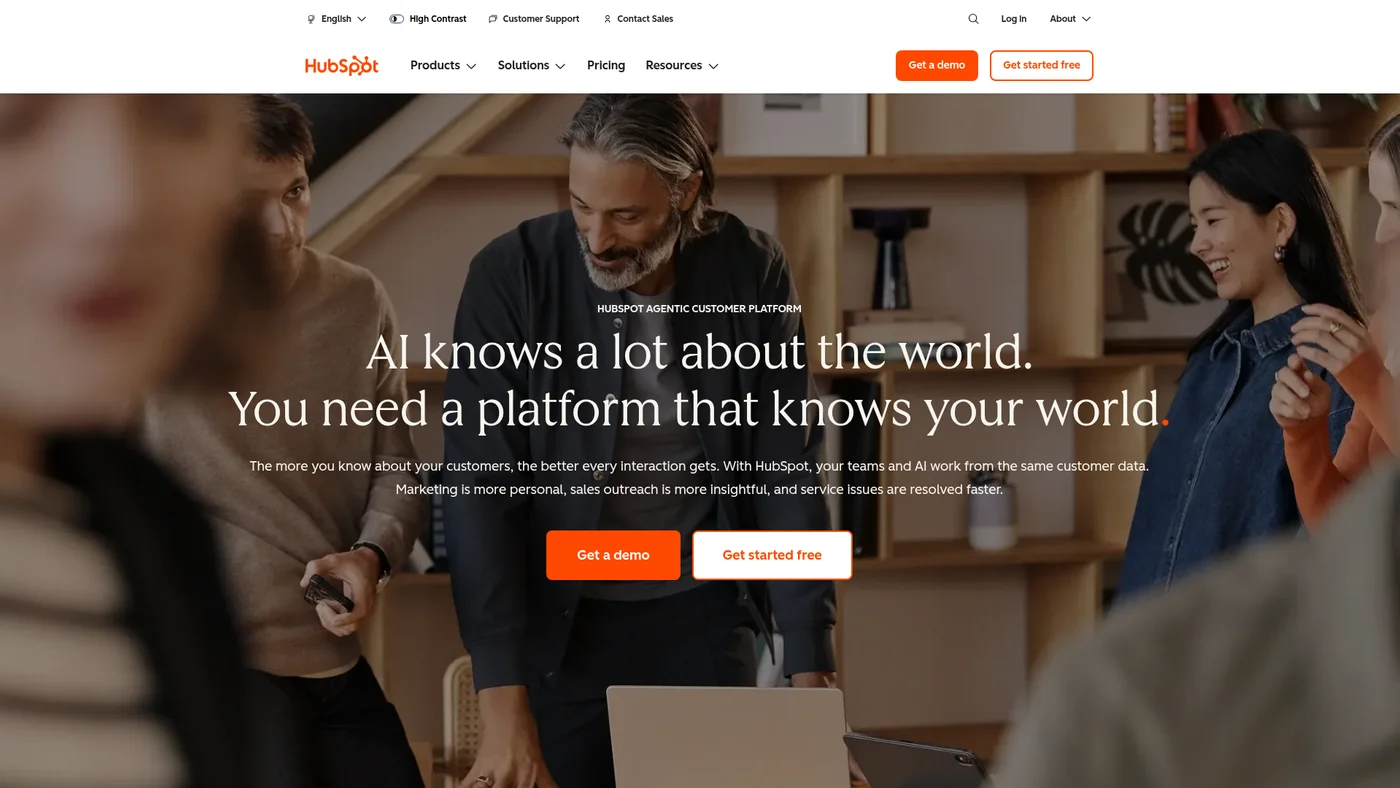
HubSpot Marketing Hub
All-in-one CRM and marketing platform with a real free tier, per-seat paid plans, and credit-metered AI features.
Key Features
Strong agent fit with an official, HubSpot-hosted MCP server. The remote CRM MCP server at mcp.hubspot.com is generally available, connects any MCP client over streamable HTTP, and authenticates with OAuth 2.1 (PKCE), with read and write access across contacts, companies, deals, tickets, and more. An official npm package and a large documented API round it out. Agents get a first-party, well-supported integration path here.
✓Pros
- Free CRM with unlimited contacts is best-in-category
- Marketing-to-sales handoff works because it is the same database
- 2,000+ integrations and an extensive partner ecosystem
✗Cons
- Professional is $800-$890/mo plus $3,000 onboarding fee
- Enterprise is $3,600/mo plus $7,000 onboarding fee
- Credit-metered AI ($9/1K) makes monthly cost unpredictable

PosterMyWall
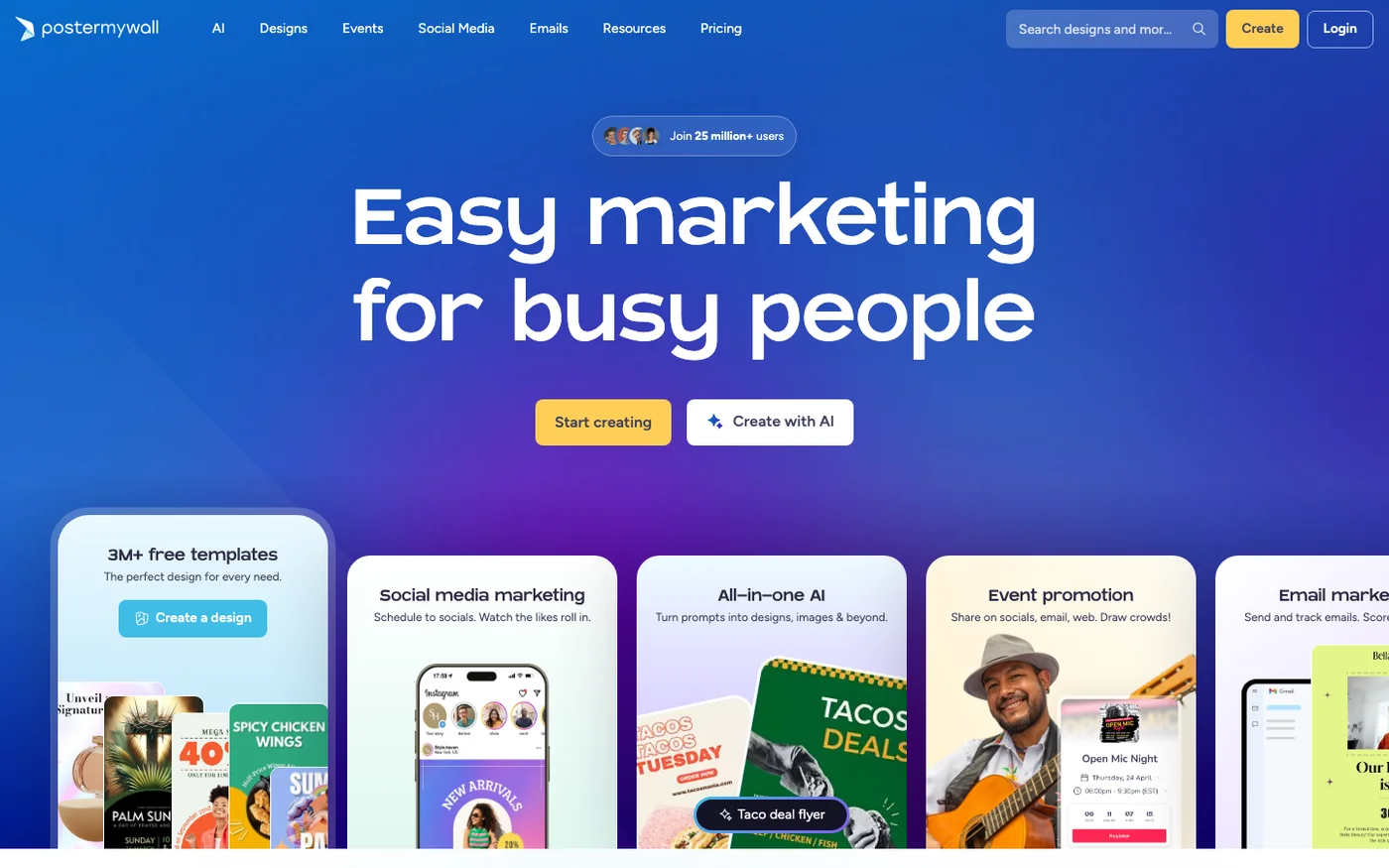
Design-first all-in-one: AI creative, social scheduling, email, and event pages in one affordable place.
Key Features
✓Pros
- Full design-to-publish-to-measure cycle in one affordable place
- Genuine free plan and a low ~$13/month entry price
- Fast template-to-campaign workflow for non-designers
✗Cons
- No CRM, sales pipeline, or funnel builder (yet)
- Landing pages and an AI-agent MCP are on the roadmap, not live today

Mailchimp
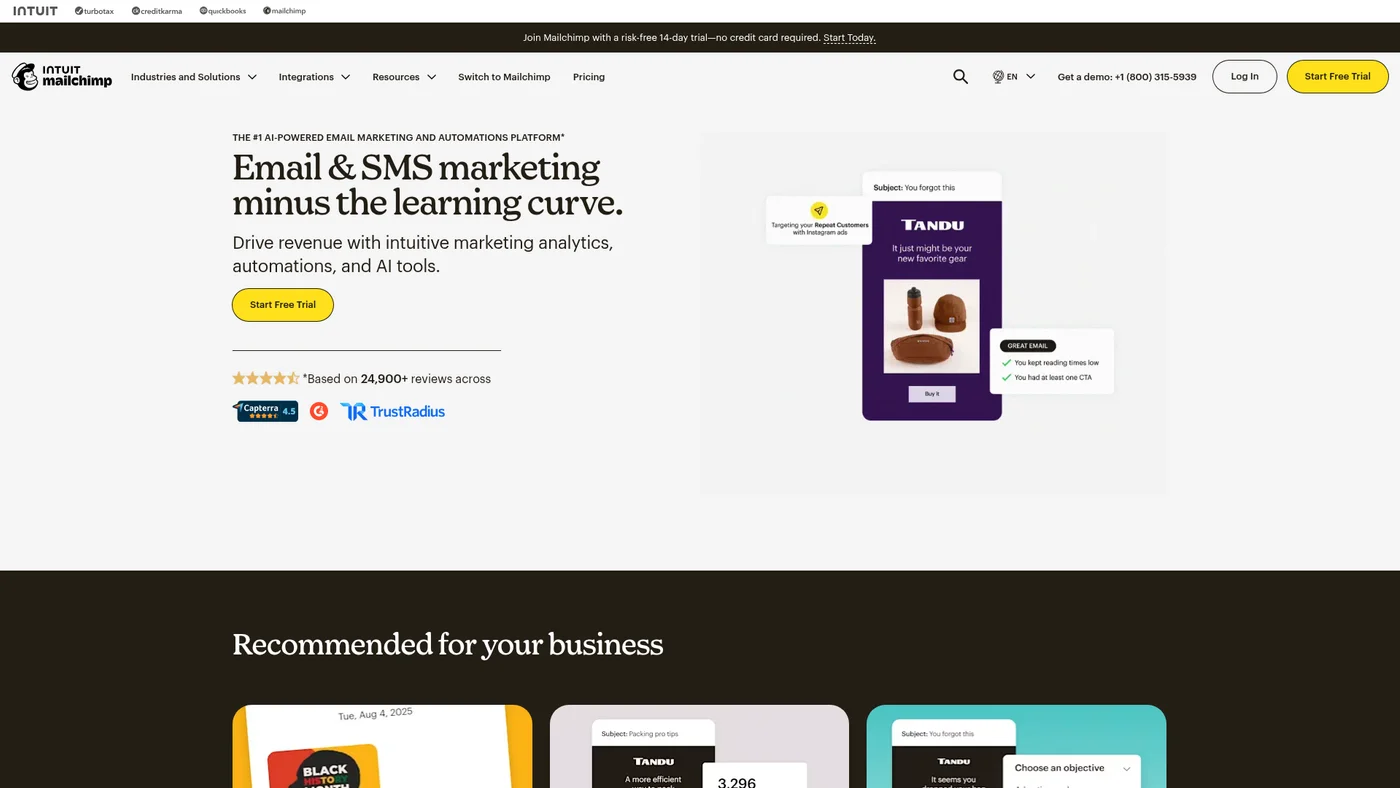
Popular email marketing platform that's become overpriced with declining value for most users
Key Features
Moderate agent fit, held back by community dependency. Mailchimp has public API docs, OpenAPI spec, and a community MCP server, but lacks official MCP support and structured outputs. The bigger constraint: no native integrations with Claude or ChatGPT, meaning you'll need custom orchestration to get reliable agentic behavior.
✓Pros
- Very easy to get started with
- Strong brand recognition and trust
- Decent integration ecosystem
✗Cons
- Free plan severely limited (250 contacts since Jan 2026)
- Charges for unsubscribed contacts
- Gets expensive quickly as your list grows

Kajabi
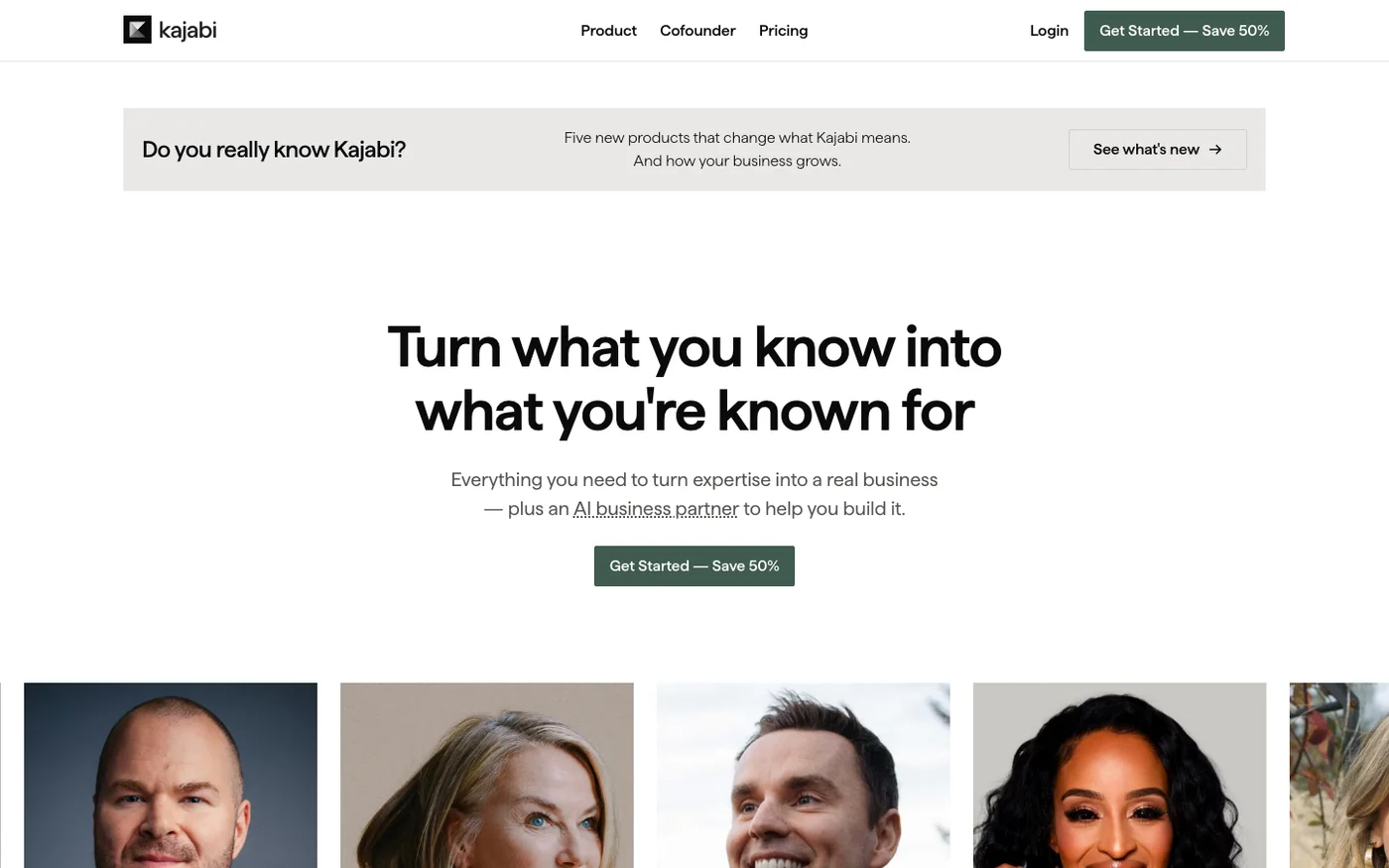
All-in-one platform for course creators, coaches, and experts to build, market, and sell knowledge products
Key Features
Strong agent fit through a first-party MCP. Kajabi runs its own OAuth-gated MCP server at mcp.kajabi.com/mcp and sells it as a named product, so an assistant can reach courses, products, transactions and subscribers directly rather than through a wrapper. A documented public API with OAuth sits behind it, and Zapier and Make cover the no-code path. Still missing are a published OpenAPI spec and SDKs, so anything the MCP does not expose means handling the HTTP yourself.
✓Pros
- Most polished course creation experience available
- Zero transaction fees on any plan
- Beautiful templates and design
✗Cons
- Expensive (starts at $89, goes to $499/month)
- Not suitable for non-course businesses

EngageBay
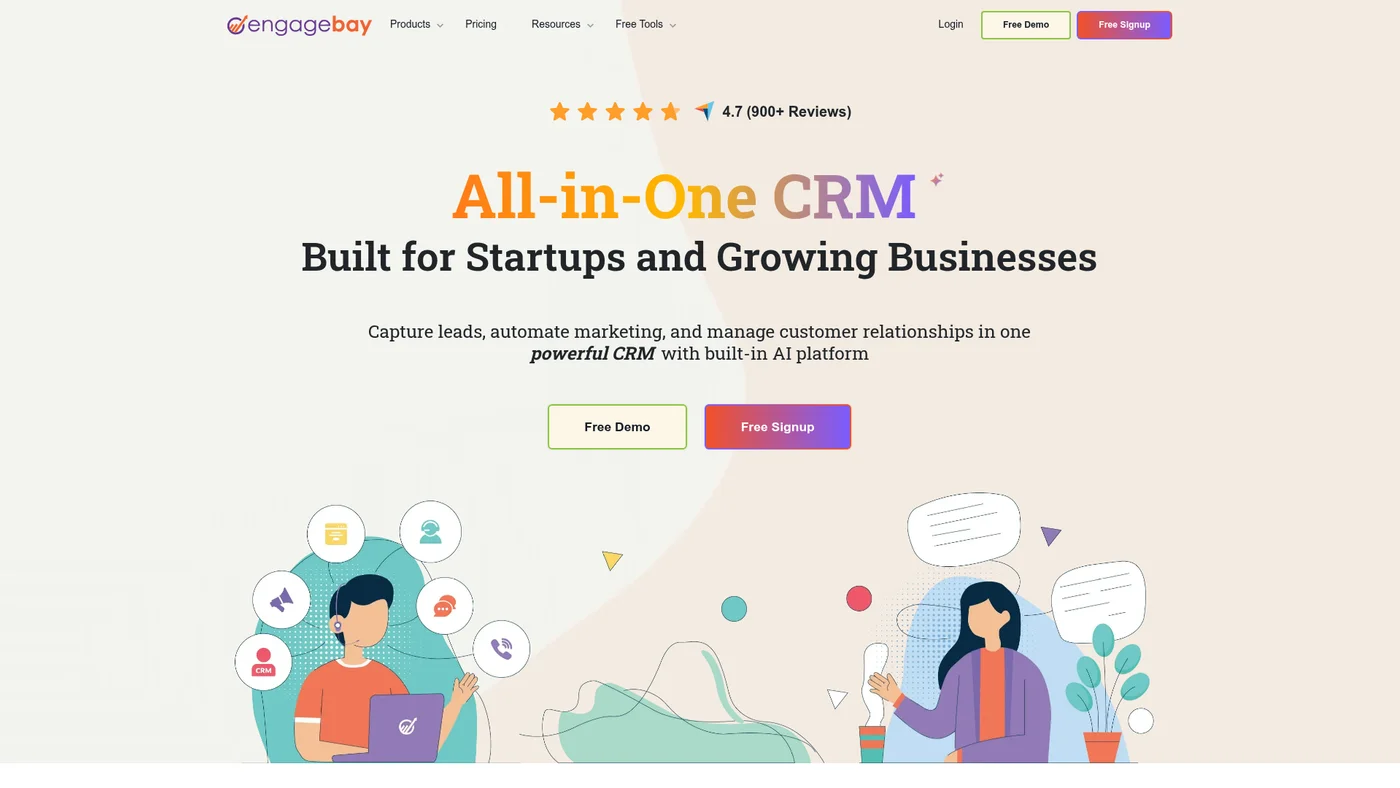
Affordable all-in-one CRM with email marketing, automation, and customer support for small businesses
Key Features
✓Pros
- Best value CRM-first all-in-one platform
- Free plan includes core CRM and marketing features
- Replaces HubSpot for small teams
✗Cons
- Interface can be buggy at times
- Smaller user community and limited integrations

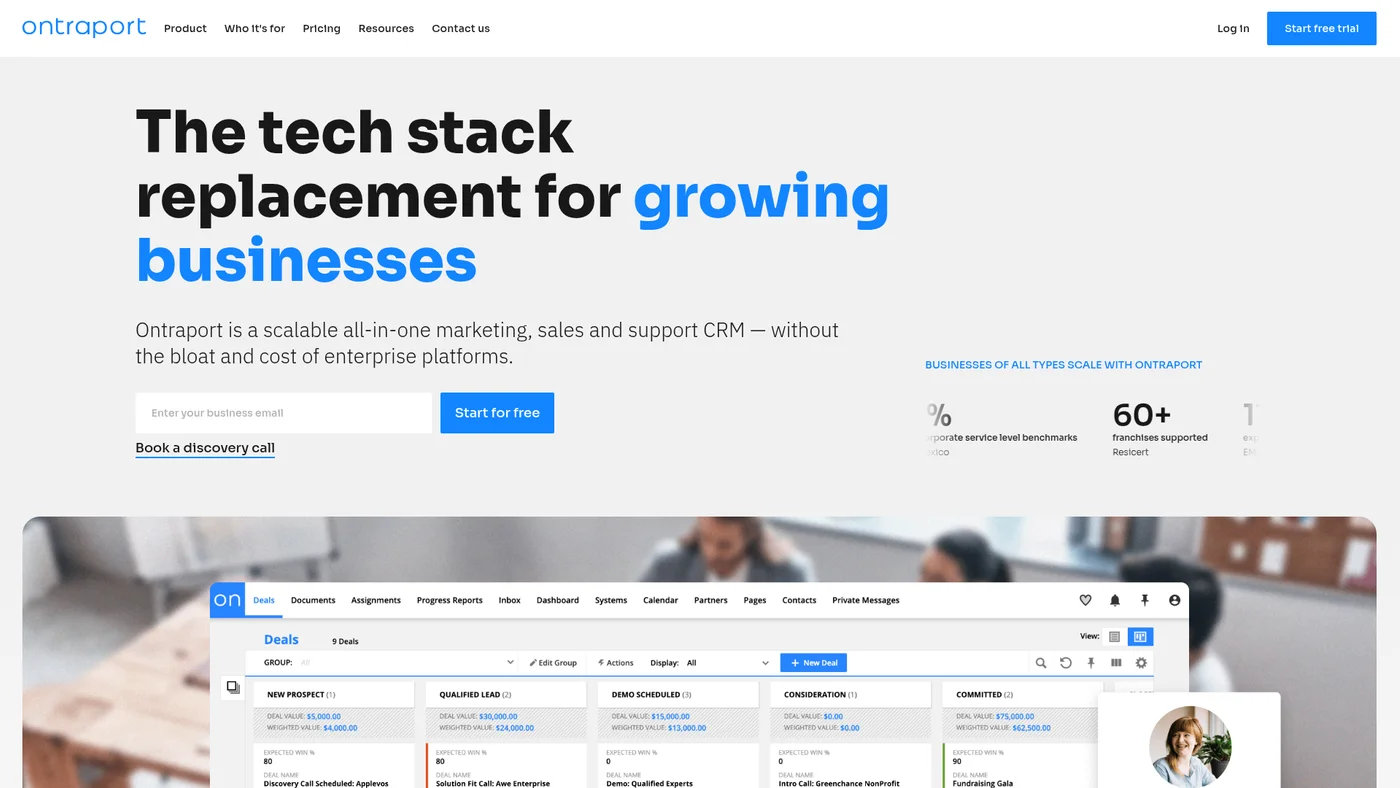
Ontraport
All-in-one CRM with enterprise power at mid-market prices, beating HubSpot in most G2 categories
Key Features
✓Pros
- One of the most powerful automation engines available
- Excellent customer journey reporting
- Built-in payment processing
✗Cons
- UI feels dated compared to newer tools
- Pricing jumps sharply ($79, $147, $297)

Builderall
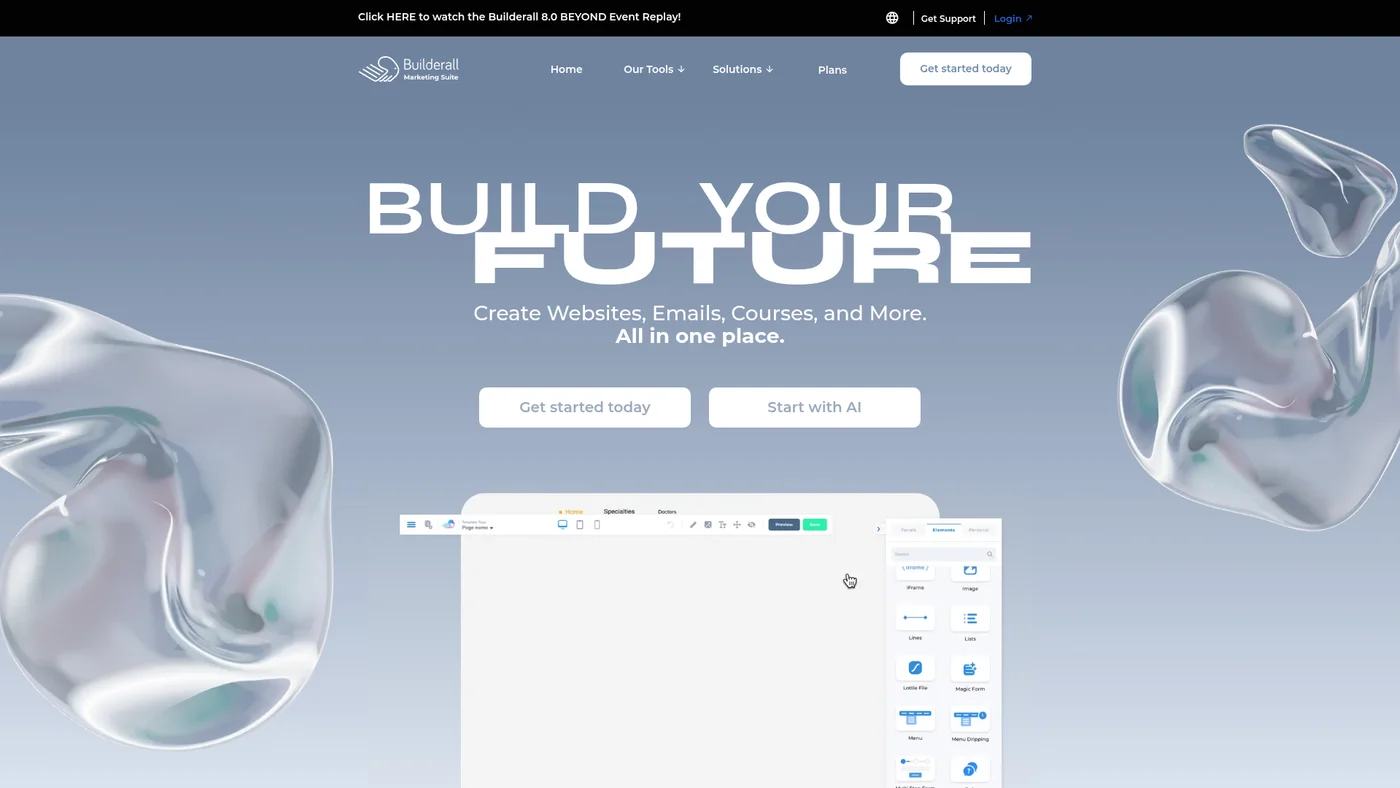
All-in-one marketing platform with 25+ tools including website builder, email marketing, and course creation
Key Features
Weak fit for agent workflows. Builderall runs no MCP server: nothing on builderall.com mentions one, and the addresses you would guess return web pages rather than a protocol endpoint. What exists is narrower than the platform, a documented token-authenticated API for MailingBoss, Builderall's email tool, rather than for Builderall as a whole. No CLI, no SDKs, no OpenAPI spec. An agent can be wired to the email side with custom code, and everything else means Zapier or the interface.
✓Pros
- Unbeatable value with 50+ tools from $17.90/month
- Great for beginners who want to experiment
- Strong funnel builder templates
✗Cons
- No single tool is best-in-class
- Reported slow page load speeds
- Can feel overwhelming with so many tools

Okara
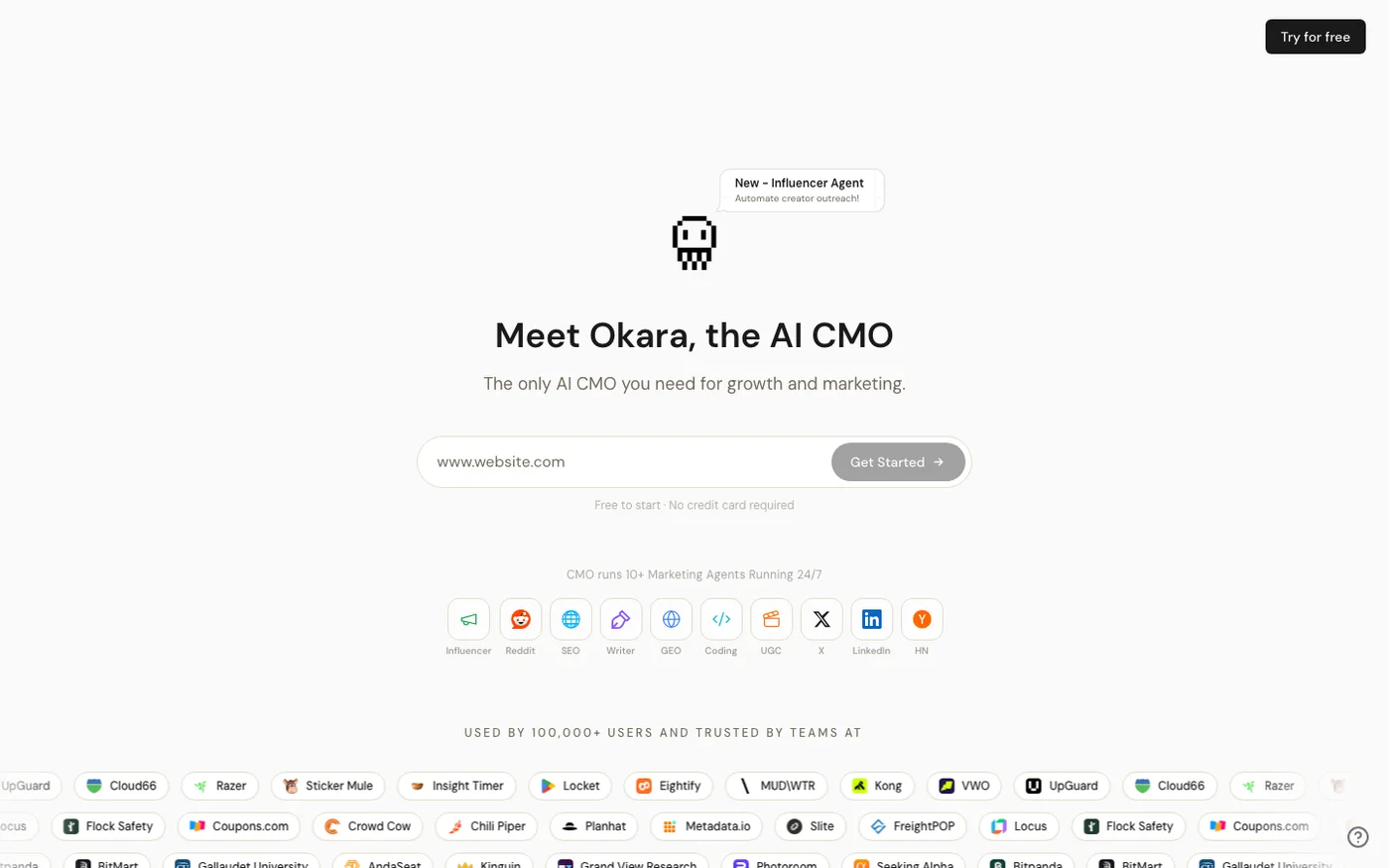
An AI CMO: 10+ agents that plan and draft your SEO, GEO, content, and social marketing from one place.
Key Features
✓Pros
- The AI does the marketing work, not just hosts it
- Real free plan (20 credits, no card), then $99/mo
- Grounds its agents in your own GSC and GA data
✗Cons
- Not a CRM, sales funnel, or contact database
- Closed app: no public API or MCP server to build on
- Drafts for approval, so you still review every output
Price landscape
How prices compare
Starting prices across all 18 tools in this category.


At scale
How prices change as you grow
Pricing at 1K, 5K, and 10K contacts for tools reviewed in this guide.
| Tool | 1K | 5K | 10K |
|---|---|---|---|
| GetResponse | $16/mo | $48/mo | $69/mo |
| ActiveCampaign | $15/mo | $79/mo | $149/mo |
| Kit | $39/mo | $89/mo | $139/mo |
Methodology
How I chose these
I evaluated these 18 platforms on six criteria: feature completeness (does it genuinely combine multiple marketing functions?), automation depth (how far the workflows go, from published documentation), pricing value (what you get per dollar at a small business's volume), reported setup friction (drawn from G2 and Capterra reviews), scalability (what happens to the bill as you grow), and AI-stack fit (can an assistant reach it through an official MCP server or API?).
Four of them I use myself: Systeme.io, Brevo, HubSpot and Mailchimp. I left out email-only tools like Campaign Monitor, AWeber, Moosend and Constant Contact, since they live in my email marketing roundup instead.
FAQ
Frequently Asked Questions
For most growing businesses, ActiveCampaign is the best all-in-one marketing and sales platform: it pairs strong marketing automation with a built-in sales CRM at a mid-market price. HubSpot is the most complete option if budget allows, GoHighLevel is best for agencies, Brevo is the affordable pick from $9/month, and Systeme.io lets you start free. The right choice depends on your budget and whether sales-pipeline features or marketing automation matter more.
A genuine all-in-one platform combines at least three core marketing functions: email marketing, landing pages or website builder, and automation workflows. The best ones also include CRM, sales funnels, and additional channels like SMS or webinars. Tools that only handle email (even with basic landing pages) do not qualify as true all-in-one platforms.
Systeme.io offers the most complete free plan with 2,000 contacts, sales funnels, email marketing, course hosting, and affiliate management. Brevo offers unlimited contacts on its free plan, limited to 300 emails per day. Kit gives you 10,000 subscribers for free but with limited features. EngageBay and HubSpot also have useful free tiers. Your best choice depends on whether you prioritize contact limits, feature access, or specific tools like funnels or CRM.
All-in-one platforms save money and reduce complexity, especially for small teams. You avoid integration headaches, data sync issues, and managing multiple billing accounts. However, no all-in-one tool is best-in-class at everything. If email automation is critical to your business, a dedicated tool like ActiveCampaign will outperform the email features in Kajabi or ClickFunnels. Most businesses start with an all-in-one platform and only switch to specialized tools when they outgrow specific features.
Free options like Systeme.io and Brevo can get you started at zero cost. Budget-friendly paid plans range from about $9 to $20 per month (Brevo Starter, EngageBay, Builderall). Mid-range platforms run $40 to $180 per month (GetResponse, Kartra, Kajabi, Ontraport). Enterprise and agency tools cost $100 to $300+ per month (ActiveCampaign, Keap, GoHighLevel, HubSpot Professional). Choose based on your revenue and contact list size, not just features.
Kajabi is the premium choice with the most polished course creation and community features, but after its 2026 restructure it starts at $179/month ($143 billed annually). Kartra combines courses with powerful funnels and checkout at $59/month. Systeme.io offers course hosting for free. Kit is great for creators who primarily grow through newsletters and want to add courses. Podia is the simplest option if you just want to upload and sell without complexity.
ActiveCampaign consistently leads in automation with 900+ recipes, advanced branching logic, and machine learning-powered optimization. For CRM-focused automation, Ontraport and Keap are strong. GoHighLevel offers the most automation variety (email, SMS, phone, voicemail drops) for agencies. For simpler automation needs, GetResponse and Brevo provide solid visual builders at a lower price point. Learn more about automation workflows in my guide on automating email campaigns.
Switching platforms involves migrating your contacts, recreating automations, rebuilding landing pages, and potentially losing historical data. Most platforms offer import tools for contact lists, but automations and funnels usually need to be rebuilt manually. Before committing, use free trials to test thoroughly. The more you build on a platform (courses, funnels, membership sites), the harder it becomes to migrate later.
GoHighLevel is built specifically for agencies. The $297/month plan includes unlimited client sub-accounts, white-label branding, and SaaS mode to bill clients directly. No other platform offers this agency-specific value. For agencies that prefer a CRM-first approach, HubSpot Partner tier is the industry standard but costs significantly more.
Not necessarily. Platforms like ActiveCampaign, Brevo, and Omnisend maintain strong deliverability rates comparable to dedicated email tools. However, some all-in-one platforms with less focus on email (like ClickFunnels or Builderall) may have lower deliverability since email is not their primary feature. If email deliverability is critical for your business, prioritize platforms that invest heavily in their email infrastructure.
Omnisend is designed specifically for e-commerce with deep Shopify, WooCommerce, and BigCommerce integrations, pre-built automation workflows, and revenue attribution tracking, plus an official MCP server so an AI assistant can manage campaigns for you. For affordable multi-channel (email plus SMS and WhatsApp), Brevo is a strong option. ActiveCampaign and GetResponse also serve e-commerce well with their automation and segmentation features.
Continue reading





10+ years in digital marketing. I review SEO and AI visibility software for small business owners and solo operators: what each plan really costs, which one actually covers the job, and where a tool stops being worth it. Checked against vendor documentation and real user feedback, and against my own use where I have it.