
This page may contain affiliate links.
Some links on this page are affiliate links, meaning I may earn a commission if you sign up (at no extra cost to you). This never influences my ratings or recommendations.
Some users find its automation capabilities limited for complex workflows, while others need more advanced segmentation or better integration options. I recommend checking my Moosend Pricing comparison and Moosend Review first to make sure switching is actually worth it for your situation.
Overview
Quick comparison
| # | Tool | Price |
|---|---|---|
| 1 | Free | |
| 2 | $15/mo | |
| 3 | Free | |
| 4 | Contact sales | |
| 5 | $13/month |
Show all 12 tools
| 6 | From $12/mo | |
| 7 | Custom pricing | |
| 8 | Free | |
| 9 | Free | |
| 10 | Contact sales | |
| 11 | Free | |
| 12 | Get started free |
Why Switch
Why people look for Moosend alternatives
Limited advanced automation features compared to specialized platforms
Fewer third-party integrations than some competitors
Basic reporting and analytics capabilities may not meet complex business needs
Customer support quality can be inconsistent during peak times
Template customization options are somewhat restrictive for design-focused brands
Alternatives
Best Moosend alternatives
12 alternatives ranked. 3 are cheaper. 22 offer free plans.

Campaign Monitor
Top PickAgencies and designers who prioritize visual email creation
Visual email marketing platform with advanced design and automation tools
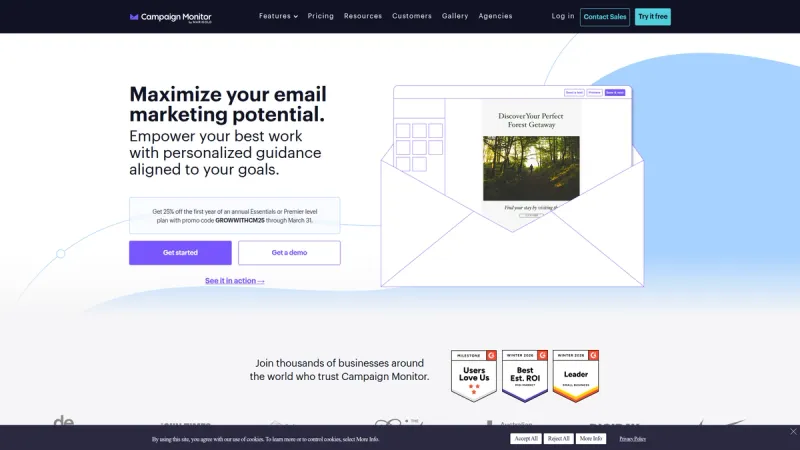
Why consider Campaign Monitor
Campaign Monitor excels at creating visually stunning emails with its drag-and-drop builder and extensive template library. It's particularly strong for businesses that need branded, professional-looking campaigns without requiring coding skills. Read my Campaign Monitor Review for a full breakdown.
Pros
- +Excellent visual email builder with advanced design tools
- +Strong template library and customization options
- +Good deliverability rates and detailed analytics
Cons
- −Higher pricing than many competitors
- −Limited automation features in lower tiers

ActiveCampaign
Growing businesses that need advanced marketing automation
Customer experience automation platform with advanced marketing workflows
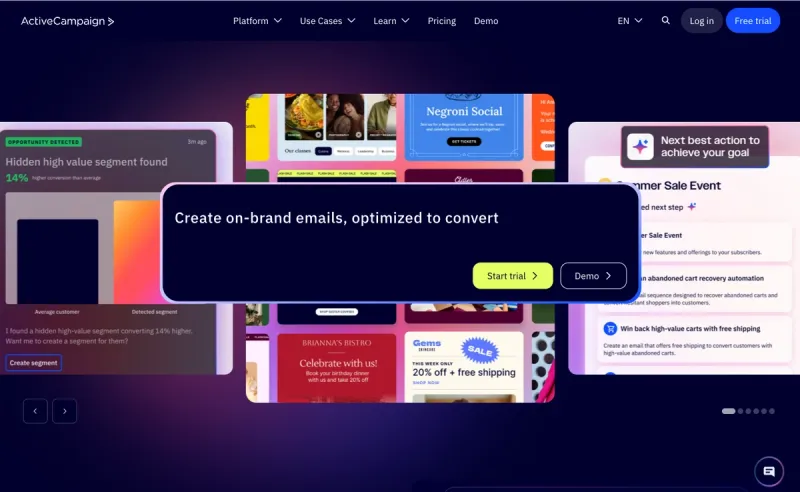
Why consider ActiveCampaign
ActiveCampaign combines email marketing with powerful CRM features and automation workflows. It's ideal for businesses ready to implement complex customer journeys and detailed behavioral tracking. Read my ActiveCampaign Review for more details.
Pros
- +Powerful automation and workflow capabilities
- +Built-in CRM with lead scoring
- +Advanced segmentation and personalization options
Cons
- −Steeper learning curve than simpler platforms
- −Can be overwhelming for basic email marketing needs

Brevo
Businesses needing multi-channel marketing beyond just email
Marketing platform with email, SMS, and chat capabilities
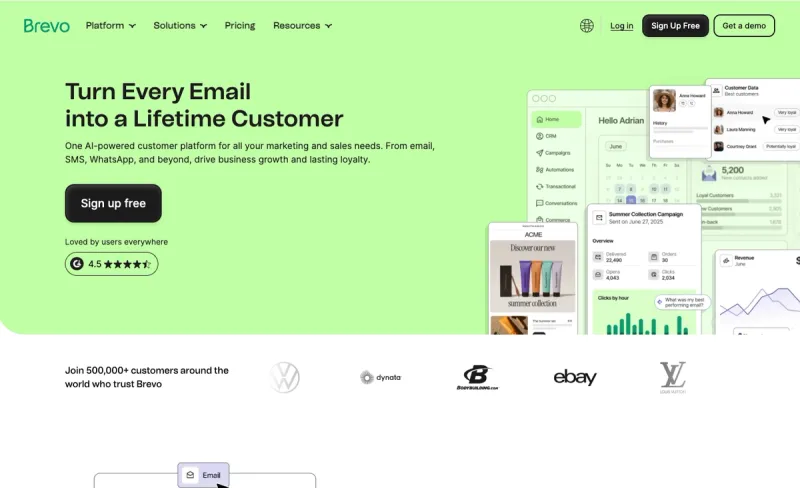
Why consider Brevo
Brevo offers email, SMS, and chat capabilities in one platform with a generous free plan. It's particularly valuable for businesses that want to coordinate messaging across multiple channels without managing separate tools. Check out my Brevo Review for a detailed look.
Pros
- +Multi-channel marketing including SMS and chat
- +Generous free plan with good features
- +Competitive pricing as you scale
Cons
- −Interface can feel cluttered with multiple channel options
- −Email design tools are less advanced than specialized platforms

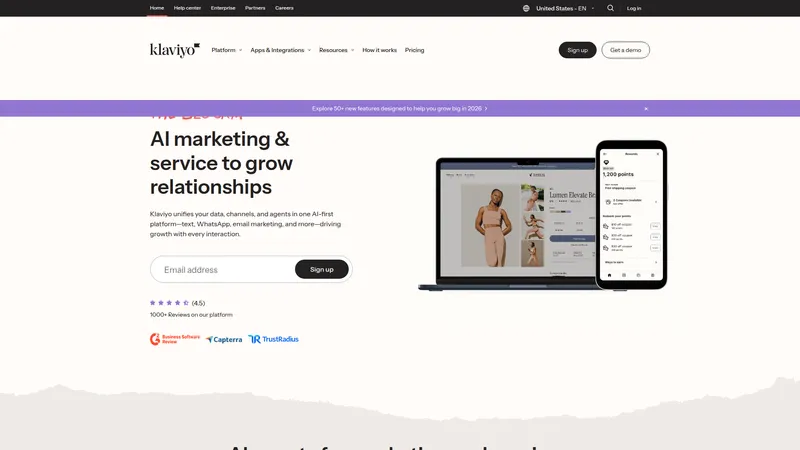
Klaviyo
Ecommerce businesses focused on personalized customer experiences
AI-powered B2C CRM platform unifying marketing, service, and analytics for ecommerce brands
Why consider Klaviyo
Klaviyo specializes in ecommerce marketing with AI-powered personalization and deep integration with shopping platforms. It excels at creating data-driven campaigns based on customer behavior and purchase history.
Pros
- +AI-powered personalization for ecommerce
- +Deep Shopify and ecommerce platform integrations
- +Advanced customer data and behavioral tracking
Cons
- −Pricing can get expensive for large contact lists
- −Primarily focused on ecommerce, less suitable for other industries

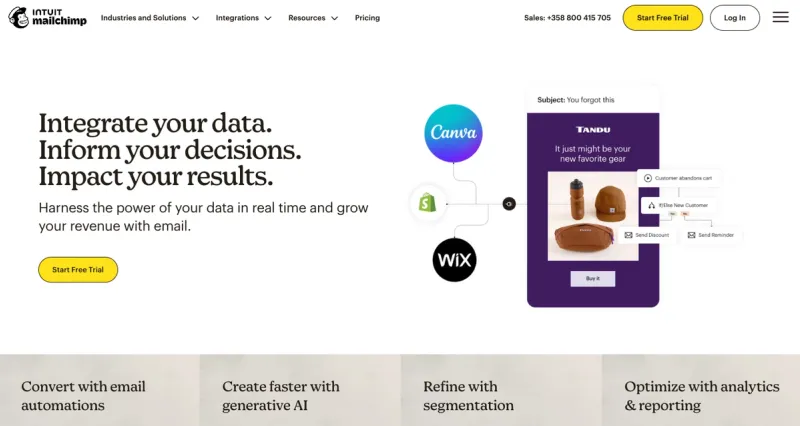
Mailchimp
Small businesses just starting with email marketing
All-in-one marketing platform with email, website, and CRM tools
Why consider Mailchimp
Mailchimp offers the most generous free plan in the industry and has an intuitive interface that beginners find easy to navigate. Its all-in-one approach includes basic website building and social media tools. See my Mailchimp Review for a complete breakdown.
Pros
- +Generous free plan with good feature set
- +User-friendly interface for beginners
- +Includes website builder and social media tools
Cons
- −Pricing increases quickly as you scale
- −Limited automation capabilities compared to specialized platforms

Constant Contact
Small businesses wanting comprehensive marketing support and guidance
Email marketing platform helping small businesses automate email, social, and text marketing with easy-to-use tools
Why consider Constant Contact
Constant Contact provides extensive customer support and marketing guidance alongside its email tools. It's particularly good for local businesses and nonprofits that need hands-on help with their marketing strategy.
Pros
- +Excellent customer support and marketing guidance
- +AI-powered email creation tools
- +Good for local businesses and nonprofits
Cons
- −Limited advanced automation features
- −Higher pricing for the features offered

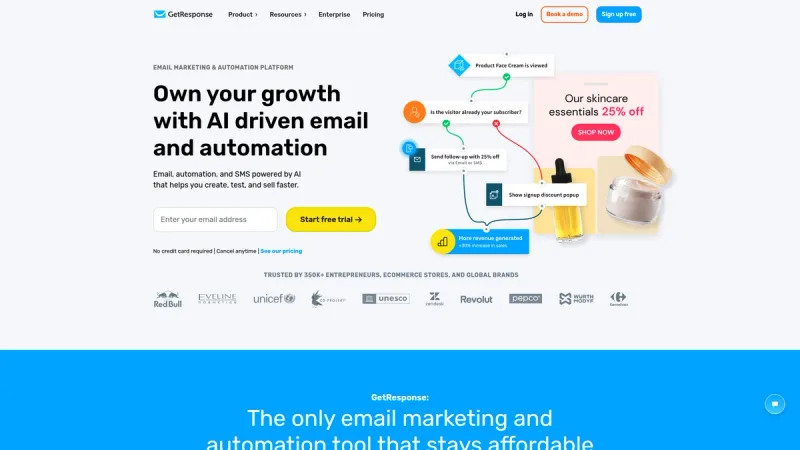
GetResponse
Content creators and businesses that frequently host webinars
Marketing platform with built-in webinar and landing page tools
Why consider GetResponse
GetResponse includes built-in webinar hosting and landing page creation tools alongside email marketing. It's perfect for businesses that use webinars as part of their marketing strategy and want everything integrated. Read my GetResponse Review for an in-depth look.
Pros
- +Built-in webinar hosting capabilities
- +Good landing page builder included
- +Solid automation features across all plans
Cons
- −Interface feels dated compared to newer platforms
- −Webinar features may go unused if not needed

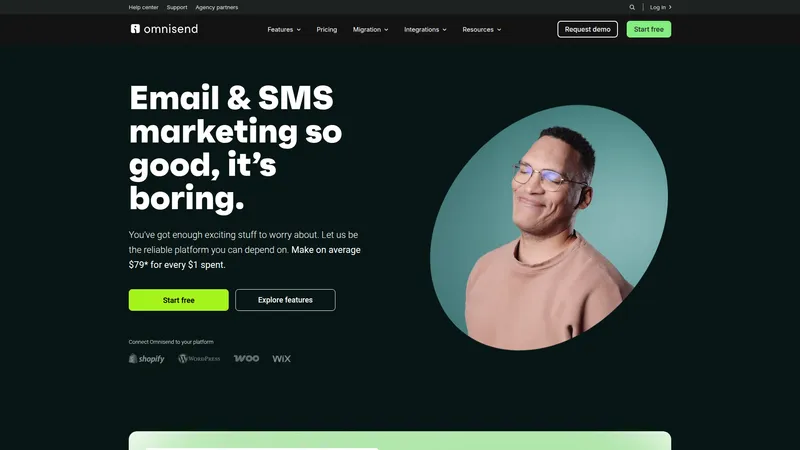
Omnisend
Ecommerce stores wanting to combine email and SMS marketing
Email and SMS marketing platform for ecommerce businesses to engage customers and boost sales across multiple channels
Why consider Omnisend
Omnisend focuses specifically on ecommerce with pre-built workflows for abandoned carts, welcome series, and post-purchase follow-ups. It seamlessly combines email and SMS in unified campaigns.
Pros
- +Specialized ecommerce automation workflows
- +Seamless email and SMS integration
- +Strong Shopify and WooCommerce integrations
Cons
- −Limited usefulness outside of ecommerce
- −SMS costs can add up quickly
Exclusive reader deal
30% off Omnisend for 3 months
Affiliate link. I may earn a commission at no extra cost to you.

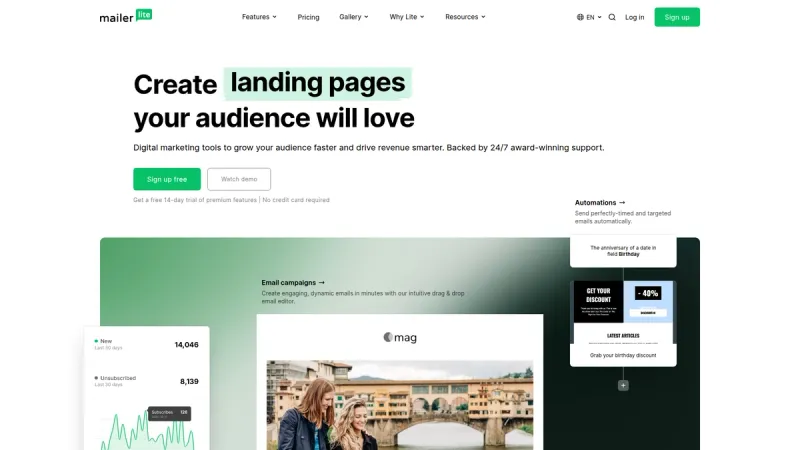
MailerLite
Budget-conscious users who want simplicity without sacrificing key features
Simple and affordable email marketing platform
Why consider MailerLite
MailerLite offers excellent value with a clean, intuitive interface and solid features at low prices. For most small to medium businesses, it delivers both simplicity and functionality. Read my MailerLite Review for a full breakdown.
Pros
- +Very affordable pricing with generous features
- +Clean, intuitive interface
- +Good automation capabilities for the price
Cons
- −Limited advanced features compared to premium platforms
- −Smaller template library than competitors

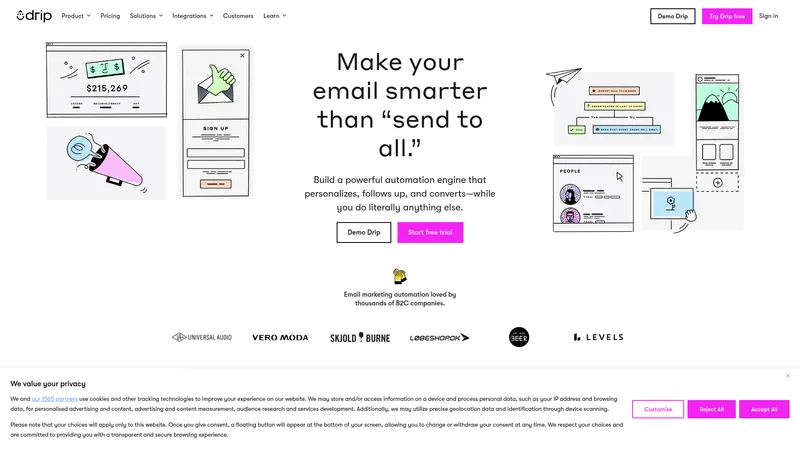
Drip
Advanced marketers who need ecommerce automation
Cookie consent and tracking management platform that helps websites manage privacy settings and user preferences
Why consider Drip
Drip provides powerful behavioral tracking and automation specifically designed for ecommerce businesses. It excels at creating complex customer journeys based on detailed shopping behavior and preferences.
Pros
- +Advanced behavioral tracking and automation
- +Ecommerce-focused features
- +Powerful segmentation capabilities
Cons
- −Steep learning curve for beginners
- −Higher pricing than general email platforms

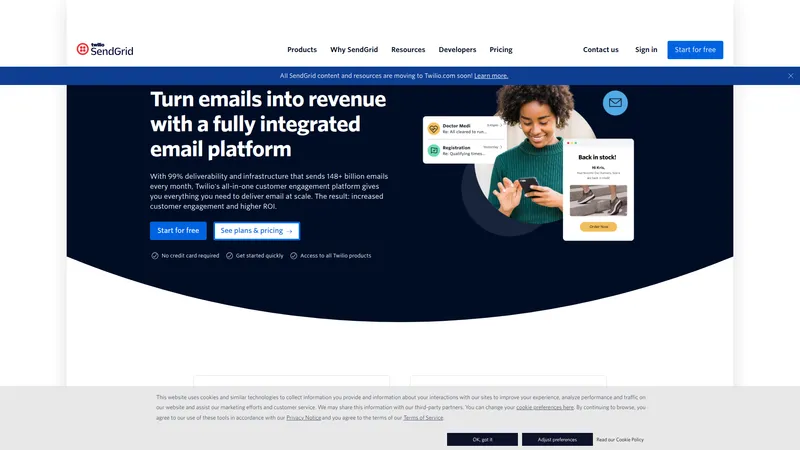
SendGrid
Developers and businesses with high-volume transactional email needs
Email API and marketing platform for developers and marketers to send, track, and optimize email communications at scale.
Why consider SendGrid
SendGrid excels at delivering transactional emails reliably at scale, with APIs for developers. It's the go-to choice for apps and websites that need to send confirmation emails, notifications, and other automated messages.
Pros
- +Excellent deliverability for transactional emails
- +API for developers
- +Scales easily for high-volume sending
Cons
- −Marketing email features are basic compared to dedicated platforms
- −Requires technical knowledge for advanced setup

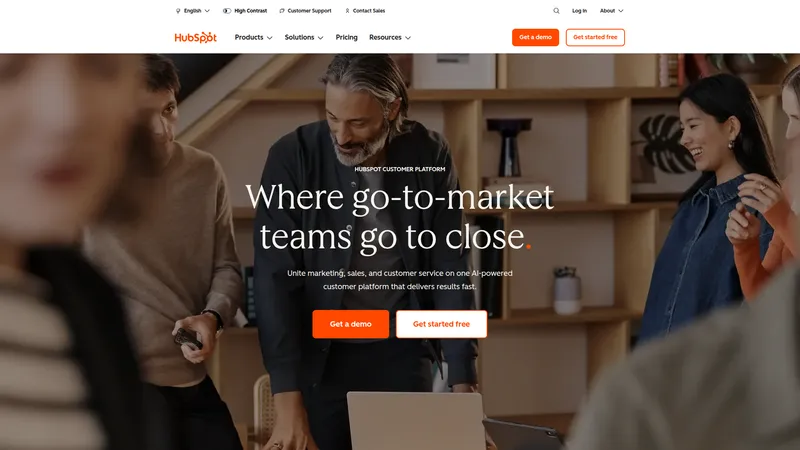
HubSpot
Growing businesses that want email marketing integrated with CRM and sales tools
An all-in-one CRM platform that unites marketing, sales, and customer service with AI-powered tools for business growth.
Why consider HubSpot
HubSpot's free CRM includes basic email marketing features, making it ideal for businesses that want their marketing and sales data in one place. The platform grows with you as your needs expand.
Pros
- +Free CRM integration with email marketing
- +All-in-one platform for marketing, sales, and service
- +Extensive third-party integrations
Cons
- −Advanced email features require expensive paid plans
- −Can be complex to set up and optimize fully
Price Chart
How Moosend compares on price
Of the 29 alternatives tracked, 3 start at a lower price than Moosend's $9/mo. 22 offer a free plan.


At Scale
Which stay cheaper as you grow?
Cheapest plan price at each contacts tier. Some tools that look cheap at 1K contacts get expensive fast.
| Tool | 1K | 5K | 10K |
|---|---|---|---|
| Moosend | $16/mo | $48/mo | $88/mo |
 Ghost Ghost | $18/mo | $18/mo | $18/mo |
 Buttondown Buttondown | — | $29/mo | $79/mo |
 Selzy Selzy | $10/mo | $30/mo | $60/mo |
 Zoho Campaigns Zoho Campaigns | €7/mo | €31/mo | €49/mo |
 MailerLite MailerLite | $15/mo | $39/mo | $73/mo |
 GetResponse GetResponse | €16/mo | €48/mo | €69/mo |
 Loops Loops | — | $49/mo | $99/mo |
 Flodesk Flodesk | $25/mo | $52/mo | $72/mo |
Checklist
What to look for in an alternative
Consider your specific needs first. If you're running an ecommerce store, prioritize platforms with strong Shopify integrations and abandoned cart recovery. For B2B companies, look for advanced lead scoring and CRM integration capabilities. Pricing structure matters too. Some platforms charge per contact while others use send-based pricing. Factor in your email volume and list growth projections.
Also evaluate the learning curve - some tools offer more power but require more setup time. For a broader look at the top options in this category, check my best email marketing software roundup.
FAQ
Frequently Asked Questions
Moosend focuses on affordability and ease of use, while competitors like ActiveCampaign offer more advanced automation features at higher prices. The choice depends on whether you need basic email marketing or complex multi-step workflows.
Mailchimp has the most generous free plan, allowing up to 500 contacts and 1,000 monthly sends. MailerLite and Brevo also offer competitive free tiers with good feature sets.
Pricing varies significantly. MailerLite and Brevo often cost less, while ActiveCampaign and Campaign Monitor typically cost more. The best value depends on which features you actually need.
Klaviyo and Omnisend are specifically designed for ecommerce, offering features like abandoned cart recovery and product recommendations. They integrate deeply with Shopify and other shopping platforms.
Most alternatives are designed for non-technical users. Mailchimp and Campaign Monitor are particularly beginner-friendly, while SendGrid requires more technical knowledge for setup.
Constant Contact is known for excellent customer support and marketing guidance. ActiveCampaign and Campaign Monitor also receive good ratings for their support quality.
Most email platforms offer import tools for contact lists and basic data. However, you'll likely need to recreate automation workflows and email templates in your new platform.
Still considering Moosend?
Try it free for 30 days before deciding.
More on Moosend



Joonas Rotko
Author & founder of That Marketing Buddy
I score marketing software for AI-stack fit (MCP, API, agent-readiness), backed by 10+ years in digital marketing. I track 32 tools so you can find the right fit.
This page may contain affiliate links. I earn a commission at no extra cost to you. This never influences the recommendations.