
Sales funnels turn casual website visitors into paying customers by guiding them through a strategic sequence of pages, emails, and offers. The right funnel software automates this entire process so you can focus on your product instead of manually chasing leads.
I compared 14 sales funnel platforms across different use cases, from simple landing page funnels for lead generation to complex multi-step sequences with upsells, downsells, and membership areas. This list includes dedicated funnel builders, landing page specialists, and niche tools for specific funnel types like WordPress and WooCommerce.
If email automation is your main priority rather than full funnel building, check my best email marketing software list. And if you need a platform that handles everything from funnels to CRM to course hosting, see my best all-in-one marketing software comparison.
If you have not built a funnel before, my complete guide to sales funnels and landing pages covers the funnel types, the anatomy of a page that converts, and the minimum viable funnel worth launching first.
This page may contain affiliate links.
Some links on this page are affiliate links, meaning I may earn a commission if you sign up (at no extra cost to you). This never influences my ratings or recommendations.
Overview
The landscape
I track 11 tools in this category. Prices range from $14.99/mo (EngageBay) to $299/mo (Keap). The median starting price is $59/mo, so anything below that is a good deal.
6 tools offer free plans: EngageBay, Systeme.io, HubSpot, Builderall, and 2 more.
This roundup covers the 15 I consider worth a serious look. Each one is ranked with real pricing data, aggregated user ratings, and my honest take.
Audience
Who is this guide for?
- ✓Marketing agencies managing multiple client campaigns
- ✓E-commerce businesses wanting to optimize their customer journey
- ✓Course creators and coaches selling digital products
- ✓Small business owners looking to automate their sales process
Which one is right for you
One tool leads every kind of buyer here
Unusually, the same tool tops Sales Funnel for all four. I ranked every tool here against each buyer separately and it still came out first each time.
Agency · Consultant · Solo builder, either kind
Ranked first for all four

from $99/mo (annual $79/mo, ~20% off; promo $49/mo first 3 months)
Conversion optimization tools
What to Look for in Sales Funnel Software
The sales funnel software market is crowded, and most tools advertise the same features. Here is what actually matters when choosing one.
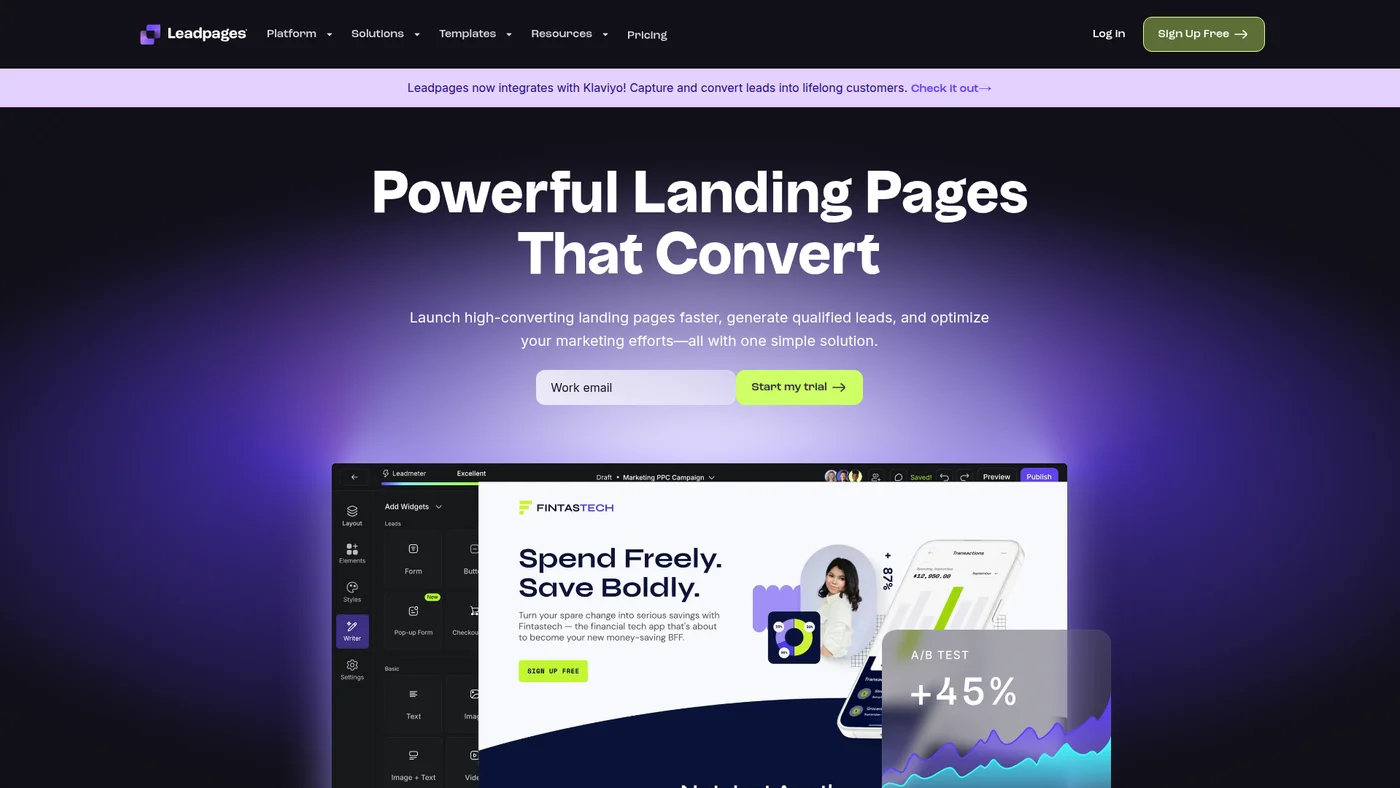
Page builder quality separates good tools from frustrating ones. You will spend hours in the editor, so drag-and-drop responsiveness, mobile preview accuracy, and template variety matter more than feature count. ClickFunnels and Leadpages have the most polished editors. Systeme.io and GetResponse are solid but less refined.
Funnel type support varies widely. Some tools only handle simple opt-in funnels (landing page plus thank you page). Others support webinar funnels, product launch sequences, membership funnels, and complex checkout flows with order bumps and upsells. Know what funnel types your business needs before committing. Check the ClickFunnels pricing breakdown to see what each tier includes.
Built-in email versus third-party integration is a major decision. All-in-one platforms like Kartra, GetResponse, and Systeme.io include email marketing. Dedicated funnel builders like ClickFunnels and Leadpages require you to connect a separate email tool. Built-in email simplifies your stack but may limit automation depth compared to a dedicated platform like ActiveCampaign.
Payment processing and checkout features directly impact revenue. Look for one-click upsells, order bumps, coupon support, and multiple payment gateway integrations. The difference between a basic checkout and an optimized one with upsells can be 20-40% more revenue per customer.
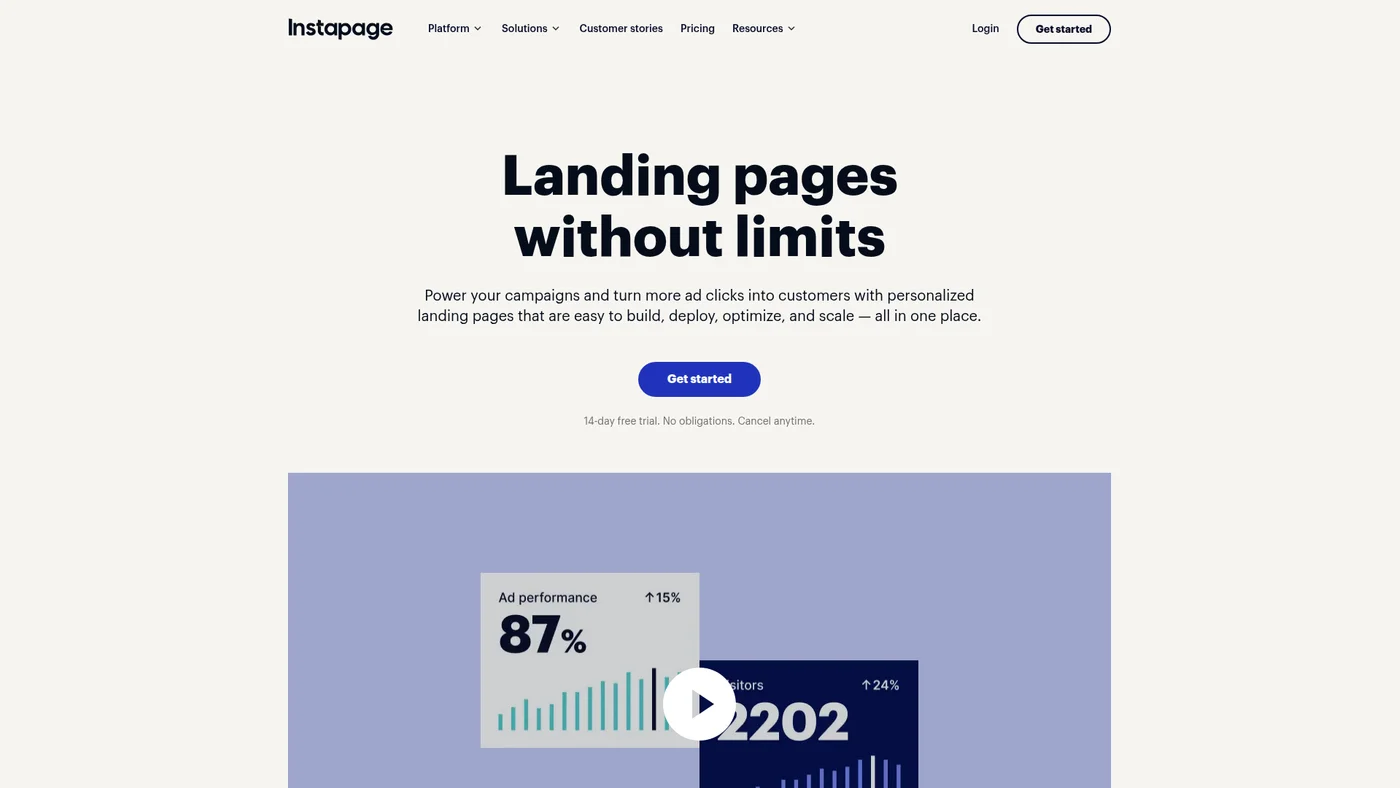
Analytics and split testing are how you improve over time. Every funnel builder claims to have analytics, but the depth varies. Instapage leads in A/B testing sophistication. Most others offer basic page-level split tests. Make sure the tool tracks the metrics that matter to your business.
Quick verdict
ClickFunnels is the industry standard for sales funnel building. Their templates are battle-tested across millions in revenue, and the editor handles everything from opt-in pages to complex checkout flows.
For a more affordable option, Systeme.io gives you funnels, email marketing, and course hosting on a generous free plan. If you want funnels combined with powerful email automation, GetResponse is the best value.
And for agencies managing multiple clients, GoHighLevel offers white-label funnels, CRM, and automation in one platform.
Overview
Quick comparison
| # | Tool | Price |
|---|---|---|
| 1 | $97/mo | |
| 2 | $59/mo | |
| 3 | $17/mo | |
| 4 | $59/mo | |
| 5 | $97/mo |
Show all 15 tools
| 6 | $19/mo | |
| 7 | $19.90/mo | |
| 8 | $99/mo | |
| 9 | $99/mo | |
| 10 | $29/mo | |
| 11 | $129/mo | |
| 12 | Check website for pricing | |
| 13 | From $19/month | |
| 14 | From $99/year | |
| 15 | Custom |
Rankings
My Top Picks

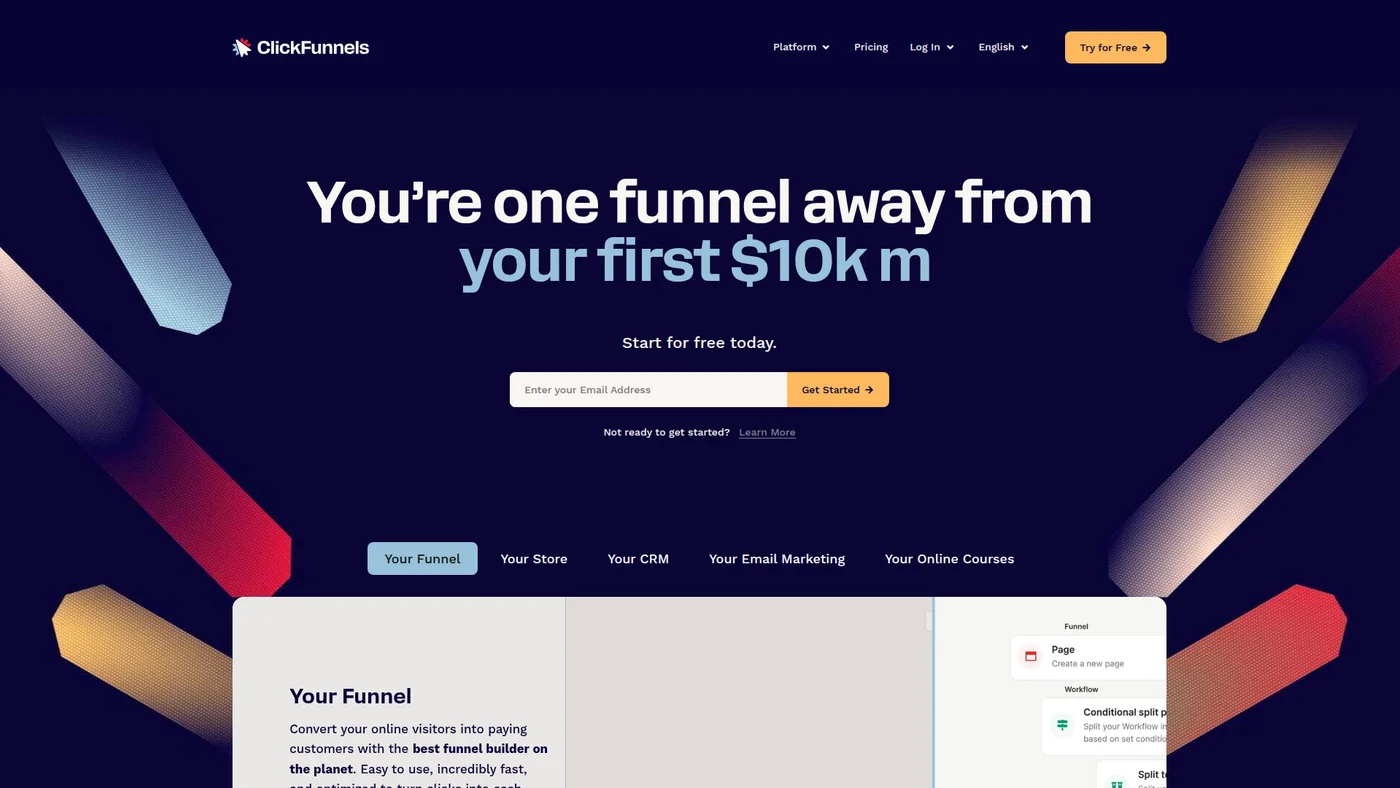
Clickfunnels
All-in-one marketing platform for building sales funnels, hosting courses, and managing customers
Key Features
Strong agent fit with an official MCP server in technical preview. ClickFunnels exposes a Labs MCP endpoint (mcp.myclickfunnels.com) with roughly 100 tools across contacts, orders, products, courses, and webhooks, backed by a published OpenAPI spec, an llms.txt index, webhooks, and a Node SDK. The caveats are real: it is beta and currently Claude Desktop only, so treat it as early but legitimate.
✓Pros
- Battle-tested templates that convert
- No contact limits
- Strong community and training
✗Cons
- Higher starting price
- Learning curve for beginners

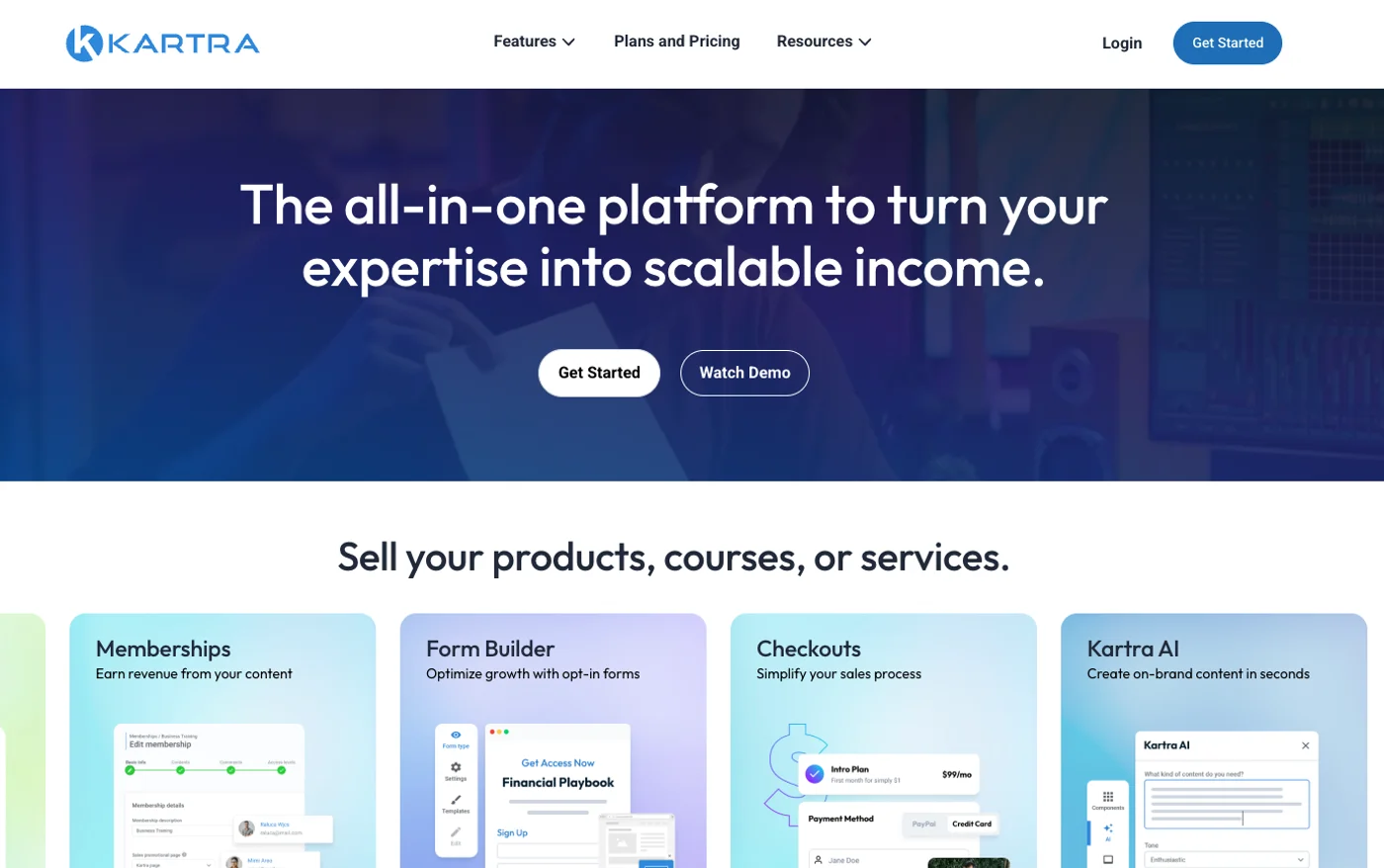
Kartra
True all-in-one marketing platform with advanced funnels, email automation, and membership hosting
Key Features
Skip for agent workflows. Kartra has a documented public API, but lacks MCP support, OpenAPI specs, webhooks, and structured outputs - all critical for Claude/Cursor integration. Without these primitives, you'll need heavy custom glue code to make it talk to modern AI agents.
✓Pros
- Agency-focused features
- Comprehensive platform
- White-label options
✗Cons
- Higher price point
- Overkill for simple businesses

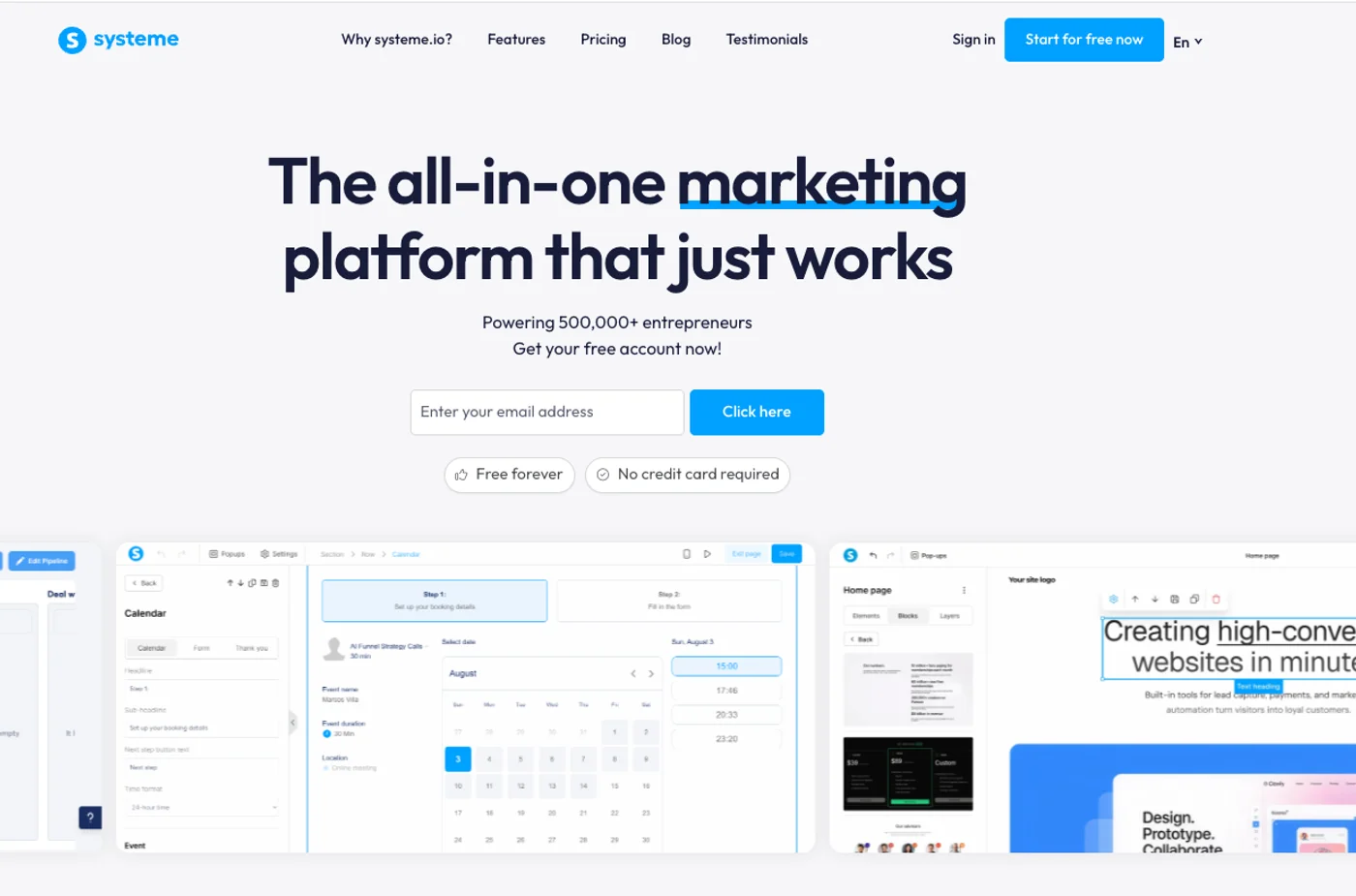
Systeme.io
Complete marketing platform with sales funnels, email marketing, courses, and more at budget-friendly prices
Key Features
Official MCP verified 2026-07-08: mcp.systeme.io/mcp, API-key auth (X-MCP-Key header or mcpKey param, 90-day keys, max 2), FREE PLAN, ChatGPT+Claude, contacts/tags/newsletters/opt-in-funnels write tools, rate-limited. OAuth planned. 4->7 Joonas approved.
✓Pros
- Free plan with real value
- Very affordable paid plans
- Easy to use interface
✗Cons
- Fewer advanced features
- Limited template selection

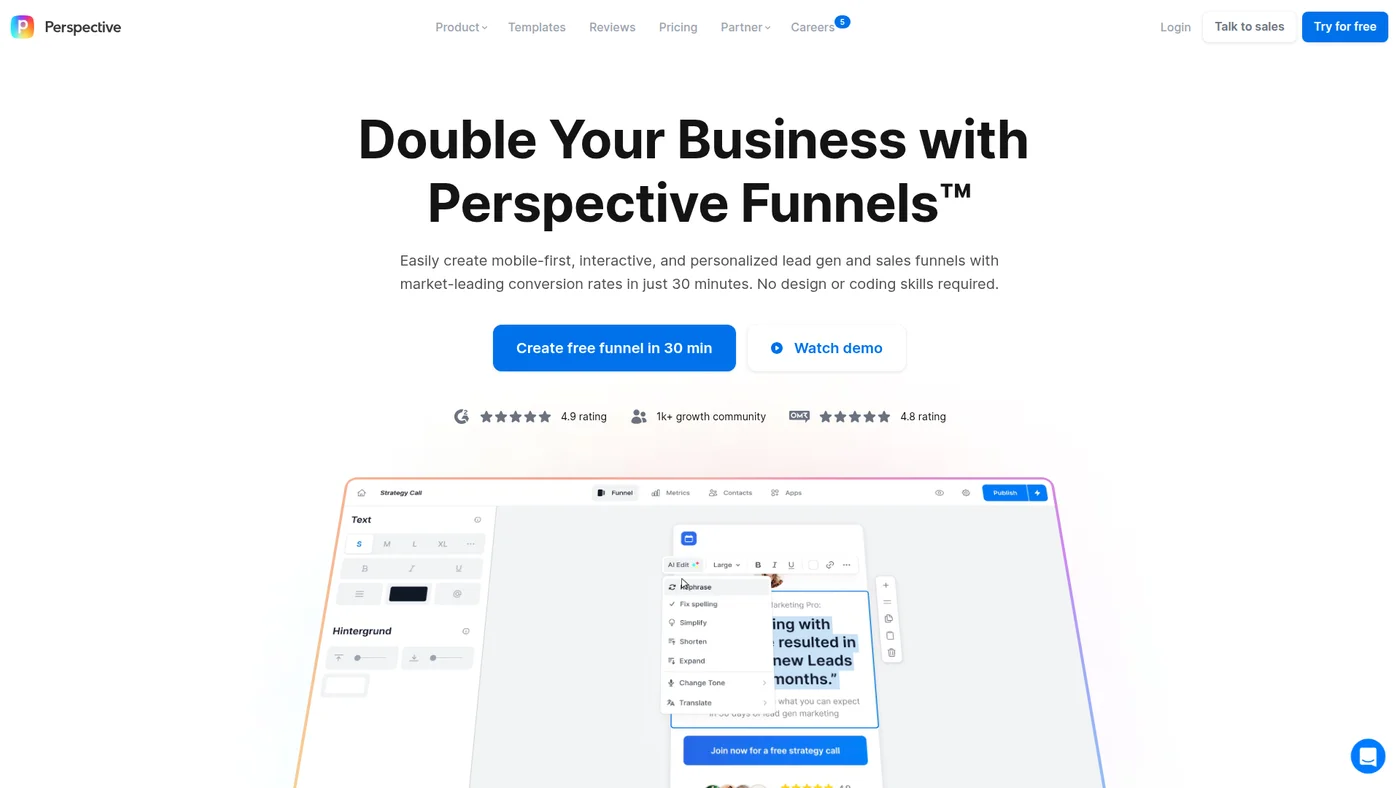
Perspective Funnels
Mobile-first funnel builder with interactive features and high conversion templates for modern marketers.
Key Features
Not agent-ready. Perspective Funnels publishes API docs but lacks an MCP server, OpenAPI spec, and any official LLM integrations, making it difficult to wire into Claude or Cursor workflows without custom bridge code. The absence of webhooks and structured outputs further limits real-time automation potential.
✓Pros
- Optimized for mobile users
- High conversion claims
- Modern interface
✗Cons
- Newer platform
- Limited track record

GoHighLevel
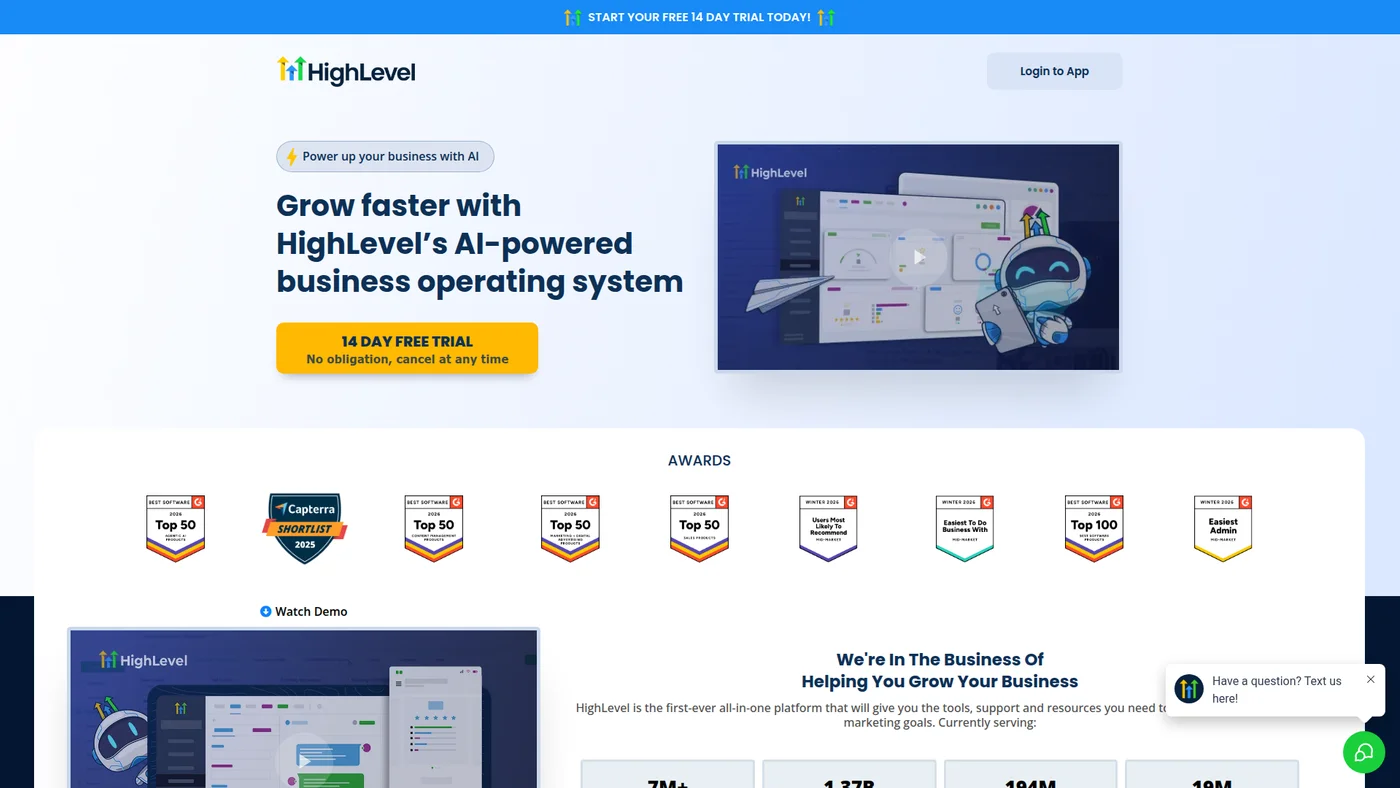
All-in-one CRM and marketing platform designed for agencies. Replaces multiple tools but has a steep learning curve.
Key Features
Strong agent fit with an official MCP server. HighLevel runs a hosted MCP server on its own marketplace domain exposing 36 tools across contacts, conversations, opportunities, payments, and calendars, authenticated with private integration tokens. Paired with published OpenAPI specs, that gives agents a documented, first-party path to automate an account. The main gap is structured-output reliability, so expect some custom error handling.
✓Pros
- Complete agency toolkit in one platform
- White-label options for client reselling
- Unlimited sub-accounts on agency plans
✗Cons
- Steep learning curve due to feature depth
- Interface can feel overwhelming initially

GetResponse
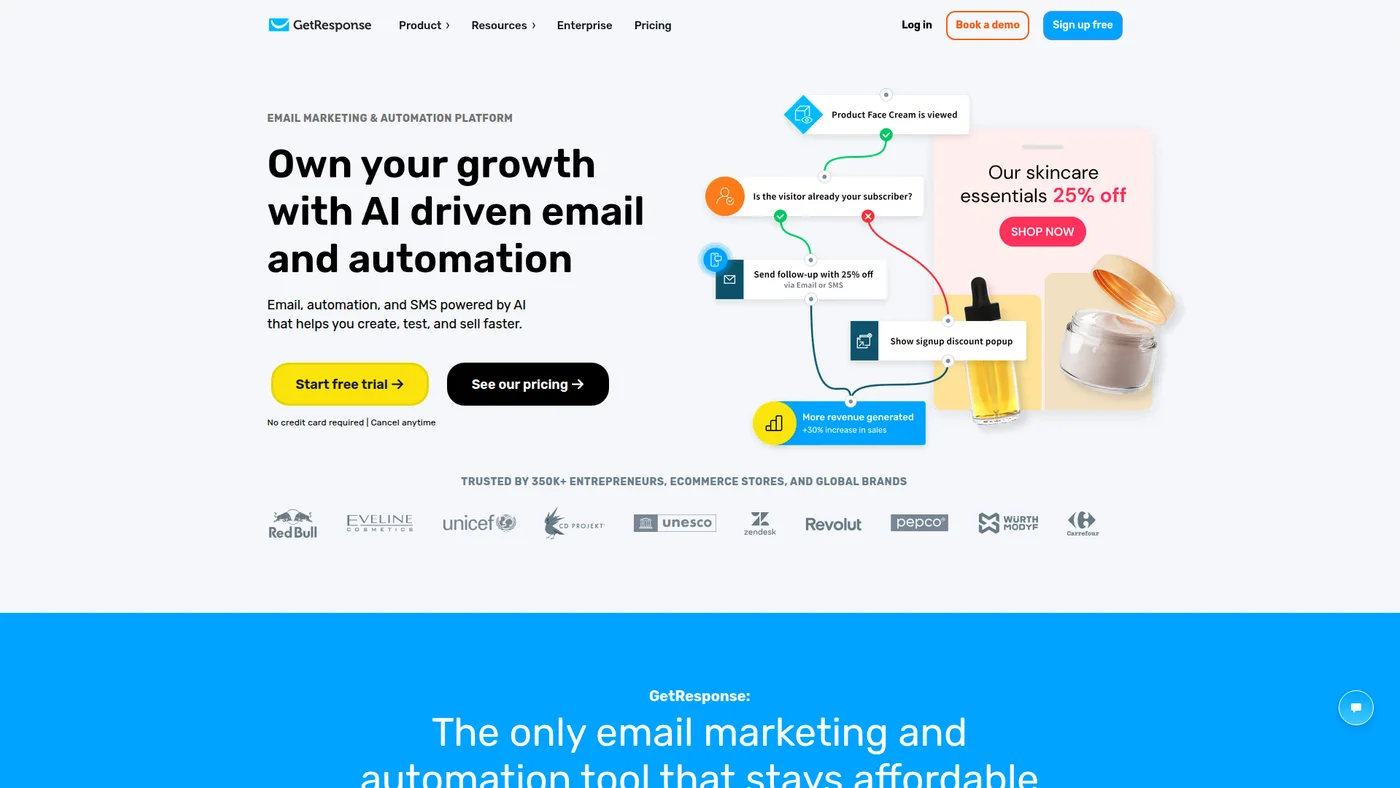
AI-powered email marketing platform with automation, landing pages, and webinars starting at $19/month
Key Features
Limited agent-fit without official backing. GetResponse has a community MCP server and documented public API, but lacks OpenAPI specs, SDKs, and native integrations with Claude or ChatGPT. The missing structured outputs and webhook support make it harder to build reliable agent workflows compared to platforms with first-party MCP implementations.
✓Pros
- True all-in-one platform
- Excellent webinar features
- Visual funnel tracking
✗Cons
- Pricing increases with contact growth
- Complex interface for beginners

Onepage
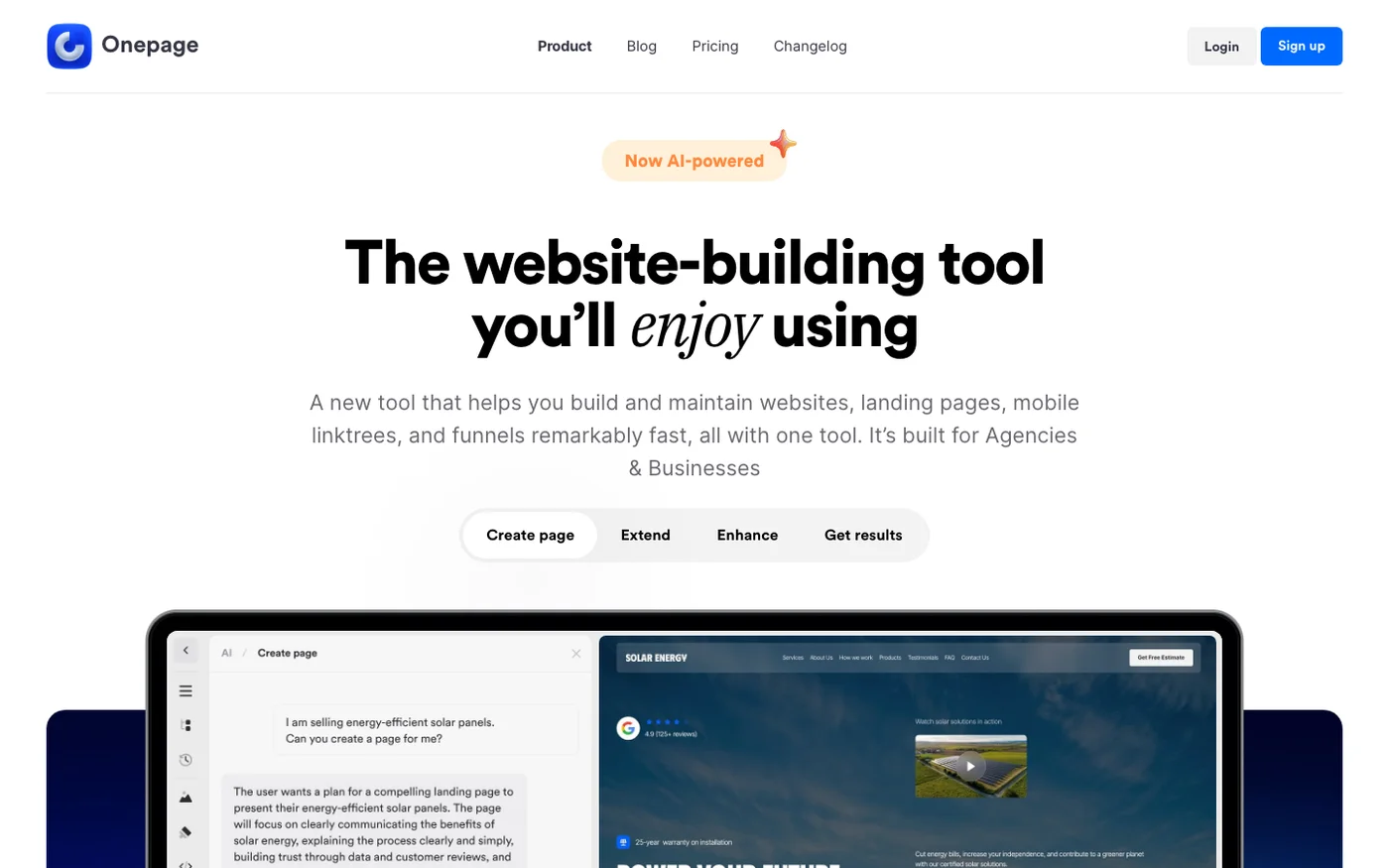
AI landing page builder with EU pricing and MCP on every tier, though check what it generates before publishing.
Key Features
Onepage ships an MCP server included on every plan, free included (limited on free). Their changelog entry for the Onepage Agent says: MCP support - Connect Claude, Cursor, Codex, and more to build in your projects with the same context the built-in Agent has. The pricing page banner advertises it as included in all plans. No public MCP server URL or setup docs found on the site, so this looks like a client-side/stdio connection configured from inside the app rather than a hosted remote endpoint. No public REST API documented.
✓Pros
- Fastest brief-to-page of anything in this list: six sections in under eight minutes
- Euro pricing from €19.90/mo undercuts ClickFunnels heavily on the page-building side
- MCP support means an AI agent can build in your projects directly
✗Cons
- Funnels are not in the main licence: the add-on starts at €39.90/mo on top of your plan
- AI output needs a review pass before it goes live, especially the lead-capture sections
- Built for pages first: funnel steps and quizzes only arrive with the paid add-on

Leadpages
Drag-and-drop landing page builder with 200+ templates and strong conversion optimization tools
Key Features
Strong agent-fit for Claude workflows. Leadpages has an official MCP server and documented public API with OpenAPI spec, enabling direct integration with Claude and ChatGPT. Missing webhooks and structured outputs limits real-time automation and data parsing capabilities.
✓Pros
- Proven conversion templates
- No lead limits
- Easy to use
✗Cons
- Limited email automation
- Fewer funnel building features

Instapage
Drag-and-drop landing page builder with A/B testing and personalization for marketers
Key Features
Not recommended for agent workflows. Instapage publishes API docs and an OpenAPI spec, but lacks MCP support, SDKs, and structured output capabilities that agents need for reliable integration. Without webhooks or native LLM connections, you'd be building custom bridges to make it work in Claude or Cursor.
✓Pros
- Testing features
- Professional collaboration tools
- High-quality templates
✗Cons
- Expensive for small businesses
- Focused mainly on landing pages

Landingi
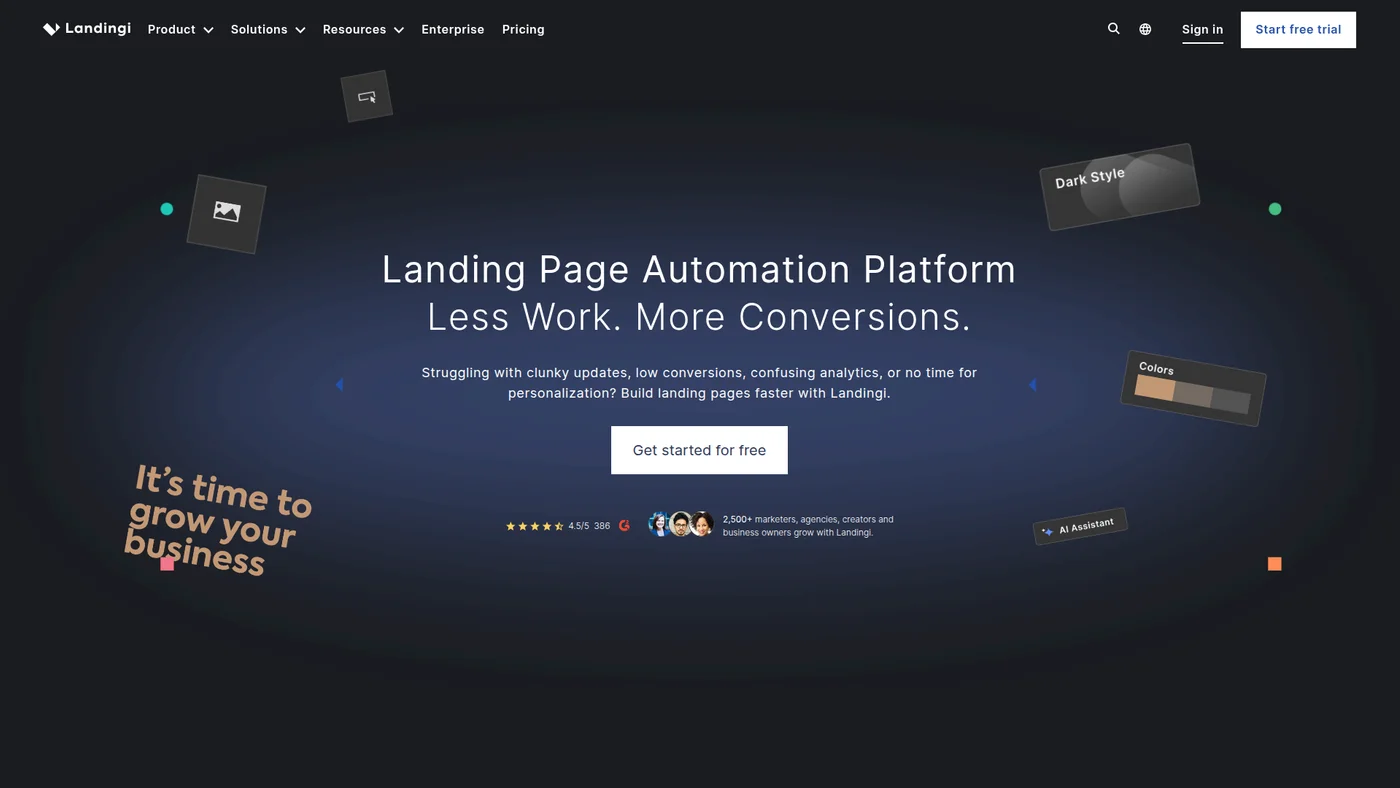
Landing page builder with AI assistance, A/B testing, and 170+ integrations for marketers
Key Features
Landingi has a real API (OAuth 2.0 authorization-code flow) for managing landing pages, forms and leads, but the documentation sits BEHIND the platform - credentials and docs come from account settings and it is positioned as an Agency-plan option. There is no public developer portal to link to, so apiDocsUrl is empty by design. No official vendor MCP server: a Zapier bridge exists at zapier.com/mcp/landingi, but a third-party bridge is not a vendor server.
✓Pros
- Easy to use
- Good template variety
- Affordable pricing
✗Cons
- Limited email marketing
- Basic automation features

LanderLab
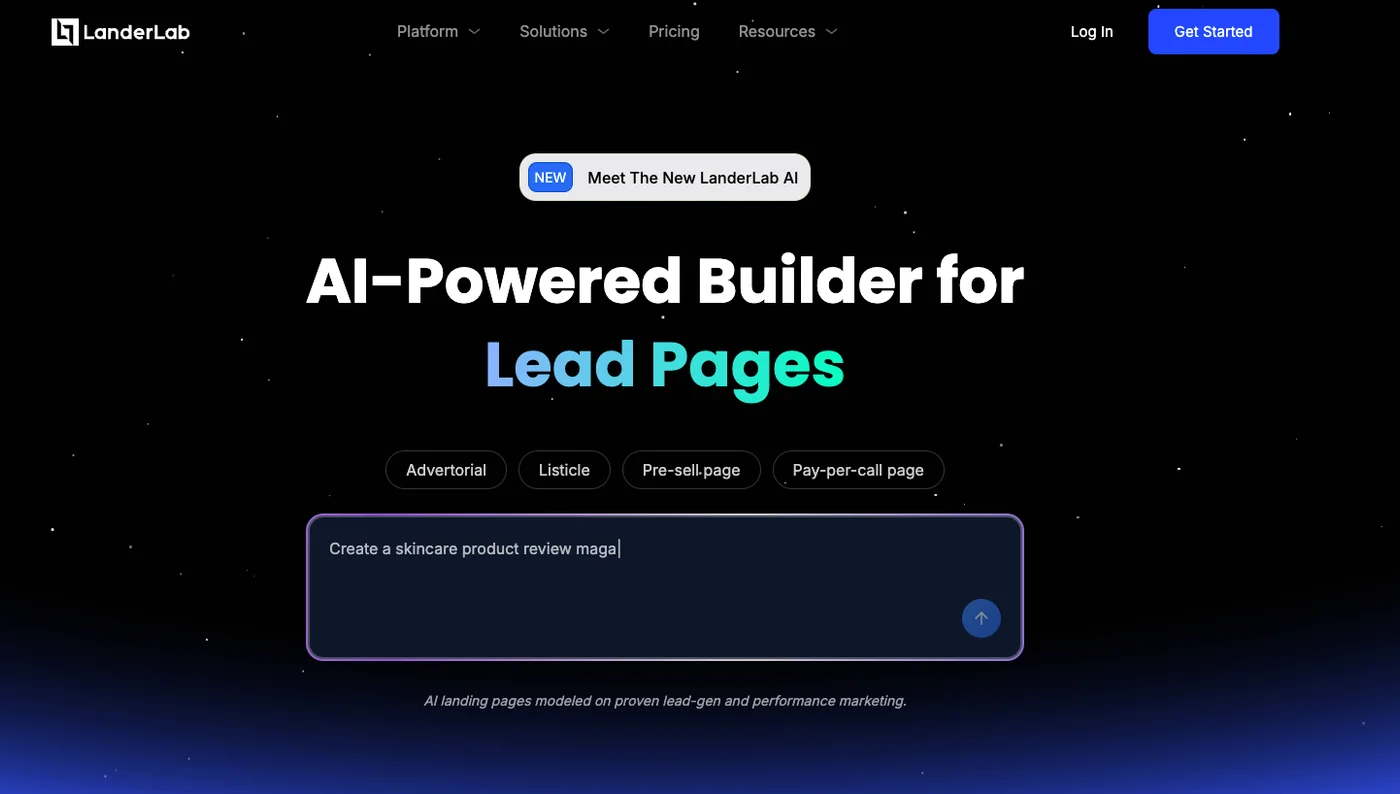
AI-powered landing page builder specialized for performance marketing with proven templates and native integrations
Key Features
LanderLab advertises an official MCP server on its own homepage ("Run LanderLab from Claude, ChatGPT & more"). martech-db recorded hasMcpServer=false, which was wrong. The endpoint URL is not published on any public page (landerlab.io/mcp-server 404s), so mcpServerUrl is deliberately empty rather than guessed. landerlab.io/api also 404s, so the public API is unconfirmed - do not claim a REST API in prose.
✓Pros
- Lightning-fast page load times
- Easy to import and modify existing pages
- Great value for high-volume testing
✗Cons
- Not a full funnel builder (landing pages only)
- Less template variety than competitors

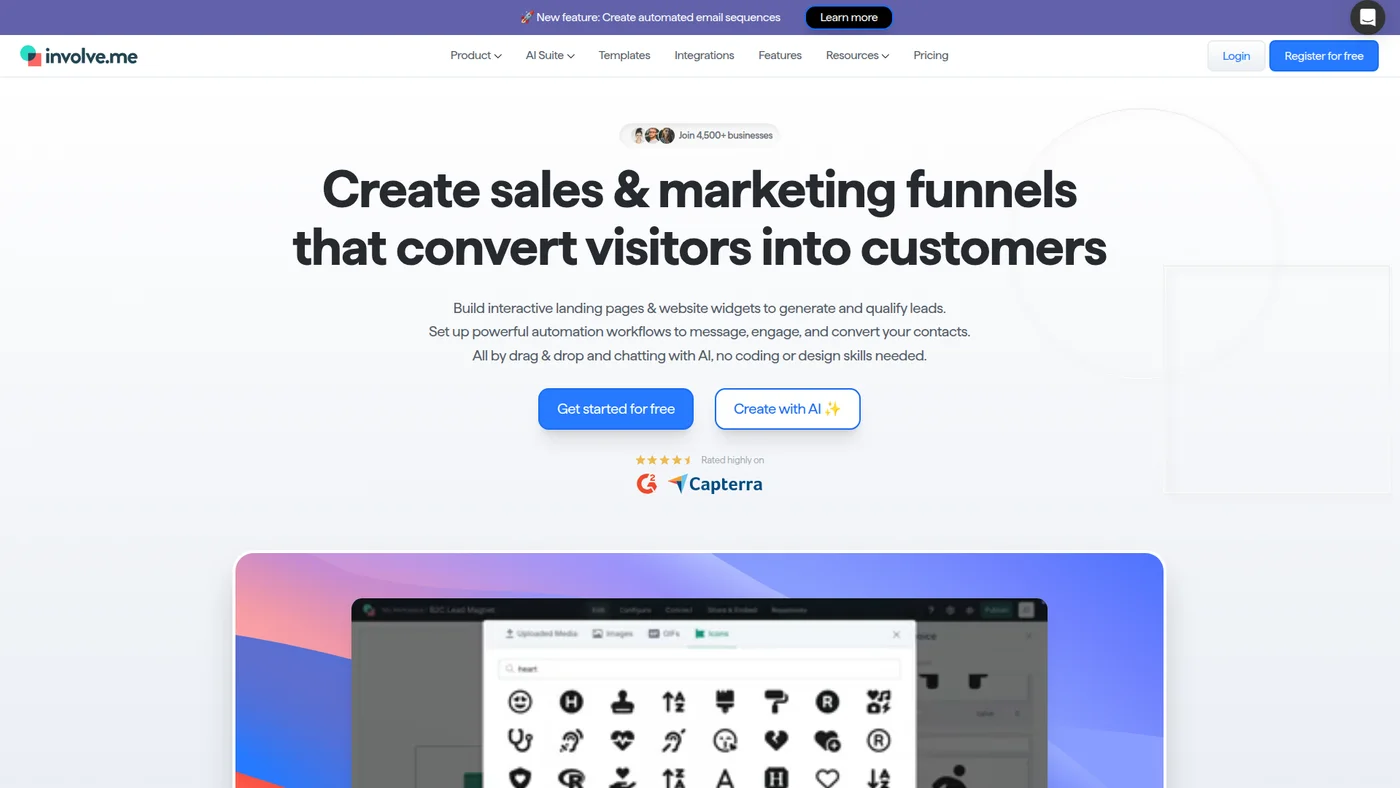
Involve.me
A drag-and-drop funnel builder that creates interactive landing pages, quizzes, and forms to convert visitors into qualified leads.
Key Features
✓Pros
- Highly personalized experiences
- Better engagement than static funnels
- Comprehensive analytics
✗Cons
- More complex to set up
- Requires strategic planning

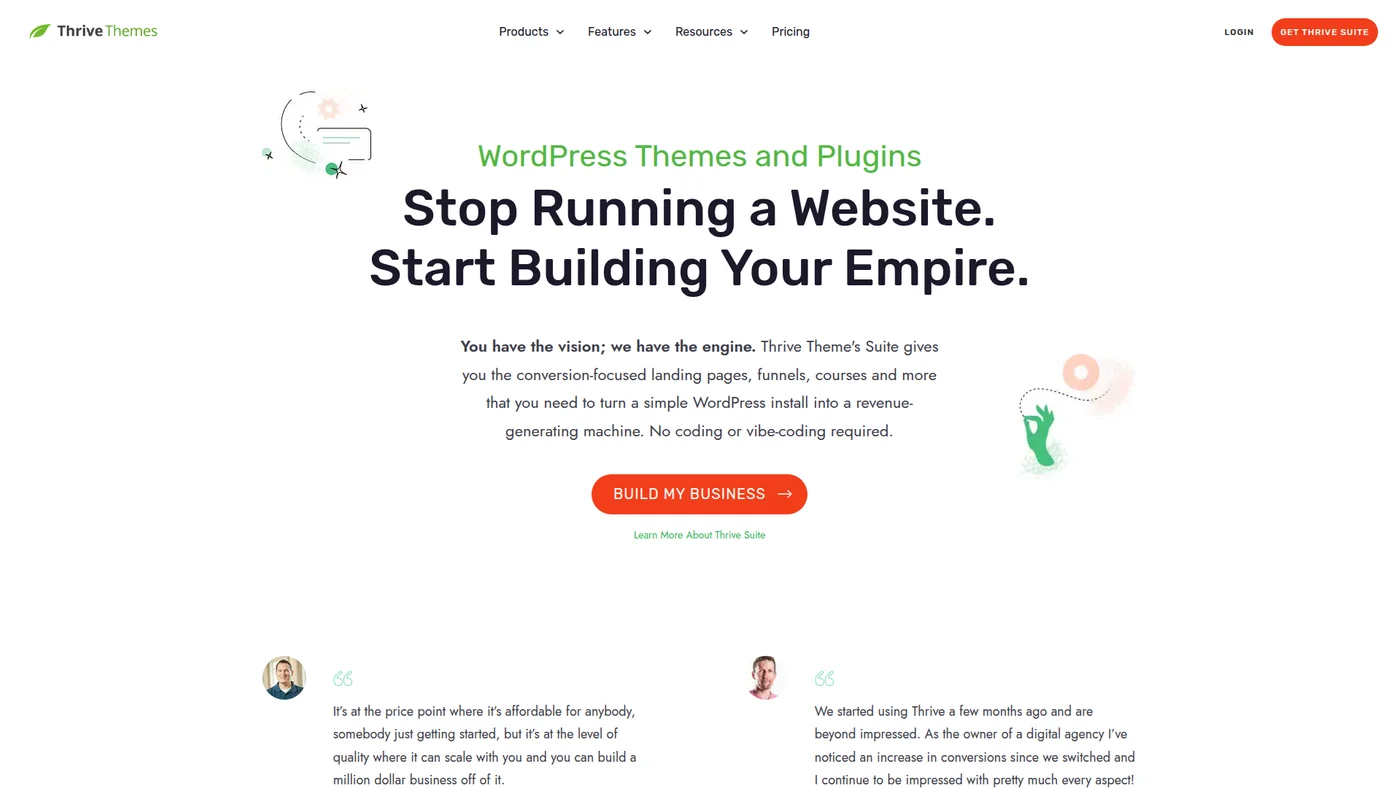
Thrive Suite
WordPress-focused conversion toolkit with landing pages and sales funnel tools.
Key Features
✓Pros
- Great value pricing
- WordPress native
- No monthly fees option
✗Cons
- WordPress only
- Requires technical knowledge

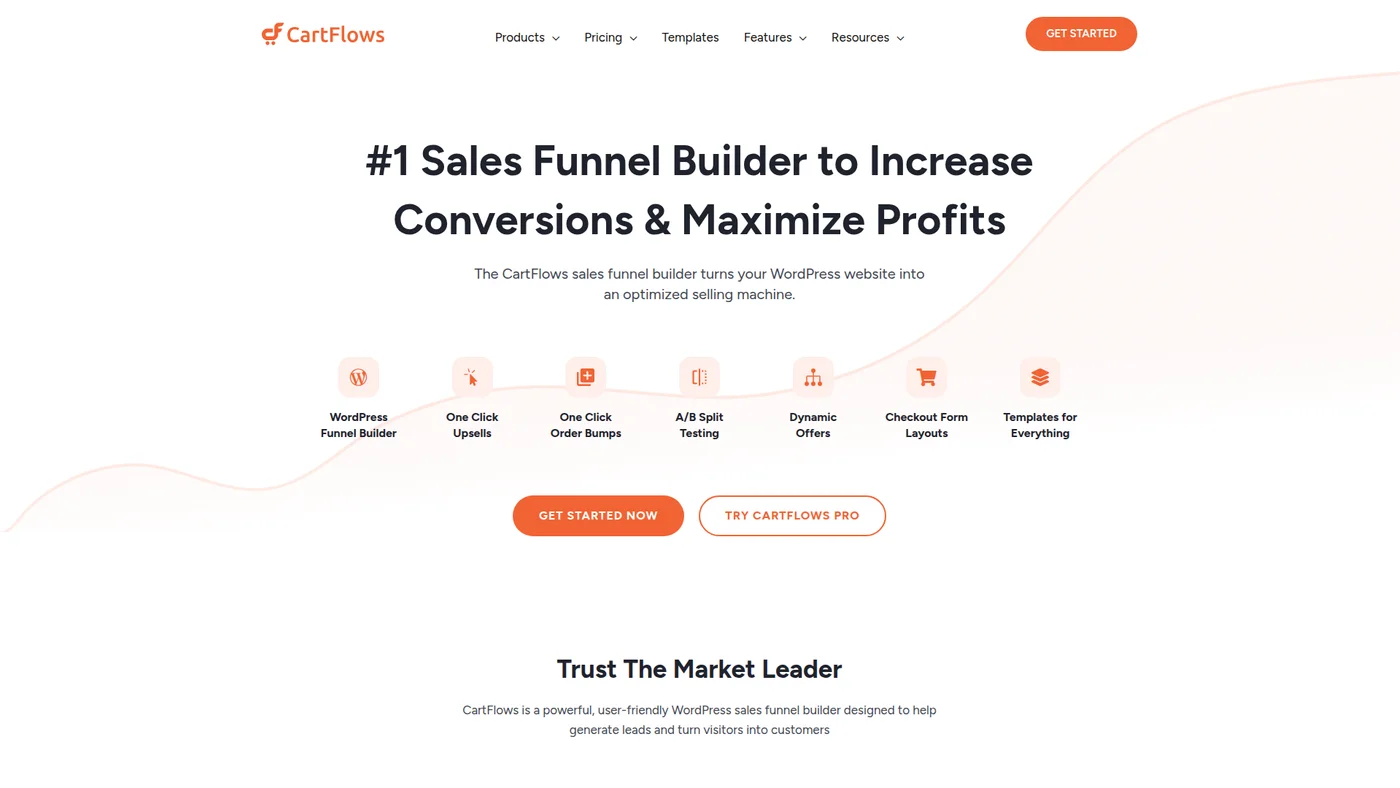
CartFlows
WooCommerce-specific sales funnel plugin for WordPress e-commerce stores.
Key Features
✓Pros
- Perfect WooCommerce integration
- Proven e-commerce features
- Good documentation
✗Cons
- WooCommerce only
- Requires WordPress knowledge

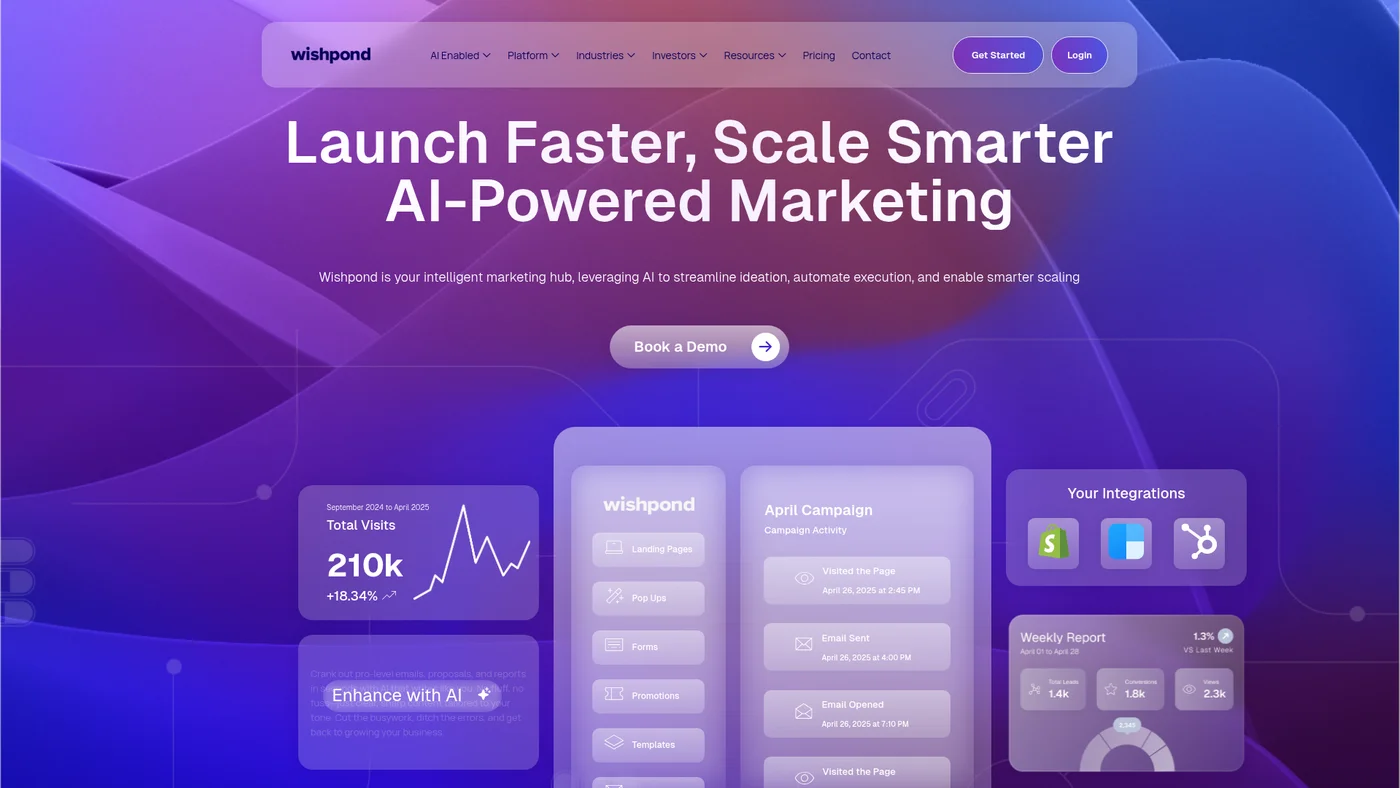
Wishpond
All-in-one marketing platform with landing pages, email marketing, and lead generation tools
Key Features
Skip for agent workflows. Wishpond has public API docs but no MCP server, OpenAPI spec, or SDKs, leaving little for Claude or Cursor to hook into. The lack of webhooks and structured outputs makes real-time automation and reliable data parsing difficult.
✓Pros
- Beautiful templates
- Easy customization
- Good value pricing
✗Cons
- Limited advanced features
- Smaller community
Price landscape
How prices compare
Starting prices across all 11 tools in this category.


At scale
How prices change as you grow
Pricing at 1K, 5K, and 10K contacts for tools reviewed in this guide.
| Tool | 1K | 5K | 10K |
|---|
Methodology
How I chose these
A funnel has to do three things end to end: build the pages, take the payment, and follow up automatically. Systeme.io and Onepage are the two here I use myself.
For the rest I compared documented editor capabilities and template libraries, what each platform automates after the sale, transaction fees and payment-processor support, integration options, and the real cost at a small business's volume. Tools that only build a page, with no checkout or follow-up behind it, are in the landing page builder roundup instead.
When to Switch or Upgrade Your Funnel Software
If your current setup works and converts, do not switch just because a competitor released a flashy new feature. But there are clear signals that your funnel tool is holding you back.
Hitting page or funnel limits is the most obvious trigger. If you are on a starter plan and constantly deleting old funnels to make room for new ones, upgrading or switching saves time and lets you keep your testing history intact.
Checkout limitations cost you money directly. If your tool does not support one-click upsells, order bumps, or A/B testing on checkout pages, you are likely leaving 20-30% of potential revenue on the table. This is the strongest ROI case for upgrading.
Outgrowing your email integration is common. If you started with a simple funnel builder plus basic email tool and now need complex automation sequences, conditional logic, or lead scoring, consider either upgrading to an all-in-one platform or connecting a dedicated automation tool like ActiveCampaign.
Slow page load times hurt conversions. If your funnel pages take more than 3 seconds to load, you are losing visitors before they even see your offer. Some builders generate heavier pages than others. Test your funnel speed regularly.
For detailed pricing comparisons to plan your upgrade, check the guides for ClickFunnels, Kartra, GetResponse, and Systeme.io. For the full picture of all-in-one options, see my best all-in-one marketing software comparison.
FAQ
Frequently Asked Questions
Sales funnel software helps you build a sequence of pages and automated steps that guide visitors from initial interest to purchase. A typical funnel includes a landing page, an opt-in form, email follow-ups, a sales page, and a checkout page. The software handles page building, email automation, payment processing, and analytics so you can optimize each step of the customer journey.
Systeme.io offers a useful free plan. Most paid funnel builders start at $19-49 per month for basic plans. Mid-tier plans with more funnels and features run $79-149 per month. Enterprise options like ClickFunnels Platinum and Kartra Silver cost $149-299 per month. Check the ClickFunnels pricing guide and Kartra pricing guide for detailed breakdowns at each tier.
No. Every tool on this list uses drag-and-drop editors that require zero coding. Leadpages and Systeme.io are especially beginner-friendly. More advanced platforms like Kartra and ClickFunnels have steeper learning curves but still do not require any coding knowledge.
A landing page builder creates individual standalone pages. Sales funnel software connects multiple pages into a sequence with automation between them, including email follow-ups, conditional redirects, upsells, and payment processing. Tools like Leadpages and Landingi focus on landing pages. ClickFunnels and Kartra handle the full funnel workflow.
Systeme.io is the best starting point because it is free, includes all essential features, and has a simple interface. GetResponse is another good beginner option since it combines funnels with email marketing in one platform, reducing the number of tools you need to learn.
Yes. ClickFunnels and Kartra both handle product sales with checkout pages, order bumps, and upsells. For WooCommerce stores specifically, CartFlows integrates directly with your existing setup. If your main need is email-driven ecommerce marketing rather than funnel pages, check my best email marketing software list for platforms with strong ecommerce features.
All-in-one platforms like Kartra and Systeme.io simplify your workflow and cost less overall. Separate tools give you best-in-class performance for each function. Start with an all-in-one if you are new, then consider specialized tools as you scale and identify bottlenecks. See my best all-in-one marketing software comparison for the full picture.
Track three key metrics: conversion rate at each step (landing page to opt-in, opt-in to sale), cost per acquisition (total ad spend divided by customers), and customer lifetime value. If your cost per acquisition is lower than your customer lifetime value, your funnel is profitable. Most funnel builders include basic analytics. For deeper insights, connect Google Analytics or use a tool with built-in A/B testing like Instapage.
Continue reading






10+ years in digital marketing. I review SEO and AI visibility software for small business owners and solo operators: what each plan really costs, which one actually covers the job, and where a tool stops being worth it. Checked against vendor documentation and real user feedback, and against my own use where I have it.