
If you are building something, the interface is not the product. Agencies, builders and in-house teams increasingly want one thing from an SEO tool: data they can trust, delivered somewhere they can actually use it. That is what an API gives you, and it usually costs less than the dashboard wrapped around it.
This roundup covers the SEO and GEO APIs worth building on, organized by what they do best: SERP data, AI answer data, backlinks, keywords, and all-in-one coverage. Each one is evaluated on where the data comes from, how well it is documented, what it really costs at volume, and whether it holds up in a production workflow. New to working with APIs instead of dashboards?
My guide on how to use SEO APIs for client work walks through the concrete builds (automated audits, custom rank tracking, competitive gap analysis) and what the switch actually costs.
This page may contain affiliate links.
Some links on this page are affiliate links, meaning I may earn a commission if you sign up (at no extra cost to you). This never influences my ratings or recommendations.
Overview
The landscape
I track 13 tools in this category. Prices range from $19/mo (Firecrawl) to $129/mo (SE Ranking). The median starting price is $50/mo, so anything below that is a good deal.
5 tools offer free plans: Firecrawl, SerpApi, SearchApi, HasData, and 1 more.
This roundup covers the 15 I consider worth a serious look. Each one is ranked with real pricing data, aggregated user ratings, and my honest take.
Audience
Who is this guide for?
- ✓Agencies that need client data inside their own reporting, not another dashboard login
- ✓Builders shipping SEO or GEO features inside their own product
- ✓In-house teams who want numbers they can trust piped into the tools they already use
- ✓Technical SEOs automating audits, rank tracking and gap analysis with AI coding tools
Which one is right for you
One tool leads every kind of buyer here
Unusually, the same tool tops SEO APIs for all four. I ranked every tool here against each buyer separately and it still came out first each time.
Agency · Consultant · Solo builder, either kind
Ranked first for all four

from $40/month
Coordinate-level geo-targeting
Quick verdict
DataForSEO is the best all-around choice for API-first SEO work: broadest coverage, pay-as-you-go pricing, no subscriptions. For pure SERP scraping on a budget, Serper is unbeatable at $0.30 per 1,000 queries. If you need the deepest backlink data, the Ahrefs API is still the gold standard. Start with the free Google APIs (Search Console, PageSpeed Insights) before spending anything.
Overview
Quick comparison
| # | Tool | Price |
|---|---|---|
| 1 | $40/mo | |
| 2 | Free tier, then from $30/month | |
| 3 | $50/mo | |
| 4 | Custom pricing | |
| 5 | From $549/month |
Show all 15 tools
| 6 | $129/mo | |
| 7 | $49/mo | |
| 8 | From $0.30/1K queries | |
| 9 | $25/mo | |
| 10 | From $129/month | |
| 11 | From $49.99/month | |
| 12 | From $250/month | |
| 13 | Free | |
| 14 | Free | |
| 15 | Free |
Rankings
My Top Picks

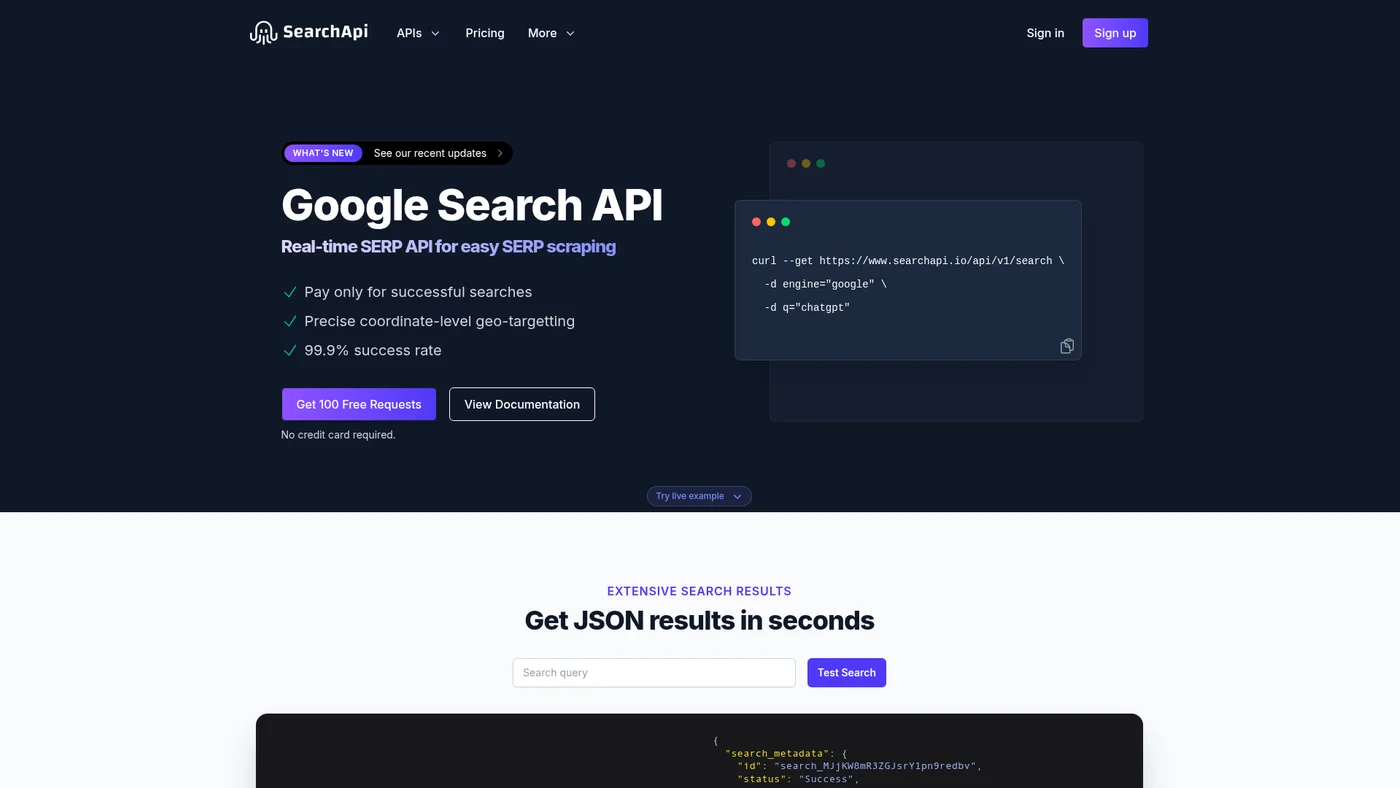
SearchApi
Real-time SERP API with pay-per-success pricing and precise geo-targeting for data collection.
Key Features
Remote HTTP. OAuth (recommended) or token auth. The previously stored value was the docs page at searchapi.io/integrations/mcp.
✓Pros
- Official MCP server beats most SERP-API competitors
- Pay-per-success means failed scrapes do not eat quota
- Per-engine OpenAPI specs for typed-client generation
- Breadth across SERP, social, marketplace, travel, ad libraries
✗Cons
- No first-party SDKs (REST + 13-language code examples only)
- No documented webhooks for async result delivery
- No sandbox: prototyping draws from live credit balance

cloro
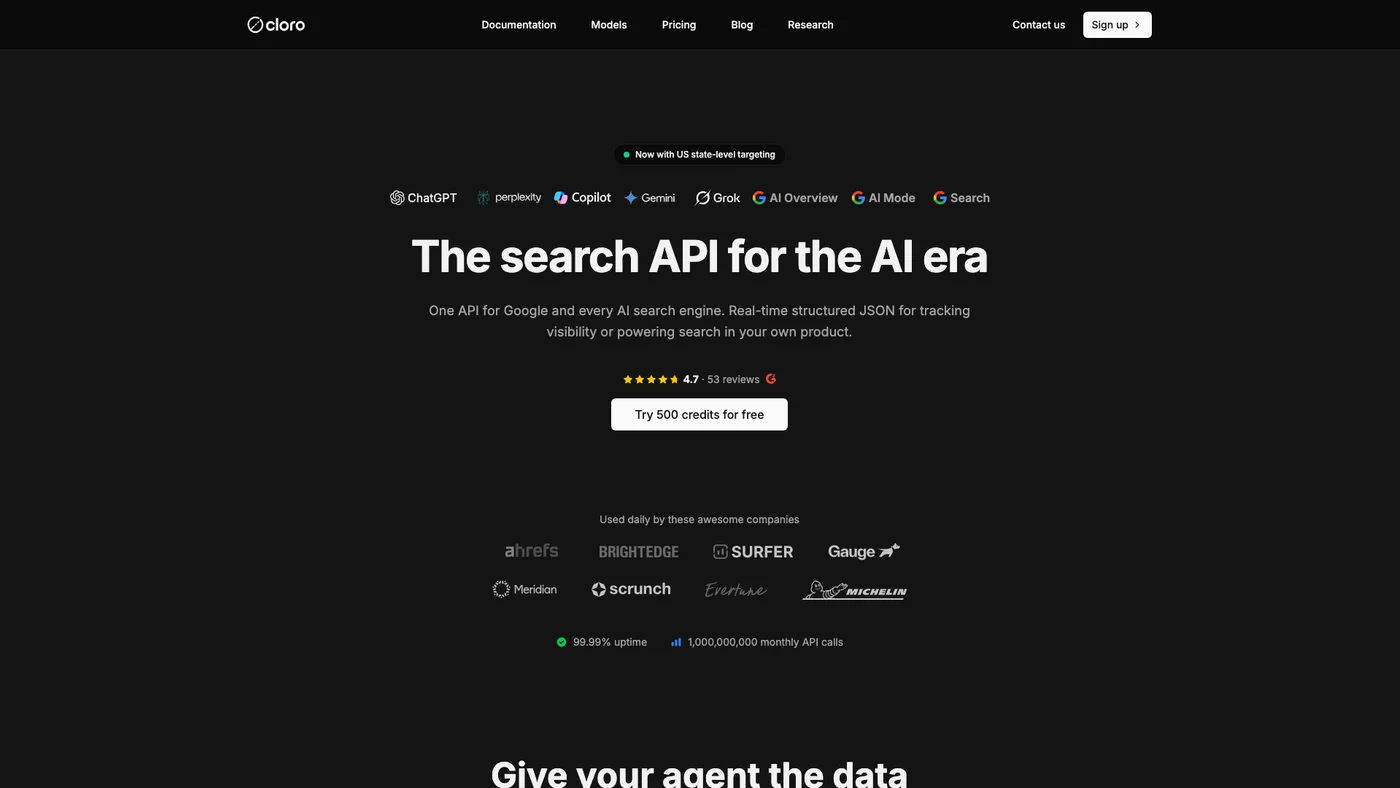
One REST API for Google Search, Google News and the AI answer surfaces: ChatGPT, Perplexity, Copilot, Gemini, Grok, AI Overviews and AI Mode. Same request shape and the same parsed JSON on every engine, so covering AI answers does not mean a separate integration per surface.
Key Features
✓Pros
- Google SERPs and AI answer citations from a single integration
- Credits are only deducted on a successful extraction, failed requests cost nothing
- Free tier with 500 credits a month to test against
✗Cons
- Priced in credits, not requests: a Google search is 3 credits plus 2 per extra page, a full ChatGPT response is 7, so the real unit cost depends on the engine
- Poor value for plain SERP work: Lite works out around $2.40 per 1,000 Google searches, against Serper at $0.30
- No backlink or keyword-volume data, so it does not replace a full-coverage SEO API

DataForSEO
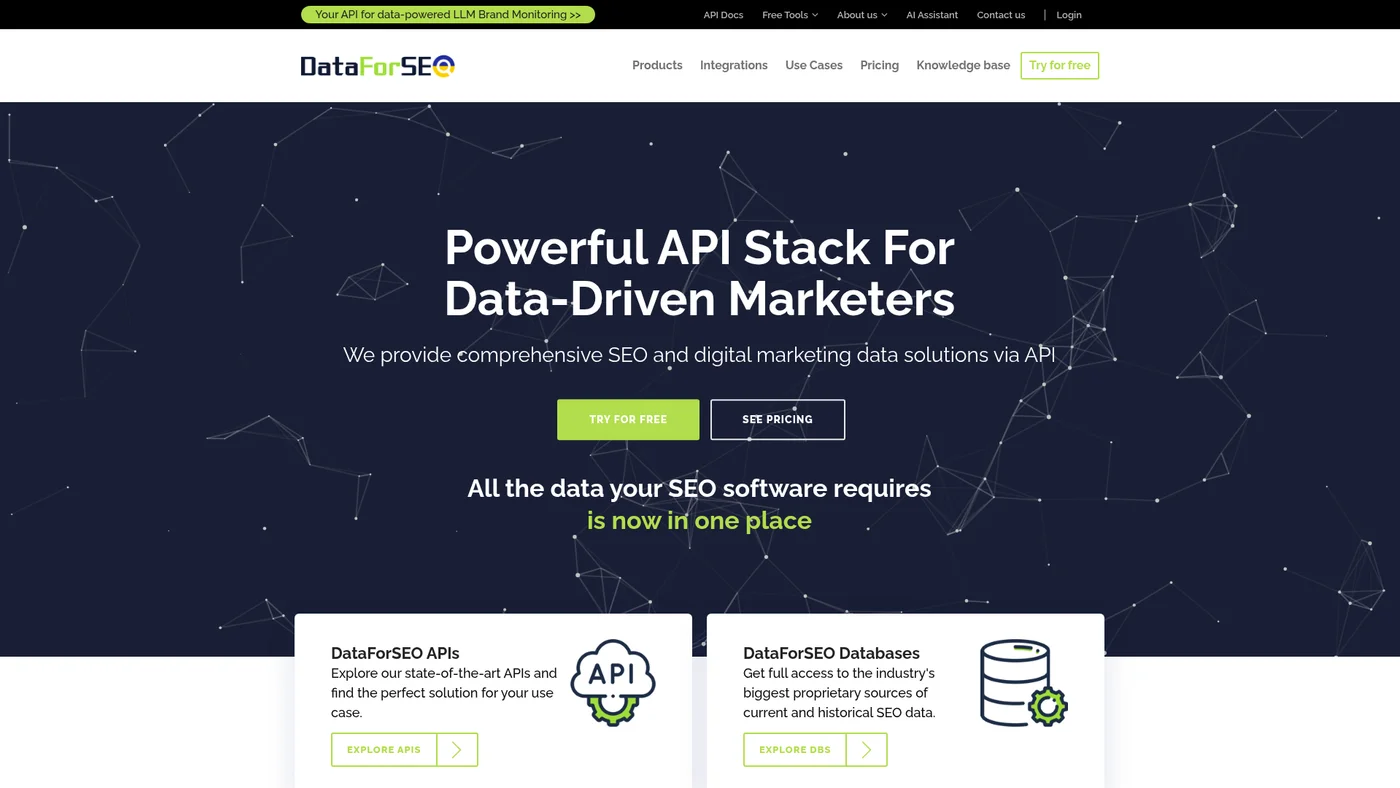
API-first SEO data platform for developers building SEO tools and software solutions
Key Features
Strong agent foundation: an official MCP server, a published OpenAPI spec, and first-party clients for Python, TypeScript, Java, C# and PHP. DataForSEO also ships its own Claude skills and an n8n node, so it drops into a multi-LLM agent stack without a custom wrapper. The gap is autonomy: it returns data, it does not act, so you still build the decision layer yourself.
✓Pros
- Pay-as-you-go, no forced monthly subscription
- Free $1 credit on signup (no card required) to test with real data
- Broadest data coverage of any API-first tool
- Excellent documentation
- New LLM Mentions API tracks AI answer visibility, not just classic rankings
✗Cons
- $50 minimum top-up once the free credit runs out
- Backlink index smaller than Ahrefs
- No GUI for quick manual lookups
- Learning curve for non-developers

BrightData SERP API
SERP data powered by one of the largest proxy networks in the world. Handles Google, Bing, DuckDuckGo, Yahoo, and Yandex. Built for scale with enterprise-grade reliability.
Key Features
✓Pros
- Unmatched scale and reliability
- Excellent geo-targeting at city level
- Enterprise support and SLAs
✗Cons
- Pricing not transparent (custom quotes)
- Overkill for small agencies
- Primarily a proxy company

Semrush API
The most comprehensive keyword and competitive intelligence API. 25+ billion keywords across 140+ countries. Covers organic keywords, paid keywords, traffic analytics, backlinks, and competitive analysis.
Key Features
✓Pros
- Deepest keyword database (25B+ keywords)
- Unmatched competitive intelligence
- Strong traffic estimates
✗Cons
- Full API requires Business plan at 500/month
- Credit limits apply
- Overkill for SERP-only needs

SE Ranking API
Complete SEO platform with AI visibility tracking, rank monitoring, and competitive research tools.
Key Features
MCP verified 2026-07-07: api.seranking.com/mcp, OAuth 2.1, Streamable HTTP, 160+ tools incl. project mgmt writes, ALL paid plans, 7 vendor Claude Skills (MIT). 6->8 Joonas approved.
✓Pros
- Full SEO suite and API from one vendor, including AI search data
- API access included in all plans, no separate API fee for normal usage
- Cheaper than the Semrush or Moz APIs at comparable data depth
- Standalone SE Ranking API plan available without buying the SEO suite
- Native MCP server on Core and Growth, agent-friendly out of the box
✗Cons
- Backlink index smaller than Ahrefs or DataForSEO
- Rate limited; credit budgeting still required for heavy scraping
- Standalone API plan is annual-only billing

HasData
Web scraping and SERP APIs with a 57-tool MCP server, AI Mode capture and plain-English AI extraction.
Key Features
✓Pros
- Excellent SERP feature parsing
- AI overview detection and support
- Reasonable pricing for mid-volume
✗Cons
- Free tier caps at 100 Google SERP requests a month
- Smaller company than competitors
- Shorter public track record than SerpApi or DataForSEO

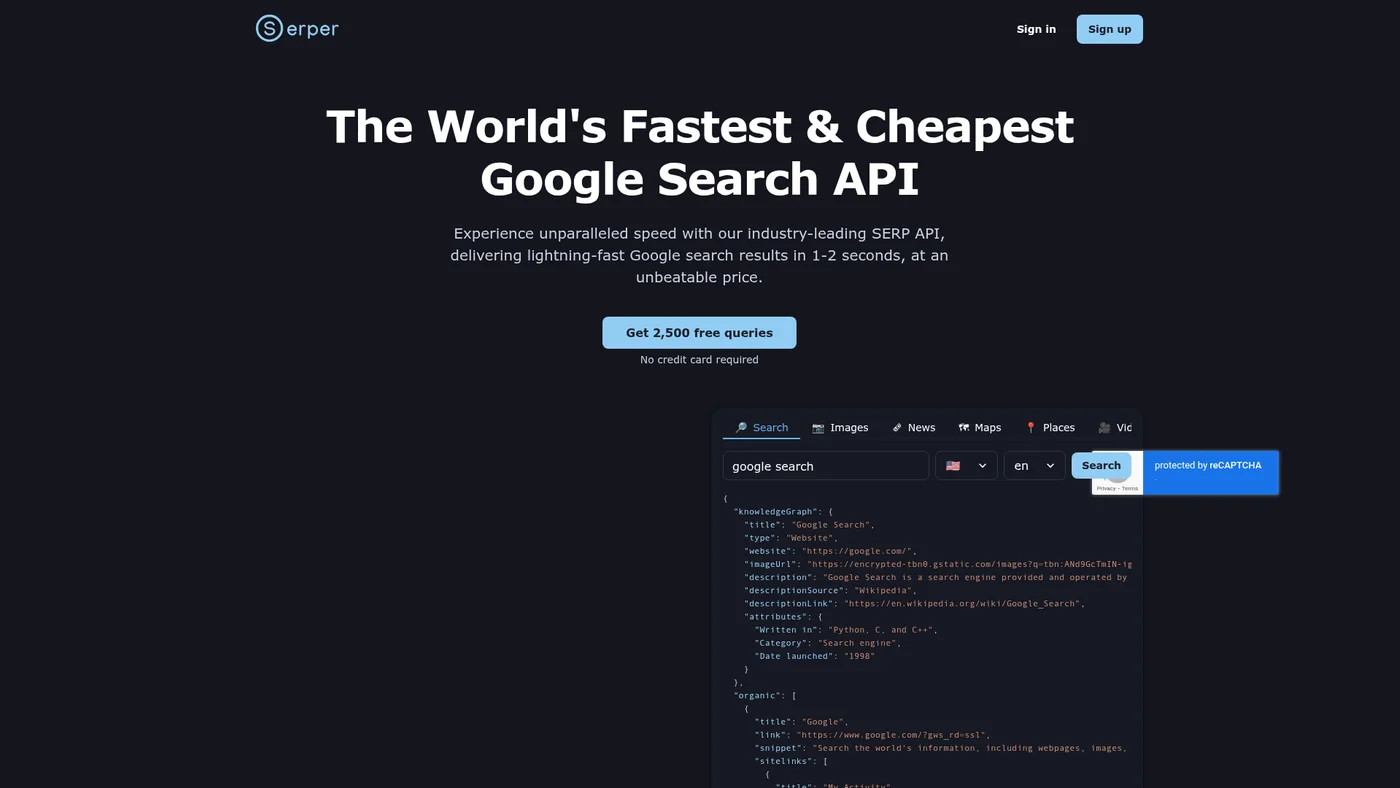
Serper
The fastest and cheapest way to get Google SERP data via API. Returns structured JSON for organic results, featured snippets, People Also Ask, knowledge graph, and more. 2,500 free searches per month.
Key Features
✓Pros
- Cheapest SERP API available
- Generous free tier (2,500/month)
- Fast response times
- Simple API design
✗Cons
- Google only (no Bing/Yahoo)
- No keyword volume or backlink data
- Limited to SERP scraping

SerpApi
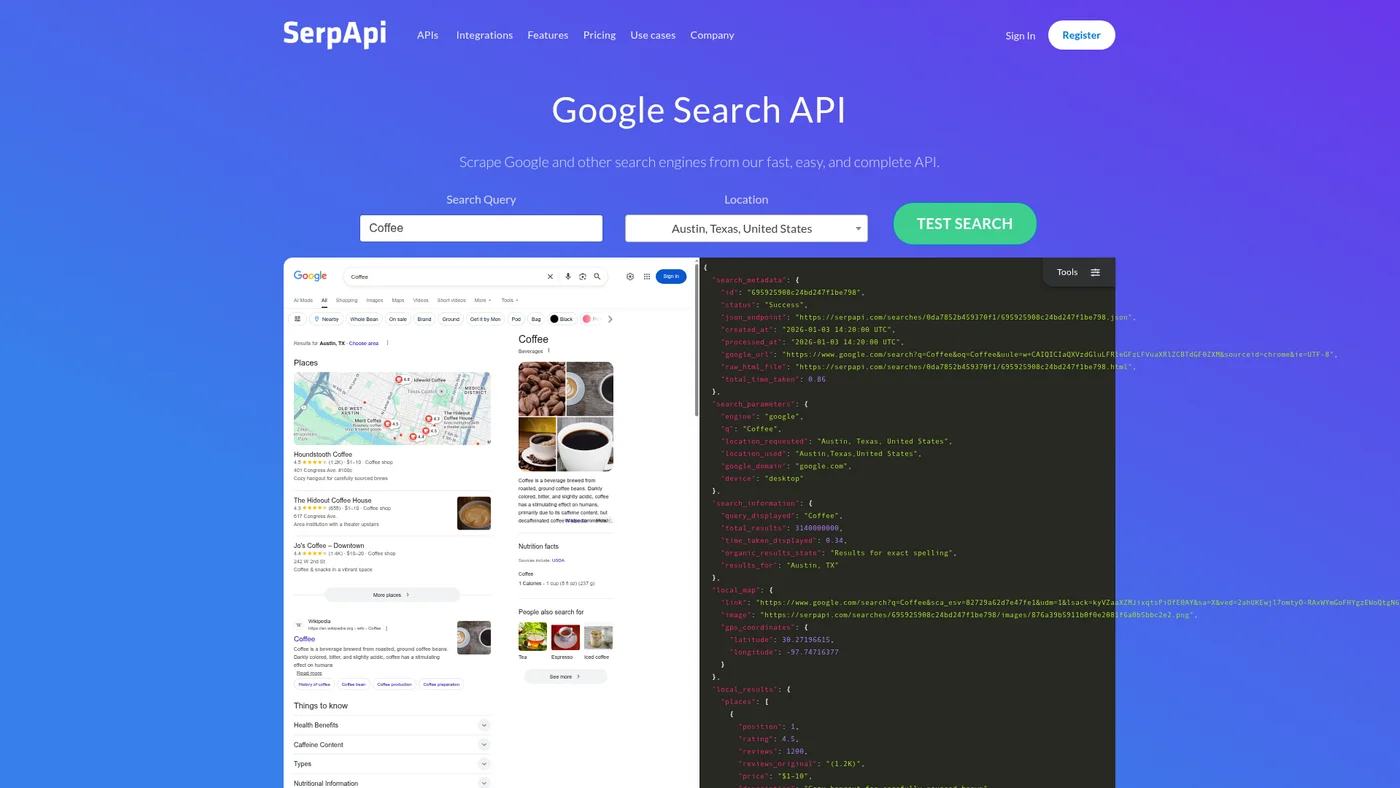
A search-engine scraping API with 100+ engine coverage, an MCP server, and pricing that climbs fast.
Key Features
Remote streamable HTTP. Auth is path-based (API key in the URL) or a bearer header. Self-hosting is possible via github.com/serpapi/serpapi-mcp. The previously stored value was the docs page at serpapi.com/integrations/mcp, not an endpoint.
✓Pros
- Widest search engine coverage
- Excellent debugging playground
- Mature, well-documented product
✗Cons
- More expensive than Serper for Google-only use
- Subscription model with overage charges

Ahrefs API
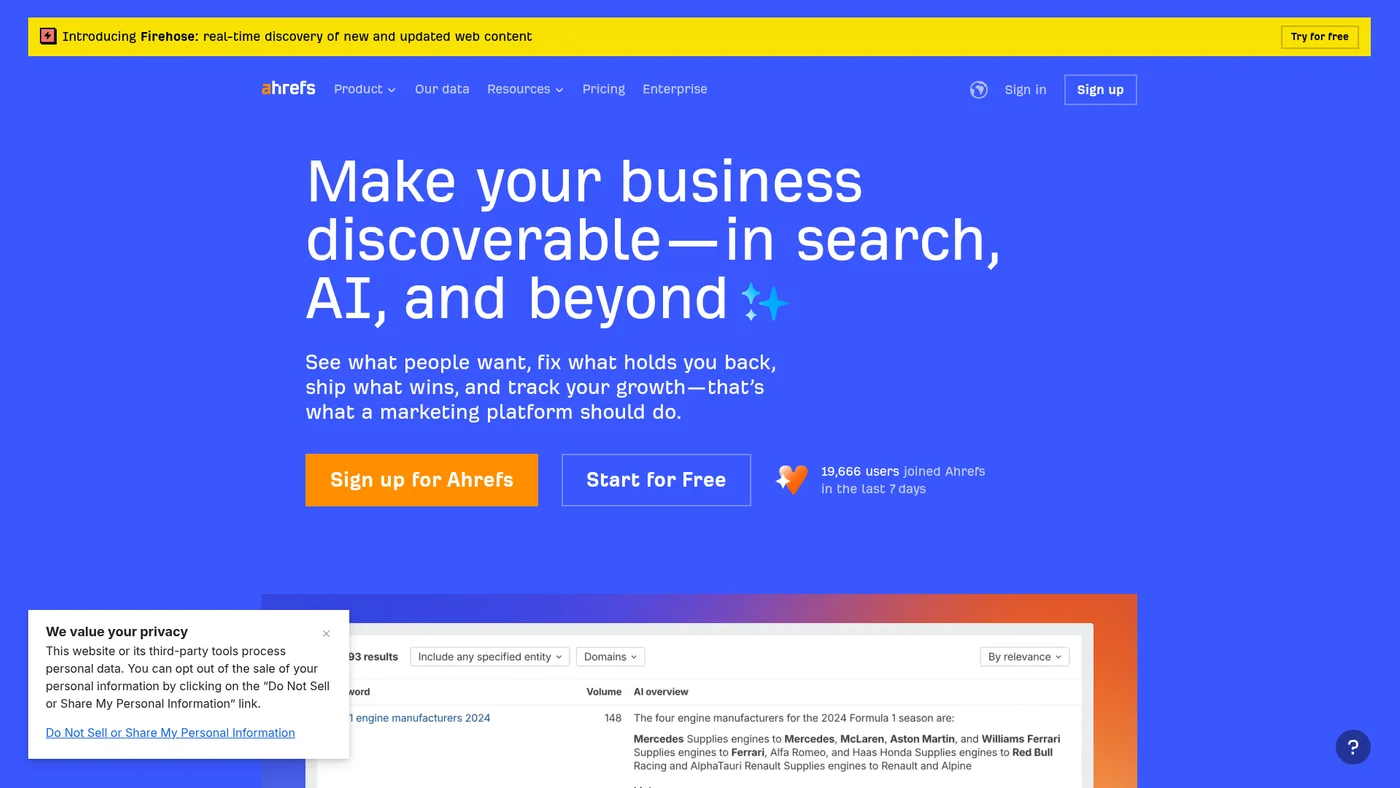
Access the largest backlink index in the industry via API. Get referring domains, backlink profiles, anchor text, organic keywords, and SERP data. API v3 is included from the $129/month Lite plan up.
Key Features
✓Pros
- Best backlink data quality in the industry
- Strong organic keyword data
- Widely trusted DR/UR metrics
✗Cons
- API bundled with subscription, no standalone plan
- Credit limits on lower plans
- Not cheap

Majestic API
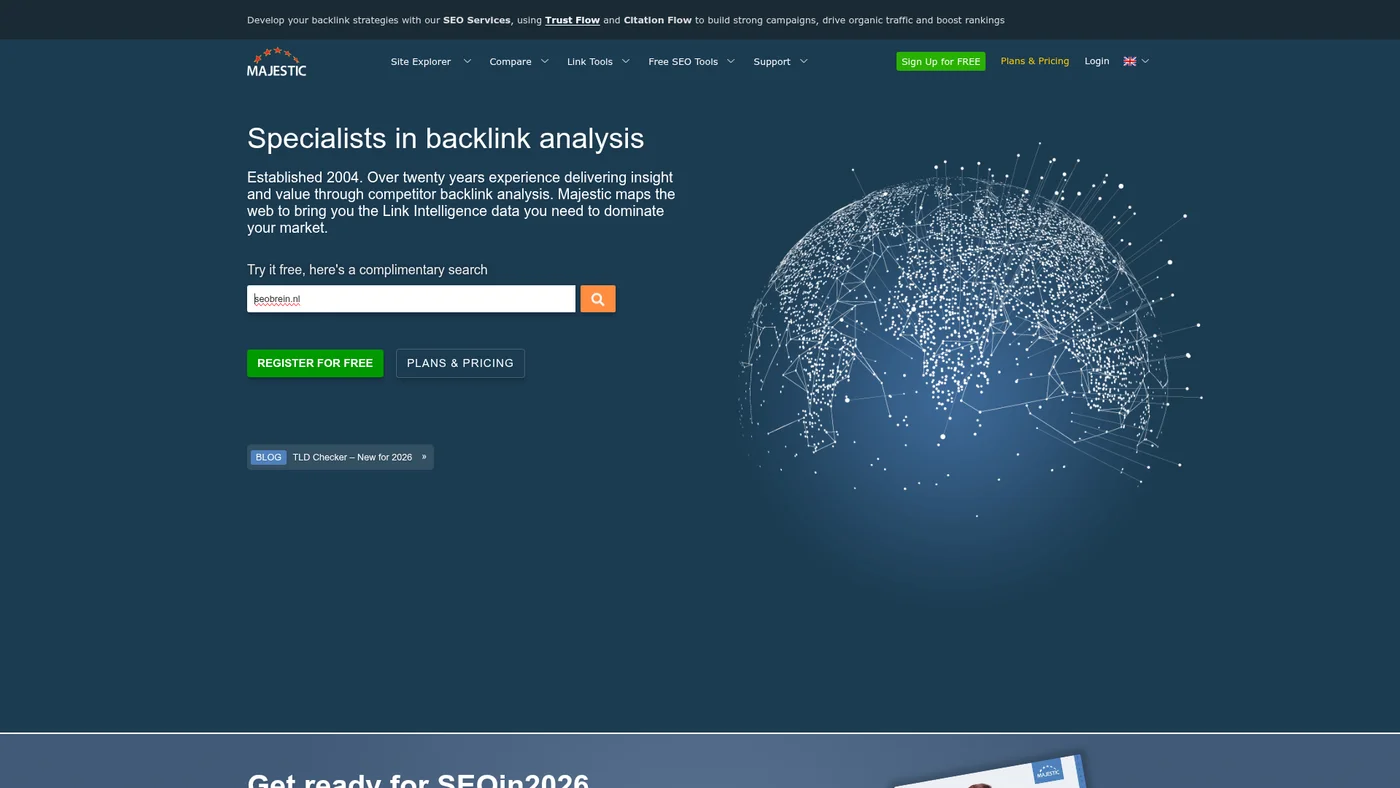
Specialized backlink analysis API with proprietary Trust Flow and Citation Flow metrics. Offers both fresh and historic backlink indexes. The dedicated API plan is built for programmatic use.
Key Features
✓Pros
- Unique Trust Flow metrics
- Topical link categorization
- Large historic backlink index
✗Cons
- Interface feels dated
- Dedicated API plan is expensive
- Less useful for keyword research

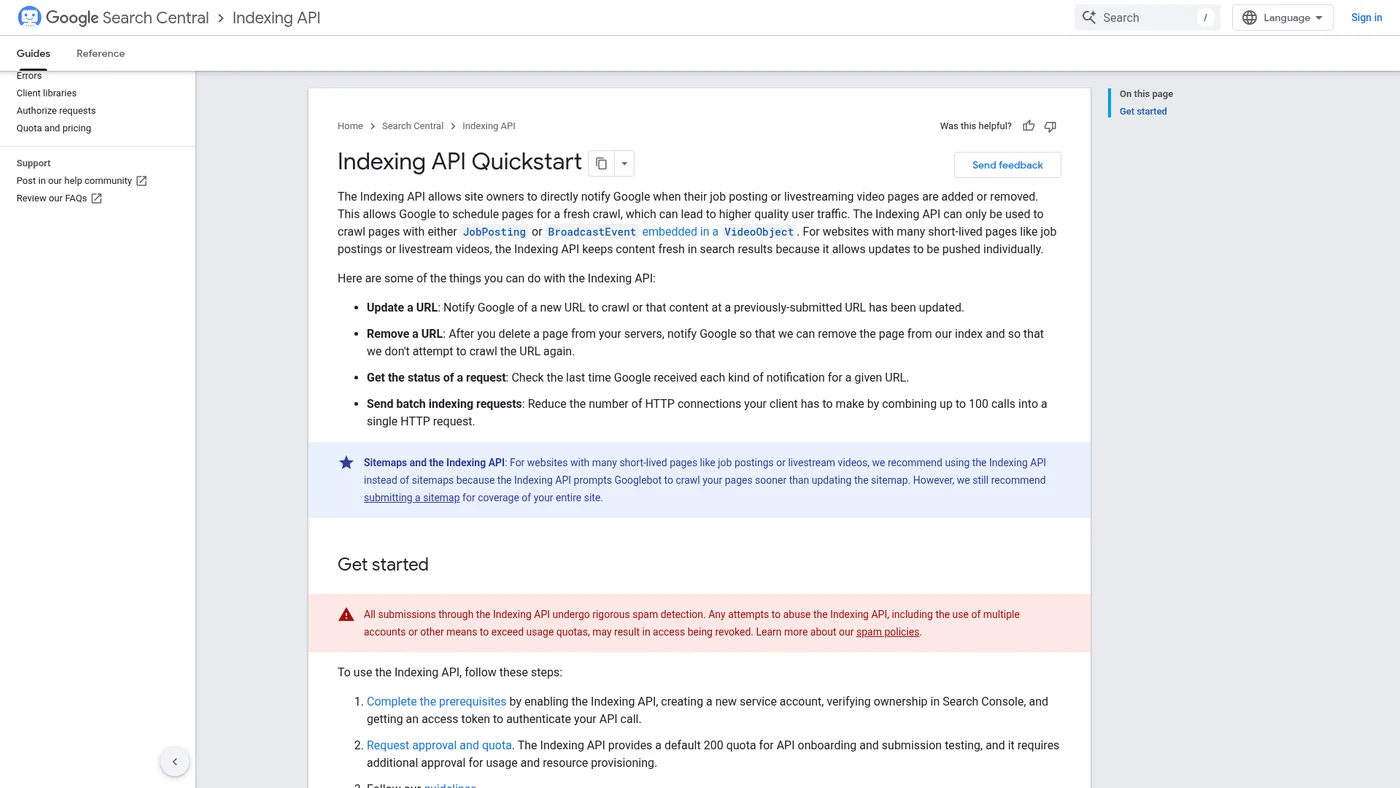
Moz Links API
Domain Authority, Page Authority, and Spam Score via API. The standalone Links API can be purchased without a full Moz subscription. DA remains one of the most widely referenced SEO metrics.
Key Features
✓Pros
- Domain Authority is industry standard
- Standalone API option available
- Spam Score useful for link audits
✗Cons
- Smaller link index than Ahrefs
- Expensive for the data you get
- Free tier is tiny
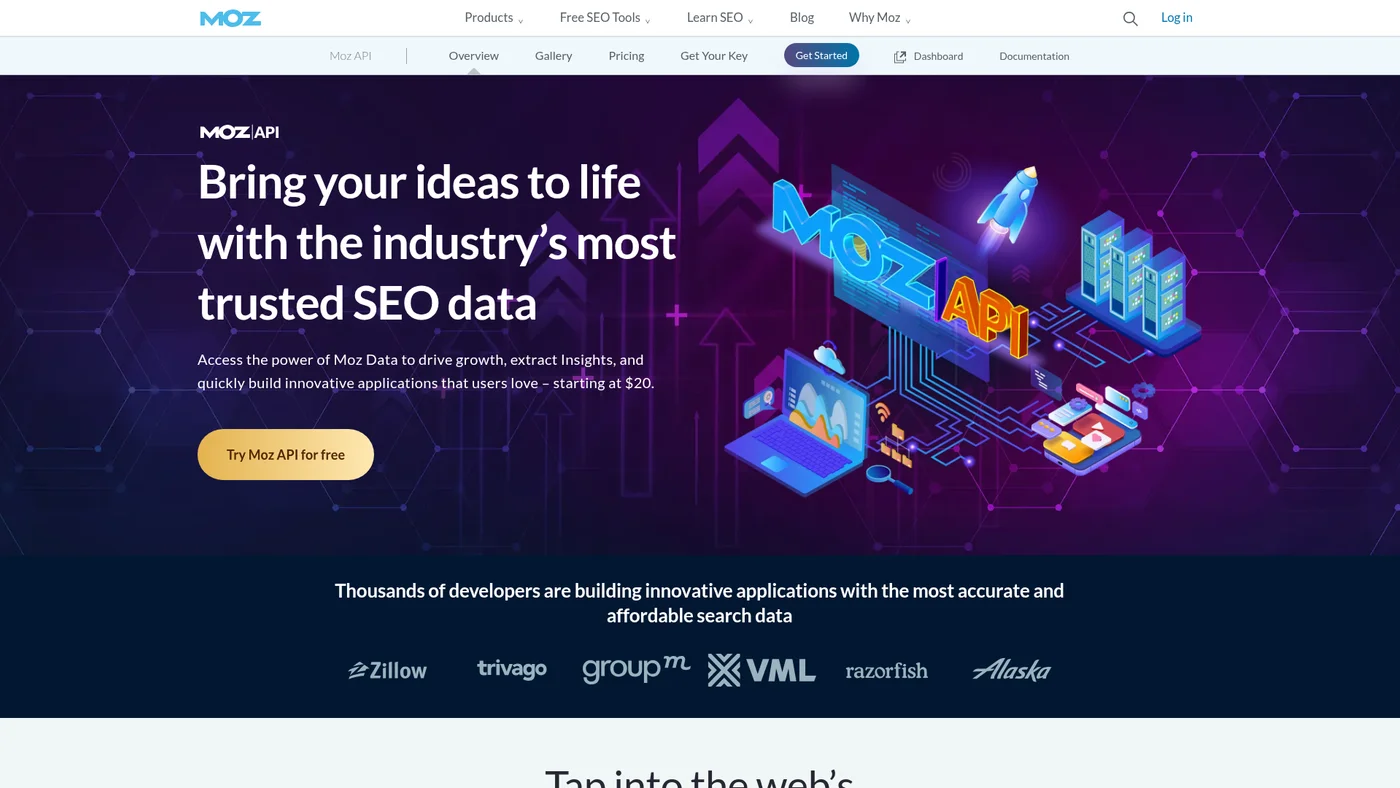

Google Search Console API
The only source of real Google search performance data for sites you own. Queries, impressions, clicks, CTR, and average position. Free with no API costs. Bypasses the 1,000-row export limit in the dashboard.
Key Features
✓Pros
- Free with no API costs
- Real Google data, not estimates
- No row limits via API
✗Cons
- Only for verified properties
- 48-hour data delay
- Requires Google Cloud setup
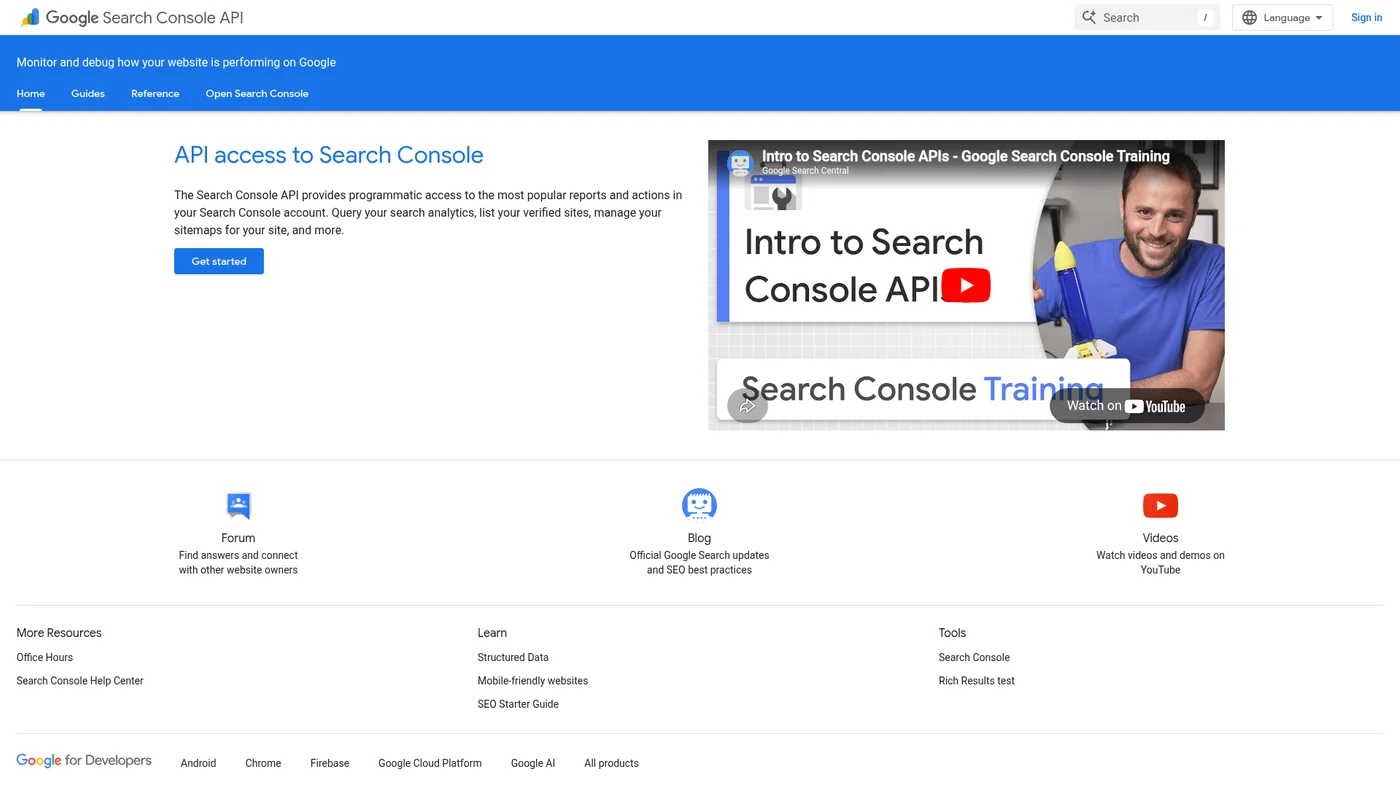
Google PageSpeed Insights API
Lighthouse performance scores and real Chrome UX Report (CrUX) field data via API. Measures Core Web Vitals (LCP, INP, CLS) that Google uses for page experience ranking signals. 25,000 requests per day for free.
Key Features
✓Pros
- Free with 25,000 daily requests
- Real field data from CrUX
- Actionable recommendations
✗Cons
- One URL per request
- No field data for low-traffic pages
- Can be slow
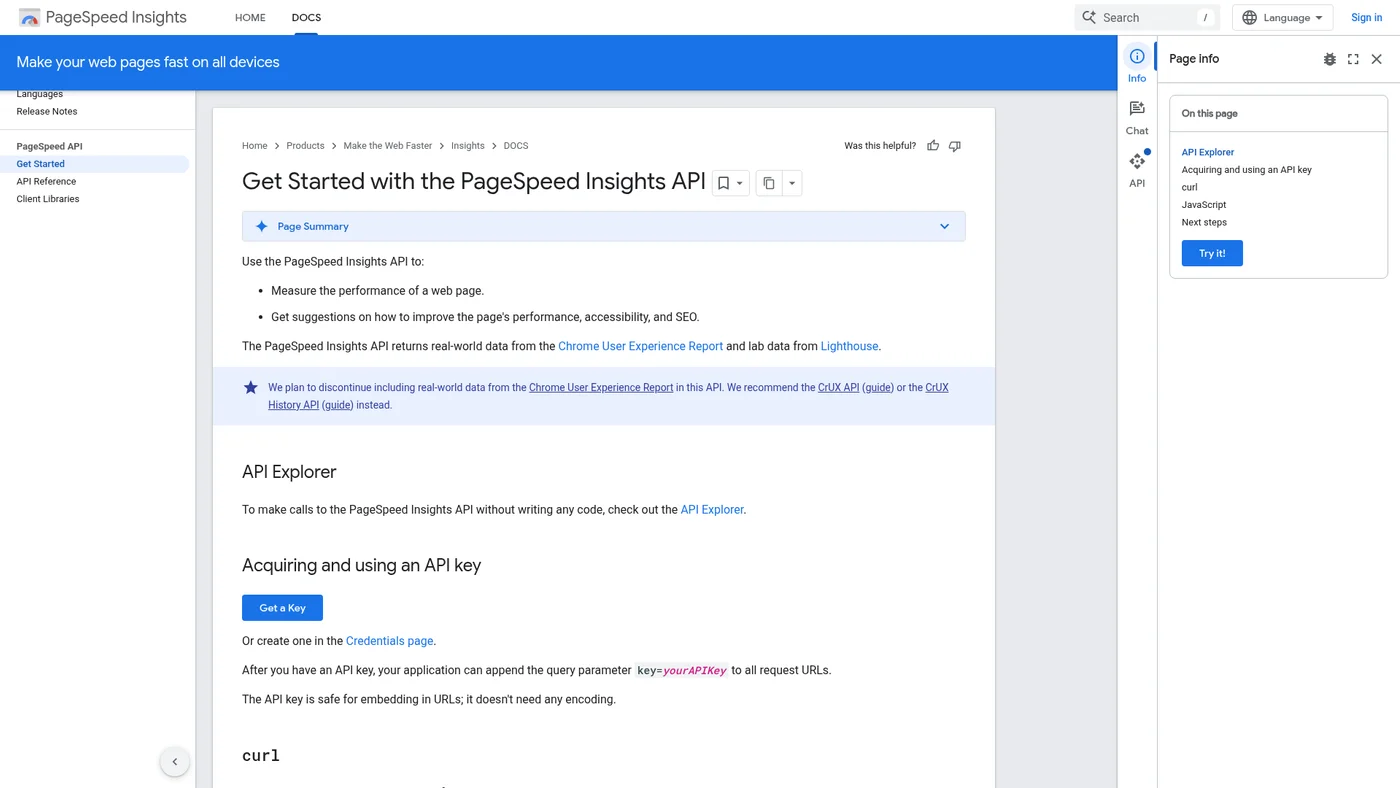
Google Indexing API
Submit URLs directly to Google for crawling and indexing. The fastest way to get new pages indexed. Officially for JobPosting and BroadcastEvent schema, but widely used by SEOs for all content types.
Key Features
✓Pros
- Free to use
- Dramatically faster than natural crawling
- Batch submission support
✗Cons
- Officially limited to JobPosting/BroadcastEvent
- 200 requests per day limit
- Requires service account setup
Price landscape
How prices compare
Starting prices across all 13 tools in this category.


Building competitor analysis with these APIs
If you're pulling data programmatically, the competitor analysis workflow maps cleanly onto these APIs: use the keyword and SERP endpoints to find the domains outranking you for a target query list, the backlinks endpoints to export page-level link profiles for the top-ranking URLs, and the organic-research endpoints for keyword gap analysis. DataForSEO and Semrush have the deepest coverage for this; Ahrefs is the richest for link data but has stricter rate limits.
For the non-technical version of the same workflow, and what to actually do with the data once you've pulled it, see the step-by-step SEO competitor analysis guide.
Running SEO for clients instead of one site?
APIs are how agencies escape per-seat pricing: one integration, every client's data in your own dashboard. DataForSEO in particular is the cheapest route to client reporting at volume if you have someone who can wire it up.
If you are building that stack, SEO agency software covers the platforms that handle white-label reporting and multi-client management for you, including which ones ship an official MCP server so an assistant can pull the numbers.
Building SEO or GEO data into your own product?
If the data is going into an app rather than a report, the pick changes. DataForSEO is the usual base layer because it is pay-as-you-go and covers SERP, keywords and backlinks from one account, so you are not stitching three vendors together at v1. For AI answer data from ChatGPT, Perplexity and AI Overviews, coverage is patchier: DataForSEO sells it as a separate AI Optimization product on its own rate card, and cloro returns Google plus the AI surfaces in one response shape. For anything about your own site, start on the free Google APIs, because no third party has your Search Console data.
Three things that bite people in production. Cache by keyword, location and day, since SERPs barely move within a day and uncached calls are where the budget goes. Normalise to cost per result before comparing vendors, because a credit-based plan and a per-query plan are not comparable at the headline price: a Google search might cost 3 credits where a full ChatGPT answer costs 7. Store the raw JSON next to whatever you parse, because providers change response shapes without much notice and you cannot reparse history you never kept.
One more that is legal rather than technical: check the terms before showing SERP or AI-answer data to your own users. Several providers license it for internal analysis, and redistributing it inside a product you sell is a different agreement. For the workflow-level version of all this, see how to use SEO APIs for client work.
Methodology
How I chose these
I evaluated each API on five criteria: where the data actually comes from and how complete it is, documentation and developer experience, what it costs at volume rather than at the headline price, rate limits and scalability, and how cleanly it drops into a production workflow including AI coding tools.
I prioritized pay-as-you-go and API-only pricing over API access bundled into an expensive dashboard subscription.
FAQ
Frequently Asked Questions
Not anymore. AI coding tools like Claude Code, Cursor, and GitHub Copilot can write API integration scripts from plain English descriptions. You describe what data you want, the AI writes the code. Basic comfort with running scripts helps, but you do not need traditional programming skills.
For breadth per dollar, DataForSEO: pay-as-you-go with a $50 minimum deposit and no monthly subscription, so cost tracks your actual usage instead of a plan tier. New accounts get a free $1 credit (no card required) to test with real data before topping up. If you only need SERP data, per-request providers like Serper and SearchApi are cheaper still. The expensive end is Semrush, which sells API units on top of a Business subscription. Ahrefs is no longer in that bracket: API v3 is included from its $129/month Lite plan.
Serper at $0.30 per 1,000 queries with 2,500 free searches per month. For a more complete solution covering SERP data plus keyword volumes, DataForSEO gives new accounts a free $1 credit for real API testing (no card required), then requires a $50 minimum top-up, starting at $0.0006 per SERP query.
For data access, yes. You can get rankings, keywords, backlinks, and technical audit data via APIs for significantly less money. What you lose is the GUI for quick manual lookups and the convenience of pre-built reports. Most agencies use a mix: APIs for automated workflows and a dashboard tool for ad-hoc research.
Ahrefs has the largest and most frequently updated backlink index. For link quality metrics specifically, Majestic's Trust Flow is highly regarded. For budget-friendly backlink data, DataForSEO's Backlinks API is a solid alternative at a fraction of the cost.
Absolutely. Google Search Console API gives you real search performance data, PageSpeed Insights API provides Core Web Vitals monitoring, and the Indexing API speeds up content indexing. These three free APIs cover the foundations. Add paid APIs like DataForSEO or Serper when you need competitive data or SERP tracking.
Continue reading





10+ years in digital marketing. I review SEO and AI visibility software for small business owners and solo operators: what each plan really costs, which one actually covers the job, and where a tool stops being worth it. Checked against vendor documentation and real user feedback, and against my own use where I have it.