
That Marketing Buddy

Alternatives

Substack alternatives that keep more of what readers pay

Joonas Rotko
Joonas Rotko

SEO & GEO professional · Hands-on with 4 of 6 tools · Prices verified

Affiliate links on this page may earn me a commission, at no extra cost to you. They don't change what I recommend. How I choose and earn

If Substack's share of your paid subscriptions has started to sting, I'd start with beehiiv. It takes 0% of what readers pay, and Lite, which adds paid subscriptions on your own domain, is $95/month billed annually for the list I priced. Ghost and Buttondown cost less each month and also leave reader payments alone. Prices checked 30 Sep 2026.

Comparing the whole category? See 11 Best Newsletter Platforms for Creators and Writers.

Prices below are for one writer charging readers on their own domain. Substack itself isn't priced, because it keeps a share instead:

  • 5,000 subscribers
  • 1 user

Who this is for. Writers already charging readers on Substack, or about to, who have done the sum: Substack keeps 10% of every paid subscription, Stripe's fees come on top, and the amount grows with every reader who pays. A plan price follows the size of your list, not how much you earn from it.

My picks for different needs

Find the line that sounds like you. Each pick links to the full reasoning below.

  1. I want Substack's way of publishing without the revenue share

    A newsletter site and paid subscriptions, with nothing taken from reader payments.

    Why this one
    beehiiv logo

    beehiiv

    My default

    $95/moannual

    Try beehiivAffiliate link
  2. I want a publication website I control

    Payments land in your own Stripe account, and the plan costs less than beehiiv for this list.

    Why this one
    Ghost logo

    Ghost

    $63/moannual

  3. I sell digital products to my readers too

    Subscriptions and product sales in one account, with a small cut inside the card fee.

    Why this one
    Kit logo

    Kit

    $75/moannual

    Try KitAffiliate link
  4. I want the lowest monthly bill for a paid newsletter

    The cheapest plan here that bills readers on your own domain.

    Why this one
    Buttondown logo

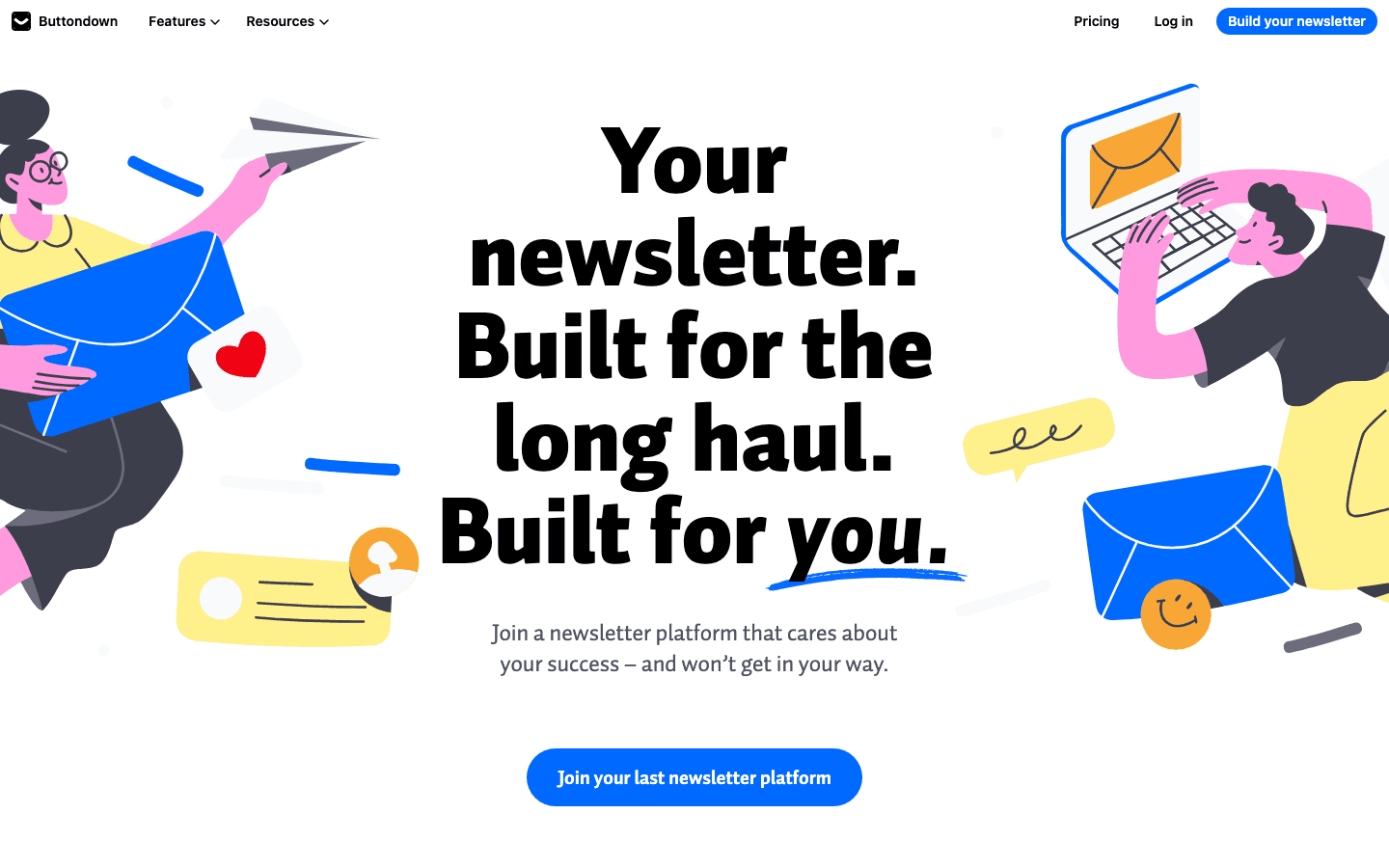
    Buttondown

    $24.17/moannual

    Try ButtondownAffiliate link
  5. I'll make the newsletter free and earn elsewhere

    Automations and landing pages for little money, without reader billing.

    Why this one
    MailerLite logo

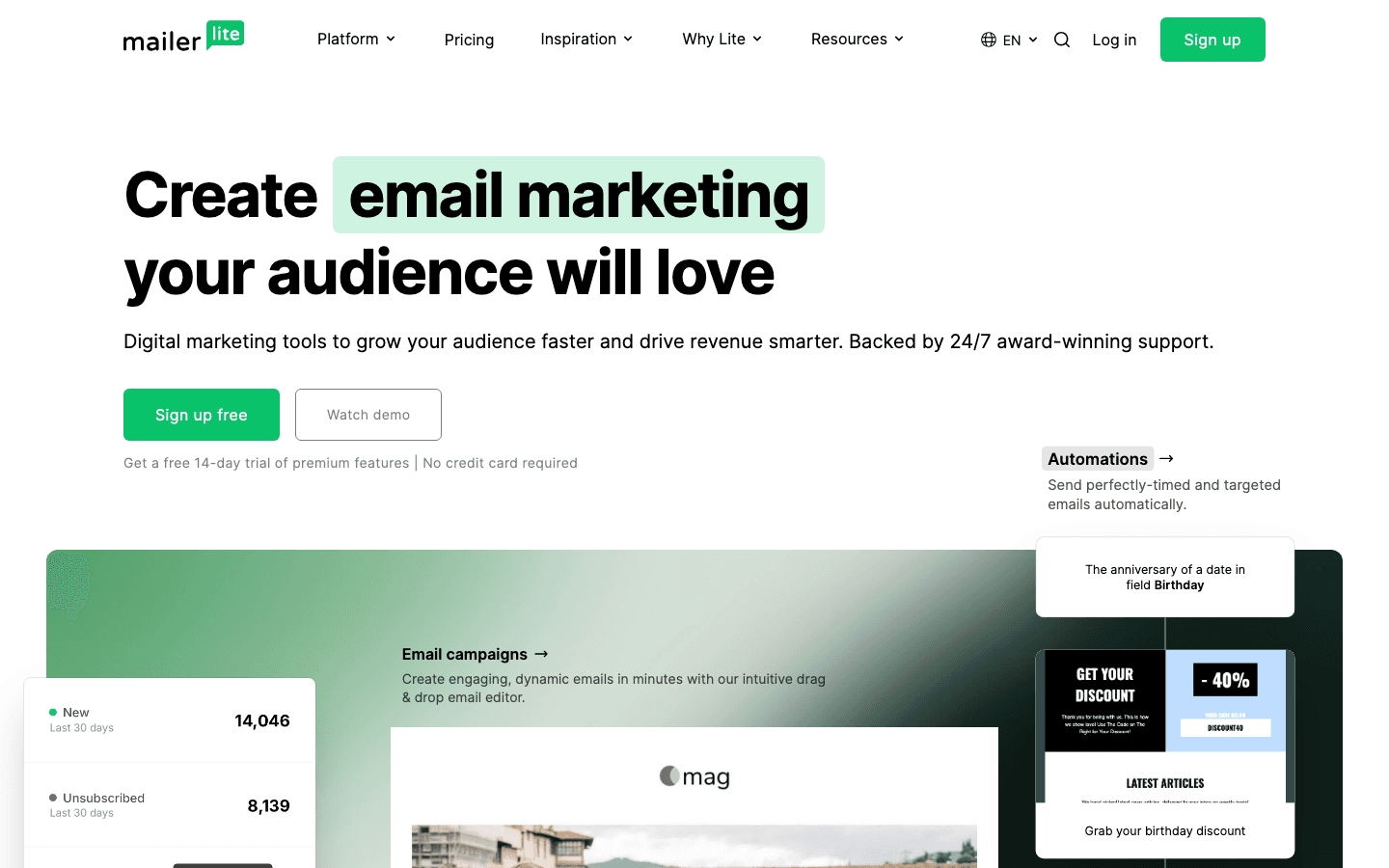
    MailerLite

    Try MailerLiteAffiliate link
  6. I only need to send a free newsletter cheaply

    A free plan with room for a growing list, and a low Pro price after it.

    Why this one
    EmailOctopus logo

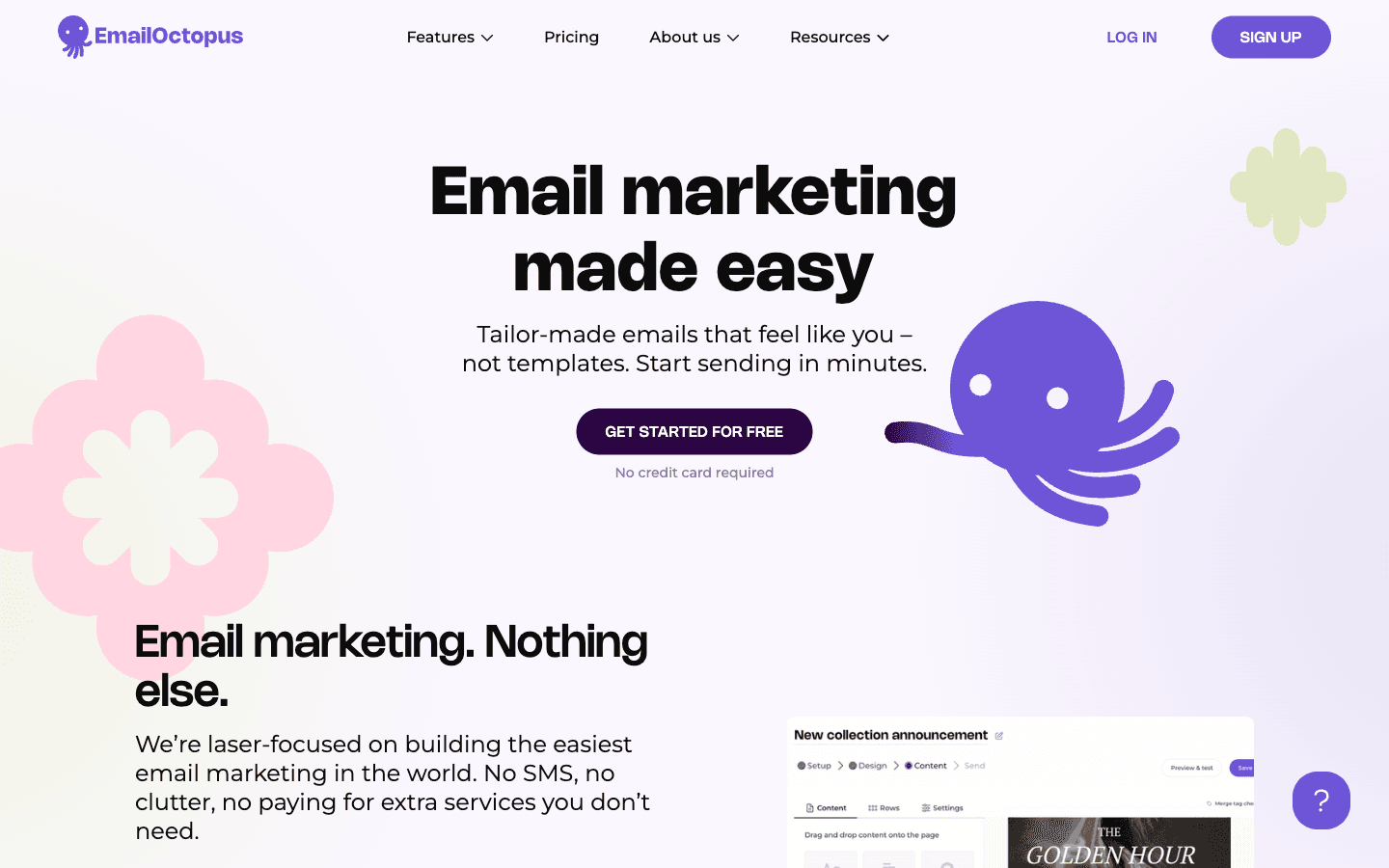
    EmailOctopus

    Try EmailOctopusAffiliate link

What changes when you leave Substack's revenue share

Substack charges nothing to publish and earns from paid subscriptions instead: it keeps 10% of each payment before card processing. That is a fair deal while a newsletter earns little. Once paid subscribers are a real income, the share is usually the largest cost you have.

What you gain

  • No platform share on beehiiv, Ghost or Buttondown: each lists 0% as its cut of reader payments, so another paid subscriber adds nothing to the platform's bill.
  • Email automation. Substack has no drip sequences, while Kit Creator, beehiiv Lite and Buttondown's plan for this list all include automations, so a welcome series or a paid-upgrade nudge runs on its own.
  • Your own domain without the extra charge. Substack's custom domain fee is $50 one-time; Ghost includes a custom domain on every plan, and Kit allows one even on its free plan.

What you give up

  • Starting at zero. Every pick that bills readers charges a plan price from the day you switch paid subscriptions on, whether or not anyone has paid yet.
  • Unlimited contributors. Substack puts no cap on team members, while Ghost Publisher includes 3 staff users and beehiiv Lite 2 seats.
  • Substack's app and recommendations, which pass some readers between publications. Outside Substack, finding readers is your job.

When to stay. Stay on Substack while paid revenue is small or uncertain. The share costs little when few readers pay, and no plan here beats free. Move once the monthly cut is bigger than the plan price you'd pay elsewhere for your list size.

The tools side by side

Each priced row is the cheapest plan that bills readers on your own domain at this list size, next to the share of each payment the platform keeps.

a paid newsletter on its own domain: plan priced, monthly and annual cost, Platform cut of reader payments, Custom domain, Team seats, Free start
Tool and planCost per monthPlatform cut of reader paymentsCustom domainTeam seatsFree start
beehiivLite

$95annual

$109 monthly

0%Yes2Free plan and a 14-day trial
GhostPublisher

$63annual

$75 monthly

0%Yes314-day trial
KitCreator

$75annual

$89 monthly

0.6%Yes2Free plan and a 14-day trial
Buttondown1,001 to 5,000 subscribers

$24.17annual

$29 monthly

0%YesNot publishedFree plan
MailerLiteNot pricedNot priced here. MailerLite has no paid reader subscriptions, so no plan covers this workload.Not pricedNot pricedNot pricedFree plan and a 14-day trial
EmailOctopusNot pricedNot priced here. EmailOctopus has no paid reader subscriptions, so no plan covers this workload.Not pricedNot pricedNot pricedFree account, no trial

Six picks, in the order I'd consider them

Each one says who it is for, what it costs for a paid newsletter on its own domain, and what you give up.

beehiiv logo

beehiiv

Closest to Substack, minus the revenue share

Hands-on

Choose it if

You like how Substack works, posts plus a web archive plus paid tiers, and only object to handing over a share of every payment.

Consider Ghost instead if

You'd rather pay less each month for the same list. Ghost Publisher is $63/month billed annually and also takes nothing from payments.

Why it fits a paid newsletter on its own domain

beehiiv is the nearest like-for-like move off Substack: it is built around publishing, sends are unlimited on every plan, and Lite adds paid subscriptions, a custom domain and automations. In my test of beehiiv's Free plan, subscribers came in by CSV or pasted emails, and beehiiv offered a separate migration for paid subscriptions from Stripe. The difference is how it earns. Substack's cut grows with your revenue, while beehiiv charges a plan price set by list size and keeps nothing from subscriptions.

The plan I priced

Lite: $109/month billed monthly, or $95/month billed annually, with 2 seats and 3 publications.

Closest alternative

Ghost becomes the better choice when you want the site to feel like your own publication, for a lower monthly price.
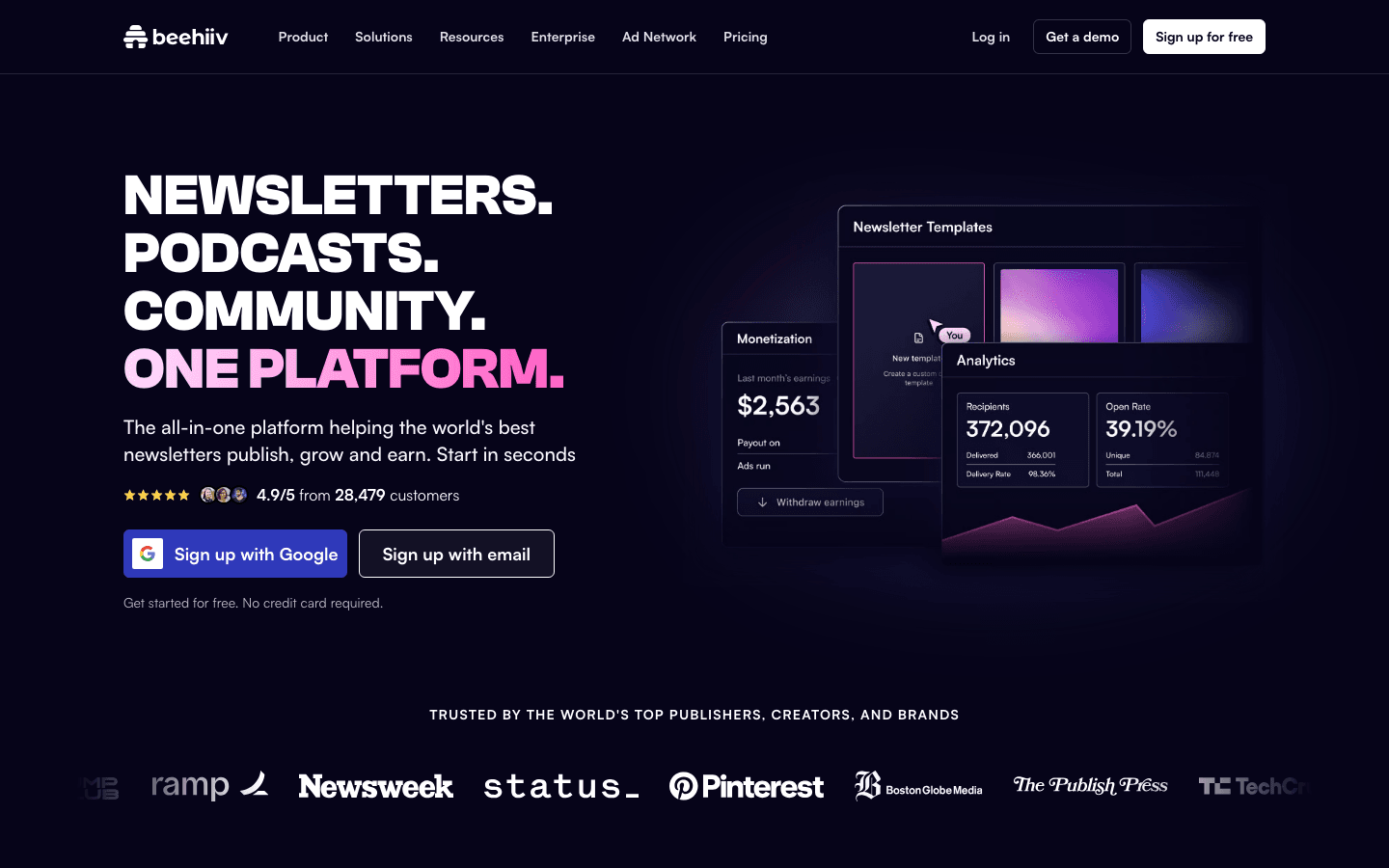
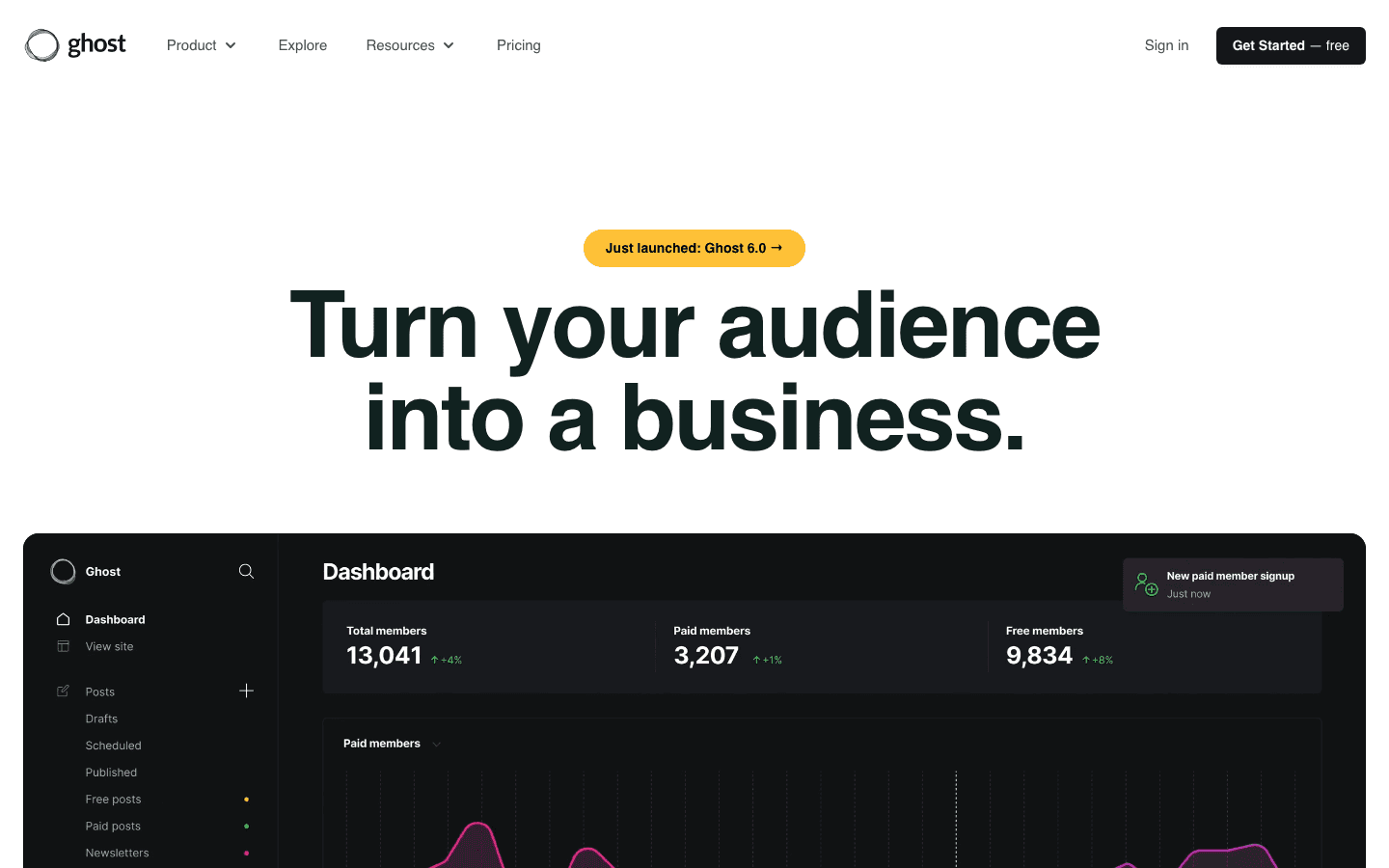
beehiiv homepageTry beehiiv
beehiiv homepage, captured

A paid newsletter on its own domain: Lite

Billed annually

$95/mo

Billed monthly

$109/mo

Above 100,000 subscribers: Pro (+$594/mo billed annually).

The trade-off

It is the most expensive plan on this page for this list, and Lite still shows beehiiv branding; Pro removes it, starting at $109/month billed monthly for the smallest list. The free plan can't take payments, so you pay from the day you start charging.
What my review says

Best for: A Substack writer who wants the same publishing model with a plan price instead of a revenue share.

Skip it if your paid revenue is still small enough that Substack's share costs less than Lite.

Strengths

  • Nothing taken from paid subscriptions on any paid plan.
  • Unlimited sends, plus automations on Lite, which Substack doesn't offer.

Limits

  • The highest plan price here for this list.
  • beehiiv branding stays until Pro.

“I set up a free beehiiv publication and opened every gated feature. Paid subscriptions, a custom domain, automations and Ad Network offers can all be viewed on Free, and each one asked for Lite to switch on.”
Substack alternatives that keep more of what readers pay
Ghost logo

Ghost

Best for owning the whole publication

Desk research

Choose it if

You want readers to arrive at a site that is clearly yours, with your design, rather than a page inside Substack.

Consider Buttondown instead if

You only need the newsletter and an archive. Buttondown bills readers for $24.17/month billed annually.

Why it fits a paid newsletter on its own domain

Ghost answers the revenue question by connecting paid memberships to your own Stripe account and taking 0%. A custom domain costs nothing extra, and Publisher is priced below Kit and beehiiv for this list. Because Ghost is open source, a self-hosted version exists if you ever want to run it yourself.

The plan I priced

Publisher: $75/month billed monthly, or $63/month billed annually, with 3 staff users.

Closest alternative

beehiiv becomes the better choice when you want automations and a free plan to start on.
Ghost homepageTry Ghost
Ghost homepage, captured

A paid newsletter on its own domain: Publisher

Billed annually

$63/mo

Billed monthly

$75/mo

Above 100,000 subscribers: no bigger plan is published.

The trade-off

There is no free plan to sit on: the 14-day trial asks for a card, and Starter can't take payments at all, so paid memberships begin at Publisher. I have no affiliate link for Ghost.
What my review says

Best for: A Substack writer who wants a branded publication site and keeps every subscription payment, minus Stripe's fee.

Skip it if you want to keep publishing for free until readers start paying.

Strengths

  • Payments go to your own Stripe account, with no platform cut.
  • A custom domain on every plan at no extra cost.

Limits

  • No free plan, and the trial needs a card.
  • Paid memberships need Publisher; Starter has none.
Substack alternatives that keep more of what readers pay
Kit logo

Kit

Best if you sell products as well as subscriptions

Hands-on

Choose it if

The newsletter is one income stream among several, such as an ebook, a template pack or a paid community, and you want them billed from one account.

Consider beehiiv instead if

The newsletter is the whole business and you want a publication site more than a sales tool.

Why it fits a paid newsletter on its own domain

Kit keeps 0.6% of each sale, and that sits inside an all-in transaction fee that already covers card processing, so next to Substack's 10% plus Stripe it is a small charge. Creator adds paid subscriptions, product sales and automations, and the free plan lets you move your list over before paying anything.

The plan I priced

Creator: $89/month billed monthly, or $75/month billed annually. The 14-day trial needs no card.

Closest alternative

Buttondown becomes the better choice when subscriptions are the only thing you sell and the smallest bill wins.
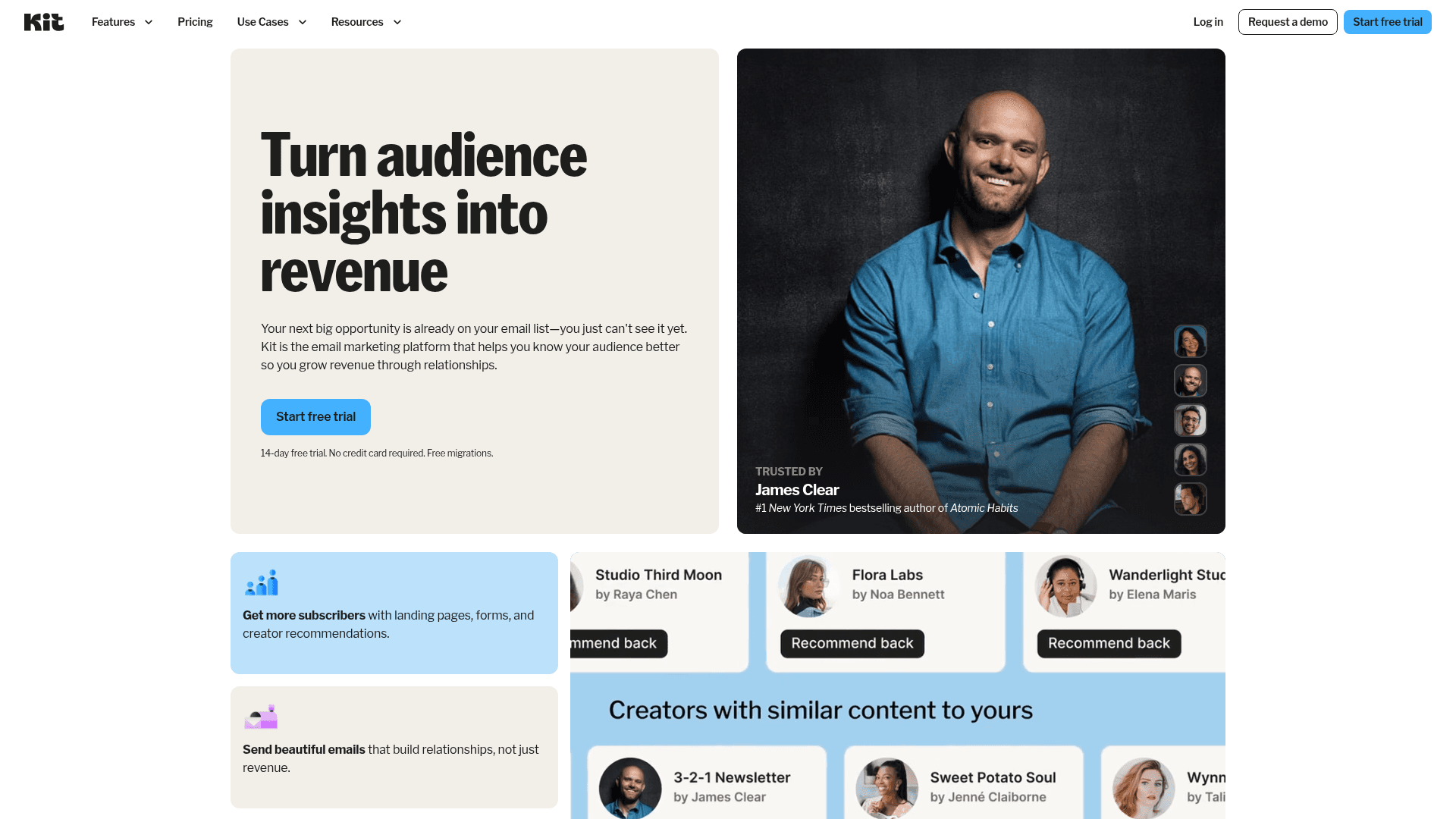
Kit homepageTry Kit
Kit homepage, captured

A paid newsletter on its own domain: Creator

Billed annually

$75/mo

Billed monthly

$89/mo

Above 400,000 subscribers: no bigger plan is published.

The trade-off

Creator's price follows your subscriber count, so a growing list costs more at every band, and for this list it already sits above Ghost and Buttondown. The web archive of your posts is plainer than Substack's.
What my review says

Best for: A Substack writer who also sells digital products and wants one account for both.

Skip it if subscriptions are your only product and the bill matters most.

Strengths

  • A small cut that already includes card processing.
  • Automations and product sales on Creator.

Limits

  • Creator gets pricier with every subscriber band.
  • A plainer post archive than Substack's.
Substack alternatives that keep more of what readers pay
Buttondown logo

Buttondown

Smallest fixed price for paid readers

Hands-on

Choose it if

You write, readers pay, and you want the cheapest fixed cost to replace Substack's share.

Consider Kit instead if

You want a free plan with real room first. Kit's holds 10,000 subscribers, against Buttondown's 100.

Why it fits a paid newsletter on its own domain

Buttondown takes 0% of reader payments, and the plan for this list includes paid subscriptions, automations and an archive on your own domain. Against Substack the maths is simple: a fixed price that is a fraction of beehiiv's, and nothing taken from each subscription beyond Stripe's card fee.

The plan I priced

Up to 5,000 subscribers: $29/month billed monthly, or $24.17/month billed annually, billed on active subscribers only.

Closest alternative

Ghost becomes the better choice when you want a full website around the newsletter.
Buttondown homepageTry Buttondown
Buttondown homepage, captured

A paid newsletter on its own domain: 1,001 to 5,000 subscribers

Billed annually

$24.17/mo

Billed monthly

$29/mo

Above 5,000 subscribers: 5,001 to 99,999 subscribers (+$41.66/mo billed annually).

The trade-off

It assumes a steady sending pace: Prices assume at most one email a day to the whole list; heavier sending is usage-priced by arrangement. Past 5,000 subscribers the next band jumps to $79/month billed monthly.
What my review says

Best for: A paid newsletter writer who wants Substack's share replaced by the smallest fixed price.

Skip it if you want a publication website or a large free plan.

Strengths

  • No platform cut, only Stripe's card fee.
  • Paid subscriptions, automations and a custom domain at this list size.

Limits

  • A tiny free tier.
  • A big price step past this band.
Substack alternatives that keep more of what readers pay
MailerLite logo

MailerLite

For a newsletter you make free

Hands-on

Choose it if

You are leaving Substack because you'd rather drop paid subscriptions and earn from sponsors, services or products sold elsewhere.

Consider EmailOctopus instead if

You need even less: plain sending on a free plan that holds 2,500 subscribers.

Why it fits a paid newsletter on its own domain

Leaving the revenue share can also mean leaving paid subscriptions behind. MailerLite has no cut to take because it has no reader billing; instead Comfort gives you 50 automations and 10 landing pages, the tools Substack never had for turning readers into customers.

The plan I priced

Comfort starts at $12/month billed monthly, or $10.80/month billed annually, for the smallest list, and rises with subscriber count.

Closest alternative

Kit becomes the better choice when you change your mind and want to sell subscriptions or products from the same list.
MailerLite homepageTry MailerLite
MailerLite homepage, captured

A paid newsletter on its own domain: not priced

Not priced here. MailerLite has no paid reader subscriptions, so no plan covers this workload.

The trade-off

It can't bill readers, so any paid tier would need another product. The free plan holds only 250 subscribers, and paid plans move up a band and charge your card when the list grows.
What my review says

Best for: A Substack writer who is dropping paid subscriptions and wants marketing tools for a free list.

Skip it if paid subscriptions are how you earn.

Strengths

  • Comfort includes automations and landing pages.
  • A 14-day trial of paid features with no card.

Limits

  • No reader billing at all.
  • A small free plan.
Substack alternatives that keep more of what readers pay
EmailOctopus logo

EmailOctopus

Free sending once paid tiers are gone

Desk research

Choose it if

You want out of Substack, the newsletter will stay free, and the goal is the lowest possible bill.

Consider MailerLite instead if

You want landing pages and a bigger automation allowance.

Why it fits a paid newsletter on its own domain

EmailOctopus suits a writer who has decided paid subscriptions aren't worth a platform share. Starter is free for 2,500 subscribers and 10,000 emails a month, and Pro stays cheap as the list grows, so the cost is close to nothing while you work out how the newsletter earns.

The plan I priced

Pro starts at $10/month billed monthly, or $9/month billed annually, for the smallest list. Starter is free.

Closest alternative

Buttondown becomes the better choice when you decide to charge readers after all.
EmailOctopus homepageTry EmailOctopus
EmailOctopus homepage, captured

A paid newsletter on its own domain: not priced

Not priced here. EmailOctopus has no paid reader subscriptions, so no plan covers this workload.

The trade-off

No reader billing, no publication website, and the free plan puts EmailOctopus branding in your emails. There is no trial of Pro either.
What my review says

Best for: A writer leaving Substack to run a free newsletter for the smallest bill.

Skip it if you want readers to pay you through the newsletter.

Strengths

  • A free plan with room for 2,500 subscribers.
  • Pro removes branding and adds unlimited users.

Limits

  • No paid subscriptions.
  • The free plan caps sends at 10,000 a month.
Substack alternatives that keep more of what readers pay

What a paid newsletter on its own domain really costs

Bars are the cheapest plan that bills readers on your own domain, on yearly billing. The two email tools have no bar because they can't bill readers.

Dollar prices, per month (billed annually where sold)

Pay monthly or yearly?

What yearly billing saves on the same plan.

  • beehiiv$109 monthly, $95 yearly: 13% less
  • Ghost$75 monthly, $63 yearly: 16% less
  • Kit$89 monthly, $75 yearly: 16% less
  • Buttondown$29 monthly, $24.17 yearly: 17% less

When you'll outgrow the plan

The first limit you hit, and the next plan up.

  • beehiiv: above 100,000 subscribers, Pro (+$594/mo)
  • Ghost: above 100,000 subscribers, no bigger plan is published
  • Kit: above 400,000 subscribers, no bigger plan is published
  • Buttondown: above 5,000 subscribers, 5,001 to 99,999 subscribers (+$41.66/mo)
How I calculated this

Workload: 5,000 subscribers, 1 user.

A plan counts only if it bills readers and allows your own domain. MailerLite and EmailOctopus can't bill readers, so their cards show an entry price instead.

    Other options, and why they missed the list

    I kept to platforms that either bill readers without a share like Substack's or send a free newsletter cheaply. Membership tools where email is an afterthought, and anything that needs a sales call, are left out.

    • Flodesk logo

      Flodesk

      Takes payments through a checkout with no platform fee, but it sells products, not recurring paid subscriptions, so it can't replace Substack's paid tiers.

    • Mailchimp logo

      Mailchimp

      A familiar name with no paid reader subscriptions and a small free plan. Kit and EmailOctopus give a free list far more room.

    How I chose, and how I earn from this page

    Affiliate disclosure

    Some links here are affiliate links, and I earn a commission if you buy through them, at no cost to you. That never moves a price or a verdict. beehiiv, Kit, Buttondown, MailerLite and EmailOctopus have affiliate programs with me; Ghost does not, and neither does Substack. Ghost ranks second because it fits a writer leaving Substack's revenue share better than the tools below it.

    How this guide was prepared

    What I did

    • I priced one writer with a list past most free tiers, charging readers through paid subscriptions on their own domain, from each vendor's pricing page on the date beside its source.
    • Each platform gets the cheapest plan that takes paid subscriptions and allows a custom domain at that list size, on monthly and yearly billing separately.
    • Substack itself isn't priced: it has no plan price, and its cost is the share it keeps from each payment.
    • MailerLite and EmailOctopus can't bill readers, so their cards give an entry price instead, and they rank below every tool that can.
    • Cards marked Hands-on are tools I use myself. The rest is desk research from published plans and help pages.

    What to keep in mind

    • List-size prices change often, so check the vendor's page before you buy.
    • Stripe's card fee depends on the reader's card and country, so I compare each platform's own cut, not the total.
    • Kit's cut sits inside a transaction fee that includes card processing, so it isn't directly comparable with a cut taken before Stripe.
    Sources and verification dates

    Prices and limits checked on 12 vendor pages. Oldest check: 30 Sep 2026.

    • : Rebuilt for writers leaving Substack over its share of paid subscriptions, with beehiiv as the default pick.
    Spot something out of date?Vendors and readers, send me the correct fact.

    Software sites change almost every week, and I want every claim on this page to be factually correct. If you are a vendor or a reader, send me the correct fact and a link to the official page. I will check it and update the page. The opinions and rankings stay mine.

    I only change a fact when the official page shows it.

    Free. I use your details only to follow up. Privacy

    Questions people ask

    What is the best Substack alternative?

    For most writers leaving over the revenue share, beehiiv: the same publishing model, paid subscriptions on Lite, and nothing taken from reader payments. Ghost is the pick if you want your own publication site, and Buttondown if the monthly bill matters most.

    Which Substack alternative doesn't take revenue cuts?

    beehiiv, Ghost and Buttondown take nothing from paid subscriptions; you pay their plan price and Stripe's card fee. Kit keeps a small cut, inside a transaction fee that already covers card processing. Substack keeps the biggest share of any platform here, and Stripe's fee comes on top of it.

    How much does Substack take from paid subscriptions?

    Substack keeps a fixed share of all subscription revenue, and Stripe adds its card fee plus a separate fee on recurring billing. Publishing itself is free, and the custom domain fee is $50 one-time. Once paid readers bring in steady money, that share usually costs more than a plan price elsewhere.

    Is there a cheaper alternative to Substack?

    Not up front, since Substack charges no plan price. Once readers pay, Buttondown is the cheapest fixed cost here, at $24.17/month billed annually for this list, with no platform cut. Moving saves money as soon as Substack's monthly share is bigger than that price.

    Can I import my Substack subscribers to other platforms?

    Yes. Email addresses move as an export from Substack and an import into the new platform, and a custom domain keeps your links working after the move. Paid subscribers need the most care because their billing runs through Stripe, so follow the new platform's migration guide before switching, or readers may be asked to subscribe again.

    Does Substack have email automation?

    It has no drip sequences or automation builder. Kit Creator, beehiiv Lite and Buttondown's plan for this list include automations, and MailerLite's Comfort plan includes 50 of them.

    Joonas Rotko

    Joonas Rotko

    SEO & GEO professional, founder of That Marketing Buddy

    I'm a Finnish SEO and GEO professional with 11+ years in digital marketing, including years as a co-owner of a digital marketing agency. On That Marketing Buddy I test and compare SEO and AI-visibility software for entrepreneurs, marketing professionals and agencies.

    Hands-on tests

    Get my newest hands-on tests of SEO and GEO tools

    I test SEO and AI visibility tools on my own sites and send you what I found: real prices, how accurate the data was and what didn't work.

    At most one email a week. Unsubscribe anytime. I use your email only for this. Privacy policy