

This page may contain affiliate links.
Some links on this page are affiliate links, meaning I may earn a commission if you sign up (at no extra cost to you). This never influences my ratings or recommendations.
Overview
The landscape
I track 32 tools in this category. Prices range from €4/mo (Zoho Campaigns) to $299/mo (Keap). The median starting price is $18/mo, so anything below that is a good deal.
22 tools offer free plans: Zoho Campaigns, Sender, Selzy, Mailjet, and 18 more.
This roundup covers the 15 I consider worth a serious look. Each one is ranked with real pricing data, aggregated user ratings, and my honest take.
Exclusive reader deal
30% off Omnisend for 3 months
Affiliate link. I may earn a commission at no extra cost to you.
Quick verdict
Resend is the right pick for almost any new SaaS or developer-led project in 2026: 9/10 agent-readiness, official MCP, machine-readable pricing, React-email components, free tier that ships product. For a marketing platform with MCP, Klaviyo for ecommerce data depth, ActiveCampaign for automation depth, Kit for creators, Omnisend for the cheapest ecommerce-first MCP.
For pure transactional, Postmark for reliability or Mailgun for multi-region. beehiiv if you run a publication. Loops for SaaS lifecycle. Plunk if vendor lock-in is unacceptable. Sender if you want an official MCP without paying for one. Use the filter chips to narrow the list to the shape that fits your stack.
Overview
Quick comparison
| # | Tool | Price | Rating |
|---|---|---|---|
| 1 | $20/mo | 8.3/10 | |
| 2 | $19/mo | 8.5/10 | |
| 3 | $39/mo | 8.6/10 | |
| 4 | $49/mo | 8.6/10 | |
| 5 | $49/mo | 7/10 |
Show all 15 tools
| 6 | $45/mo | 8.8/10 | |
| 7 | $15/mo | 8.9/10 | |
| 8 | $16/mo | 8.7/10 | |
| 9 | $15/mo | 8.1/10 | |
| 10 | $10/mo | 8.8/10 | |
| 11 | From $7/mo | 8.4/10 | |
| 12 | From $13/mo | 6.8/10 | |
| 13 | From $4/mo | 6.5/10 | |
| 14 | $99/month | 7.9/10 | |
| 15 | Free + $0.001/email (PAYG) | 8/10 |
Rankings
My Top Picks

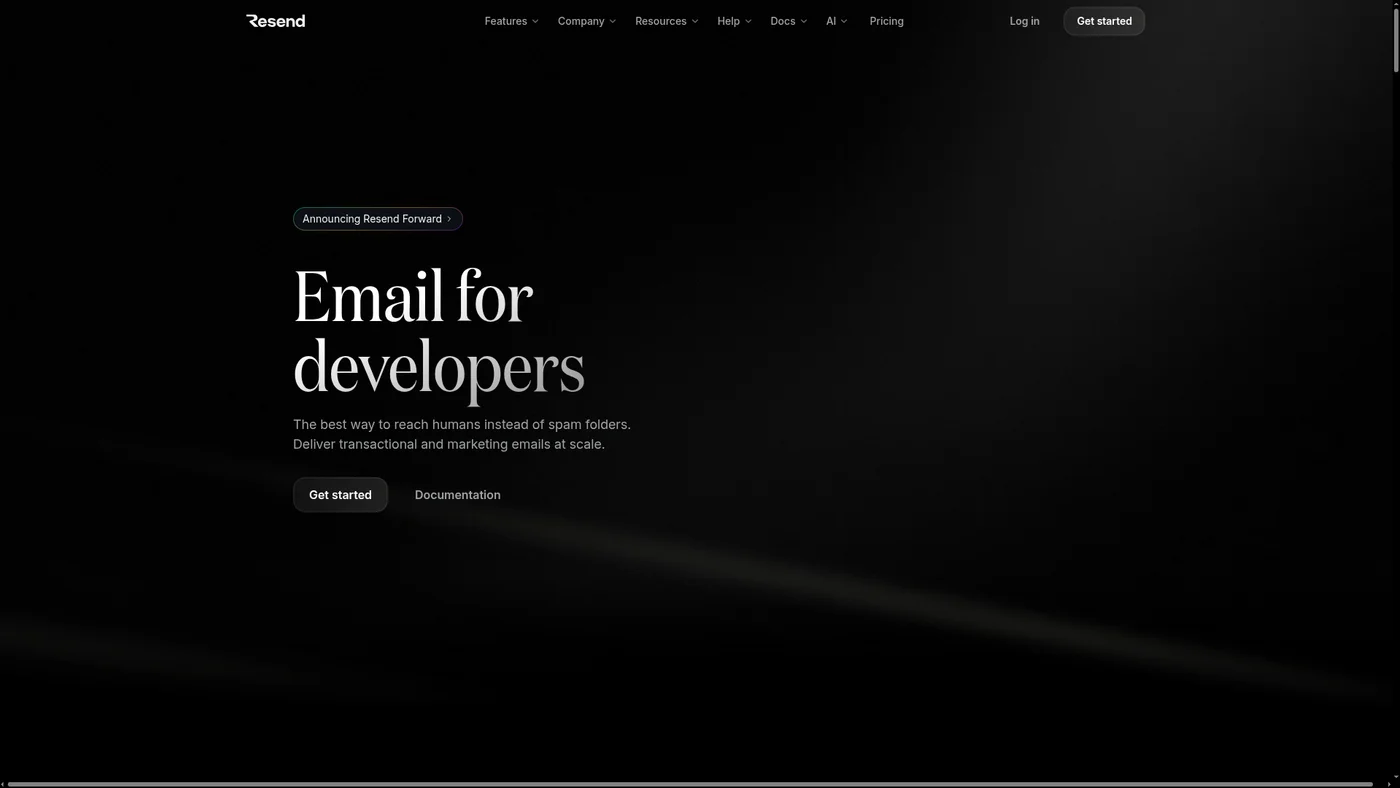
Resend
Developer-focused email API with React templates and modern tooling for transactional and marketing emails
Key Features
Strong agent-fit for Claude workflows. Resend includes an official MCP server and comprehensive API coverage with OpenAPI spec plus SDKs across 6 languages, making it straightforward to integrate into agentic email tasks. The main gap is lack of webhook support, which limits real-time event handling in multi-step workflows.
✓Pros
- Highest agent-readiness score of any email tool
- Cleanest developer experience in the category
- Free tier is enough to ship a small SaaS
✗Cons
- Marketing automation features are leaner than Klaviyo or ActiveCampaign
- No native CRM or visual journey builder
- Younger vendor (founded 2023), shorter track record

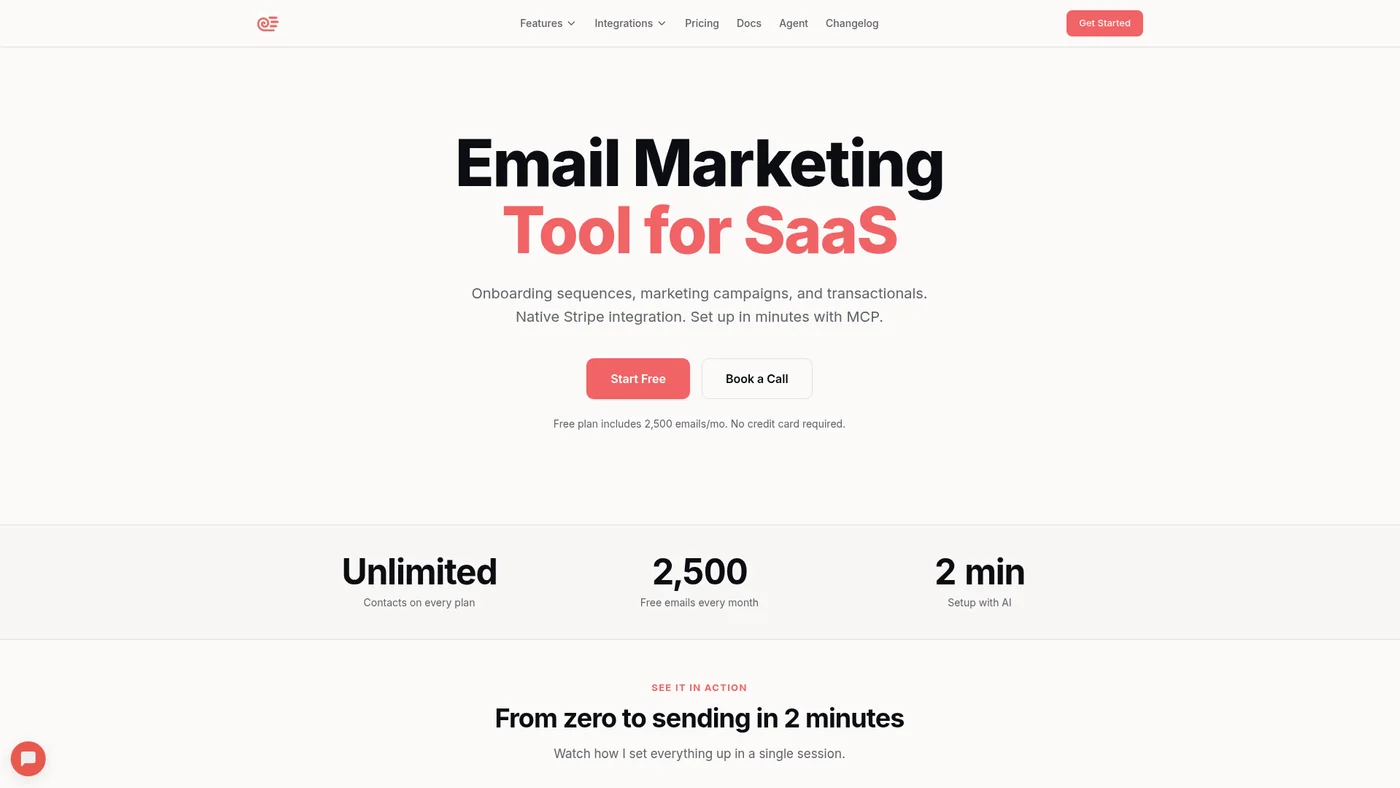
Sequenzy
Email marketing built for AI-native workflows, with a 120-tool MCP server, native Stripe billing triggers, and 2,500 free emails a month.
Key Features
Strong agent fit, top tier for an email tool. Sequenzy ships an official MCP server exposing 120 tools on its own domain, offered both as a hosted Streamable HTTP endpoint (api.sequenzy.com/v1/mcp) and a local stdio server (npx @sequenzy/mcp). Every tool carries structured outputs (outputSchema plus readOnlyHint, destructiveHint and openWorldHint annotations), so an agent gets typed, safe results instead of raw JSON. Webhooks (create, test, replay) and a documented REST API with an llms.txt index round it out, authenticated by API key. The only gaps versus a perfect score are a published OpenAPI spec and an official REST SDK, and the 120-tool MCP already covers most of what those would give you.
✓Pros
- Official MCP from a small focused vendor
- Feature scope is intentionally narrow
- Documentation is clean and AI-readable
✗Cons
- Smallest vendor on this list, ecosystem is thin
- Not for marketing automation or ecommerce flows
- Track record is shorter than incumbents

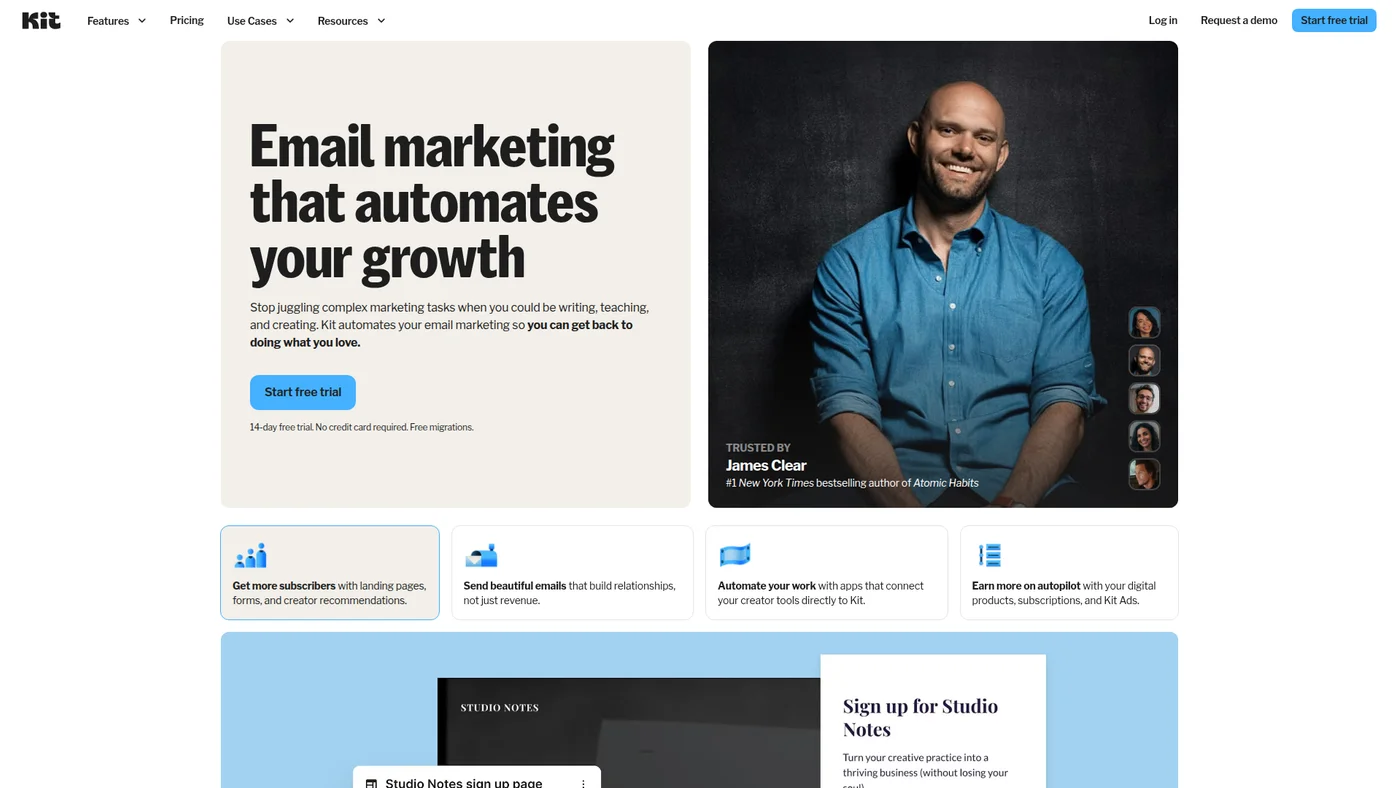
Kit
Creator-focused email marketing platform with powerful automations and integrated monetization tools
Key Features
Official MCP at app.kit.com/mcp verified 2026-07-07: OAuth, full v4 surface incl. writes w/ safety annotations, ChatGPT+Claude+Cursor, paid plans, 120rpm. Second Developer Docs MCP at developers.kit.com/mcp. llms.txt live. Score 7->8 (Joonas approved).
✓Pros
- Official, vendor-maintained MCP
- Cleanest API in the creator-email tier
- Strong free plan for experimentation
✗Cons
- Pricing scales fast above 10,000 subscribers
- Lighter on ecommerce features vs Klaviyo or Omnisend
- MCP capability set is leaner than ActiveCampaign

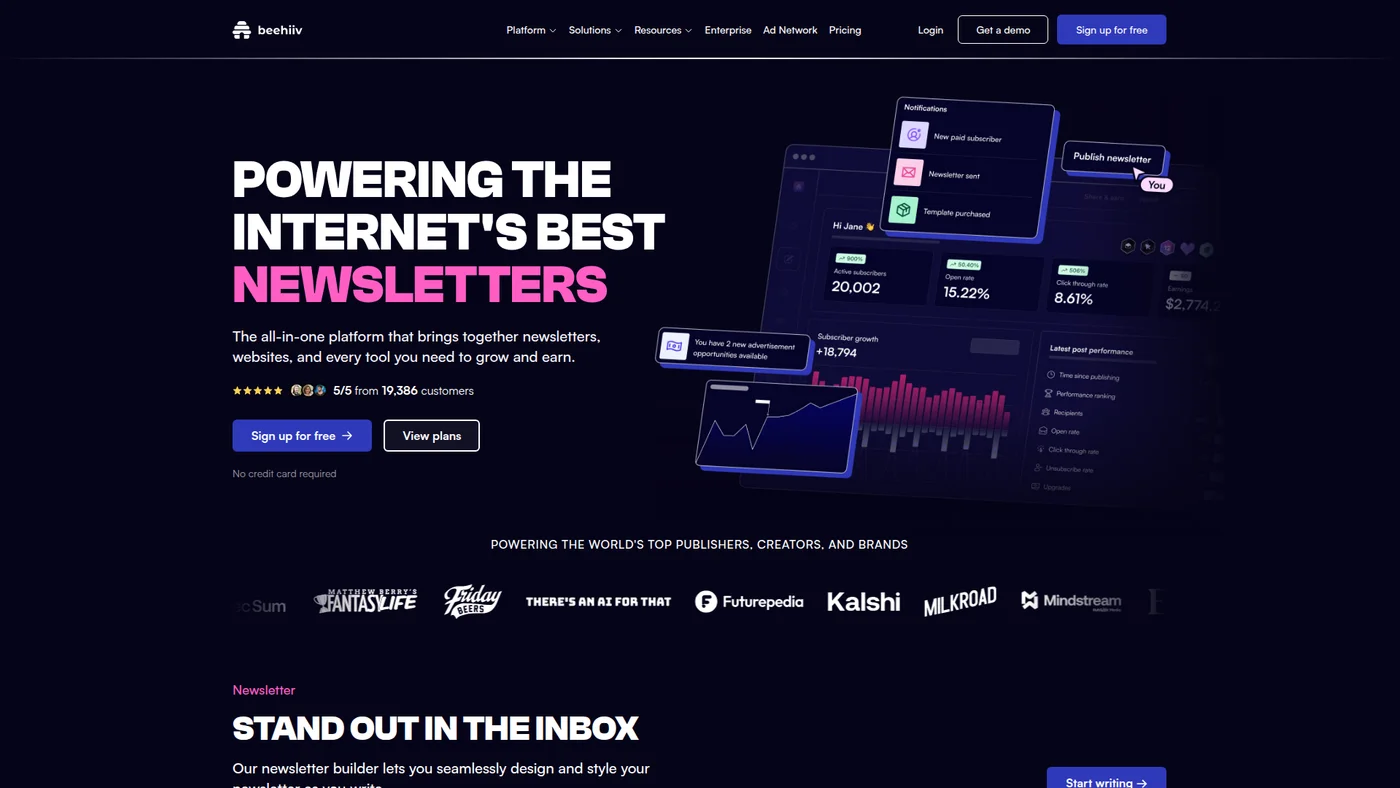
beehiiv
All-in-one newsletter platform with built-in website builder and monetization tools for creators
Key Features
Moderate agent fit with an official MCP server and documented API, but limited by missing OpenAPI specs and lack of SDK support. The MCP bridge helps with Claude workflows, though you'll need custom auth handling and manual JSON parsing for structured data extraction. Skip this if you need webhooks or native integration with other LLM platforms.
✓Pros
- Only newsletter platform with official MCP plus pricing.md
- Richest data surface for publication operators
- Active product, ships agent infrastructure quickly
✗Cons
- Not built for ecommerce or transactional flows
- API rate limits are tight on lower tiers
- Pricing climbs steeply above 10,000 subscribers

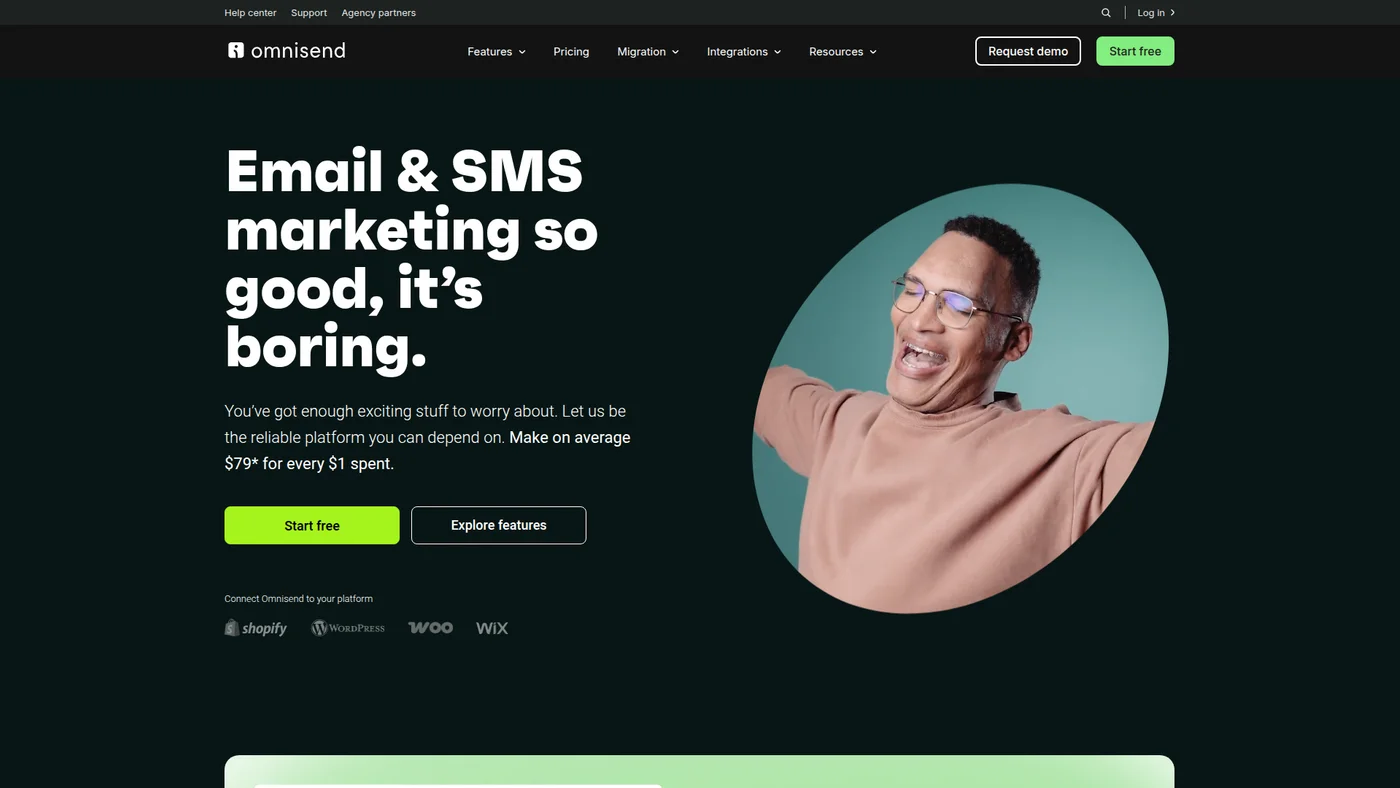
Loops
API-first email platform designed specifically for SaaS teams and product-focused businesses
Key Features
Strong agent-fit for SaaS workflows. Loops runs an official first-party remote MCP server at mcp.loops.so (streamable HTTP, browser OAuth, listed in the official MCP registry as io.github.loops-so/loops), alongside a documented public API with an OpenAPI spec, webhooks and official SDKs for JavaScript/TypeScript, Go, PHP and Ruby plus a Nuxt module. The remaining limitation is disclosure rather than capability: Loops does not publish the server's tool list, read/write consent split, plan gating or rate limits.
✓Pros
- Official MCP from a SaaS-native vendor
- Audience model is event-driven, fits product analytics
- Trusted by Linear, Framer, and Perplexity
✗Cons
- Pricing jumps fast above the free tier
- Not built for ecommerce or B2C marketing volume
- Younger vendor with smaller integration ecosystem
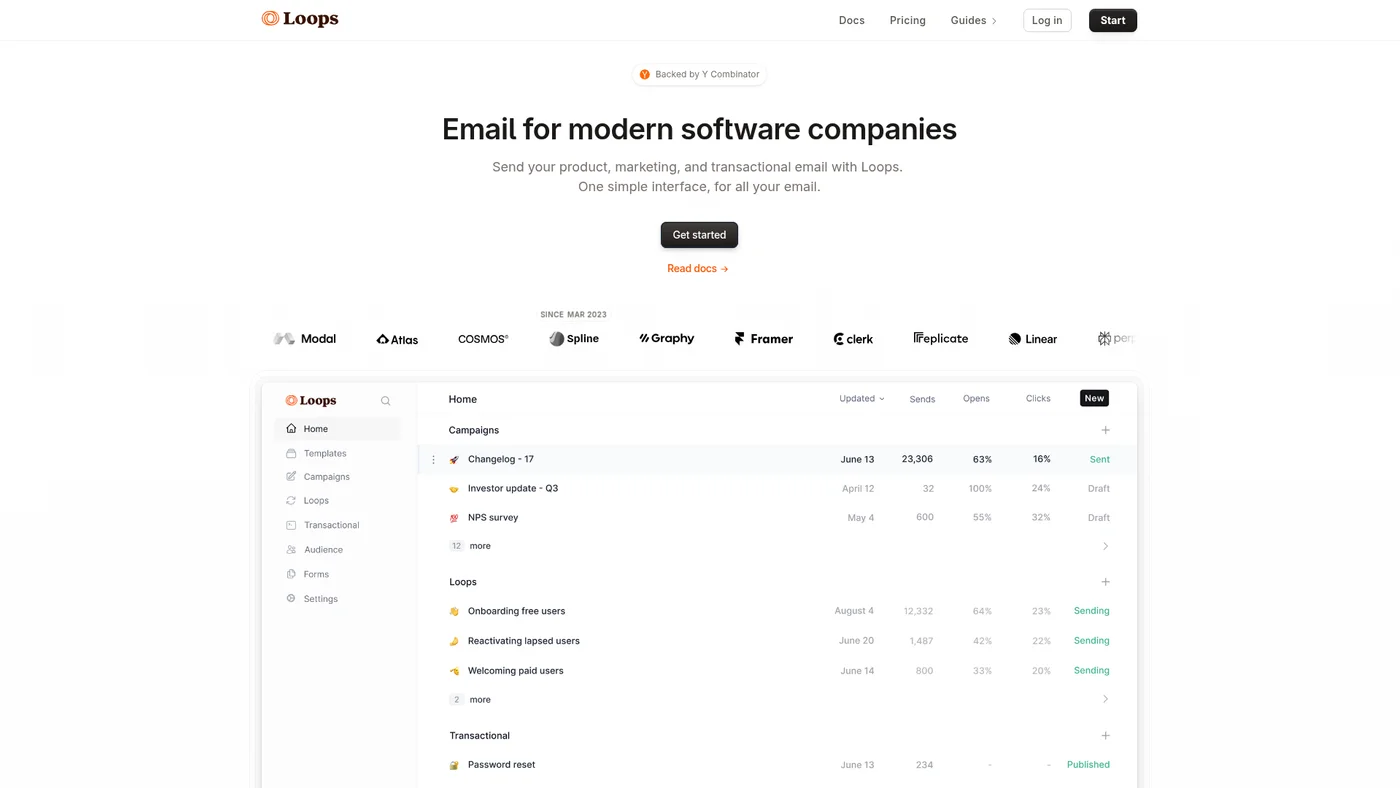

Klaviyo
AI-powered marketing automation platform for ecommerce businesses with unified customer data and omnichannel campaigns
Key Features
Good agent fit with official MCP support. Klaviyo offers an official MCP server and documented public API with native Claude and ChatGPT integration, making it straightforward to add to agentic workflows. The missing OpenAPI spec and lack of webhooks limit some automation patterns, but the MCP availability handles most agent use cases.
✓Pros
- Richest data surface of any email MCP
- Tied into the full Klaviyo data platform, not just sends
- Strong developer docs and SDKs
✗Cons
- Profile-based pricing climbs fast
- Product taxonomy expanded in 2025-2026 (easy to misframe as just email)
- Free tier capped at 250 profiles makes MCP testing tricky
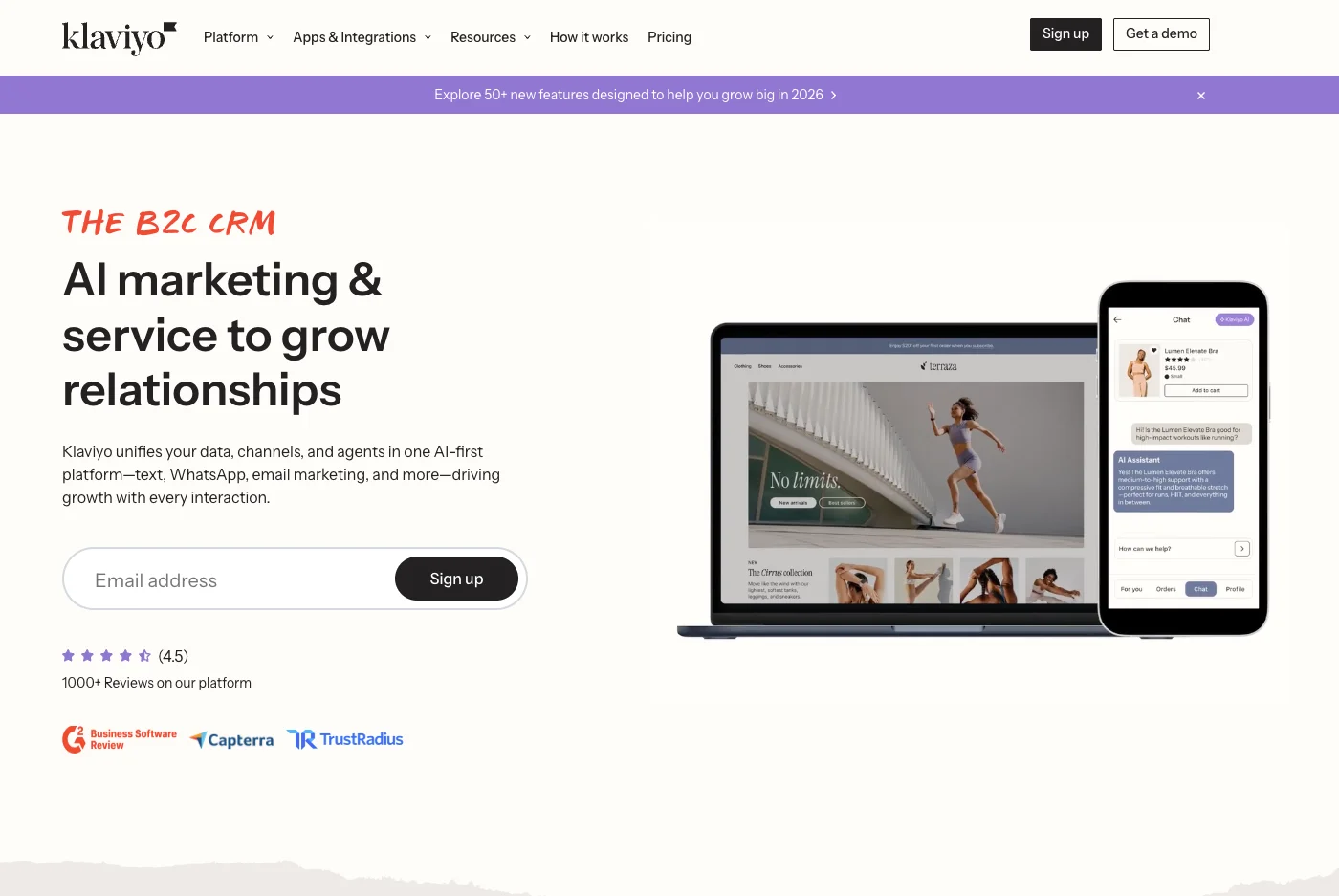

ActiveCampaign
AI-powered email marketing and automation platform for businesses serious about personalized campaigns
Key Features
Solid agent-fit with official MCP support and documented API access. ActiveCampaign's official MCP server and native Claude integration create a direct path for agents to manage email campaigns and automation workflows. The lack of published OpenAPI specs and structured outputs will require more manual prompt engineering to ensure reliable data handling.
✓Pros
- One of the first mainstream platforms with vendor MCP
- Mature automation engine that agents can drive
- Strong API documentation
✗Cons
- Pricing display mixes "billed annually" rates with monthly numbers (verify before quoting)
- MCP capability surface still evolving
- Heavier than dev-focused tools like Resend or Loops
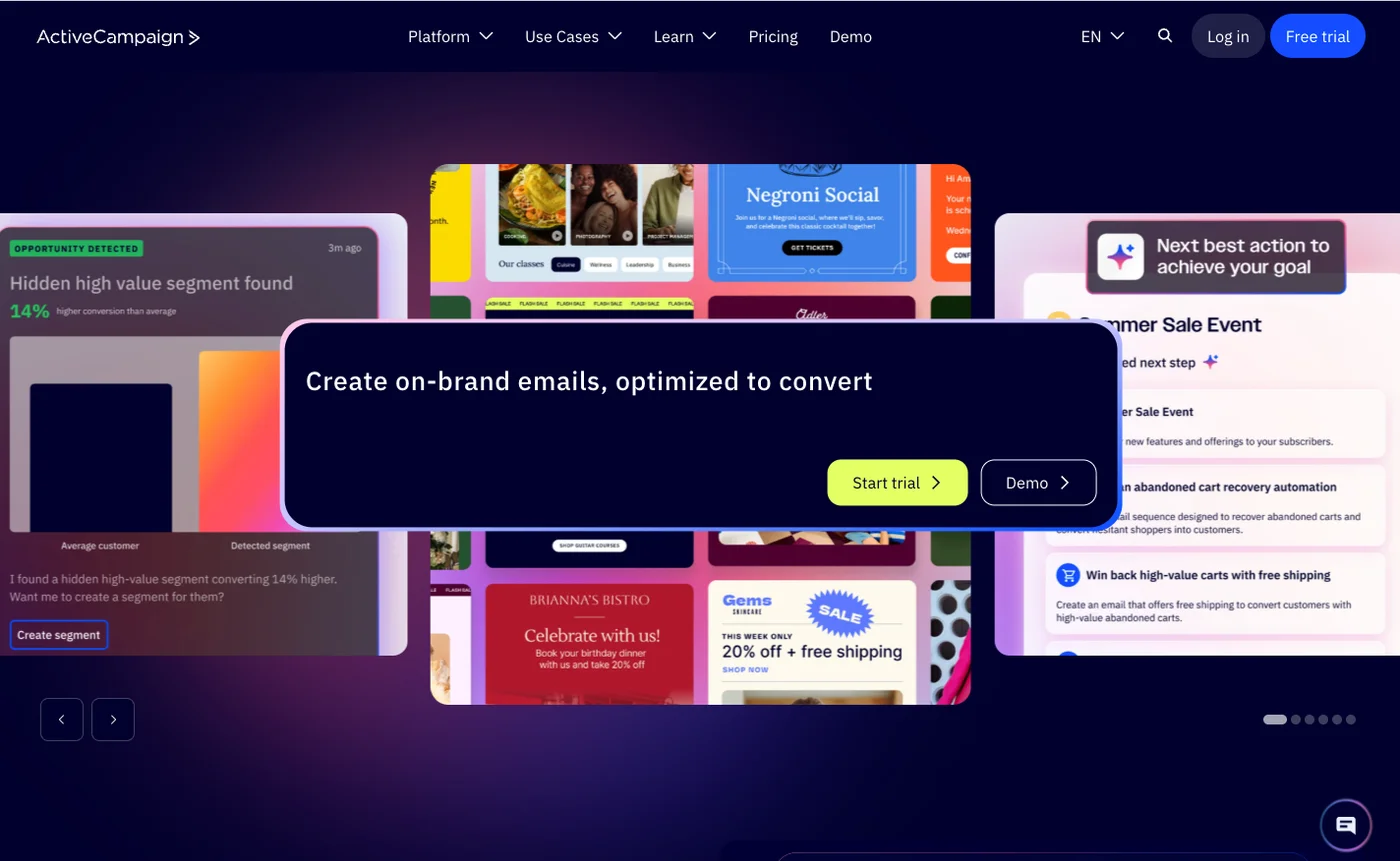

Omnisend
Ecommerce-focused email and SMS marketing platform with powerful automation and 160+ integrations
Key Features
Solid agent fit with a first-party MCP server and a clean REST API. Omnisend hosts an official MCP server at mcp.omnisend.com/mcp, authenticated over OAuth, so an agent can create campaigns, build automations, recommend and edit segments, and pull revenue reporting from Claude or ChatGPT. The REST API (api.omnisend.com/api) is date-versioned via an Omnisend-Version header, uses cursor pagination and RFC 9457 error bodies, and spans contacts, events, products, campaigns, segments, automations, and reports. It sits below the GA-official tier because the one-click Claude connector is still coming soon (custom connector for now), there are no official SDKs, and webhooks are an automation-workflow action rather than a subscription API.
✓Pros
- Cheapest official MCP in the ecommerce tier
- Multi-channel primitives, not just email
- Active product, MCP added quickly after launch
✗Cons
- API less battle-tested than Klaviyo at high volume
- Migration tooling from Klaviyo is the friction point
- SMS pricing is per-message and stacks fast in the US

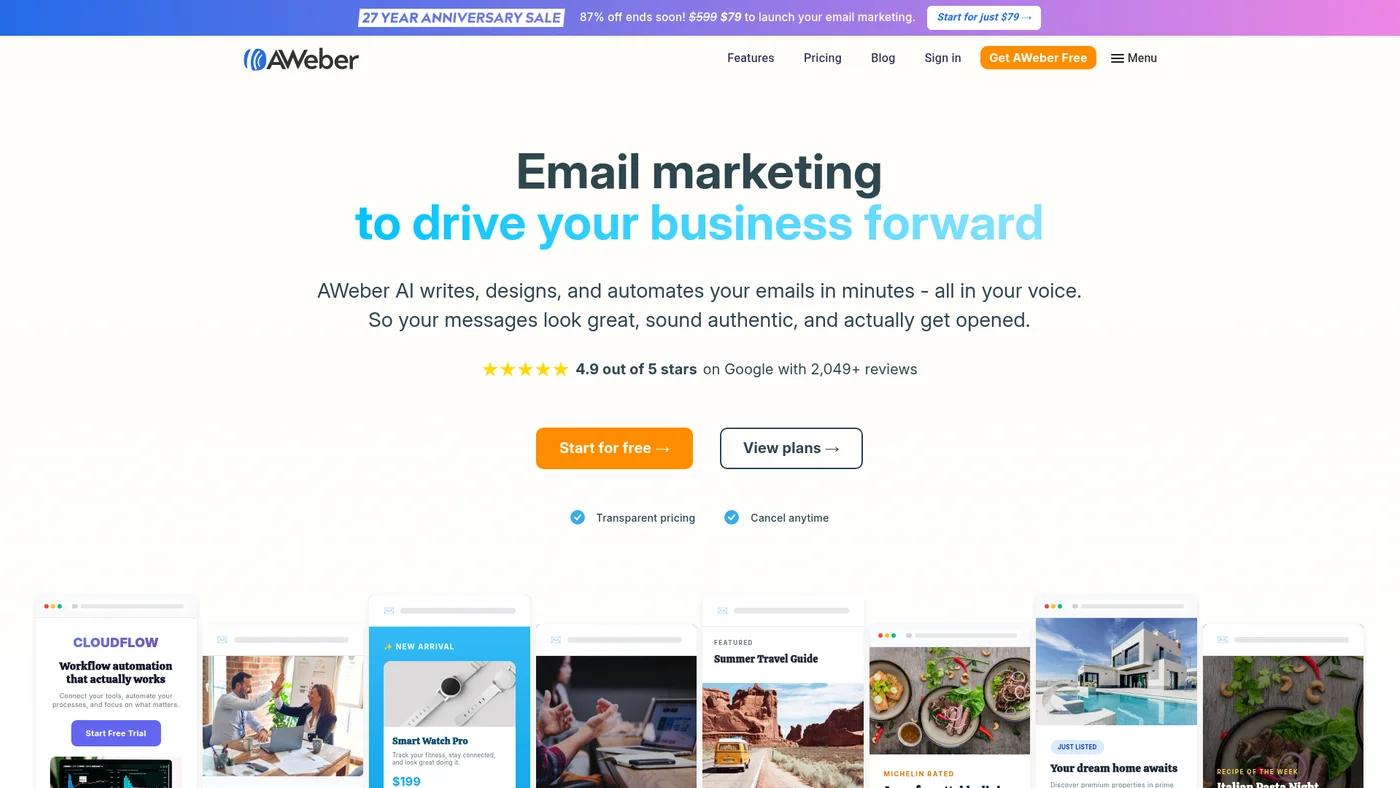
AWeber
Established email marketing platform with 27 years of experience, AI features, and reliable fundamentals
Key Features
Moderate agent-fit with official MCP support. AWeber offers an official MCP server and documented public API, plus native ChatGPT integration, making it accessible for basic automation workflows. The absence of Claude integration, webhooks, and structured outputs limits deeper agent autonomy and real-time responsiveness.
✓Pros
- Official MCP, not a community repo
- Reliable platform with strong deliverability history
- Phone support that answers
✗Cons
- UI feels dated compared to Kit or Omnisend
- Automation builder is thinner than ActiveCampaign
- Not the fresh pick for 2026 unless you value stability over polish

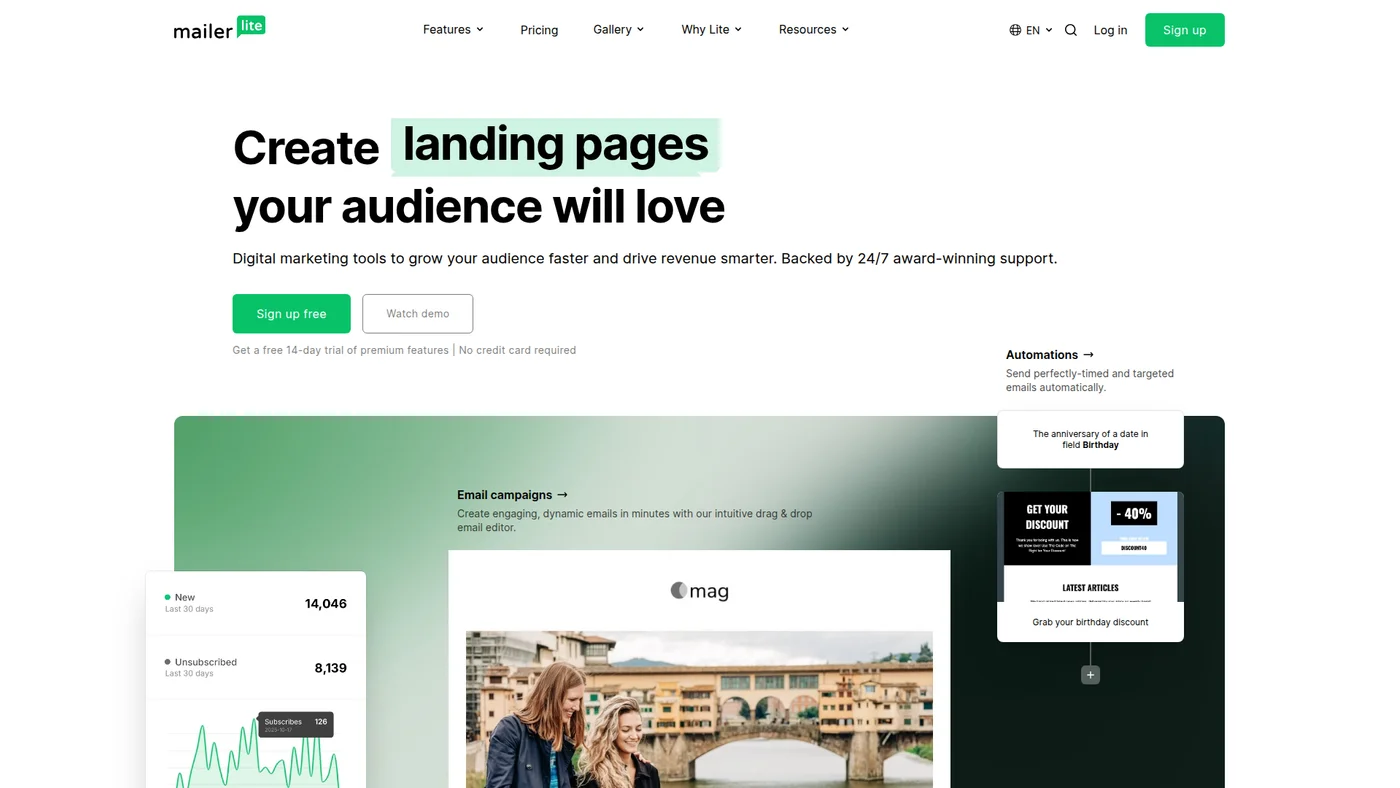
MailerLite
Affordable email marketing with surprisingly powerful features and stellar support
Key Features
Moderate agent-fit with community support. MailerLite has a public API with docs and a working community MCP server, plus native Claude integration, but lacks official MCP hosting, OpenAPI spec, and webhooks for event-driven workflows. The missing structured outputs and single-language SDK options limit automation complexity.
✓Pros
- Cleanest UI for non-technical marketers
- Usable free plan
- Publishes both llms.txt and pricing.md (vendor commitment signal)
✗Cons
- No MCP server yet
- Automation features are lighter than ActiveCampaign or Klaviyo
- Built mostly for solo creators and small businesses, not enterprise

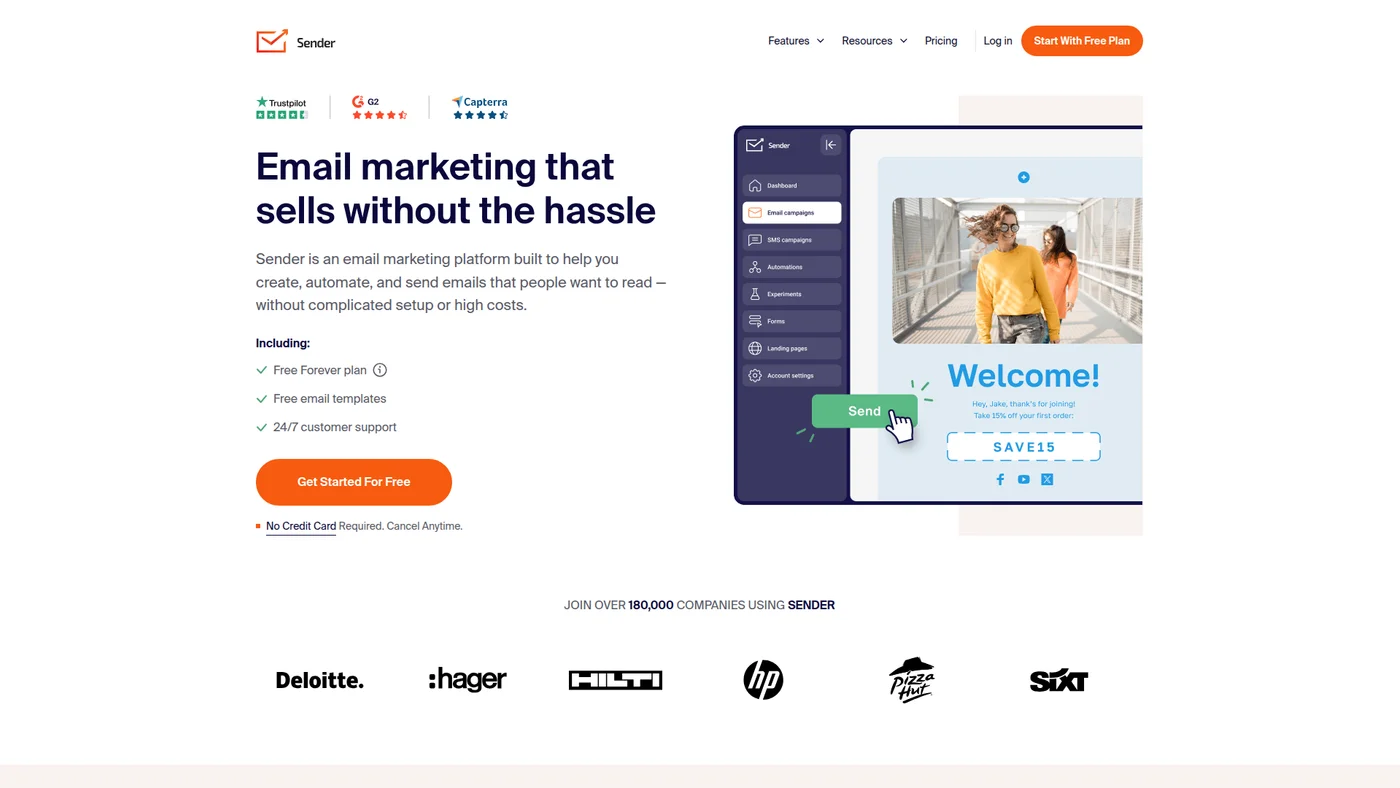
Sender
Affordable email marketing platform with generous free plan and multichannel automation
Key Features
Official MCP server at mcp.sender.net/mcp, verified 2026-08-24: OAuth, 40 documented tools spanning subscribers, segments, campaigns and workflows, reads and writes, with a hard guarantee that campaigns are never sent through the connection. Claude, ChatGPT and Cursor are all documented clients. Account webhooks exist on the REST API. What keeps it off the top tier is the missing public OpenAPI spec and the lack of official server-side SDKs.
✓Pros
- The MCP is not behind a paid plan, unlike Kit, which needs Creator or Creator Pro
- 14 workflow tools, including a dry-run validator that returns every blocking problem at once
- Cheapest paid entry on this list at $7/mo
✗Cons
- No public OpenAPI spec and no official server-side SDKs
- The MCP shipped in August 2026, so there is no track record behind it yet
- Drag-and-drop designs are read-only through the connection unless you allow an overwrite

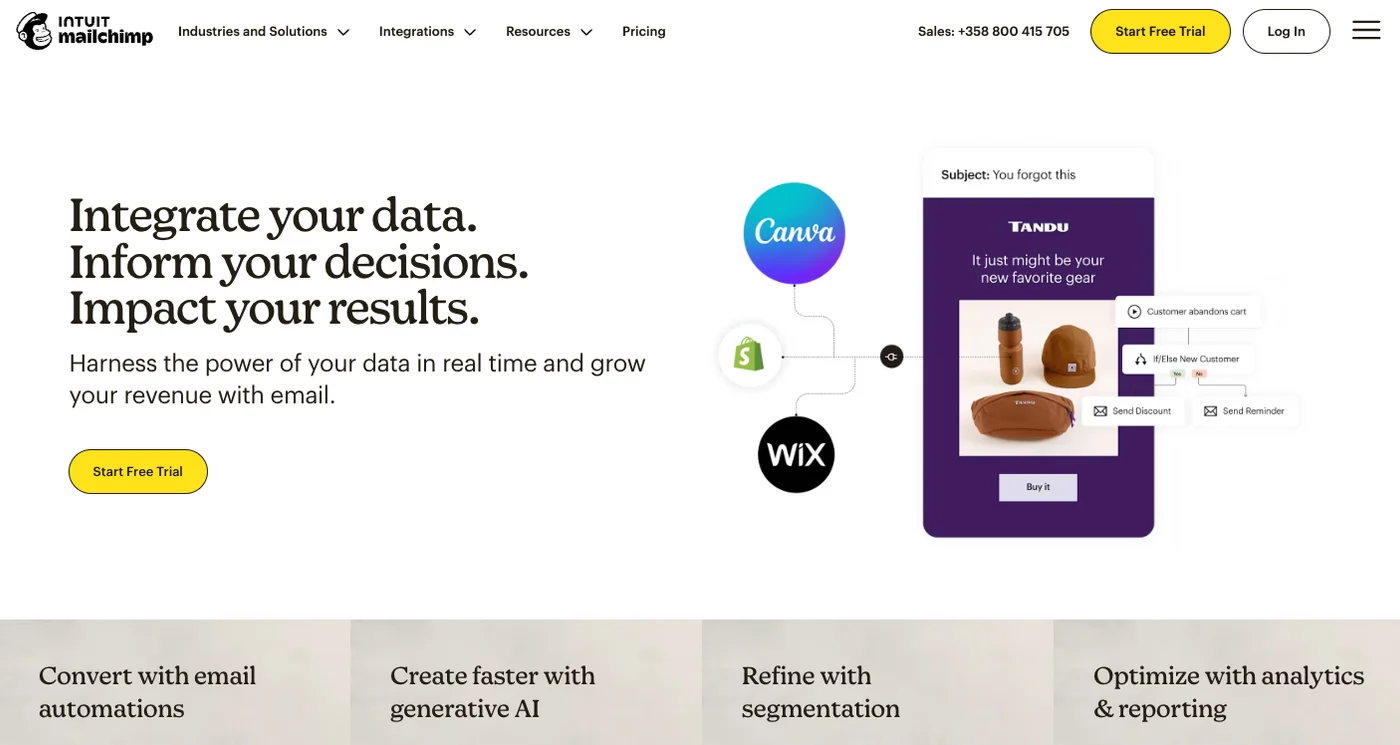
Mailchimp
Popular email marketing platform that's become overpriced with declining value for most users
Key Features
Moderate agent fit, held back by community dependency. Mailchimp has public API docs, OpenAPI spec, and a community MCP server, but lacks official MCP support and structured outputs. The bigger constraint: no native integrations with Claude or ChatGPT, meaning you'll need custom orchestration to get reliable agentic behavior.
✓Pros
- API is stable and broad
- Community MCP is high quality, not a throwaway
- Most teams already know it
✗Cons
- No vendor-maintained MCP, so future compatibility is the maintainer's call
- Pricing is the worst-value of any list here for serious senders
- Better and cheaper alternatives exist (Moosend, Brevo, MailerLite)

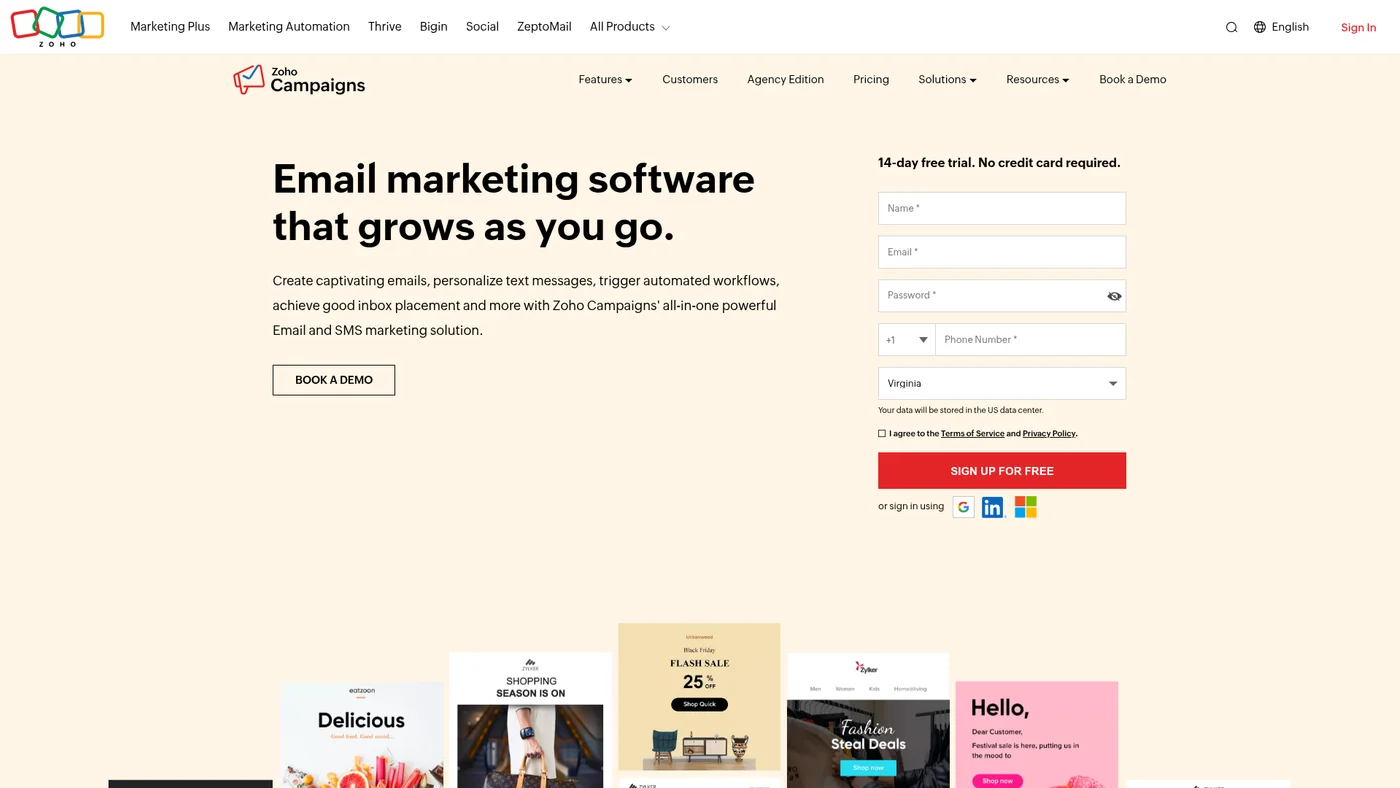
Zoho Campaigns
Email marketing platform with SMS and deep Zoho ecosystem integration for business users
Key Features
Moderate agent-fit with official MCP support. Zoho Campaigns offers an official MCP server and documented public API, giving Claude workflows a foundation for integration, but lacks OpenAPI specs, SDKs, and structured outputs that would enable deeper automation. The missing webhooks and JSON output modes limit real-time responsiveness and data parsing in agent chains.
✓Pros
- Suite-wide MCP, not just Campaigns
- Aggressive pricing
- Mature platform with deep enterprise features
✗Cons
- UI is dense and discovery-hostile for new users
- Support quality varies widely by region
- Standalone email features are weaker than Kit or Omnisend

Encharge
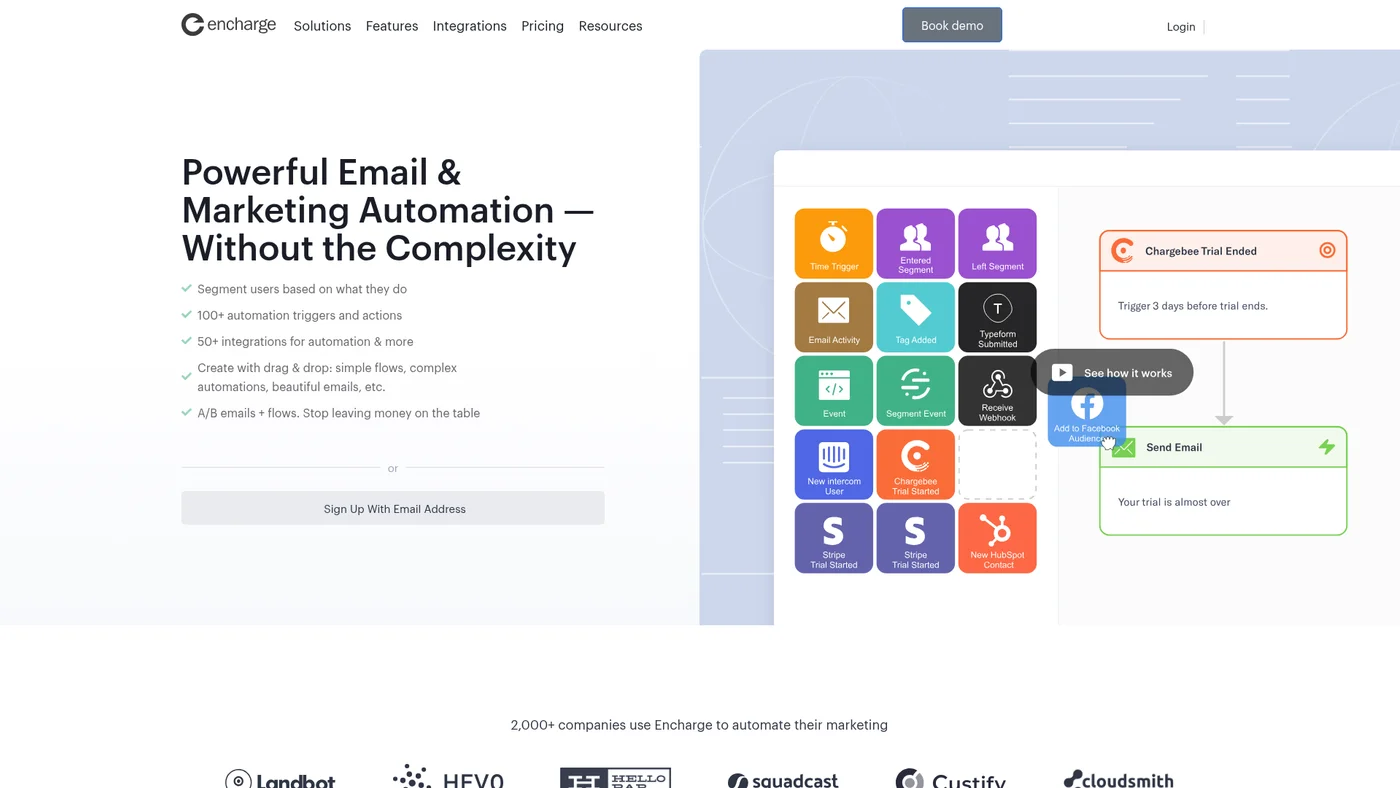
SaaS-focused email automation platform with behavior-based triggers starting at $99/month
Key Features
Moderate agent-fit with community MCP support. Encharge offers a documented API with Node SDK and ChatGPT integration, plus a community-maintained MCP server that bridges the gap. The lack of official MCP, OpenAPI spec, and Claude-native integration limits deep workflow automation.
✓Pros
- SaaS-native automation primitives
- Native Stripe and Segment integrations save integration work
- Pricing published as machine-readable markdown
✗Cons
- No vendor-hosted MCP yet
- Smaller community than Klaviyo or ActiveCampaign
- Pricing climbs quickly above 2,000 contacts

Plunk
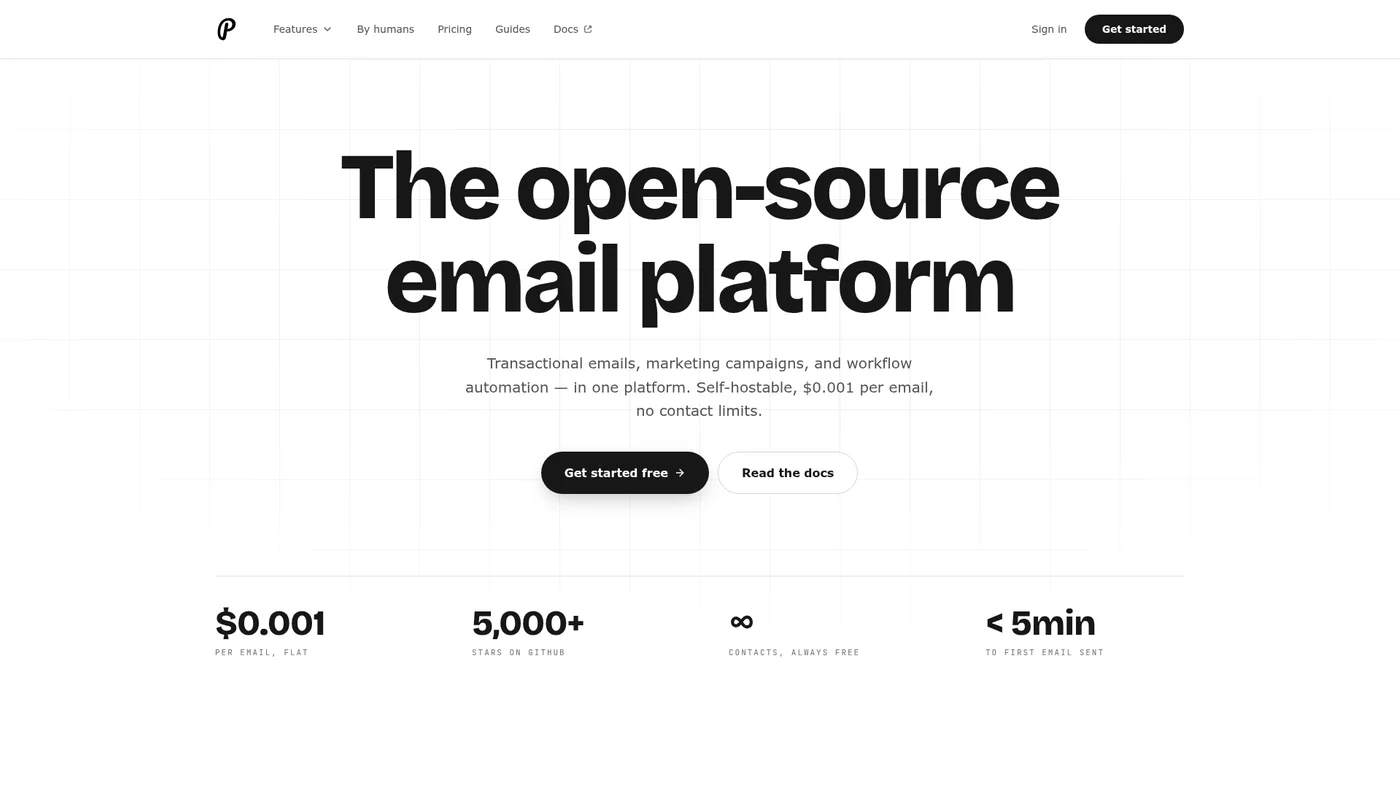
Open-source email platform with $0.001/email pricing, unlimited contacts, and self-hosting options
Key Features
Marginal agent-fit: community MCP exists and API docs are public, but lacks OpenAPI spec and official SDK support. The missing structured outputs and webhook support make it harder to build reliable autonomous workflows. Consider only if you're willing to parse unstructured responses or maintain custom integrations.
✓Pros
- Only open-source pick on this list
- Real escape hatch from vendor lock-in
- Community MCP is well-built (84 tools)
✗Cons
- Self-hosting is real operational work, not a freebie
- Smaller ecosystem and integration surface than commercial vendors
- Community MCP, not vendor-maintained
Price landscape
How prices compare
Starting prices across all 32 tools in this category.


At scale
How prices change as you grow
Pricing at 1K, 5K, and 10K contacts for tools reviewed in this guide.
| Tool | 1K | 5K | 10K |
|---|---|---|---|
| Zoho Campaigns | €7/mo | €31/mo | €49/mo |
| MailerLite | $15/mo | $39/mo | $73/mo |
| Loops | – | $49/mo | $99/mo |
| AWeber | $25/mo | $60/mo | $100/mo |
| Omnisend | $20/mo | $70/mo | $130/mo |
| Mailchimp | – | $75/mo | $110/mo |
| ActiveCampaign | $15/mo | $79/mo | $149/mo |
| Kit | $39/mo | $89/mo | $139/mo |
| Klaviyo | $30/mo | $100/mo | $150/mo |
Methodology
How I chose these
For each tool I checked: (1) does the vendor host an MCP server on their own domain (counted as "official"), or only a community implementation; (2) is there a public REST API with proper documentation; (3) is there an OpenAPI spec, SDK coverage across major languages, OAuth support, webhook events for agent triggers, and native Claude or ChatGPT integrations where they exist.
Tools below score 4 were excluded from this roundup. Community MCPs were spot-checked: I cleared out testing throwaways and generic SMTP servers misclassified to brands (Brevo and Sender both lost their false-positive MCP entries during this audit). Sender has since shipped a real official MCP server at mcp.sender.net/mcp, verified 2026-08-24.
Scores are reproducible via the martech-db auto-score-readiness script: every number in the list can be recomputed at any time.
FAQ
Frequently Asked Questions
The MCP server is hosted on the vendor's own domain (kit.com/ai/mcp, klaviyo.com, activecampaign.com) and maintained by the vendor. Community MCPs are third-party implementations on GitHub. Both work for agent workflows, but vendor-hosted means a product commitment behind it, not just a maintainer who might lose interest.
Depends on your shape. SaaS team building a product? Resend or Loops. Ecommerce store running real lifecycle automation? Klaviyo or Omnisend (Omnisend if cost matters). Creator or newsletter operator? Kit or beehiiv. Need to send transactional only? Postmark for reliability, Mailgun for multi-region. Use the filter chips above to narrow further. If you want a non-MCP-first comparison of the broader email category, /best/email-marketing-software covers the full landscape.
Case by case. The Mailchimp community MCP (112 tools, read-only and dry-run modes, active maintenance) is well-built and I would use it for internal workflows. Plunk and Encharge community MCPs are similarly credible. The risk is maintainer disappearance: if your production agent depends on a community MCP, you need a fallback. For vendor-supported continuity, lean toward the official-MCP picks.
Resend if you want one provider for both transactional and marketing email, plus MCP, plus the cleanest developer experience. Postmark if your top priority is best-in-class transactional deliverability and you are willing to use a separate provider for marketing sends. Both are excellent. Postmark has a longer track record, Resend has more momentum and better agent-readiness.
Loops is built around SaaS lifecycle: audiences, events, product analytics, where the same contact receives onboarding, marketing, and transactional sends from one source of truth. Resend is more general-purpose: transactional and marketing under one API but the audience model is closer to traditional marketing tools. For a B2B SaaS doing real product-led growth, Loops often fits better. For a general SaaS or non-SaaS use case, Resend is broader.
Only if you have a specific reason. Self-hosting an email stack is real operational work: bounce handling, IP reputation, deliverability monitoring, security patching. The hosted free tier covers most use cases. Self-host only if your product or your customers cannot tolerate the vendor going away or changing terms.
Deterministic rubric. Official MCP server (2 points base, plus 1.5 if vendor-hosted), public API with documentation (2 points), OpenAPI spec (1), multiple SDK languages (1), OAuth (1), webhooks (1), native Claude or ChatGPT integrations (1 plus 0.5). Capped at 10. No LLM judgment is involved in the score itself. The full rubric lives in the martech-db auto-score-readiness script and is reproducible.
Continue reading






10+ years in digital marketing. I review SEO and AI visibility software for small business owners and solo operators: what each plan really costs, which one actually covers the job, and where a tool stops being worth it. Checked against vendor documentation and real user feedback, and against my own use where I have it.