
This page may contain affiliate links.
Some links on this page are affiliate links, meaning I may earn a commission if you sign up (at no extra cost to you). This never influences my ratings or recommendations.
Whether you're looking for simpler automation, lower costs, or different features, there are several alternatives worth exploring.
Overview
Quick comparison
Why Switch
Why people look for Customer.io alternatives
Customer.io's pricing can be steep for smaller teams or businesses just starting with marketing automation
The platform's complexity might be overkill if you need basic email marketing without advanced behavioral triggers
You want native integrations with specific ecommerce platforms or SaaS tools that Customer.io doesn't support
Your team prefers a simpler interface over Customer.io's data-heavy approach to customer engagement
You need specific features like SMS marketing, landing pages, or CRM functionality in one integrated platform
Alternatives
Best Customer.io alternatives
7 alternatives ranked. 28 are cheaper. 22 offer free plans.

Sequenzy
Top PickSaaS companies wanting AI-powered email automation with built-in Stripe integration
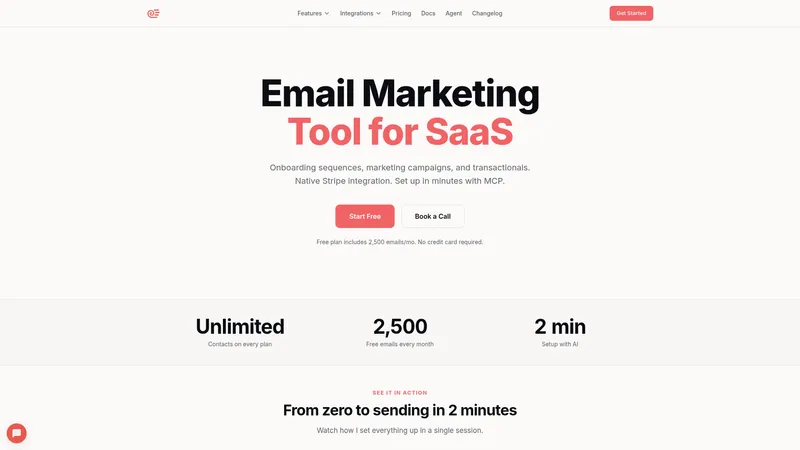
AI-powered email marketing platform with native Stripe integration designed for SaaS companies
Why consider Sequenzy
Sequenzy focuses specifically on SaaS businesses with native payment integration and AI-driven campaign optimization. It offers a generous free plan and has an MCP server for AI agents, making it accessible for modern workflows.
Pros
- +Free plan available with core features
- +AI-powered automation specifically designed for SaaS
- +Native Stripe integration for revenue tracking
Cons
- −Limited to SaaS use cases
- −Newer platform with smaller user base

Encharge
SaaS teams needing event-driven automation with visual workflow building
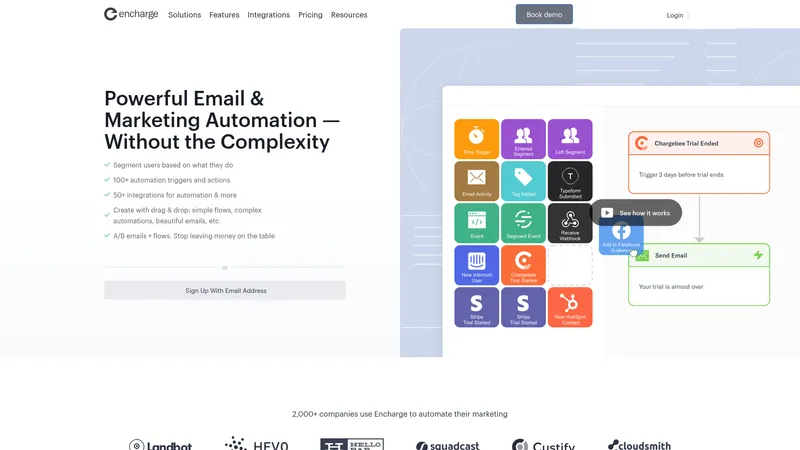
SaaS-focused marketing automation platform with event-driven behavioral triggers and visual workflow builder
Why consider Encharge
Encharge specializes in behavioral email marketing for SaaS companies with a $99/month starting price. It provides detailed user journey mapping and has strong API support for custom integrations.
Pros
- +Visual automation builder with conditional logic
- +14-day trial to test before committing
- +Strong event tracking for user behavior
Cons
- −Higher starting price than some alternatives
- −Learning curve for complex automations

Loops
Product teams wanting simplified email automation that combines transactional and marketing messages
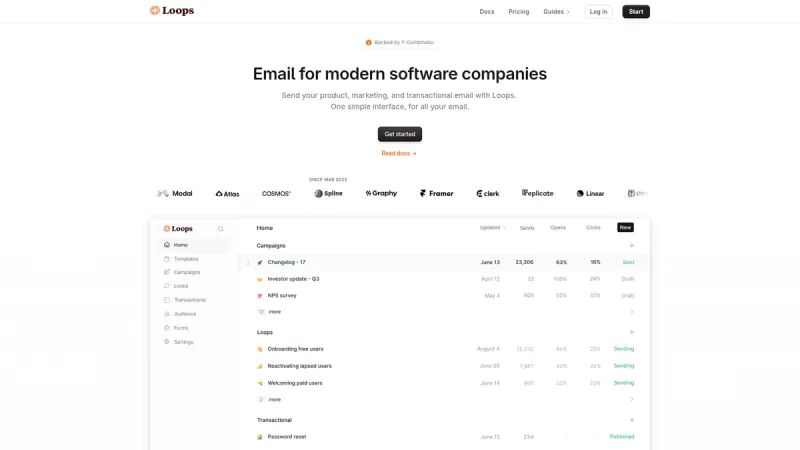
Simplified SaaS email platform combining transactional and marketing emails with event-based automation
Why consider Loops
Loops offers a clean approach to SaaS email marketing with a free plan and scaling that starts at $49/month . It has an MCP server for AI integration and focuses on developer-friendly implementation.
Pros
- +Free plan with essential features
- +Simple setup for both transactional and marketing emails
- +Developer-friendly with good API documentation
Cons
- −Fewer advanced segmentation options
- −Limited template customization compared to full-featured platforms

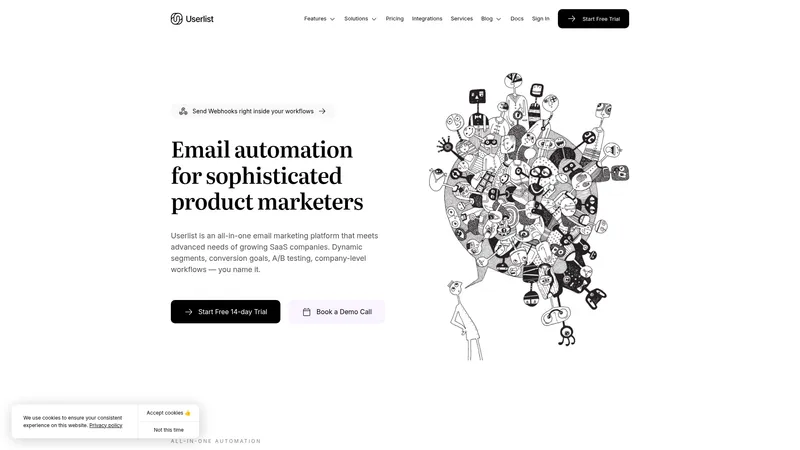
Userlist
B2B SaaS companies needing company-level data modeling and in-app messaging
B2B SaaS-focused email automation platform with native company-user data model and in-app messaging
Why consider Userlist
Userlist is built specifically for B2B SaaS with a unique company-user data structure that tracks both individual users and their organizations. This makes it ideal for teams selling to businesses rather than individual consumers.
Pros
- +Company-level data modeling for B2B context
- +In-app messaging alongside email campaigns
- +Focus on user lifecycle and retention
Cons
- −Pricing not publicly available
- −Narrow focus limits use outside B2B SaaS

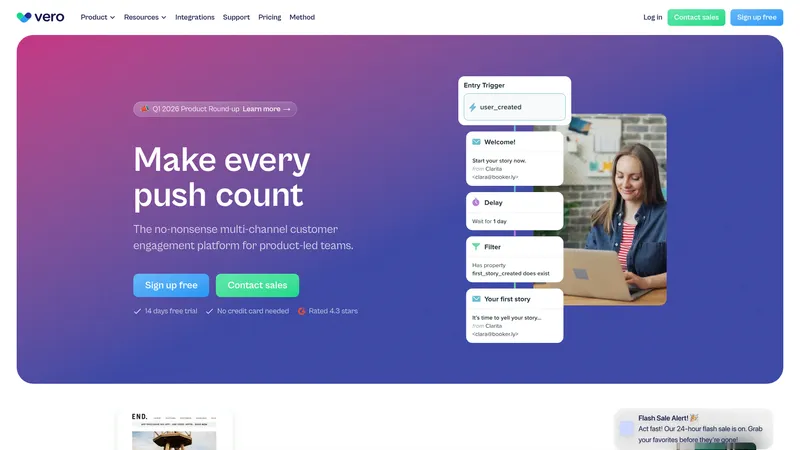
Vero
Product-led teams wanting multi-channel messaging with behavioral targeting
Multi-channel customer engagement platform for product-led teams to send personalized emails, SMS, and push notifications.
Why consider Vero
Vero combines email, SMS, and push notifications in one platform with strong behavioral segmentation. The contact sales pricing model suggests it's positioned for established teams with specific requirements.
Pros
- +Multi-channel messaging capabilities
- +Behavioral workflows and segmentation
- +99.99% uptime with proven reliability
Cons
- −No transparent pricing available
- −May be overkill for simple email needs

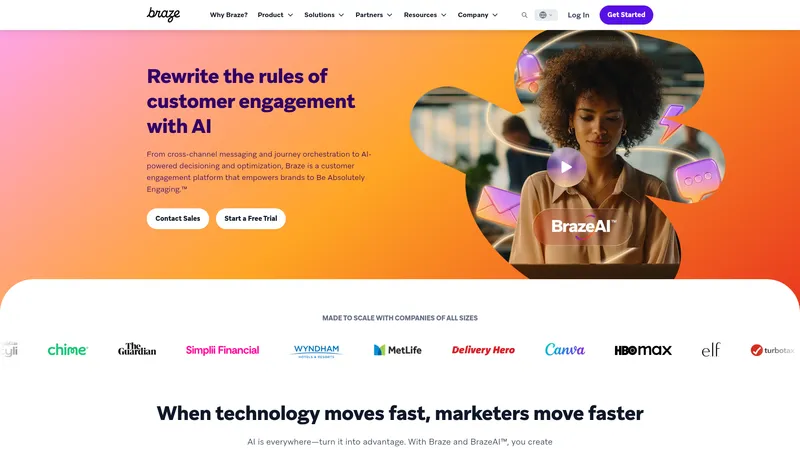
Braze
Enterprise teams needing AI-powered cross-channel orchestration at scale
Customer engagement platform for cross-channel messaging, journey orchestration, and AI-powered decisioning at scale.
Why consider Braze
Braze is a comprehensive customer engagement platform with AI-powered decisioning and real-time data activation. It's built for large organizations that need multi-channel messaging with enterprise-grade security.
Pros
- +AI-powered optimization with BrazeAI
- +Real-time data unification across channels
- +Enterprise security and compliance features
Cons
- −Enterprise pricing requires sales contact
- −Complex setup not suited for smaller teams

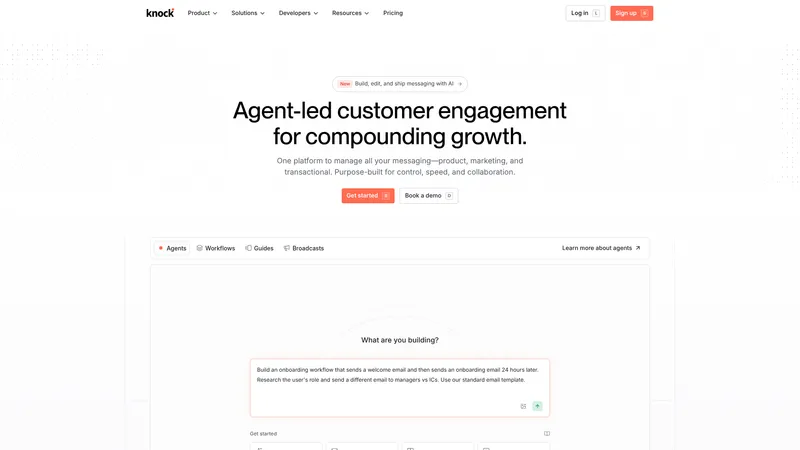
Knock
Development teams building custom messaging workflows with version control and rollback capabilities
AI-native customer engagement platform for building and managing messaging across email, SMS, push, chat, and in-app channels.
Why consider Knock
Knock is designed for developers who want to build messaging infrastructure rather than use pre-built templates. It offers multi-channel messaging with AI-powered content generation and developer-friendly features like CLI and version control.
Pros
- +Developer-friendly with CLI and SDK support
- +Version control and rollback for messaging workflows
- +AI-powered workflow and content generation
Cons
- −Requires technical implementation
- −Custom pricing may not suit smaller teams
Price Chart
How Customer.io compares on price
Of the 29 alternatives tracked, 28 start at a lower price than Customer.io's $100/mo. 22 offer a free plan.


Checklist
What to look for in an alternative
When evaluating Customer.io alternatives, consider your primary use case first. If you're running a SaaS business, look for platforms with event tracking and user lifecycle automation. Ecommerce teams should prioritize tools with product recommendation engines and abandoned cart recovery. Pricing structure matters too.
Some platforms charge per contact while others use email volume or feature tiers. Factor in your growth plans and whether you need multi-channel messaging beyond email. Also consider integration requirements, especially if you're already using tools for analytics, CRM, or customer support.
FAQ
Frequently Asked Questions
Customer.io specializes in behavioral email marketing using event data from your product. While traditional email platforms focus on demographic segmentation, Customer.io triggers messages based on user actions like feature usage, subscription changes, or in-app behavior.
Sequenzy, Encharge, and Loops all focus specifically on SaaS needs. Sequenzy offers a free plan with AI features, Encharge provides visual workflow building at $99/month , and Loops combines transactional and marketing emails starting at $49/month .
Yes, several alternatives offer free plans. Sequenzy has a free tier, Loops offers a free plan with essential features, and HubSpot provides free CRM with basic email marketing. These free options have limitations but can work for smaller teams getting started.
HubSpot and Loops tend to be more user-friendly for teams new to marketing automation. HubSpot offers guided setup and familiar CRM workflows, while Loops simplifies the complexity of behavioral messaging into more straightforward campaigns.
Most Customer.io alternatives offer API access and common integrations. Sequenzy and Loops have MCP servers for AI agent integration, while HubSpot has the broadest integration marketplace. Check each platform's integration directory for your specific tools.
Customer.io's pricing varies by usage, but many alternatives offer more transparent pricing. Encharge starts at $99/month , Loops at $49/month , and HubSpot has a free tier. Enterprise solutions like Braze require custom pricing similar to Customer.io's enterprise plans.
Still considering Customer.io?
Try it free for 14 days before deciding.
More on Customer.io



Joonas Rotko
Author & founder of That Marketing Buddy
I score marketing software for AI-stack fit (MCP, API, agent-readiness), backed by 10+ years in digital marketing. I track 32 tools so you can find the right fit.
This page may contain affiliate links. I earn a commission at no extra cost to you. This never influences the recommendations.