
Most GEO roundups rank tools on how well they track a single brand. That is the wrong test if you run an agency. But the test I used to run on this page, client workspaces and white-label reporting, was not quite right either. It assumes you already have clients paying for AI visibility work. Most agencies do not.
So the first question is whether you can run a real audit for a prospect before anyone is paying you, because that audit is how the service gets sold. The second is what the entry costs once one client is on the books. Only then does it matter whether client separation and white-label reporting exist at the tier you can afford. That is the order I ranked in.
For each tool below I opened the vendor's own pricing and agency pages and checked what they publish: whether there is a free tier or a pitch workspace you can use pre-sale, what the real agency entry price is, how many client projects it covers, and whether white-label reporting is included or gated.
Where a vendor does not publish a number, I say so rather than guessing, and several of them do not.
This page may contain affiliate links.
Some links on this page are affiliate links, meaning I may earn a commission if you sign up (at no extra cost to you). This never influences my ratings or recommendations.
Overview
The landscape
I track 38 tools in this category. Prices range from $19/mo (Aiso) to $800/mo (Evertune). The median starting price is $89/mo, so anything below that is a good deal.
2 tools offer free plans: PromptWatch, AthenaHQ.
This roundup covers the 13 I consider worth a serious look. Each one is ranked with real pricing data, aggregated user ratings, and my honest take.
Audience
Who is this guide for?
- ✓SEO and digital agencies adding AI visibility as a billable service
- ✓Agencies managing between 3 and 25 client brands
- ✓Freelance consultants who need white-label reports under their own brand
- ✓Agency owners deciding whether GEO is a product line or a line item
Which one is right for you
The right pick depends on who you are
Four buyers, four answers, all within AI Search Visibility (GEO). I ranked every tool here against each of them, and the reason under each pick is mine rather than the vendor's.
For an agency
3 to 30 people, multiple client accounts

from $95/mo
Official MCP server with OAuth and 59 tools (including writes) plus a full REST API on every plan, free tier included, wrapped around visibility tracking that reads actual AI interfaces and crawler logs
For a consultant
solo, juggling 5 to 15 clients
from $95/mo
Official MCP server with OAuth and 59 tools (including writes) plus a full REST API on every plan, free tier included, wrapped around visibility tracking that reads actual AI interfaces and crawler logs
For a solo builder who lives in AI
wires tools into Claude Code or Cursor
from $95/mo
Official MCP server with OAuth and 59 tools (including writes) plus a full REST API on every plan, free tier included, wrapped around visibility tracking that reads actual AI interfaces and crawler logs
For a solo builder who wants it simple
one tool, no wiring

from $99/mo per site
Runs GEO and SEO end to end on autopilot for one flat $99/site, and ships a well-built free MCP server
Quick picks
Which tool is right for you?
Skip the scroll. Pick your situation:


What actually matters when you buy GEO software for clients
Four things decide whether a GEO tool works for an agency, and only one of them shows up in a normal feature comparison.
Client separation. Every client needs its own workspace, and ideally its own access control so a junior on one account cannot see another client's data. Otterly.AI gives unlimited workspaces, Peec AI splits a credit pool by project, and SE Visible adds per-seat permissions. Scrunch AI's entry plan gives you one workspace, which is worth knowing before you buy.
Whose logo is on the report. Clients pay for insight delivered in your brand, not a screenshot of someone else's dashboard. White-label is the feature most often marketed and least often included at the price shown. Peec AI includes it on agency plans. LLM Pulse restricts it to Enterprise.
How the bill scales. Per-brand pricing punishes you for winning work. Unlimited domains at Superlines or unlimited workspaces at Otterly.AI change the shape of that curve, and a shared credit pool at Peec AI lets you shift capacity from a churned client to a new one without a plan change.
Whether reporting can be automated. Monthly client reports are identical in shape and different in data, which is exactly the work that should not be done by hand. Seven of the eight tools here ship both an MCP server and an API, so a reporting run can be triggered from your own stack or an assistant.
Quick verdict
PromptWatch is where most agencies should start, and the reason is narrow: it is the only tool on this page with a free plan. Explore costs nothing, which means you can pull a prospect's AI visibility and put it in front of them before you have sold anything. Paid tiers run $95, $245 and $579 a month, and there is an Agencies track that is custom quoted.
What it does not publish is workspace counts or white-label reporting, so once you are running a roster you will be having a sales conversation. If you are already billing for this work, Searchable is the better buy.
Its agency ladder starts at $250 a month for 5 client projects with white-label reporting, MCP and API included from that first tier, which is where most of this category still gates you behind Enterprise. For the tightest budget, LLM Pulse at €49 a month is the cheapest paid entry, and Peekaboo at $50 is the cheapest way to add a second brand if two is all you need.
If your roster churns, Finseo bills per active client and lets you pause one to stop paying. If your clients are European and procurement asks about data residency, Superlines is still the answer even though it sits last here on name recognition.
Overview
Quick comparison
| # | Tool | Price | Rating |
|---|---|---|---|
| 1 | $95/mo | 8.6/10 | |
| 2 | $125/mo | 8/10 | |
| 3 | $49/mo | 8.3/10 | |
| 4 | $50/mo | 7.2/10 | |
| 5 | $29/mo | 7.7/10 |
Show all 13 tools
| 6 | $95/mo | 7.8/10 | |
| 7 | Custom pricing | 8.1/10 | |
| 8 | $99/mo | 8.4/10 | |
| 9 | $99/mo | 8.1/10 | |
| 10 | $250/mo | 7.5/10 | |
| 11 | €250/mo (5 clients) | 8/10 | |
| 12 | $82/mo | 8/10 | |
| 13 | €89/mo | 8/10 |
Rankings
My Top Picks
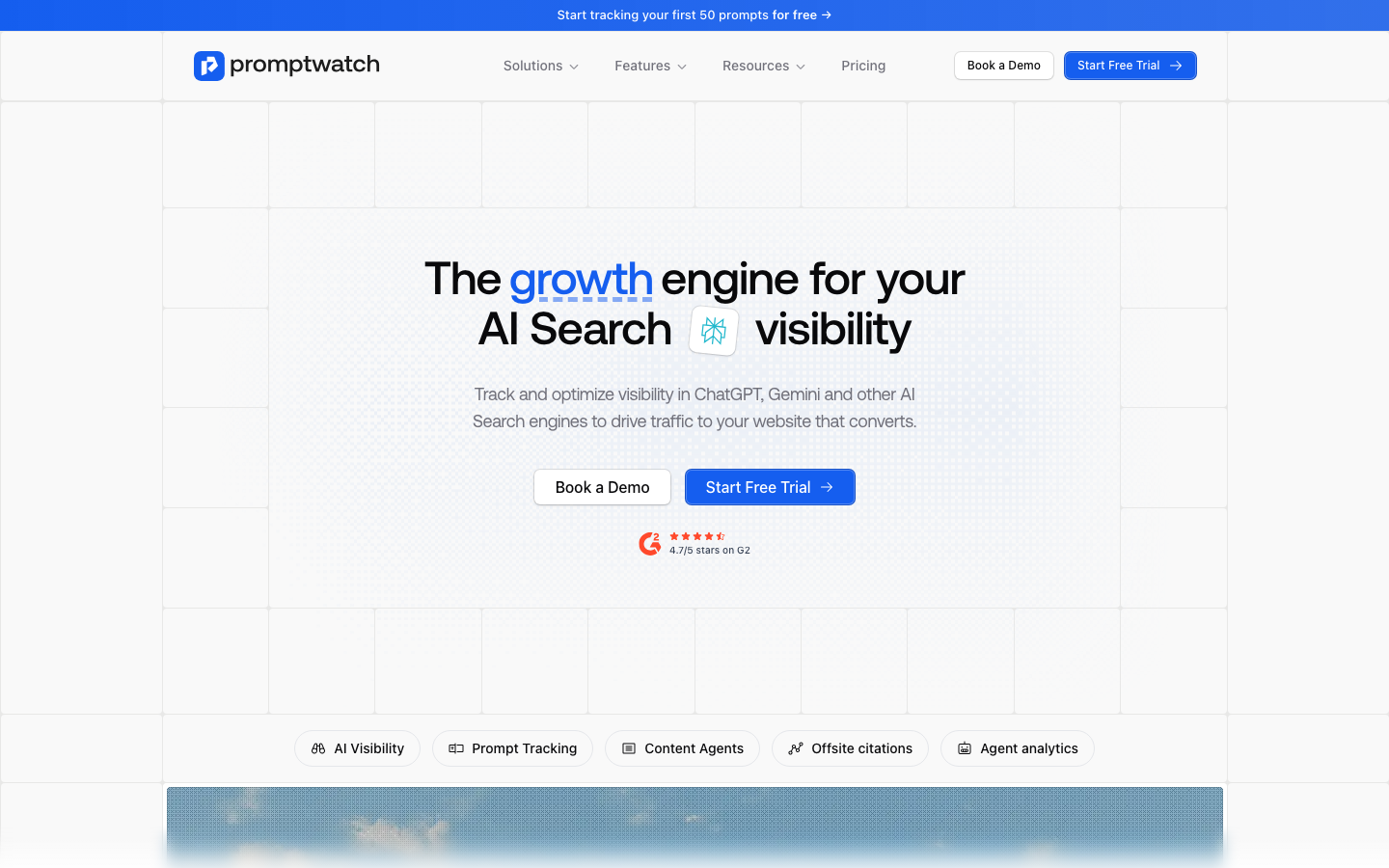
PromptWatch
AI visibility and GEO platform with a free tier and a 59-tool MCP server plus REST API on every plan.
Why I like it
PromptWatch scores highest of any GEO tool I have rated on AI-stack fit, with both an MCP server and a REST API, and it is the one tool here with a free plan. That combination makes it the low-risk way to find out whether your clients care about AI visibility before you commit budget. It runs a separate Agencies view in its pricing with an entry tier called Kick-off, and the vendor states it handles agencies managing AI search for multiple brands with client onboarding built in. I am not quoting agency prices because PromptWatch renders those figures as animated counters that do not resolve to a readable value, so I could not verify them from the page. The brand-side plans start at $95/mo, which is a reasonable proxy for the shape of the pricing. The company raised €6M and is building toward agentic AI search optimisation rather than pure monitoring.✓ Pros
- A real free tier, which nothing else here offers
- Top AI-stack fit score in the category on MCP and API depth
- Cheap way to validate client demand before buying
✗ Cons
- Agency prices are not readable on the pricing page, so budget blind
- The agency feature list is thinner than Peec AI's or Otterly's
- Newer company with less agency track record
Scorecard
Best agent stack in the GEO category: official remote MCP server (server.promptwatch.com/mcp, streamable HTTP) with OAuth browser-consent auth or API key, 59 tools including write operations (create/update/delete prompts, monitors, brands, personas, generate content). REST API v2 with ~70 endpoints, OpenAPI spec, Postman collection, published three-window rate limits. MCP and API access on every plan including the free Explore tier. llms.txt + markdown docs + MCP recipes and skills guides.
Searchable
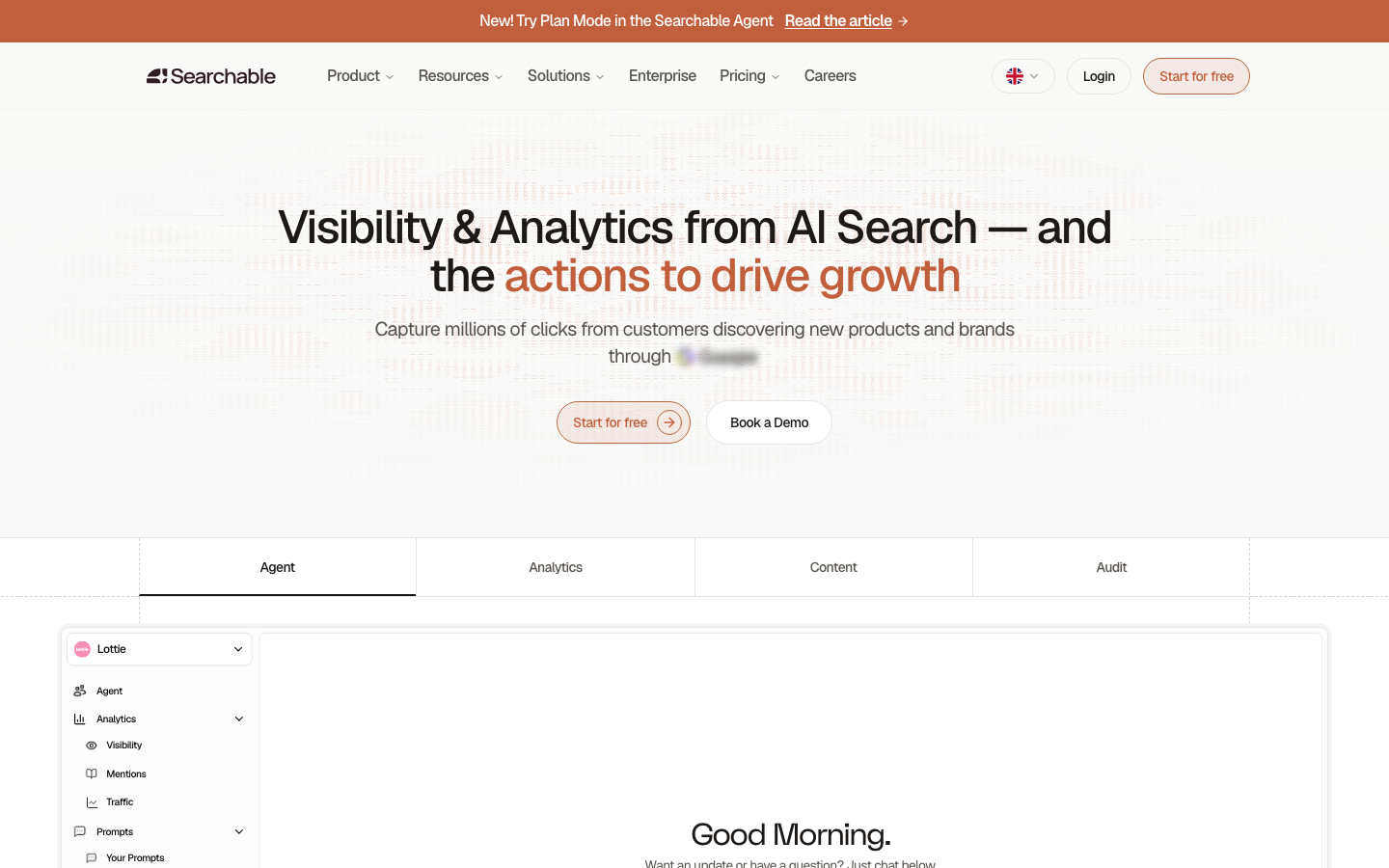
AI search visibility platform with an official MCP server and REST API on every paid plan, from $125/mo.
Why I like it
Searchable is the only tool here that runs two separate pricing ladders, and the one you land on by default is the wrong one for an agency. Switch the toggle from Brands to Agencies and the plans change completely: Launch at $250 a month covers 5 client projects, Growth at $400 covers 10, and Enterprise Agencies at $999 goes unlimited. The detail that matters is white-label. On the Brands ladder it starts at $400. On the agency ladder it is included from the $250 entry, along with MCP, API access and the Looker Studio connector. Pitch prompts let you run a real audit for a prospect before they are paying you, which is the same trick Peec uses and one of the few features on this page that wins business rather than servicing it. Growth and above add agency cohort training.✓ Pros
- White-label is included at the entry tier instead of being gated behind Enterprise
- Agency prices are published, so you can quote a retainer without booking a sales call
- MCP plus API means monthly client reporting can be automated rather than exported by hand
- Pitch prompts make prospect audits part of the product, not a manual side task
✗ Cons
- The $125 price you see first is the Brands ladder, and it covers only 1 project
- Agency prices are hidden behind a Brands / Agencies toggle that defaults to Brands
- At $250 the entry is five times Peekaboo, before you have signed a single client
Scorecard
One of the widest MCP surfaces in AI search, and it sits on the entry plan rather than behind an enterprise upsell. Searchable's official server at mcp.searchable.com/mcp exposes 52 read-only tools covering visibility (get_visibility_by_prompt, get_visibility_by_topic, get_share_of_voice, get_competitors), sources and citations (search_sources, get_source_domain, get_source_page_content), sentiment history, query fanout, prompts and raw AI answers, site health and page audits, content and opportunities, plus the traffic joins most rivals skip (get_ga4_traffic, get_gsc_performance, get_ai_traffic) and get_shopping_visibility and get_ads. Writes are scope-gated to three low-risk actions (generate_report, trigger_audit, refresh_sitemap). Auth is OAuth 2.1 with PKCE and Dynamic Client Registration, so nothing is pasted into a config file. The REST API at app.searchable.com uses sea_-prefixed Bearer keys with read/write/admin scopes and optional project binding, documented with an interactive playground, idempotency and an error reference, alongside a separate ingest API for AI-bot traffic with edge recipes for Vercel, Cloudflare, Netlify, Fastly, Akamai, CloudFront and GCP. Short of a 10 because there are no webhooks (alerting means polling), no first-party API client SDK, and MCP and API keys both require a paid plan, so there is no free way to prototype.
LLM Pulse
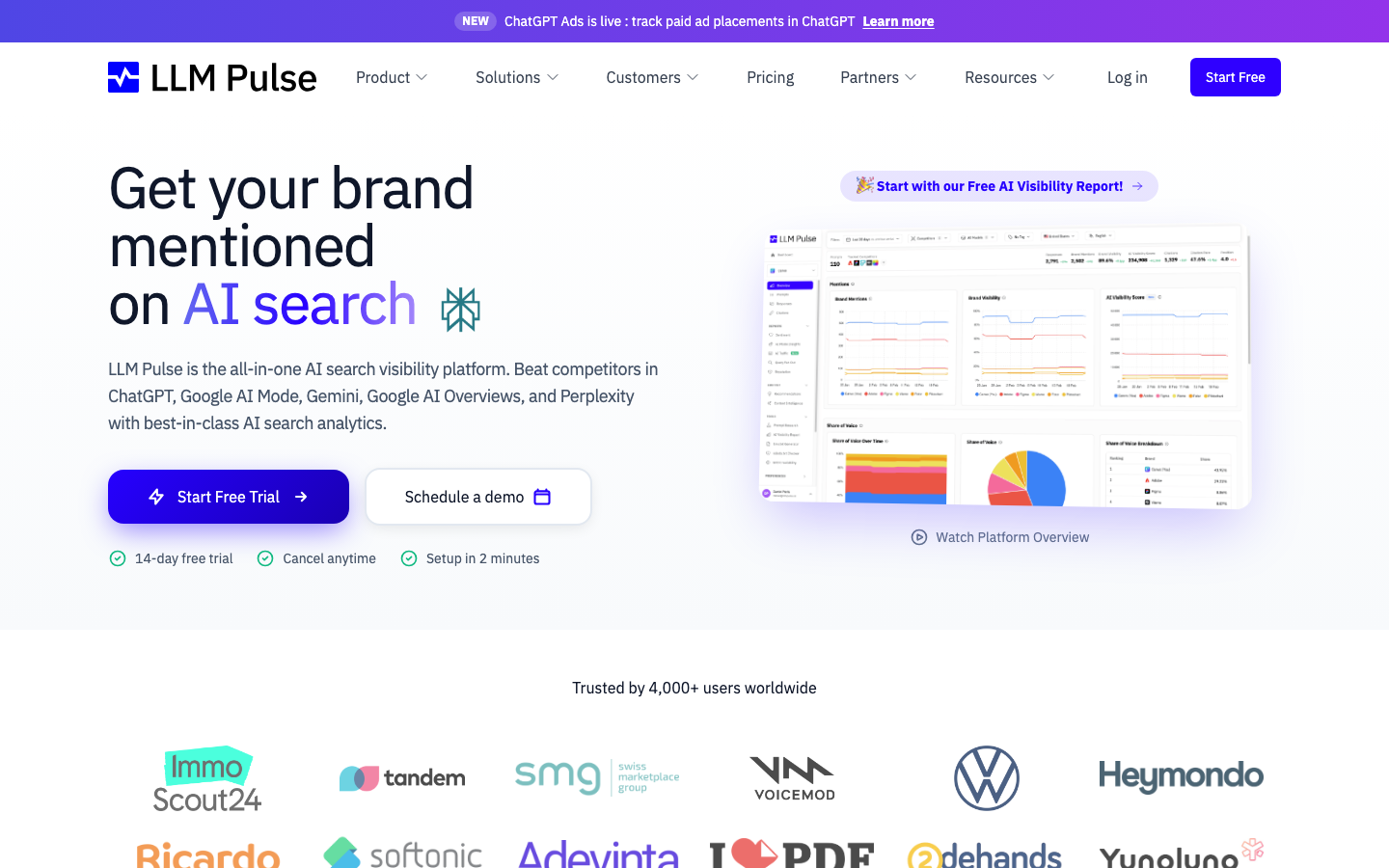
AI search visibility tracker with a hosted MCP server and REST API, monitoring your brand across 10+ AI models.
Why I like it
LLM Pulse starts at €49/mo, the cheapest paid entry on this list, and every plan includes unlimited team seats, so you are not taxed for putting the whole account team in. There is a 14-day free trial and coverage of ChatGPT, Perplexity, Gemini, Google AI Mode and AI Overviews. It also ships an MCP server and an API, so it clears the composability bar. The honest caveat is white-label: LLM Pulse markets agency and enterprise solutions with white-label options, but its own plan comparison marks white-label as not included on Starter, Growth and Scale, and included only on Enterprise. If white-label client reports are the reason you are buying, budget for Enterprise or pick Peec AI instead. As a cheap, well-connected tracker for an agency that reports in its own deck anyway, it is strong.✓ Pros
- Cheapest way to start billing for AI visibility
- Unlimited seats means no per-head cost as the team grows
- MCP and API on the lower tiers
✗ Cons
- White-label is Enterprise-only despite the agency marketing
- No published per-client workspace structure
- Volume limits tighten fast across a client roster
Scorecard
Peekaboo AI
AI visibility tracker for ChatGPT, Gemini, and Perplexity mentions, priced per brand.
Why I like it
Peekaboo is the cheapest honest entry point here and it does not pretend otherwise. Starter is $50 a month, Peek is $100, Grow is $200, and the pricing is flat and published rather than quoted. The catch is the brand ceiling: Starter and Peek both cover 2 client brands, and only Grow at $200 takes you to 5. That makes it a strong fit for a consultant with a couple of retainers and a poor fit for an agency with a roster. White-label is the other gap. Their agency page states it is available through a separately scoped agency or Enterprise engagement and is not bundled into self-serve, so the reports you send at $50 a month carry their branding, not yours. I could not find API or MCP documentation anywhere on the site.✓ Pros
- At $50 a month it is the cheapest way on this page to track a second brand
- Flat monthly pricing is published for every self-serve tier, no quote required
- Client reporting runs through Looker Studio, so delivery uses a format clients already read
✗ Cons
- Two of the three plans cap you at 2 client brands, so an agency outgrows it fast
- White-label is explicitly not bundled into self-serve, it needs a scoped engagement
- No API and no MCP server documented on the site, so reporting stays manual
Scorecard
Otterly.AI
AI search visibility tracker across ChatGPT, Perplexity and Copilot, with a live MCP server and API.
Why I like it
Otterly.AI runs an Agency Partner Programme layered on top of a normal subscription, and the headline benefit is unlimited workspace management: a separate environment per client, one login for the team. If you take on a lot of small accounts, unlimited workspaces beats per-brand pricing quickly. Pitch workspaces are included too, so you can audit a prospect before the contract, and billing consolidates into one invoice across every workspace and project rather than a stack of card charges to reconcile. Partners also get listed as an Otterly Agency Partner with co-marketing access, which is a lead source rather than a feature. The catch is the route in: you subscribe to Standard at $189/mo or Premium at $489/mo first, then apply for partner status. Entry is cheap at $29/mo for Lite, but Lite is capped at 1 workspace, so it will not carry a client roster.✓ Pros
- Unlimited workspaces is the cheapest way to hold many small clients
- Single invoice across the whole roster
- Partner listing is an actual lead channel
✗ Cons
- Partner status requires Standard ($189/mo) or Premium ($489/mo) first
- The $29/mo Lite plan is 1 workspace, so it is not an agency plan
- Partner status is an application, not an instant toggle
Scorecard
Strong agent fit at a budget price. Otterly runs a live official MCP server at data.otterly.ai/mcp, authenticated with OAuth 2.0 (no API keys), exposing roughly 20 tools across workspaces, brand reports, GEO audits, and write actions, so agents can both read and act on your AI-visibility data. It pairs that with a public REST API (2,000 requests a month on Standard, 5,000 on Premium), an official Claude Skill, and a 101-workflow marketplace. The main gaps: the $29 Lite tier has no API or MCP, and there are no language SDKs, so it sits level with Peec and below Profound's broader enterprise stack.
Peec AI
AI search visibility analytics tracking your brand across ChatGPT, Perplexity and Gemini, with MCP on every paid plan.
Why I like it
Peec AI is the only tool here with a separate agency pricing page rather than an agency footnote, and the structure tells you they thought about how agencies actually buy. Plans are sold in credits that sit in one shared pool, and you decide how much of that pool each client gets. Reallocating is a settings change, not an upgrade call, which matters when you win an account in March and lose one in June. Credits are allocation slots rather than a monthly spend, so nothing expires or resets on you. The tiers are written in client counts instead of vague company sizes: Growth is pitched at boutique agencies running 3 to 10 clients, Scale at 11 to 25 or more. White-label reporting is included on the agency plans, and pitch workspaces let you run a real audit for a prospect before they sign, which is the single most useful thing on this list for winning business. It also ships an MCP server and a REST API, so client reporting can be pulled into your own stack instead of exported by hand.✓ Pros
- Tiers are defined by how many clients you run, not by guesswork
- Credits move between clients without a plan change
- Pitch workspaces turn the tool into a sales asset
- MCP plus API means reporting can be automated
✗ Cons
- Prices are shown as annual by default, so month to month costs roughly 15% more
- Minimum allocation is 900 credits per project, which is a floor on very small clients
- Growth and Scale push you toward a setup call rather than straight self-serve
Scorecard
Strong agent fit for a young product. Peec ships an official MCP server at api.peec.ai/mcp on every paid plan from $95, not just Enterprise, so agents can connect from Claude, Cursor, or n8n without an enterprise contract. It is read-only at launch, so agents pull and reason over your AI-visibility data but cannot write back. The REST API for full programmatic access is reserved for Enterprise, which is the main gap.

AirOps
AI search visibility tracker paired with Quill, an agent that drafts, refreshes, and publishes content for you.
Why I like it
AirOps is the odd one on this list because it is not really an AI visibility tracker. It is a content workflow platform that happens to sit in the same buying conversation, and agencies use it to produce the work rather than to measure it. Brand Kits are the agency-shaped part: 1 on Solo, 3 on Pro, unlimited on Enterprise, each holding a client voice and guidelines so output does not blur between accounts. It ships an official MCP server, which is rare in this category and the reason it scores well on agent readiness. What it does not do is publish prices for the tiers an agency would land on. Insights starts at $0 and the Pages plan says Custom with a link to sales, so budgeting means a call. White-label is not mentioned at all.✓ Pros
- Brand Kits give you real per-client separation of voice and guidelines
- An official MCP server puts client work inside your own AI stack
- The $0 Insights tier lets you look before committing budget
✗ Cons
- The tiers an agency actually needs are custom quoted, so you cannot budget from the site
- Data export by API is Enterprise only, lower tiers get CSV
- It is a content production engine first, so client reporting is not the core job
Scorecard
Top-tier agent fit, and rare in AI search because the MCP surface writes as well as reads. AirOps runs an official OAuth 2.0 MCP server at app.airops.com/mcp over streamable HTTP, plus a Claude Connector in Claude's directory that renders Interactive Apps rather than describing charts. Read tools cover the AEO layer (query_analytics for mention rate, share of voice, citation rate and sentiment; list_pages filtered on losing_ai_visibility or citation_rate_decline; list_aeo_prompts, get_prompt_answers, list_aeo_citations) and Knowledge Base semantic search; write tools cover Brand Kits (update_brand_kit, writing rules, audiences, regions, competitors) and Grids (create_grid, add_grid_column, write_grid). A Bearer REST API adds Executions, Agent Apps, Files, Grids, Memory Stores and Brand Kits, and Playbooks can be started by incoming webhooks, schedules, monitors or AEO insights, with a documented Zapier trigger. What keeps it off a 10 is commercial opacity rather than capability: AirOps publishes no prices at any tier, no SDK or OpenAPI spec is surfaced, and the plan comparison table lists API data export against Enterprise, so tier access needs confirming with sales.

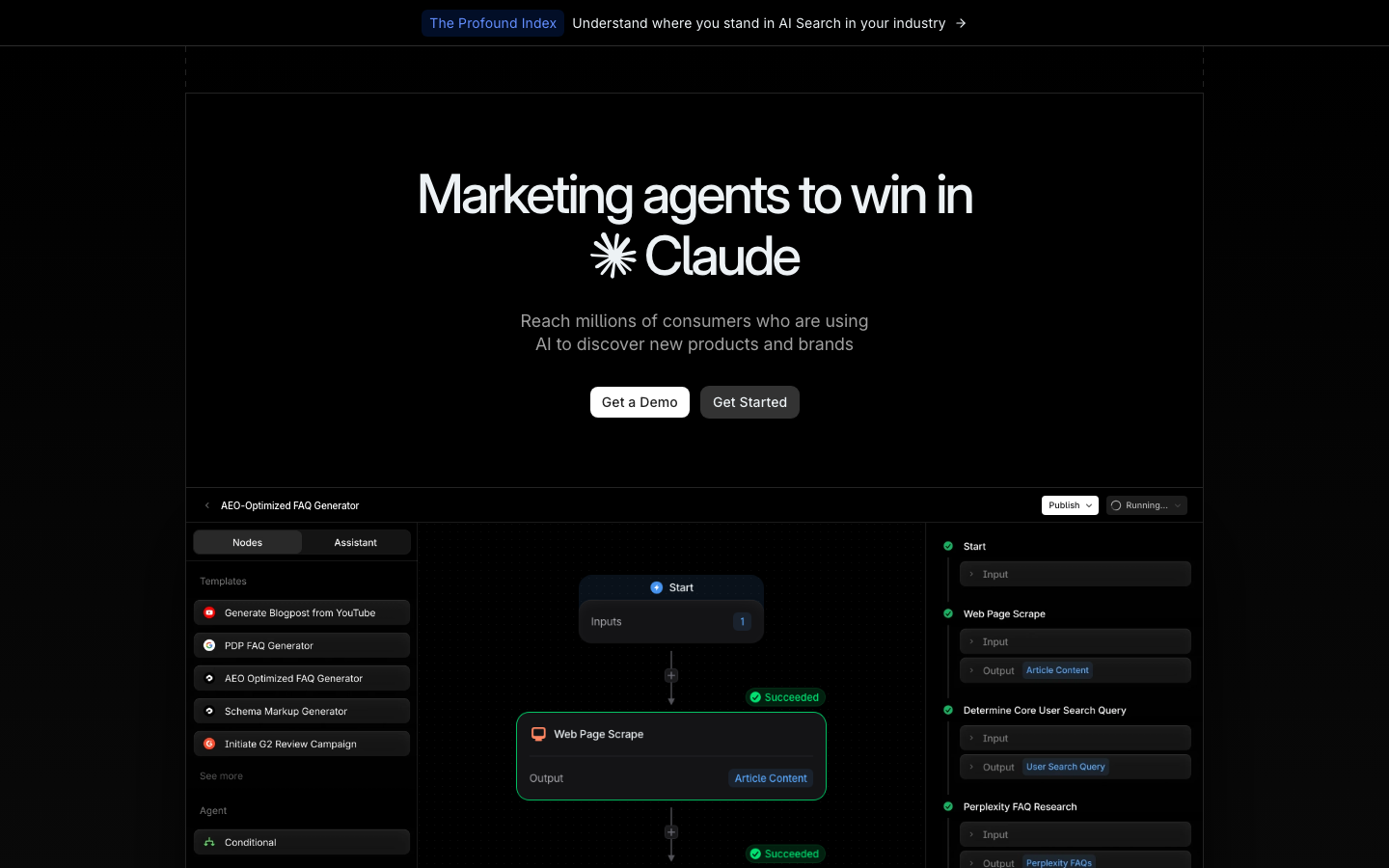
Profound
AI search visibility platform tracking how your brand shows up across ChatGPT, Perplexity and other AI engines.
Why I like it
Profound is the name that comes up most often when AI Overviews answer questions about GEO software, and that recognition has value when you are the one recommending a tool to a client's CMO. The platform is well built and ships both an MCP server and an API, so it fits an automated reporting stack. Being straight about the agency angle though: Profound does not publish a dedicated agency plan or an agency pricing view the way Peec AI, Superlines, Otterly and Scrunch do. It also publishes its own roundup of AI visibility tools for agencies, which tells you it wants the audience, but wanting it and shipping multi-client tooling are different things. Entry is $99/mo and that tier covers ChatGPT only, so realistic multi-engine coverage starts at the $399/mo Growth tier. Pick it for credibility and depth, not for client management.✓ Pros
- Recognised by clients, which shortens the sell
- MCP and API support automated reporting
- Deep analytics on the higher tiers
✗ Cons
- No published agency plan or multi-client workspace pricing
- The $99 entry tier is ChatGPT only, so it is not a real starting point
- Realistic cost per client is higher than the agency-native options
Scorecard
Strong agent-fit. Profound has an official MCP server and documented public APIs with Node and Python SDKs, enabling seamless integration with Claude and ChatGPT workflows. The main limitation is lack of OpenAPI specs and structured outputs, which can require additional parsing work in agentic chains.
SE Visible
AI search visibility tracker from the SE Ranking team, monitoring your brand across ChatGPT, Gemini and Perplexity.
Why I like it
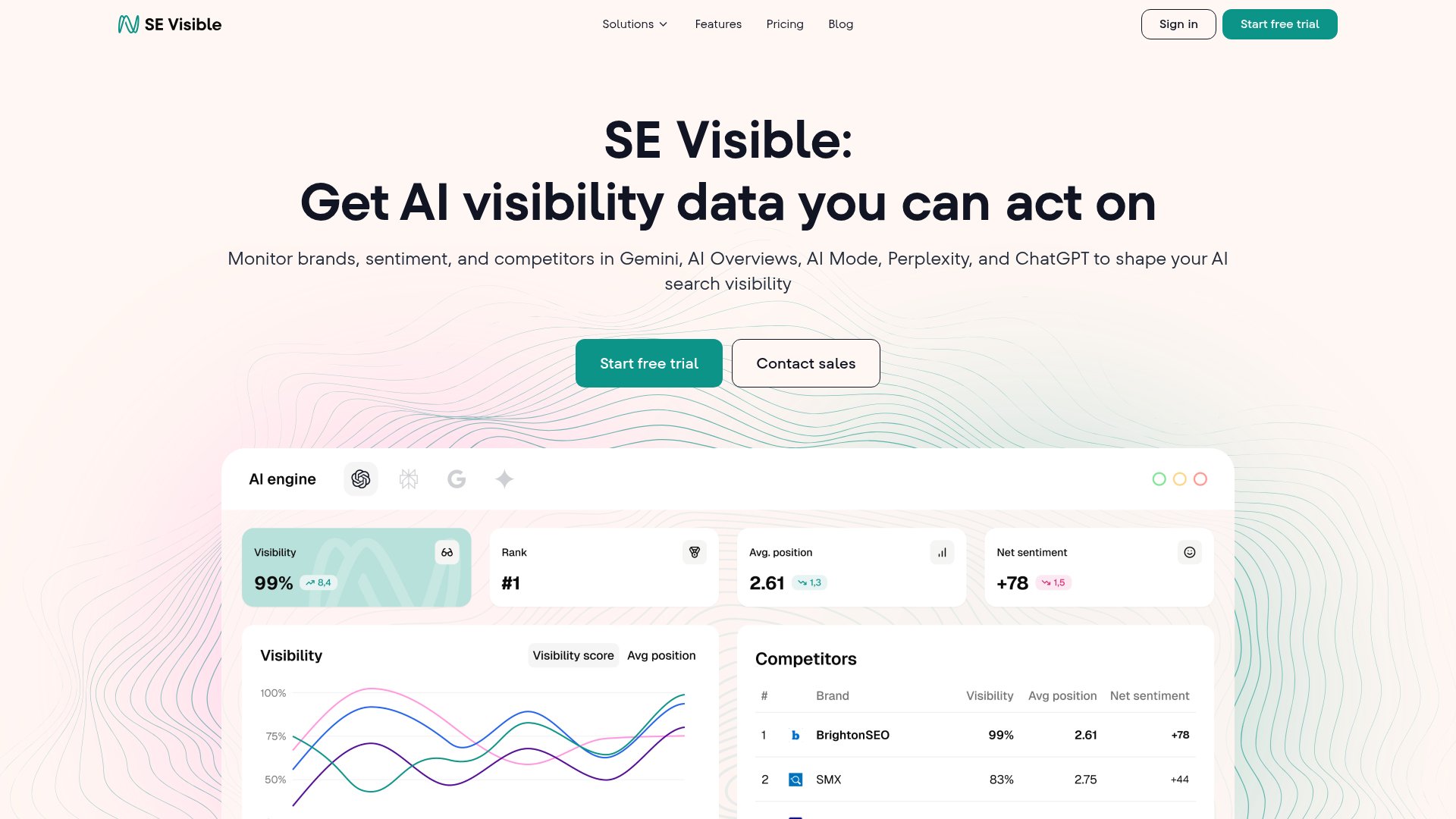
SE Visible is SE Ranking's AI visibility product, and SE Ranking has served agencies for years, so the multi-client thinking is inherited rather than bolted on. The vendor calls out agencies and agency owners directly and sells automated multiple-client management, with extra user seats under custom access control so a junior can see one client and not the rest. Entry is $99/mo, or $79/mo billed annually, for 200 prompts and roughly 12,000 AI answers analysed a month, which is the most transparent volume disclosure on this list. Coverage spans ChatGPT, Perplexity, Gemini, AI Overviews and AI Mode across seven countries and five interface languages. There is a 10-day trial, and both an API and MCP server. If SE Ranking is already your reporting spine, this is the least disruptive addition.✓ Pros
- Publishes actual AI-answer volumes instead of vague prompt counts
- Seat-level access control keeps clients walled off from each other
- Slots into an existing SE Ranking agency workflow
✗ Cons
- No published white-label reporting
- Country coverage is 7 markets, so global rosters will find gaps
- Best value only if you already use SE Ranking
Scorecard
Weak agent fit as a standalone product. SE Visible is a dashboard: you read AI-visibility data in the UI and export it to CSV, but there is no API or MCP server on the SE Visible plan, so an agent cannot pull your data programmatically. The agent-ready path lives one product over: the SE Ranking platform ships an official hosted MCP server (160+ tools, including AI search visibility) that I rate 9/10, on a separate subscription. Buy SE Visible for the dashboard; buy the SE Ranking platform if you need agent access.
Scrunch AI
AI search visibility platform tracking brand mentions across ChatGPT, Perplexity and more, from $250/month.
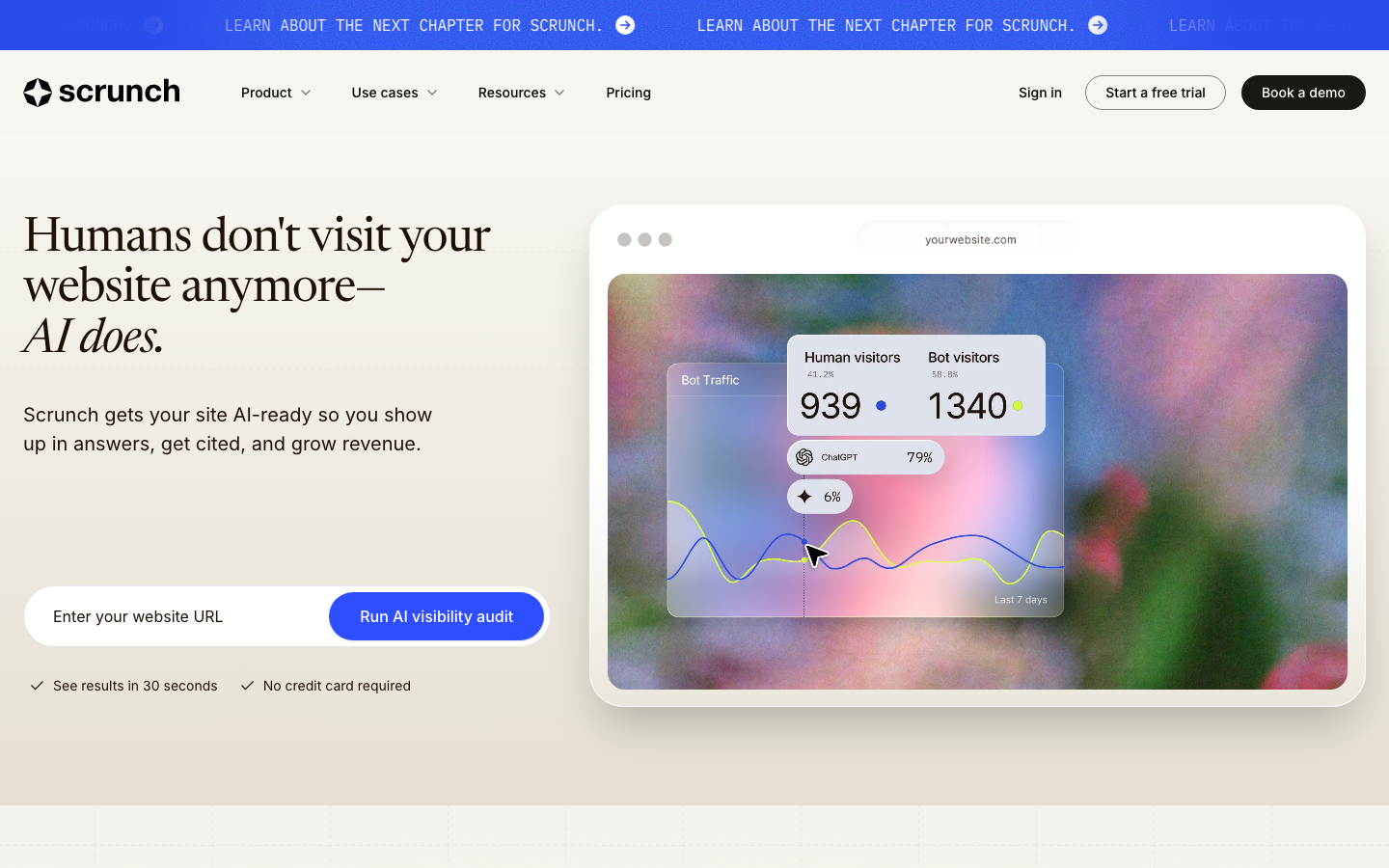
Why I like it
Scrunch AI splits its pricing into brand and agency views, which is a good sign, and Core sits at $250/mo with 125 unique prompts, 5 site audits a month and 5 user licences. The number to read carefully is brand workspaces: Core gives you exactly 1. Real multi-client separation means Enterprise, which unlocks a custom number of brand workspaces and licences, API access, SSO via SAML or OIDC, expanded model coverage to 9 LLMs and a dedicated account team. So the agency story is real but it lives above the published price. Where Scrunch earns its place is depth for big accounts: its Agent Experience Platform looks at how AI agents actually traverse a client site, which is closer to the technical work an enterprise retainer justifies. There is a 7-day free trial.✓ Pros
- Deepest technical analysis here for enterprise-grade retainers
- Genuine procurement features with SSO and account management
- Publishes a dedicated agency pricing view
✗ Cons
- Core includes only 1 brand workspace, so multi-client needs Enterprise
- API is Enterprise-gated
- $250/mo entry is steep for a small roster
Scorecard
Not ready for agent workflows. Scrunch AI has documented public API access, but lacks MCP support, OpenAPI specs, SDKs, and structured output capabilities that modern agent stacks require. Without these integrations, you'd need custom middleware to connect it to Claude or Cursor workflows.
Finseo
Enterprise AI visibility tracker for ChatGPT, Claude, Gemini and Perplexity, with a REST API and MCP server.
Why I like it
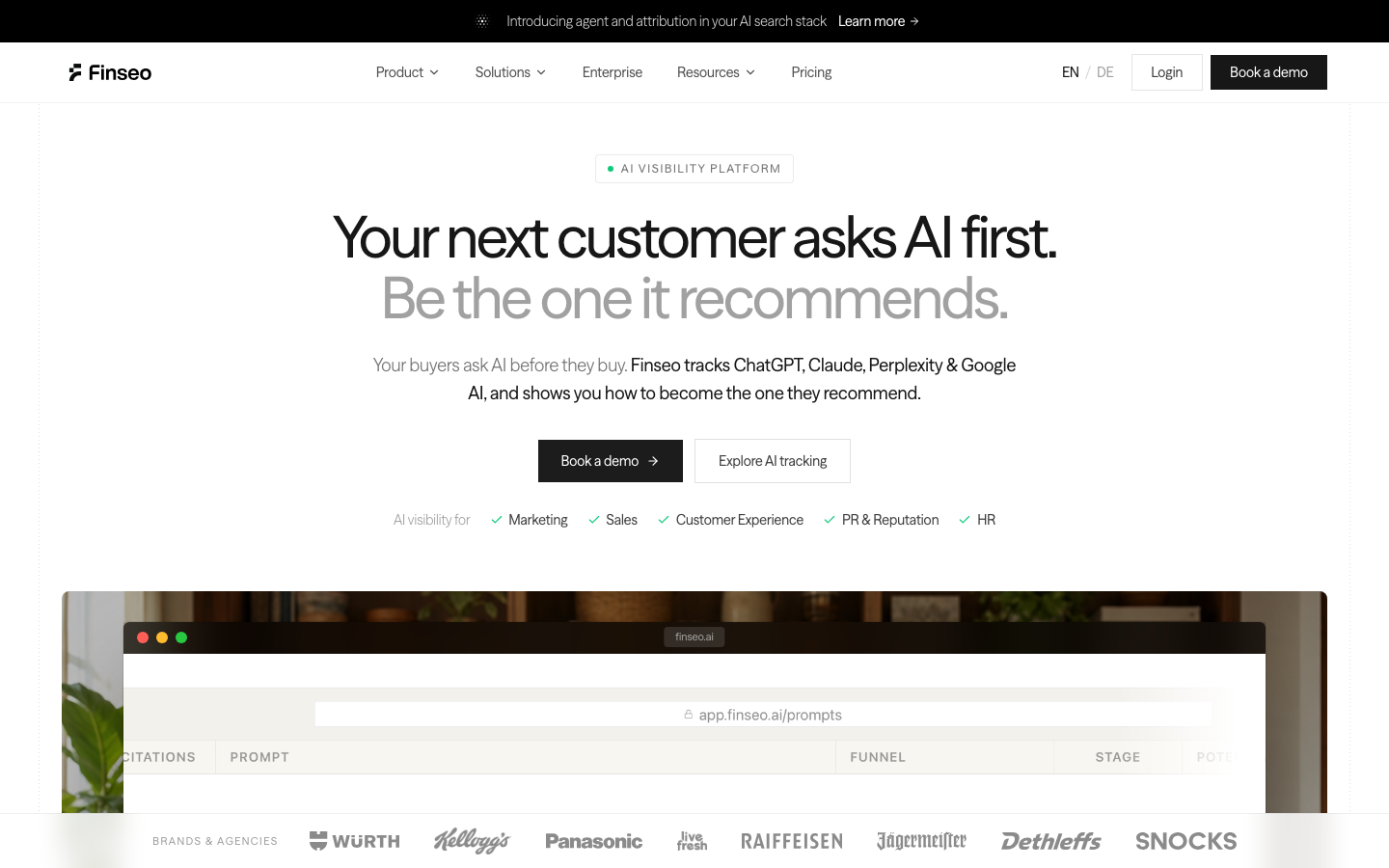
Finseo has the most agency-shaped pricing on this page, and it is the only one that acknowledges a roster is not static. You pay by active client: €250 a month for 5, €540 for 12, €875 for 25. When a client pauses or churns you pause the project and stop paying, and their own page puts a number on it, 2 paused projects saving €90 a month. Every other tool here bills you the same whether the account is live or winding down. The rest of the agency layer is there too: multiple client workspaces from one dashboard, white-label reports exported as PDF or presentation, and Admin, Editor and Viewer roles per client so a junior can run reporting without touching billing. A REST API and an MCP server are both documented.✓ Pros
- Pausing a client stops the bill, which no other tool here offers
- Pricing is stated in client counts, the same unit an agency thinks in
- White-label export plus per-client roles covers the whole delivery chain
- API and MCP are both documented, so reporting can be automated
✗ Cons
- At €250 for 5 clients you are paying €50 per client, more than Peekaboo at the low end
- Priced in euros, so US agencies carry the exchange rate
- The agency ladder lives on a solutions page, not the main pricing page, so it is easy to miss
Scorecard
Official remote MCP server (api.finseo.ai/v1/mcp, Bearer key, 7 read tools for projects/metrics/prompts/competitors/sources/tags/fanouts) plus a documented REST API with OpenAPI 3.1 spec, scoped API keys (read/write/export), published per-plan rate limits and llms.txt on both site and docs. Held back from higher: API keys require a paid, demo-gated plan (no self-serve signup) and the MCP surface is read-only.

Rankshift
AI search visibility tracker for 9 LLMs, with a real MCP server and REST API from its Professional plan.
Why I like it
Rankshift is the only tool here whose agency offer is built around winning work rather than reporting on it. The Agency Partner Program lists unlimited users, unlimited projects and, the part I would use, unlimited pitch projects. If prospect audits are how you sell GEO, a tool that does not charge per pitch changes how often you pitch. The trial is 30 days, three times what most of this category offers and long enough to run one client through a full reporting cycle before you pay. Self-serve sits at $82, $189 and $425 a month if you would rather skip the programme. Two gaps keep it low here: the agency page says nothing about white-label reporting, and there is no published agency price, so you cannot budget a retainer from the site.✓ Pros
- Unlimited pitch projects means prospect audits cost you nothing per pitch
- A 30-day trial is three times the category norm and long enough to run a real client month
- Unlimited users means you are not paying per seat as the team grows
✗ Cons
- No white-label reporting stated anywhere on the agency page
- Agency pricing is not published, so the programme needs a conversation before you can budget
- No MCP server documented, so automation stops at the API
Scorecard
Superlines
Finnish AI search intelligence platform: tracks 10+ AI engines from real interfaces, with MCP and API on every plan.
Why I like it
Superlines runs a separate agency track with its own pricing, and Agency Growth lands at €299/mo with unlimited domains tracked. Unlimited domains is the number that matters for an agency, because most competitors meter you per brand and the bill climbs with every account you win. You get 5 answer engines, 100 tracked prompts on daily frequency, and 5 seats. The pitch is EU data residency, GDPR by design, and no tracking cookies, which is a real procurement unlock if your clients are European enterprises or public sector. Both the API and an MCP server are included on the agency tier rather than held back for Enterprise, so it fits TMB's bar for a tool you can build on.✓ Pros
- Unlimited domains removes the per-client price creep
- EU data residency clears procurement at European clients
- API and MCP on the agency plan, not Enterprise-gated
✗ Cons
- Only 2 months of history on Agency Growth
- Agency pricing is framed as partner pricing, so expect a demo call
- 100 prompts spread across a client roster goes quickly
Scorecard
Official MCP server (GitHub Superlines/mcp-server, npm @superlines/mcp-server, remote HTTP at mcpsse.superlines.io) with 27 tools: 21 reads covering metrics, citations, competitive gaps, webpage audits and strategy, plus 6 writes gated behind scoped permissions (write:brands, write:prompts). REST API with Bearer keys and published per-plan rate limits (60/120/300 rpm) on every plan including Starter. Held back from higher: query-param API design with no OpenAPI spec, and the remote MCP passes the API key as a URL token parameter.
Price landscape
How prices compare
Starting prices across all 38 tools in this category.


Related guides
If you are buying for a single brand rather than a client roster, the broader 27-tool AI visibility roundup covers the whole category including tools with no agency tier at all.
For the classic SEO side of an agency stack, white-label crawling, rank tracking and client reporting, see SEO agency software.
Methodology
How I chose these
I started from the 27 AI visibility tools I already track, then applied one filter: does the vendor publish something real for agencies. That means a dedicated agency plan, a separate agency pricing view, or a documented partner programme. Thirteen tools cleared that bar or came close enough to be worth explaining.
For each one I opened the vendor's live pricing and agency pages on 31 July 2026 and read the plan detail rather than the marketing copy. Where a page hid prices behind an interaction, I drove it. That mattered twice.
Searchable's pricing page has a Brands / Agencies toggle that defaults to Brands, and the agency ladder behind it is a different set of plans at different prices, so the $125 entry most people see is not the agency entry. PromptWatch's prices now resolve to readable text, so the figures I previously left out are included.
The ordering reflects the agency adoption path rather than feature count: can you audit a prospect before you can bill for the work, what the entry costs when the first client signs, and whether client separation, white-label reporting and automation exist at a price you can defend.
Tools that ship an MCP server or an API rank higher within a tier, because client reporting is repetitive work that should be automated rather than exported by hand every month.
Where the agency marketing does not match the plan detail
Three gaps are worth naming, because each one costs money if you find it after signing.
LLM Pulse markets flexible plans with white-label options for agencies on its pricing page. Its own plan comparison then marks white-label as not included on Starter, Growth and Scale, and included on Enterprise. The agency messaging is accurate only at the top tier.
Scrunch AI publishes a dedicated agency pricing view, which is more than most do. The Core plan in that view is $250/mo and includes 1 brand workspace and 5 user licences. Multiple client workspaces require Enterprise on custom pricing, so the published agency price is not an agency price.
Profound publishes its own roundup of AI visibility tools for marketing agencies and ranks well for agency queries, but does not publish an agency plan, an agency pricing view or multi-client workspace pricing of its own. Its $99/mo entry tier also covers ChatGPT only, so multi-engine tracking realistically starts at $399/mo.
None of this makes those tools bad. Scrunch AI in particular is the most technically deep option here for enterprise accounts. It just means the agency label on a pricing page is not a substitute for reading the plan comparison.
FAQ
Frequently Asked Questions
GEO stands for generative engine optimization. GEO software tracks how often a brand is mentioned and cited in answers from ChatGPT, Perplexity, Gemini, Google AI Overviews and AI Mode, rather than where a page ranks in a list of blue links. The mechanics differ: there is no single ranking position, answers vary between users and runs, and a citation matters more than a placement. Most agencies now run a GEO tool alongside a classic SEO suite instead of replacing one with the other.
Peec AI includes white-label reporting on its agency plans. LLM Pulse offers it too, but its plan comparison marks white-label as not included on Starter, Growth and Scale, and included only on Enterprise, so budget accordingly. Superlines, SE Visible, Otterly.AI and Scrunch AI do not publish white-label reporting as a named plan feature at the tiers listed here. If you need client-branded reports, Peec AI is the straightforward answer.
Realistically €175 to €600 a month for an agency running a normal roster. Peec AI's agency plans start at €175/mo billed annually, or €205 month to month, and its Scale tier for 11 to 25 clients is €575/mo billed annually. Superlines Agency Growth is €299/mo with unlimited domains. Otterly.AI requires Standard at $189/mo or Premium at $489/mo before you can apply for partner status. SE Visible starts at $99/mo. The cheapest paid entry is LLM Pulse at €49/mo, and PromptWatch has a free plan if you want to test the water first.
It depends on the tool, and this is where the marketing and the plan detail diverge most. Otterly.AI gives unlimited client workspaces under its Agency Partner Programme. Peec AI splits one shared credit pool across as many client projects as you like, with a 900-credit minimum per project. Superlines tracks unlimited domains on its agency plan. SE Visible sells multiple-client management with per-seat access control. Scrunch AI is the one to watch: its $250/mo Core plan includes exactly 1 brand workspace, and multiple workspaces require Enterprise.
Yes, and for an agency this is the difference between a tool you run and a tool that runs itself. Peec AI, Superlines, Otterly.AI, SE Visible, PromptWatch, LLM Pulse and Profound all ship both an MCP server and a REST API, so client reporting can be pulled straight into your own dashboards or generated by an assistant. Scrunch AI gates API access behind Enterprise. Monthly client reporting is repetitive work with a fixed shape, which makes it the first thing an agency should automate.
Both work, and the tool you pick should follow the decision rather than drive it. If you are folding it into existing retainers, keep the cost low and the reporting inside your current deck, which points at LLM Pulse or SE Visible. If you are selling GEO as its own line item, you need client-branded reports and a way to audit prospects before they sign, which points at Peec AI or Otterly.AI and their pitch workspaces. Testing demand first is entirely reasonable, and PromptWatch's free plan is the cheapest way to do it.
Continue reading






10+ years in digital marketing. I review SEO and AI visibility software for small business owners and solo operators: what each plan really costs, which one actually covers the job, and where a tool stops being worth it. Checked against vendor documentation and real user feedback, and against my own use where I have it.