
A lead-generation chatbot is an AI chat widget you put on your website (and sometimes WhatsApp or Instagram) to engage visitors, answer their questions, qualify them, and capture their details, so a static contact form turns into a conversation that actually converts. I compared 10 of the best for 2026.
I ranked them on what a marketer actually cares about: how well each one captures and qualifies leads, which channels it covers, how it hands leads to your CRM, how easy it is to set up, and what it costs. As a tiebreaker I also note AI-stack fit (whether the tool exposes a clean API or an MCP server), since that is where this category is heading. Tidio is my overall pick for most teams.
Intercom has the strongest AI agent, and Tars is the one built for conversational landing pages. Verified against each vendor's live site in June 2026.
This page may contain affiliate links.
Some links on this page are affiliate links, meaning I may earn a commission if you sign up (at no extra cost to you). This never influences my ratings or recommendations.
Audience
Who is this guide for?
- ✓Marketers who want a website chatbot that captures and qualifies leads
- ✓SMBs and ecommerce stores adding live chat plus AI
- ✓B2B teams that want to identify and route website visitors
- ✓Agencies running paid traffic to conversational landing pages
- ✓Teams that want chat leads to flow straight into their CRM
Exclusive reader deal
$69 off your first payment
Affiliate link. I may earn a commission at no extra cost to you.
What is a lead-generation chatbot?
A lead-generation chatbot is an automated chat agent on your website or messaging channels whose job is to turn anonymous visitors into known leads. Instead of a static form, it starts a conversation: it answers questions, asks qualifying questions (budget, use case, company size), captures contact details, books meetings, and routes the lead to the right person or into your CRM. The best ones use AI to understand free-form questions and respond from your own content, rather than only following rigid button-based flows. The trade-off to watch is that 'AI' often sits on a higher pricing tier or a separate add-on, while the cheap or free plans give you rule-based bots.
Quick verdict
Tidio is the best AI chatbot for lead generation for most teams: affordable live chat plus a capable AI agent that captures and qualifies leads. Intercom's Fin is the strongest AI agent if budget allows. Tars is purpose-built for conversational landing pages and in-chat booking. For social DMs, ManyChat leads; for budget omnichannel, Crisp.
Match the tool to your channel mix, your CRM, and how much you want the AI to do.
How I picked and ranked these
I started from what marketers actually search for and shortlisted tools whose core job is capturing and qualifying website leads, not building general-purpose AI agents. Then I ranked on lead-capture strength first (qualification, routing, booking, channels, CRM fit), with price and ease of setup close behind. AI-stack fit (API and MCP) is the tiebreaker, not the headline, because it is where the category is heading even if it is not what most buyers sort on today. Tools that are really developer frameworks or enterprise contact-center platforms were left off; this list is for marketers who want leads, not engineers who want to build agents.
Overview
Quick comparison
Rankings
My Top Picks

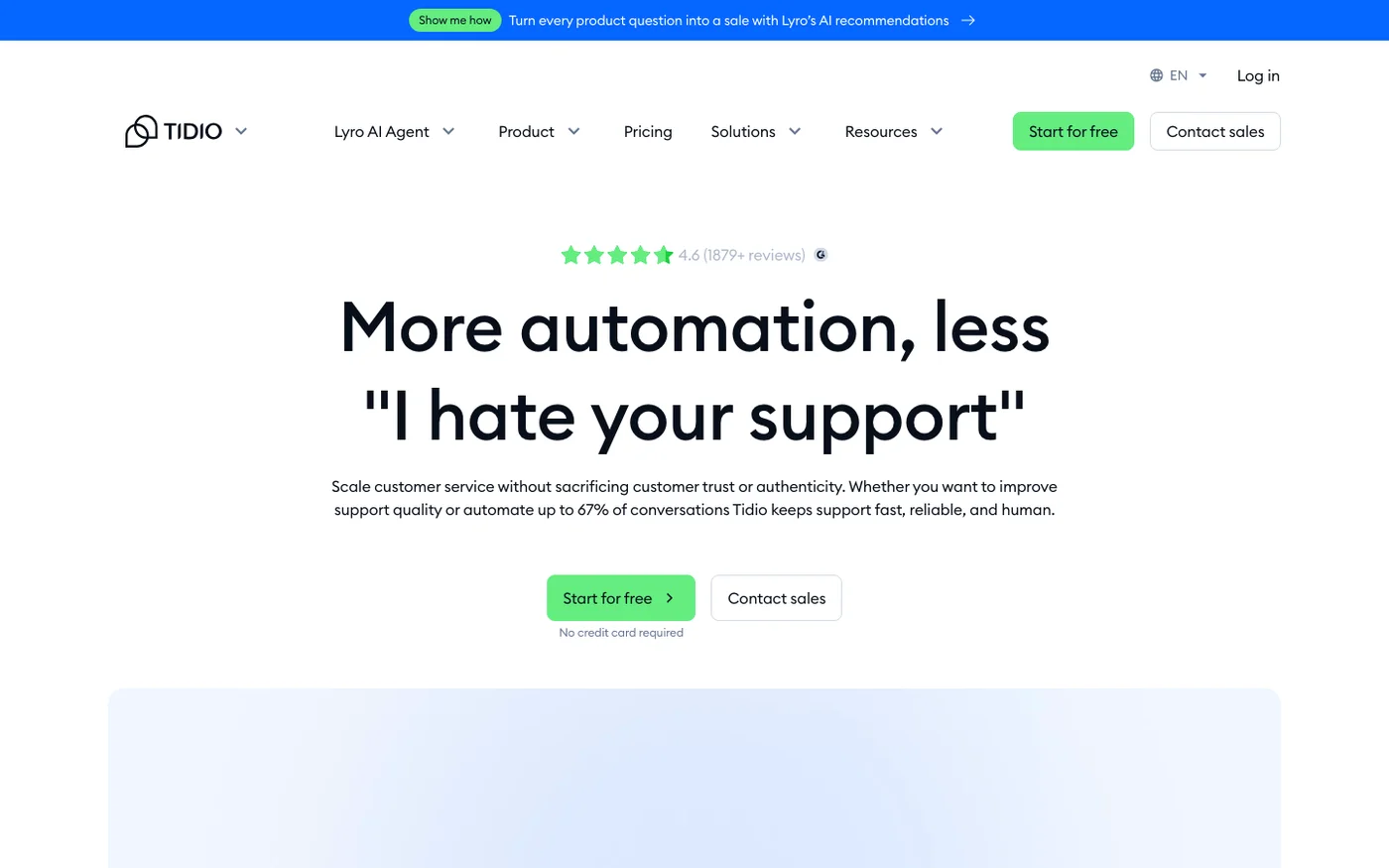
Tidio
A live chat and support platform with the Lyro AI agent that can plug into your stack via REST API and MCP.
Key Features
✓Pros
- Affordable, recognizable SMB pick
- Lyro AI is more open than rival support bots
- Real free plan with API access
✗Cons
- Two meters (conversations plus Lyro) drive cost
- Webhooks gated to the $749 Plus tier

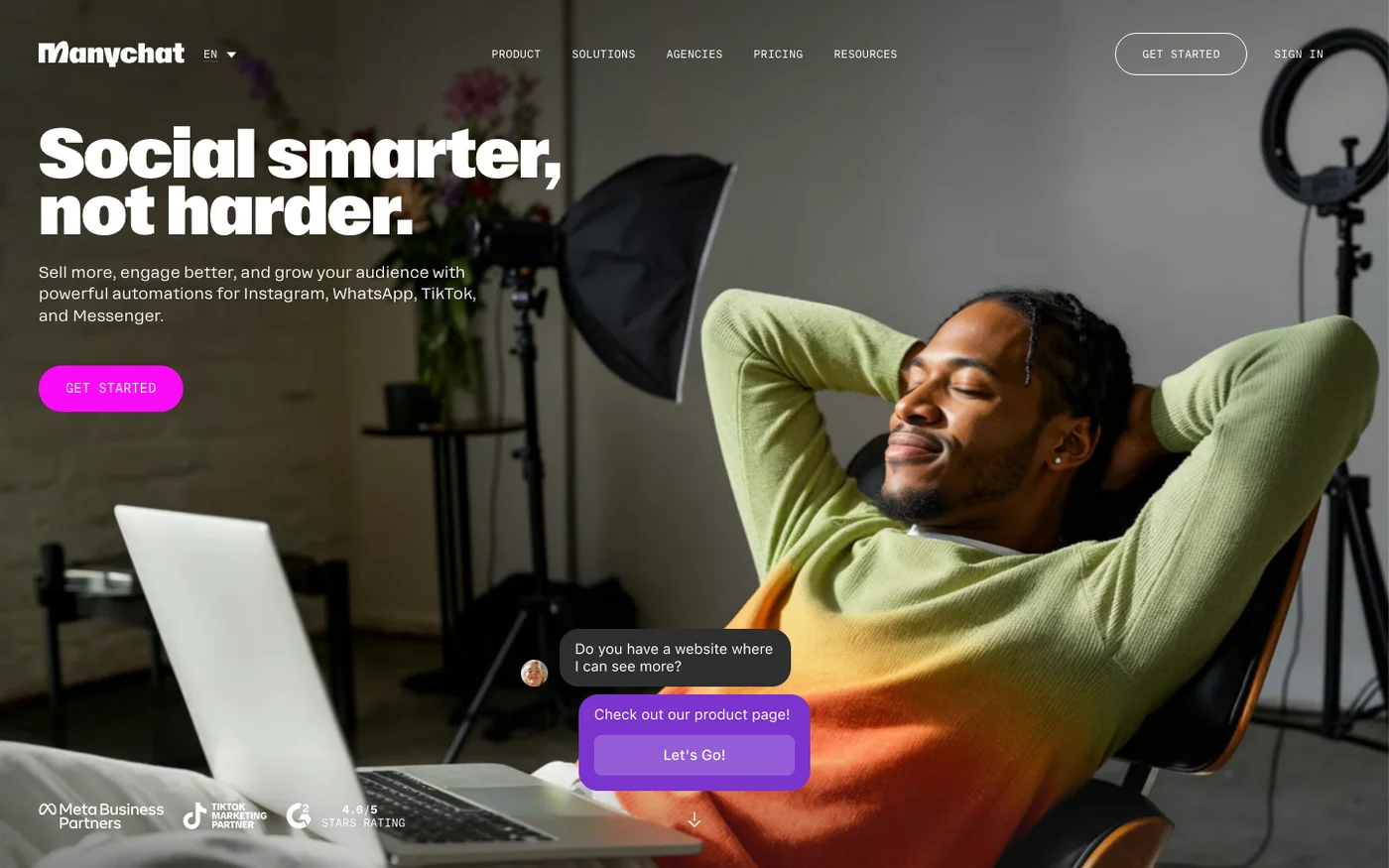
ManyChat
A social-first chat marketing tool for Instagram, Messenger, WhatsApp and SMS lead capture.
Key Features
✓Pros
- Unmatched social-DM lead capture
- Huge integration ecosystem
- Free plan to start
✗Cons
- Weak as a website chatbot, and the AI is a paid add-on
- Contact-based pricing is hard to verify, and there is no official MCP

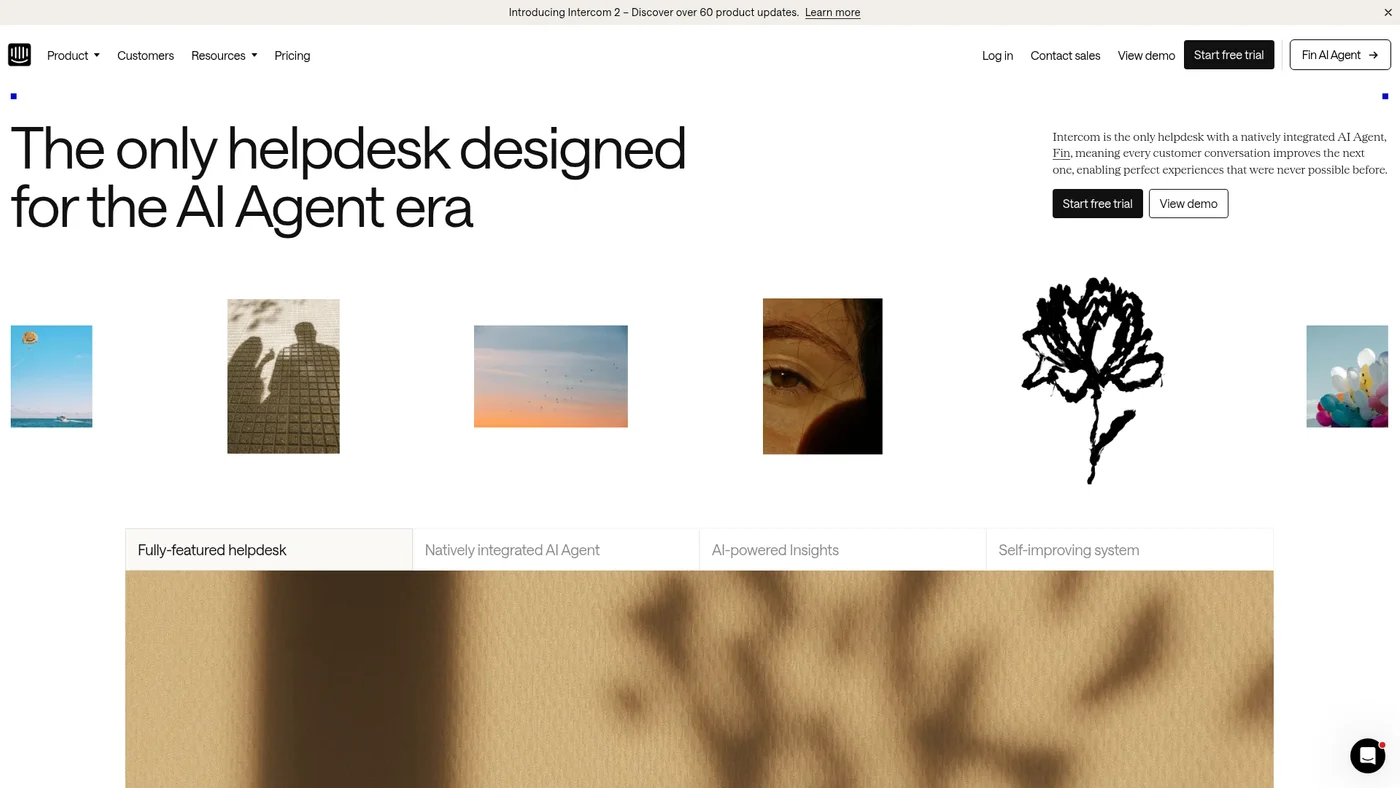
Intercom
AI-native helpdesk combining human agents and Fin AI Agent, priced per seat plus per resolution.
Key Features

Tars
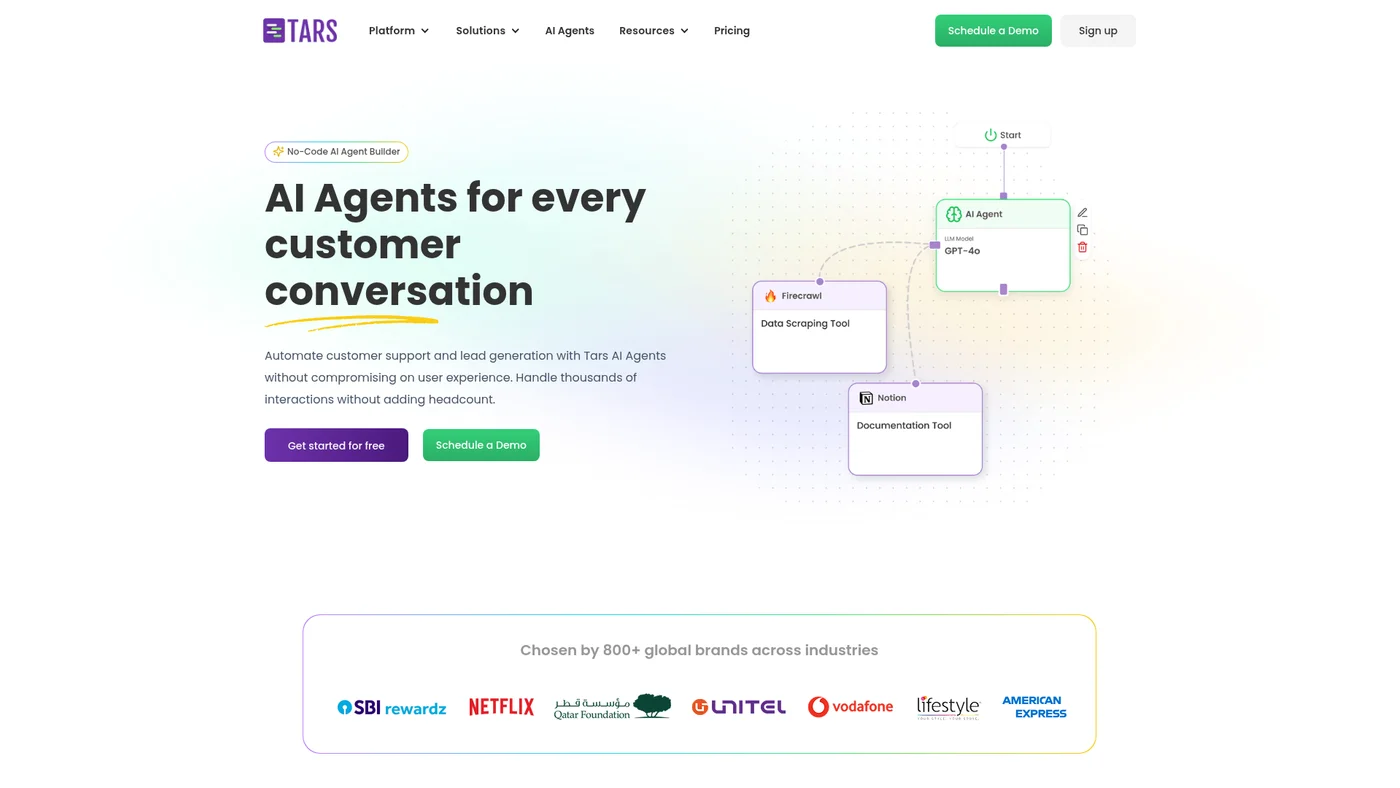
No-code AI agent builder for support and lead gen, starting free with Premium at $499/month.
Key Features

Landbot
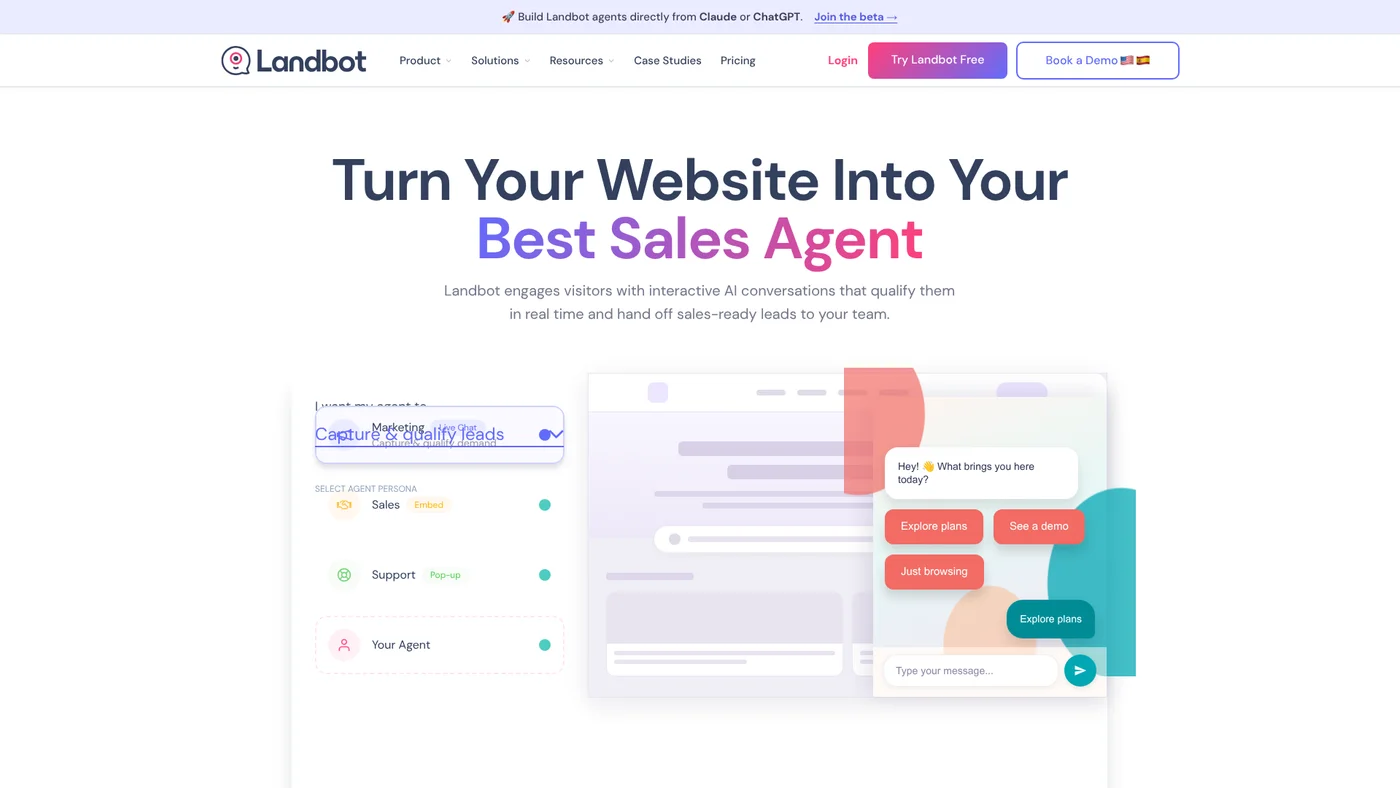
No-code chatbot builder for website, Messenger, and WhatsApp with AI agent flows.
Key Features

Crisp
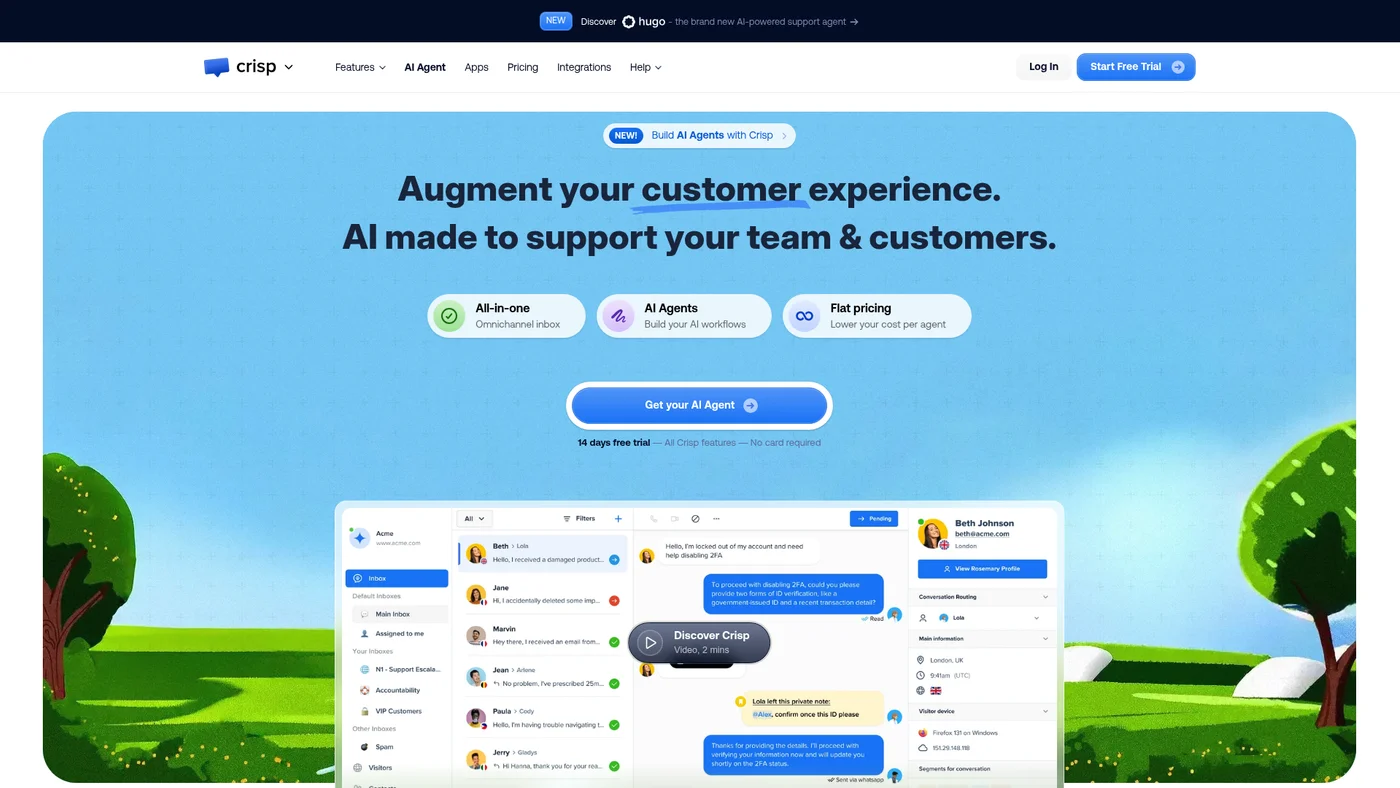
Omnichannel support platform with AI agents and flat per-workspace pricing.
Key Features

Chatbase
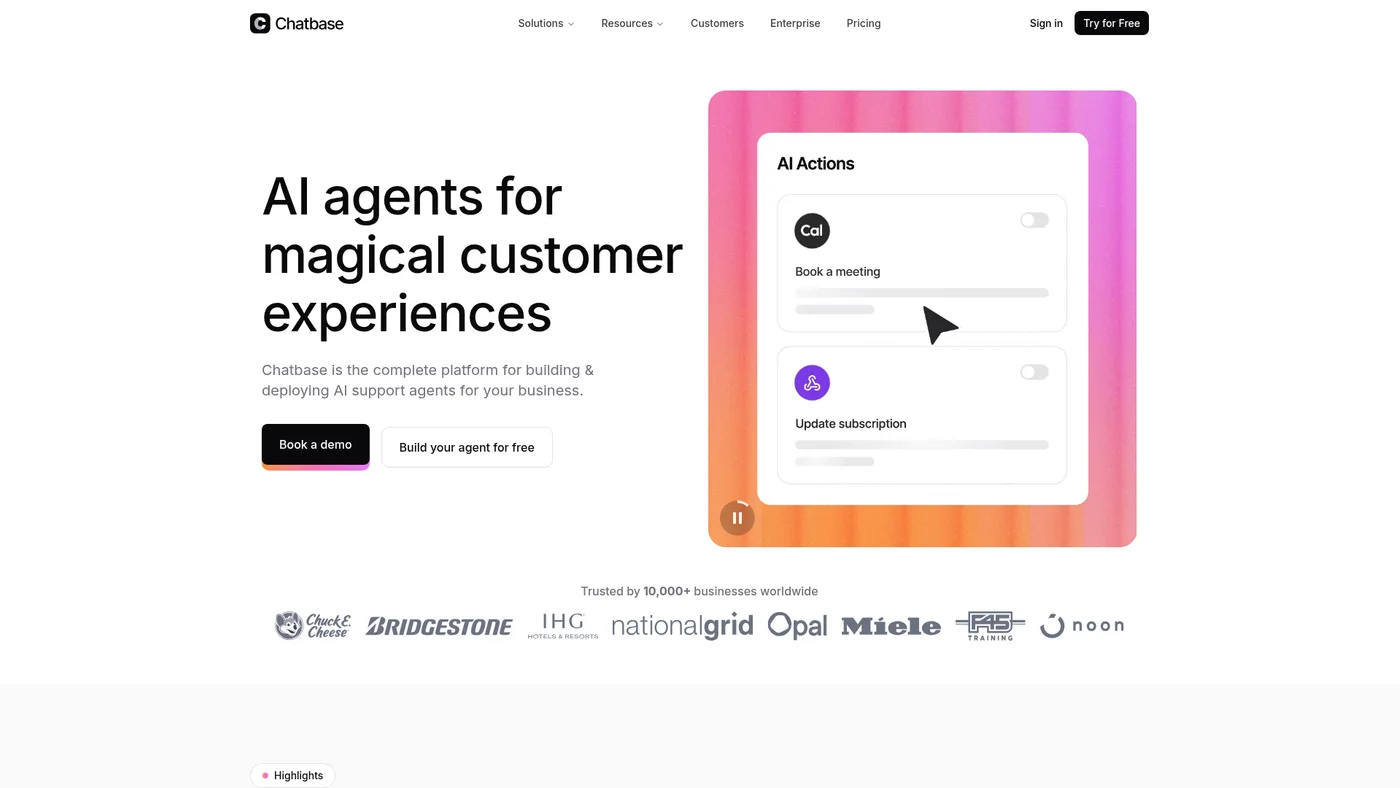
AI support agent builder with deep integrations, model choice, and a steep price ladder past the entry tier.
Key Features

SiteGPT
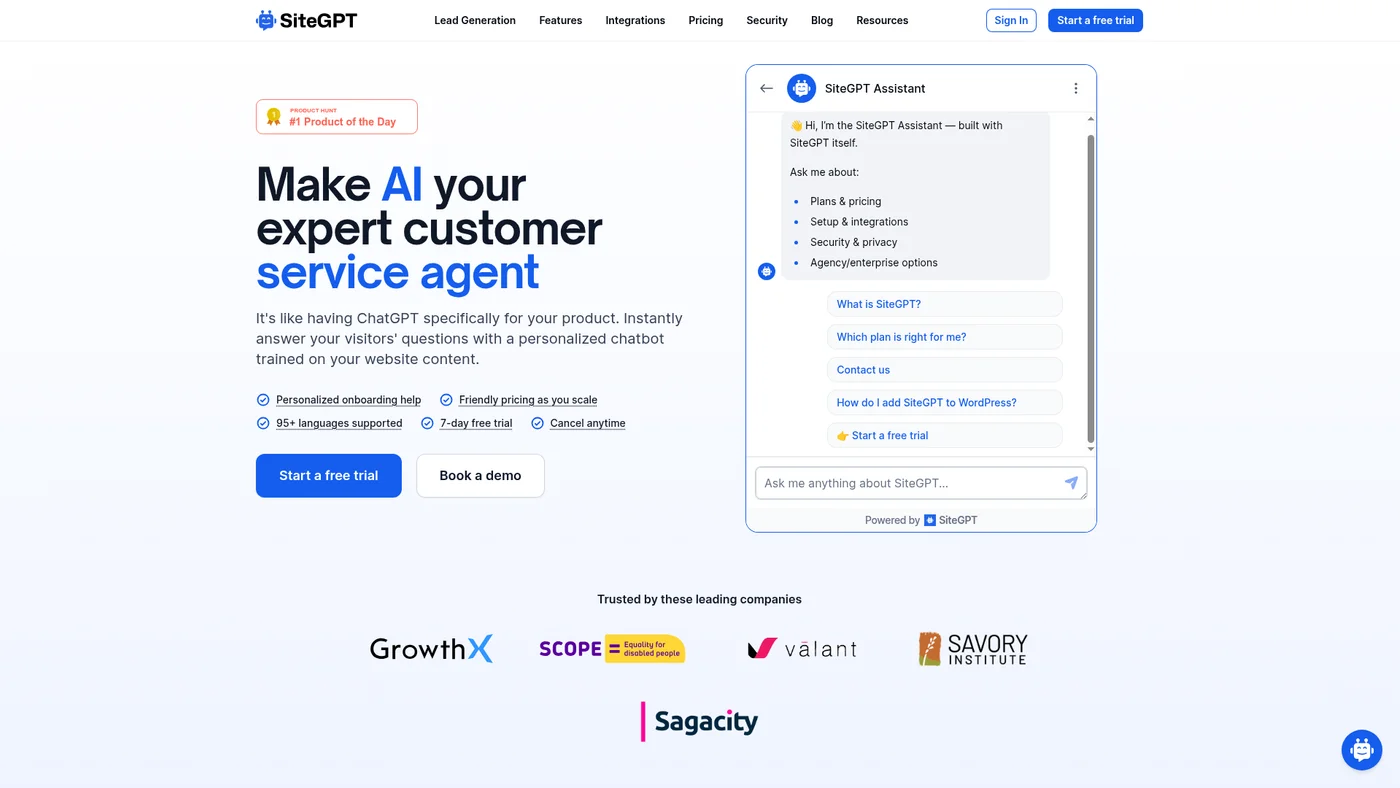
A website-trained AI chatbot with its own CLI, API, and MCP server for AI-agent workflows.
Key Features

Typebot
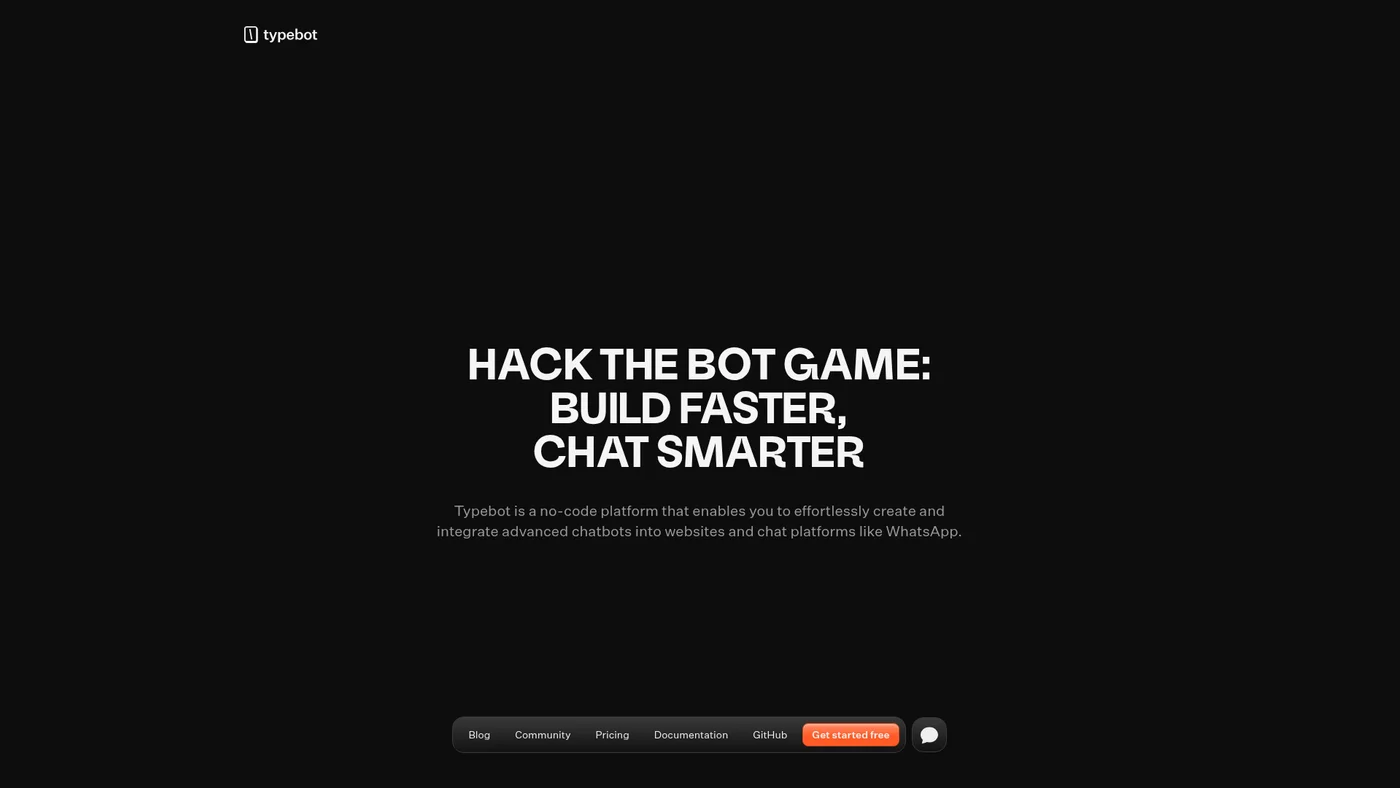
Open-source, no-code chatbot builder for websites and WhatsApp, priced by chat volume.
Key Features

Chatfuel
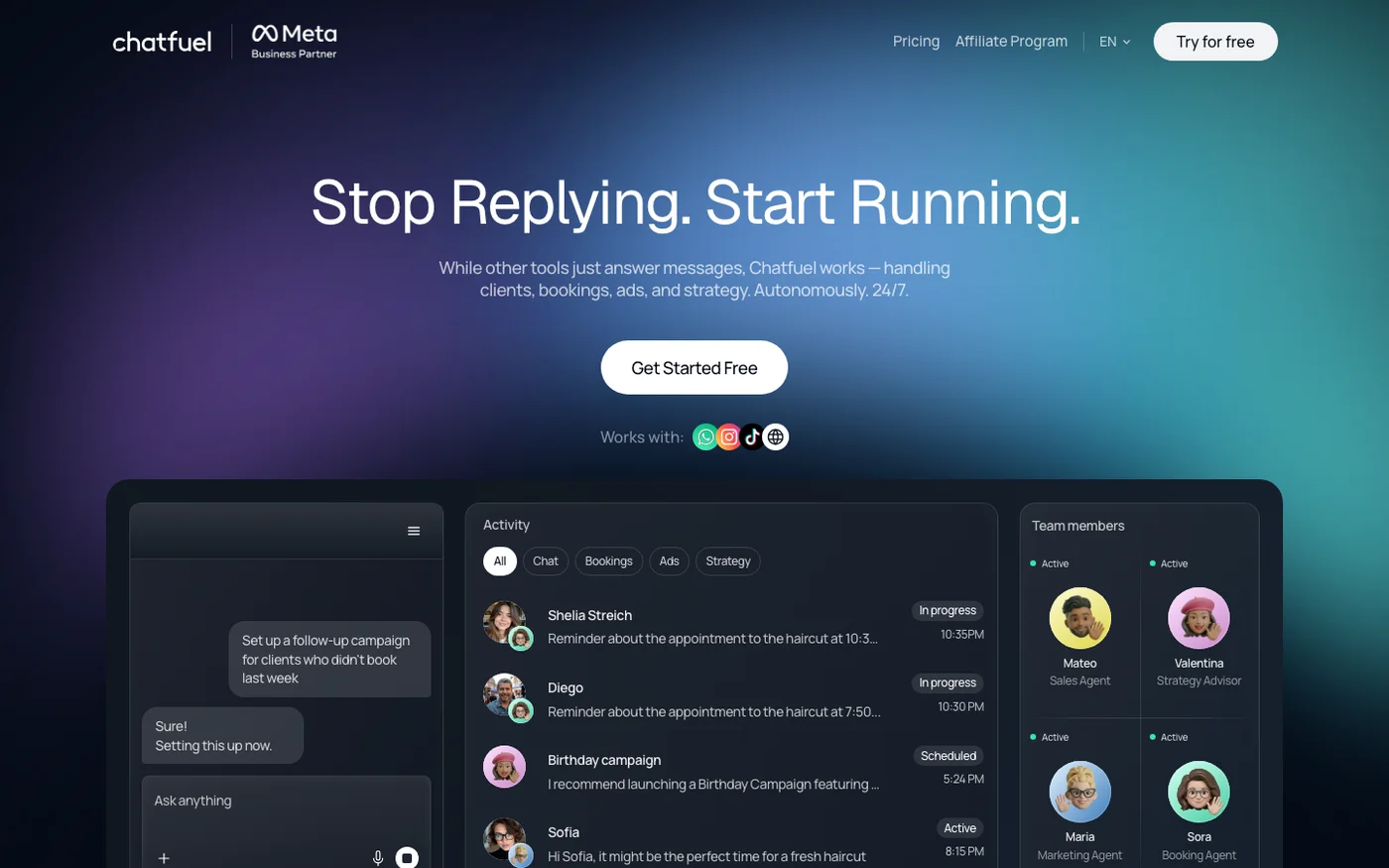
AI chat agents for WhatsApp, Instagram, Facebook, TikTok and web chat that handle bookings, sales and ads.
Key Features
✓Pros
- Genuinely usable free plan covering all three Meta channels
- Official Meta and WhatsApp Business Solution Provider
- One simple paid tier instead of contact-based pricing
✗Cons
- Only one paid tier, so there is no middle step between free and $69/mo
- Usage limits are vague: the limits page says unlimited contacts and fair-use AI
- No MCP server, and the trial length is not published
Which lead-gen chatbots plug into your AI stack?
This is the tiebreaker, and it is where the category is splitting. If you want your chatbot to feed your own agents (so a tool like Claude can read your conversations and leads, or your stack can act on them), the strongest signal is a first-party MCP server. Two tools here ship one: Intercom and Crisp. Tidio's Lyro agent can call external MCP tools, the other direction. On plain APIs, Intercom and Crisp are the most open; Chatbase and Expertise AI gate theirs to higher tiers; and Tars and ManyChat offer no official MCP at all (ManyChat has community-built wrappers only). For most marketers this is a nice-to-have today, but it is worth weighing if you are building toward an AI-driven stack.
Methodology
How I chose these
I scored each tool on five things that matter for lead capture: how well it captures and qualifies leads (forms, qualifying questions, routing, meeting booking), channel coverage (website, WhatsApp, Instagram, SMS), CRM and marketing-stack integrations, ease of setup, and pricing.
As a secondary differentiator I checked AI-stack fit: whether the tool exposes a usable REST API and, the strongest signal, its own MCP server an external agent can connect to. I verified pricing, features and integration claims against each vendor's live site in June 2026. Where a vendor recently changed pricing (ManyChat), I have flagged it.
FAQ
Frequently Asked Questions
For most teams, Tidio: affordable live chat plus a capable AI agent that captures and qualifies leads. Intercom's Fin is the strongest AI agent if budget allows, and Tars is purpose-built for conversational landing pages with in-chat meeting booking.
Tidio, Crisp and ManyChat all have free plans, though limited, and Typebot is free and self-hostable as open-source. Most tools reserve their real AI for paid tiers, so a free plan usually means rule-based flows.
For social and messaging lead capture, ManyChat leads (comment-to-DM and keyword automation on Instagram and Messenger, plus WhatsApp). Crisp covers the widest set of channels (WhatsApp, Instagram, SMS and more), and Landbot and Tidio also support WhatsApp. If social DMs are your main lead source, start with ManyChat or Crisp.
They replace a static form with a conversation. The bot greets a visitor, answers questions from your content, asks qualifying questions (need, budget, timeline), captures contact details, and either books a meeting or routes the lead into your CRM. AI-powered bots handle free-form questions and qualify more naturally than rule-based, button-only flows.
Expertise AI offers deep two-way sync with HubSpot, Salesforce and Marketo plus visitor identification, and Intercom integrates with Salesforce and HubSpot too. Most other tools connect to CRMs natively or through Zapier.
Continue reading






10+ years in digital marketing. I review marketing software for AI-stack fit: real pricing, MCP and API support, and how cleanly each tool drops into an AI agent workflow, cross-checked against verified data and real user feedback.