
This page may contain affiliate links.
Some links on this page are affiliate links, meaning I may earn a commission if you sign up (at no extra cost to you). This never influences my ratings or recommendations.
That's a genuinely useful pitch, but if you want to see model coverage or exact pricing before you sign up, or you need a straight REST API instead of an MCP-only workflow, it's worth lining up a few alternatives first.
Why Switch
Why people look for Omnia alternatives
Omnia's site doesn't publish tiered pricing, so you can't compare cost against competitors without signing up or booking a call.
The homepage leans heavily on MCP for Claude, ChatGPT, and Cursor, but doesn't confirm a separate REST API for custom builds.
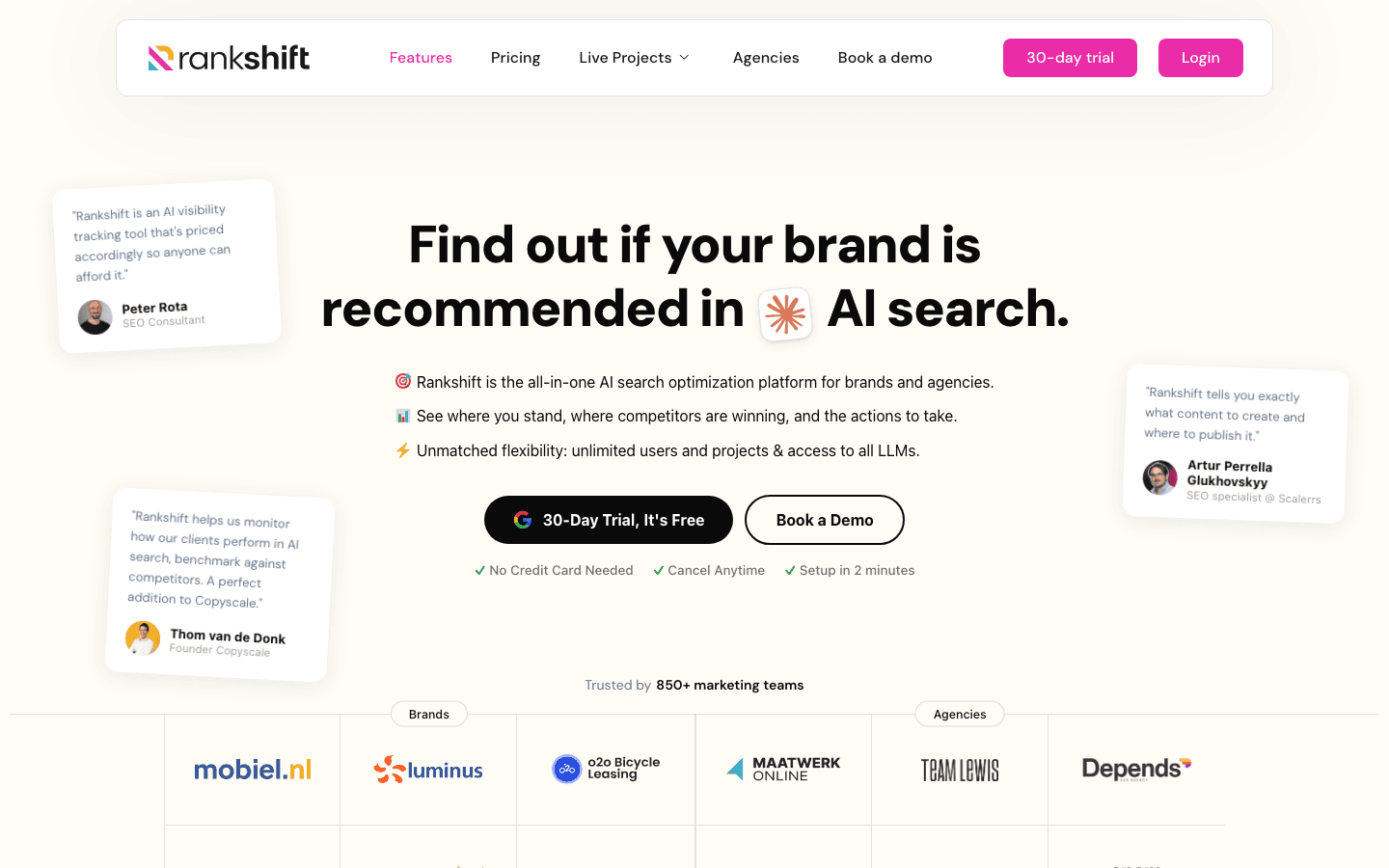
It's not clear exactly how many AI models Omnia tracks, while several competitors publish that number upfront (LLM Pulse: 10+, Rankshift: 9).
If you want the tool to draft content to close visibility gaps, not just recommend actions, Omnia's public copy focuses on the action plan, not the execution.
There's no free plan, only a 14-day trial, so beyond those two weeks there's no way to keep tracking at zero cost.
Alternatives
Best Omnia alternatives
8 alternatives ranked.

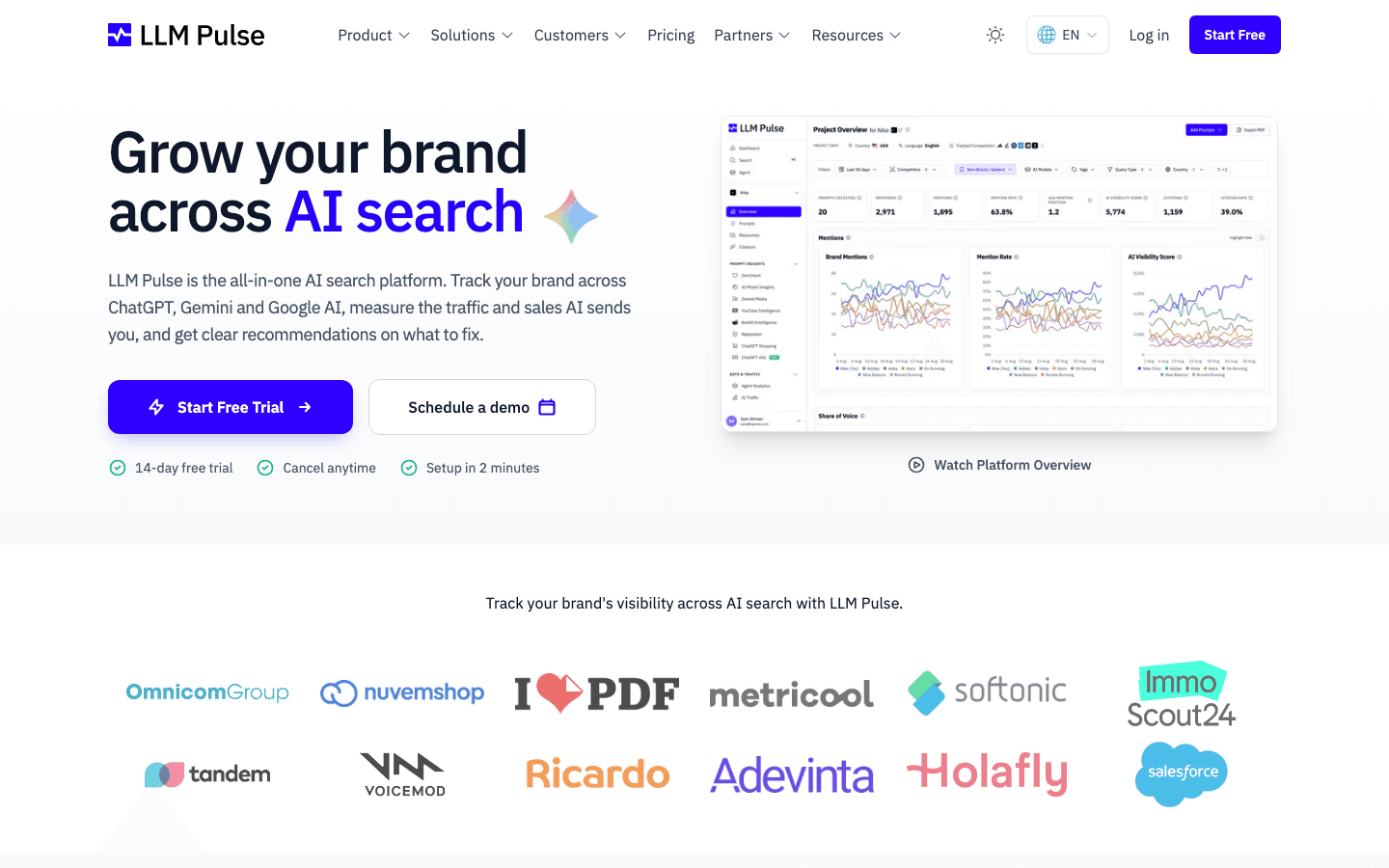
LLM Pulse
Teams that want a hosted MCP server and REST API on every tier, with pricing you can actually see.
AI search visibility tracker monitoring your brand across 10+ AI models with hosted MCP server and REST API.

Why consider LLM Pulse
LLM Pulse tracks your brand across 10+ AI models and ships both a hosted MCP server and a REST API, so agents can pull share-of-voice data directly instead of waiting on a dashboard export. Six pricing tiers are listed publicly, which is more transparent than most tools on this list.
Pros
- +10+ AI models tracked
- +Hosted MCP server plus REST API included, not gated to a top tier
- +Six clear pricing tiers from €49/mo to €1,199/mo
Cons
- −€49/mo Starter is still a real commitment if you're just testing the waters
- −No free plan

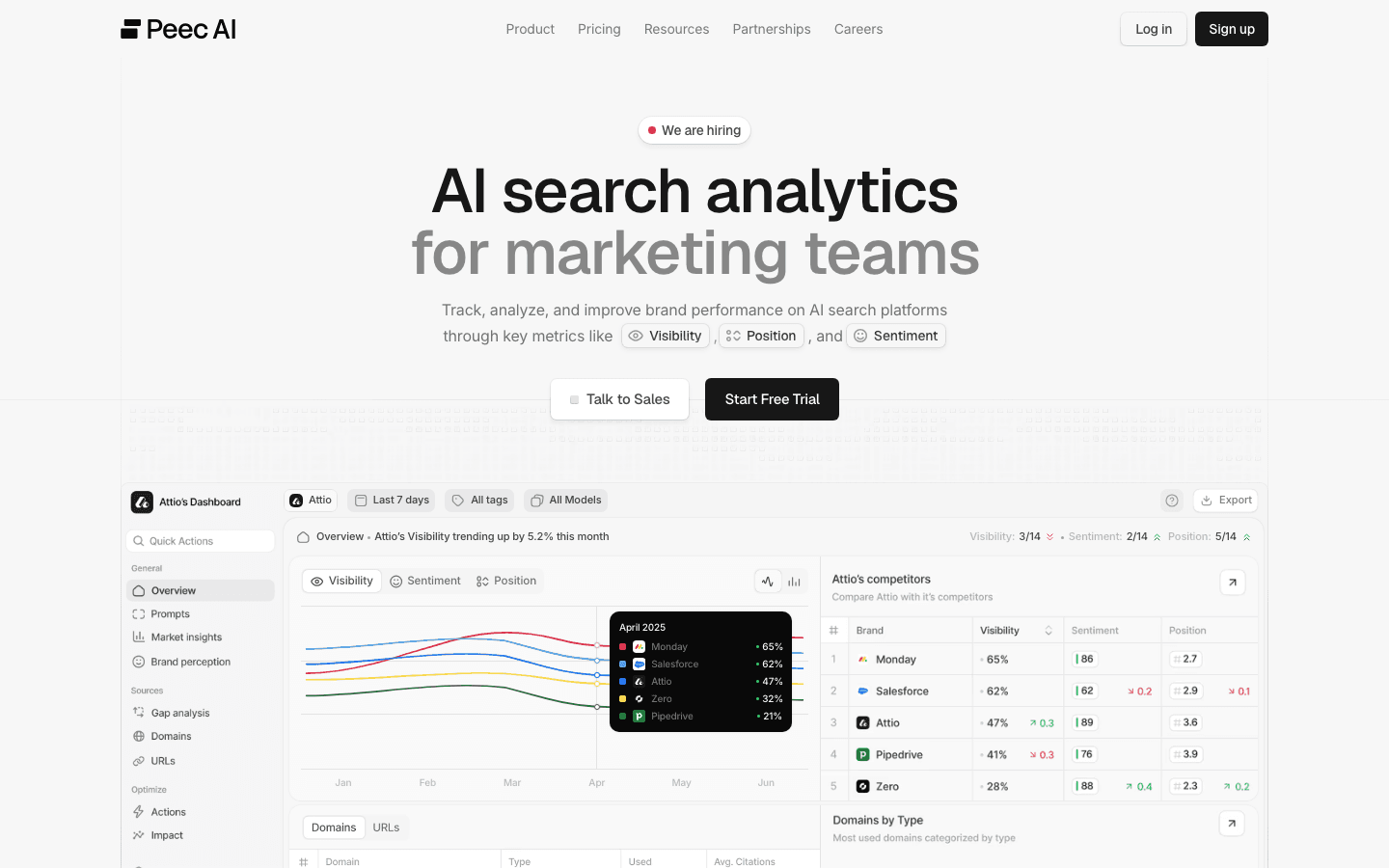
Peec AI
Brands that only care about ChatGPT, Perplexity, and Gemini, and want MCP on every paid plan.
AI search visibility analytics tracking your brand across ChatGPT, Perplexity and Gemini with MCP on every paid plan.

Why consider Peec AI
Peec AI keeps its focus narrow: ChatGPT, Perplexity, and Gemini, the three engines most brands actually get cited in. MCP comes standard on every paid plan, so you're not paying extra to connect it to your AI assistant.
Pros
- +MCP included on every paid plan, not just the most expensive one
- +Focused on the engines that matter most for most brands right now
Cons
- −At $95/mo it starts a little above Omnia and tracks fewer engines (ChatGPT, Perplexity, Gemini), so it is not the cheaper or broader option
- −Narrower model coverage than tools tracking 9-10+ engines

Rankshift
Teams that want a real MCP server and REST API once they're ready to scale past the entry tier.
AI search visibility tracker for 9 LLMs with real MCP server and REST API from Professional plan onwards.

Why consider Rankshift
Rankshift covers 9 LLMs and adds a genuine MCP server plus REST API starting on its Professional plan. That structure lets you start cheap on Starter and add automation later once you know you'll use it.
Pros
- +Tracks 9 different LLMs
- +30-day trial, longer than most tools here
- +MCP server and REST API confirmed real, not a thin wrapper
Cons
- −MCP and API locked behind the $189/mo Professional plan, not the $82/mo Starter
- −Business tier jumps to $425/mo if you need more volume

SE Visible
Teams already running SE Ranking for classic SEO who want AI visibility from the same vendor.
AI search visibility tracker from the SE Ranking team monitoring your brand across ChatGPT, Gemini and Perplexity.

Why consider SE Visible
Built by the SE Ranking team, SE Visible tracks ChatGPT, Gemini, and Perplexity citations. It slots in naturally if you're already inside that ecosystem for traditional rank tracking.
Pros
- +Backed by an established SEO vendor
- +Three tiers priced $99 to $355/mo, more transparent than several rivals here
Cons
- −Only a 10-day trial, shortest on this list
- −Research doesn't confirm MCP or REST API access, so agent workflows may be limited

Temso AI
Teams that want tracking and the fix in one closed loop, run by an agent instead of a human checklist.
Closed-loop AEO platform that tracks AI search visibility and runs an AI agent to act on it, with a REST API.

Why consider Temso AI
Temso AI pairs AI search visibility tracking with an agent that acts on what it finds, closing the loop between diagnosis and action. It also ships a REST API for teams that want to pull the data into their own tools.
Pros
- +Built-in AI agent that acts on visibility gaps, not just reports them
- +REST API available for custom integrations
Cons
- −The $29/mo entry is the cheapest here, but its MCP is read-only and full REST API access sits on a much pricier tier
- −Model coverage and MCP support aren't detailed in what's publicly available

Loudmink
Teams that want visibility tracking plus drafted content to close the gaps, not just a to-do list.
AEO tool that tracks your brand across AI engines, maps competitor source networks, and drafts content to close visibility gaps.

Why consider Loudmink
Loudmink tracks your brand across AI engines, maps out competitor source networks, and then drafts content aimed at closing the visibility gaps it finds. That's a step further into execution than pure tracking tools offer.
Pros
- +Maps competitor source networks, not just your own mentions
- +Drafts content directly to address visibility gaps
- +Three clear tiers from $79 to $479/mo
Cons
- −Ships an official MCP but no public REST API, so agent access is MCP-only
- −Drafted content still needs a human editing pass before it's usable

Finseo
Enterprise teams that need Claude coverage alongside ChatGPT, Gemini, and Perplexity, plus both MCP and API.
Enterprise AI visibility tracker for ChatGPT, Claude, Gemini and Perplexity with REST API and MCP server.

Why consider Finseo
Finseo tracks four major engines including Claude, which some competitors skip, and includes both a REST API and MCP server. It's aimed at enterprise-scale visibility programs rather than solo marketers testing the waters.
Pros
- +Tracks Claude alongside ChatGPT, Gemini, and Perplexity
- +Both REST API and MCP server included
Cons
- −No public pricing at all, every tier is book a demo
- −Managed Service tier signals this leans toward bigger budgets

AthenaHQ
Anyone who wants to test AI visibility tracking for free before spending anything.
AI search visibility tracker with built-in content optimization agent for closing visibility gaps.

Why consider AthenaHQ
AthenaHQ's Essential plan is free, the only zero-cost option on this list, making it the easiest way to get a first read on your AI search visibility. The paid Starter tier adds a content optimization agent to help act on what it finds.
Pros
- +Free Essential plan, no other tool here offers that
- +Built-in content optimization agent on paid tiers
Cons
- −Starter jumps to $295/month once you outgrow the free plan, a steep gap
- −Enterprise pricing isn't public
Checklist
What to look for in an alternative
Start with model coverage. AI answers come from different engines (ChatGPT, Claude, Gemini, Perplexity), and a tool that only tracks two or three of them is going to miss where your actual buyers are asking questions. Next, figure out how your team actually wants to work with the data.
If you're running agent workflows through Claude or Cursor, an MCP server matters more than a dashboard. If you're building custom reporting or piping data into your own stack, a REST API matters more.
Some tools on this list gate MCP and API access behind their top tier, others include it everywhere, and that difference changes what you actually pay to automate anything. Last, look at whether the tool stops at diagnosis or goes further. Some just tell you your share of voice is dropping. Others, like the AI agent tools further down this list, draft the content or run the fix themselves.
Decide how much of that execution work you want a tool doing versus your own team.
FAQ
Frequently Asked Questions
Omnia's core pitch is turning AI citation data into a weekly action plan you approve rather than build, connected through MCP to Claude, ChatGPT, or Cursor. Most alternatives on this list focus more on the tracking and reporting layer, with some adding their own execution agents on top.
AthenaHQ is the only one here with a genuinely free tier, called Essential. The rest either start at a paid tier or require you to book a demo for pricing.
LLM Pulse and Peec AI include MCP on all their plans. Rankshift adds it from the Professional plan up, and Finseo includes an MCP server as part of its enterprise-focused offering.
No, coverage varies a lot. LLM Pulse tracks 10+ models, Rankshift covers 9, Finseo covers ChatGPT, Claude, Gemini, and Perplexity, and Peec AI and SE Visible focus on ChatGPT, Perplexity, and Gemini.
Outside of AthenaHQ's free plan, Loudmink's Starter at $79/mo and Rankshift's Starter at $82/mo are the lowest publicly listed entry prices on this list.
It depends on how your team works. Pick a REST API if you're building custom dashboards or piping data into your own systems, and pick MCP if you want to run everything directly from Claude or ChatGPT without extra glue code.
Based on its own site, Omnia is focused specifically on AI search visibility, share of voice, and how AI engines talk about your brand versus competitors. It's not positioned as a traditional keyword rank tracker.
Still considering Omnia?
Check it out before committing to an alternative.
More on Omnia

Joonas Rotko
Author & founder of That Marketing Buddy
I score marketing software for AI-stack fit (MCP, API, agent-readiness), backed by 10+ years in digital marketing. I track 60+ tools so you can find the right fit.
This page may contain affiliate links. I earn a commission at no extra cost to you. This never influences the recommendations.