
In short
Email marketing continues to dominate digital channels in 2026 with an average ROI of $36 to $42 per dollar spent. Key trends: automated emails generate 16x more revenue per send than campaigns, mobile accounts for 41.6% of opens, and AI adoption has reached 63% of marketers. Open rates averaged 30.7% in 2025 (up for the fifth consecutive year), while segmented campaigns generate 760% more revenue than non-segmented ones.
Contents (12)
- 1Email Marketing ROI and Revenue
- 2Email Usage and Market Size
- 3Open Rates and Engagement Benchmarks
- 4Email Automation Statistics
- 5Personalization and Segmentation
- 6Subject Line Statistics
- 7Mobile Email Statistics
- 8B2B vs B2C Email Marketing
- 9AI in Email Marketing
- 10Deliverability and List Health
- 11What These Statistics Mean for Your Strategy
- 12Sources
Email marketing remains the highest-ROI digital marketing channel heading into 2026. But the landscape is shifting fast: AI adoption is accelerating, automation is widening the gap between top performers and everyone else, and Apple Mail Privacy Protection continues to reshape how engagement is measured.
I compiled this list of 50+ email marketing statistics from authoritative sources including Omnisend, Litmus, Mailchimp, GetResponse, Statista, and more. Every stat links back to its original source so you can cite them confidently.
Whether you are building your first email list or optimizing an advanced automation strategy, these numbers will help you benchmark your performance and spot opportunities.
Email Marketing ROI and Revenue
Email consistently delivers the highest return on investment of any digital marketing channel. These revenue statistics explain why.
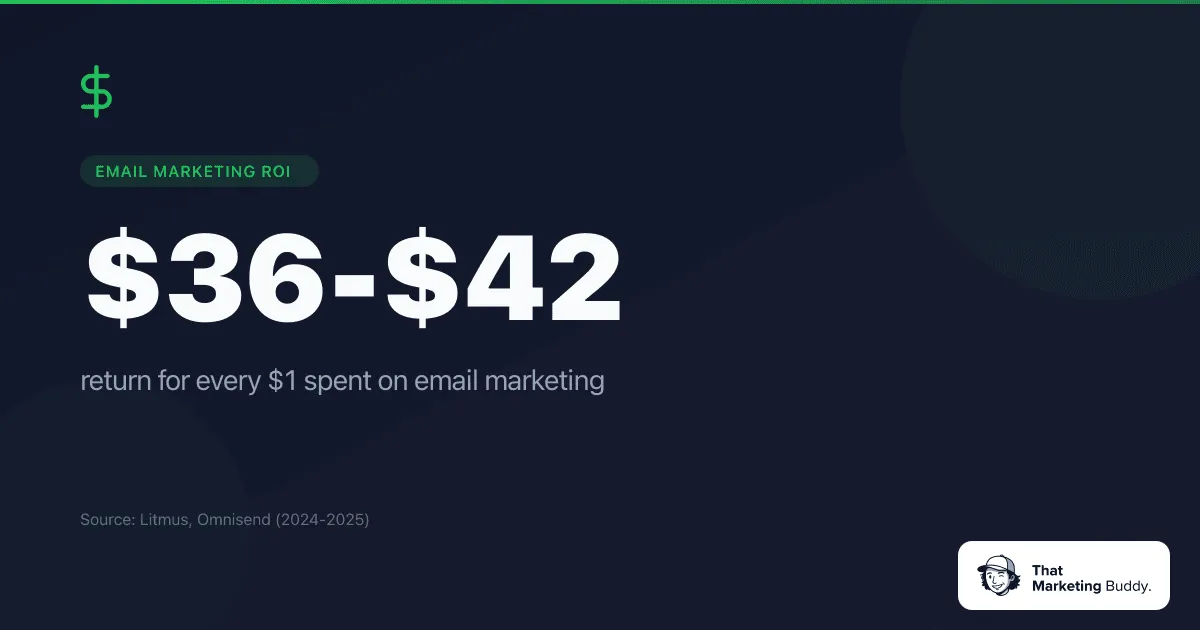
- Email marketing generates $36 to $42 for every $1 spent, translating to a 3,600% to 4,200% ROI. (Source: Litmus, Omnisend)
- Omnisend US merchants saw an average ROI of $76 per $1 spent in 2024, roughly double the industry average. (Source: Omnisend)
- 41% of marketers rank email as their most effective channel, compared to 16% for social media and 16% for paid search. (Source: Omnisend)
- Click-to-conversion rates jumped 53% year over year, rising from 5.9% to 9% in 2024. (Source: Omnisend)
- Email outperformed banner ads and SMS by 108%, social media posts by 13%, and social media ads by 11% in revenue attribution. (Source: Omnisend)
- Nearly 50% of consumers made a direct purchase from an email in the past year. (Source: Omnisend)
Email Usage and Market Size
The email market continues to grow, with more users and more messages sent every year.
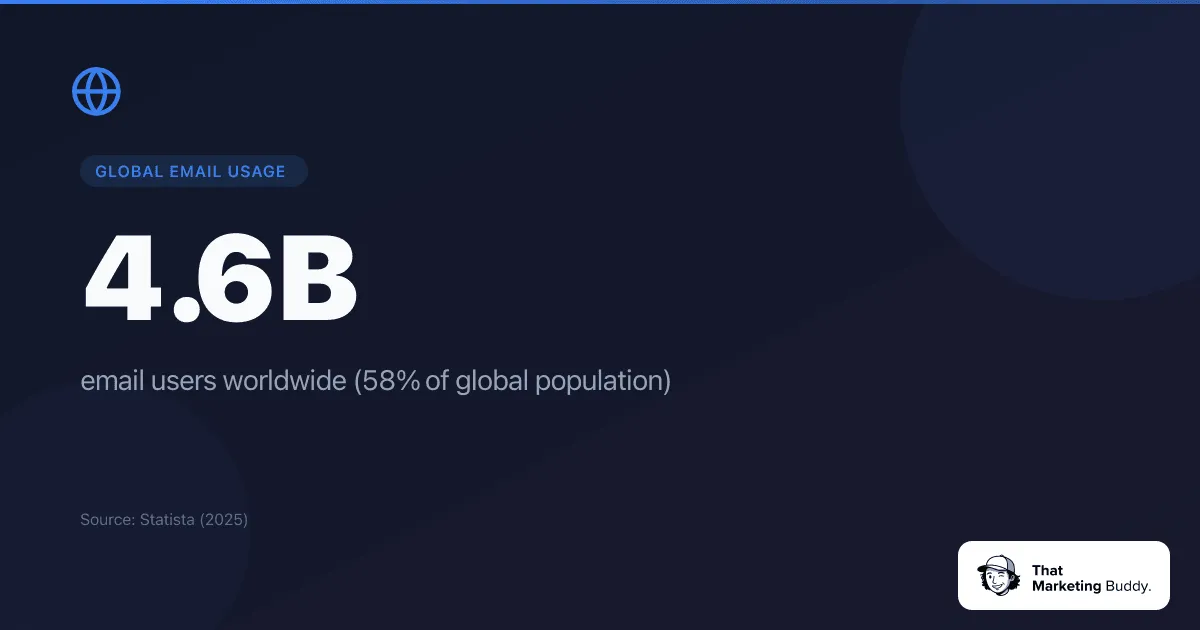
- 4.6 billion people use email globally as of 2025, representing about 58% of the world's population. (Source: Statista)
- 392.5 billion emails are sent and received daily in 2026, up from 376.4 billion in 2025. (Source: Statista)
- The global email marketing market is projected to reach $24.19 billion by 2033, growing at a CAGR of 16.48% from $7.14 billion in 2025. (Source: Straits Research)
- The US leads global email volume at 9.7 billion daily emails. Germany, Ireland, Netherlands, UK, and France each exceed 8 billion daily. (Source: Omnisend)
- 42% of people check email 3 to 5 times daily, 28% check 10 to 20 times, and 19% check 20+ times per day. (Source: Omnisend)
Open Rates and Engagement Benchmarks
Open rates have risen for five consecutive years, though Apple Mail Privacy Protection makes them less reliable as a standalone metric.
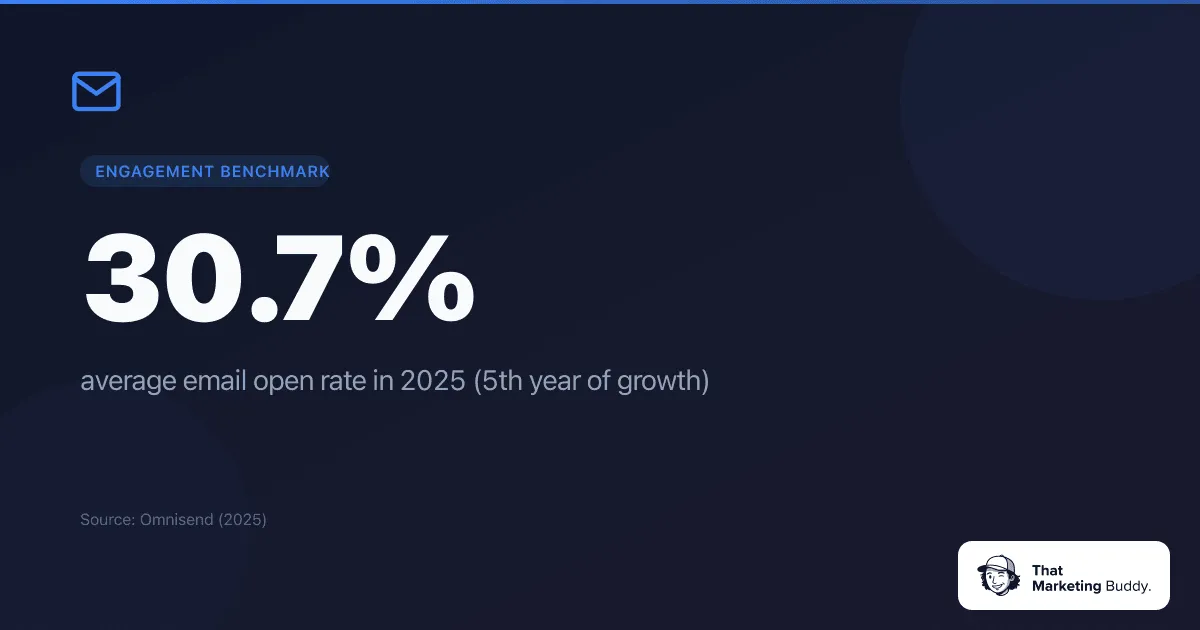
- Average email campaign open rate reached 30.7% in 2025, the fifth consecutive year of increases. (Source: Omnisend)
- MailerLite reports an even higher average of 43.46% across all industries in 2025, reflecting different customer bases and measurement methodologies. (Source: MailerLite)
- Average email click-through rate is 2.09% to 2.62% depending on the platform and industry. (Source: Omnisend, Mailchimp)
- Click-to-open rate rose to 6.81% in 2025, up from 5.63% in 2024, a 21% year-over-year increase. (Source: MailerLite)
- Apple Mail Privacy Protection affects 64% of Apple Mail users, pre-loading images and artificially inflating open rates. Click rates are now a more reliable engagement indicator. (Source: Omnisend)
Open Rates by Industry
- Religion: 55.71% (highest open rate)
- Hobbies: 53.25%
- Non-profit: 52.38%
- Government: ~28 to 30% (highest on Mailchimp's benchmarks, with 4.58% CTR)
- E-commerce: 32.67%
- Travel and transportation: 30.10% (lowest)
(Sources: GetResponse, Mailchimp)
Email Automation Statistics
Automated emails are where the real money is. Despite representing a tiny fraction of total email volume, they drive a disproportionate share of revenue.
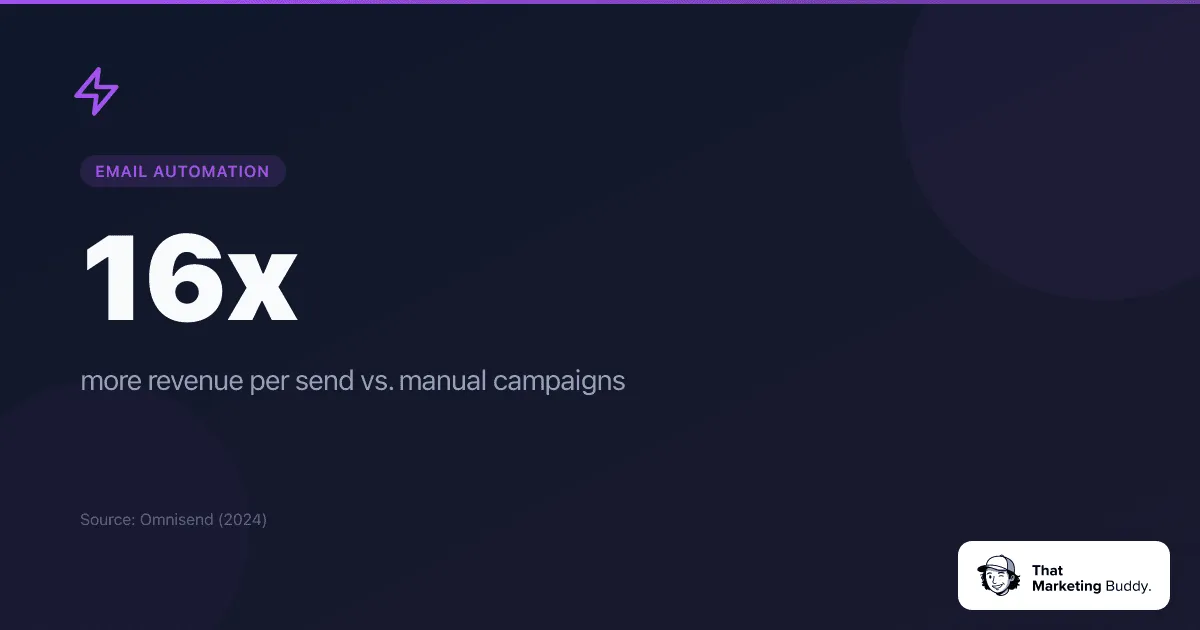
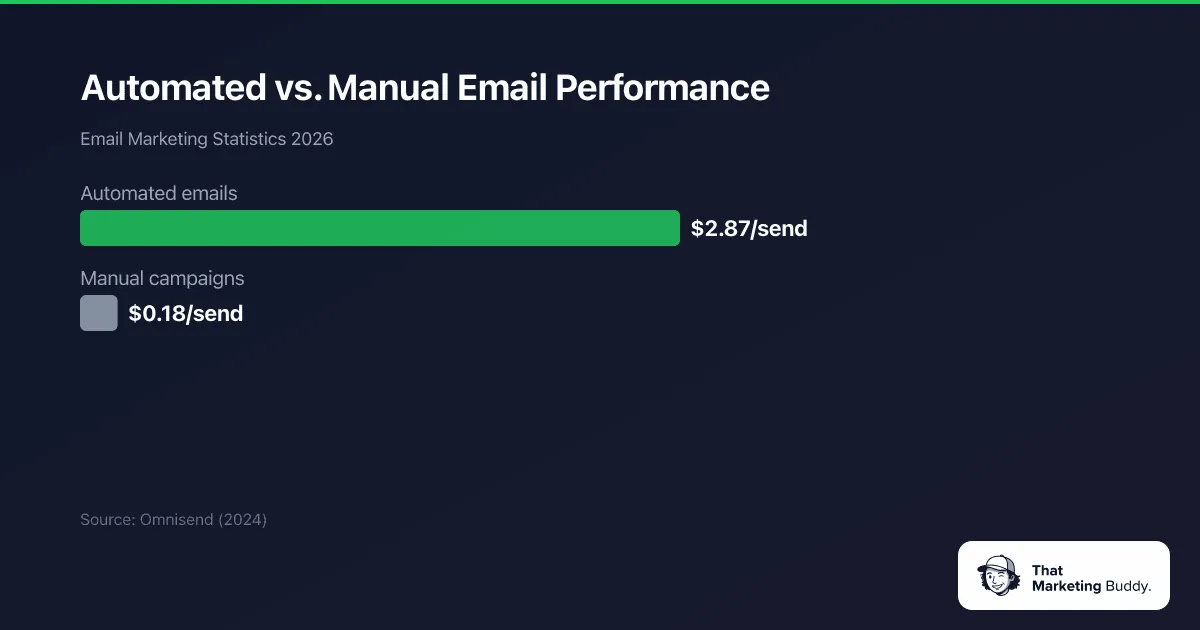
- Automated emails generate $2.87 per send compared to $0.18 for manual campaigns. That is 16x more revenue per email. (Source: Omnisend)
- Automated emails drove 37% of all email-generated sales in 2024, despite making up only 2% of total email volume. (Source: Omnisend)
- Automated emails have 52% higher open rates and 332% higher click rates than scheduled campaigns. (Source: Omnisend)
- Automated emails achieve a 2,361% better conversion rate compared to scheduled campaign emails. (Source: Omnisend)
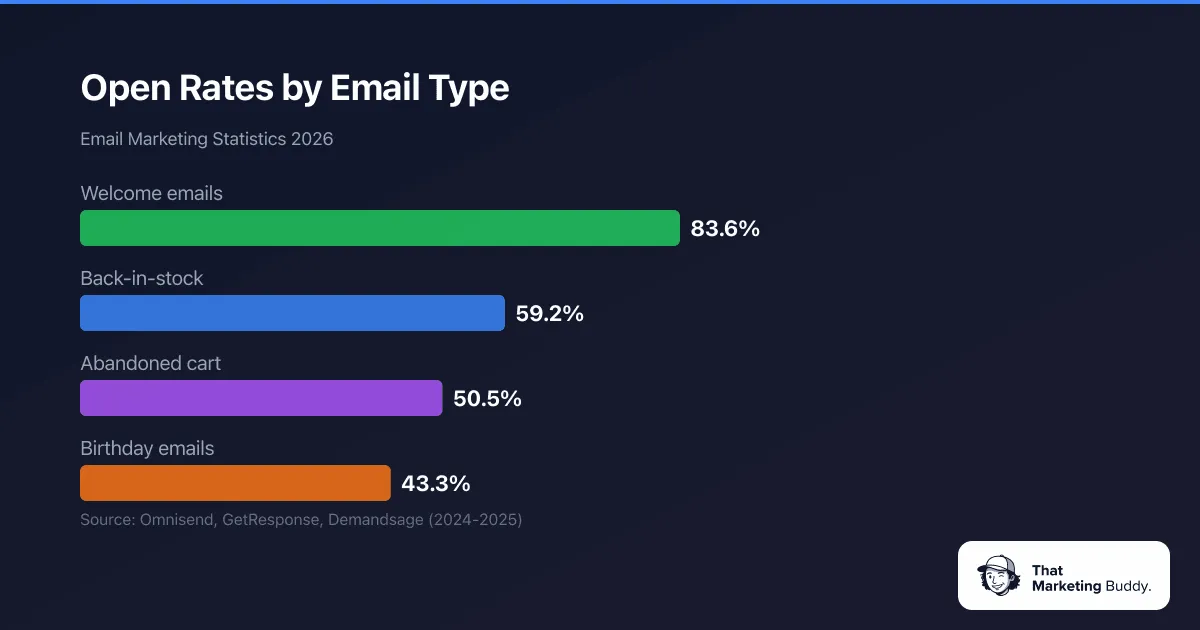
- Welcome emails reach an 83.63% open rate on average. (Source: GetResponse)
- Abandoned cart emails achieve a 50.5% open rate and are among the highest-performing automated flows. (Source: Demandsage)
- Back-in-stock emails hit a 59.19% open rate with a 5.34% conversion rate. (Source: Omnisend)
- Birthday emails deliver a 43.3% open rate with a 14.3% click-to-conversion rate and an average order value of $744, which is 4x higher than the average. (Source: Omnisend)
- 87% of automated email orders came from just three flows: abandoned cart, welcome series, and browse abandonment. (Source: Omnisend)
If you are not using email automation yet, check my guide on how to automate your email campaigns for a step-by-step walkthrough.
Personalization and Segmentation
Personalized, segmented emails dramatically outperform generic blasts across every metric.
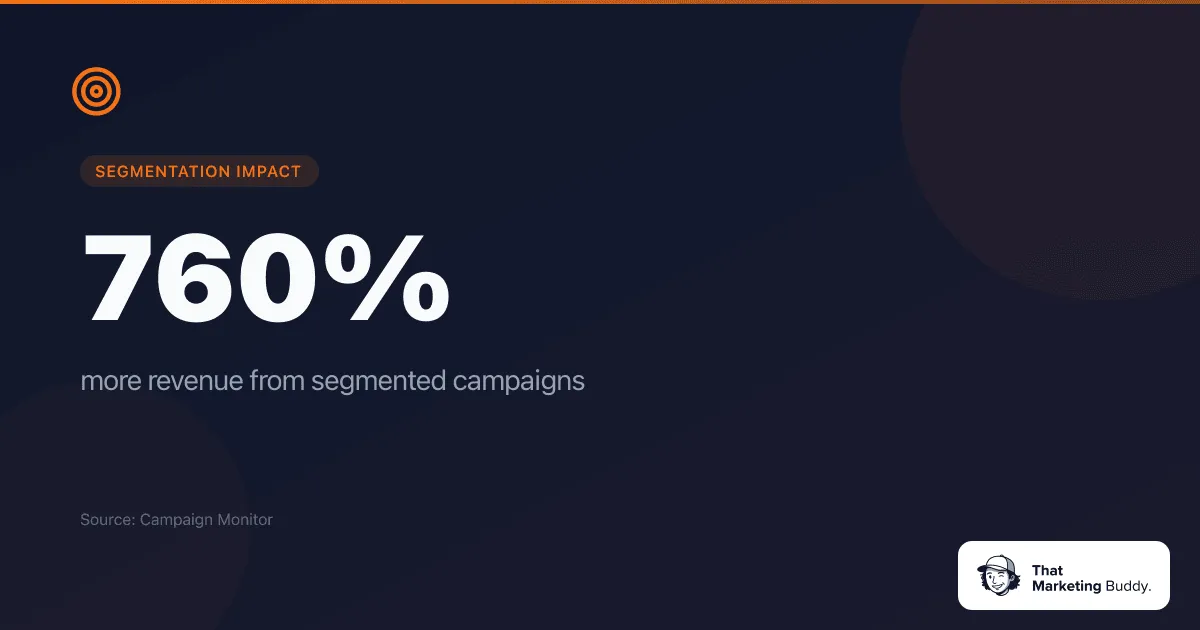
- Segmented campaigns generate 760% more revenue than non-segmented campaigns. (Source: Campaign Monitor)
- 80% of customers are more likely to purchase from brands that offer personalized experiences. (Source: Omnisend)
- Personalized emails deliver 6x higher transaction rates compared to generic emails. (Source: Omnisend)
- 90% of email marketing professionals report that segmentation increases their campaign performance. (Source: Omnisend)
- 80%+ of marketers report improvement when using subject line personalization. (Source: Omnisend)
- Behavioral trigger emails generate 10x greater revenue than other email types. (Source: Omnisend)
- 44% of personalization data is sourced from past email interactions, making your email platform the most valuable data source for personalization. (Source: Omnisend)
Subject Line Statistics
Your subject line determines whether your email gets opened or ignored. These stats show what works.
- Subject lines between 36 and 50 characters perform best, balancing readability with mobile preview constraints. (Source: Mailpro)
- Personalized subject lines increase open rates by 10 to 14% across industries. (Source: Omnisend)
- 73% of marketers say emojis in subject lines improve performance significantly. (Source: Omnisend)
- 69% of email recipients report emails as spam based on the subject line alone. (Source: Omnisend)
- Personalization in the subject line increases replies by 30.5%. (Source: SalesHandy)
For practical tips on writing better subject lines, read my guide on email subject lines that get opened.
Mobile Email Statistics
More than half of all emails are now opened on mobile devices. Optimizing for mobile is no longer optional.
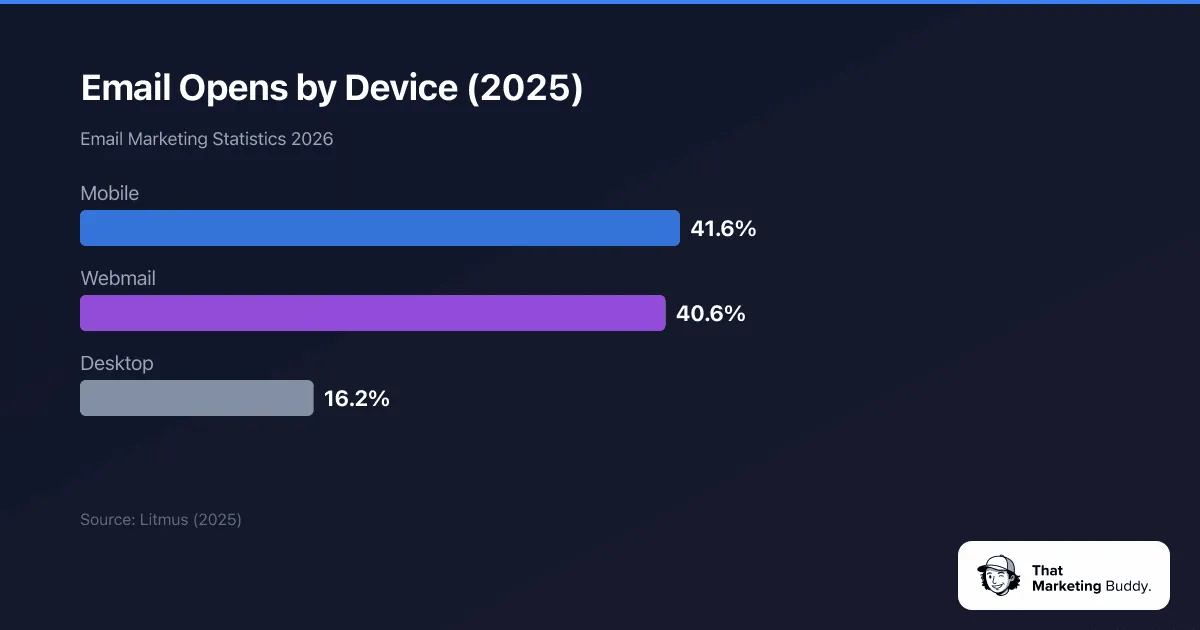
- Mobile devices account for 41.6% of all email opens, webmail accounts for 40.6%, and desktop for just 16.2%. (Source: Litmus)
- Mobile-responsive emails deliver 15% higher click rates compared to non-responsive designs. (Source: DesignModo)
- Mobile email opens show an 11% click-to-open rate compared to 21% on desktop, meaning desktop users engage nearly 2x more deeply. (Source: GenesysGrowth)
- Mobile open rates rise to 44.2% during the holiday season, higher than the rest of the year. (Source: Omnisend)
- Mobile inbox previews display 28 to 50 characters of the subject line before truncation, making concise subject lines critical. (Source: Mailpro)
B2B vs B2C Email Marketing
The way B2B and B2C audiences engage with email differs in important ways.
- B2B marketing emails have a 15.14% open rate compared to 19.7% for B2C. (Source: SalesSo)
- B2B emails have a 23% higher click-to-open ratio than B2C, meaning B2B readers who open are more likely to engage deeply. (Source: SalesSo)
- 81% of B2B marketers use email newsletters as their primary content marketing format. (Source: Omnisend)
- 73% of B2B buyers prefer email as the contact method from sellers. (Source: Omnisend)
- 71% of B2B marketers use email newsletters for lead nurturing specifically. (Source: Omnisend)
- Cold B2B email outreach averages a 36% open rate, which is substantially higher than general B2B marketing email benchmarks. (Source: verified.email)
AI in Email Marketing
AI adoption in email marketing has accelerated rapidly. Here is where the industry stands.
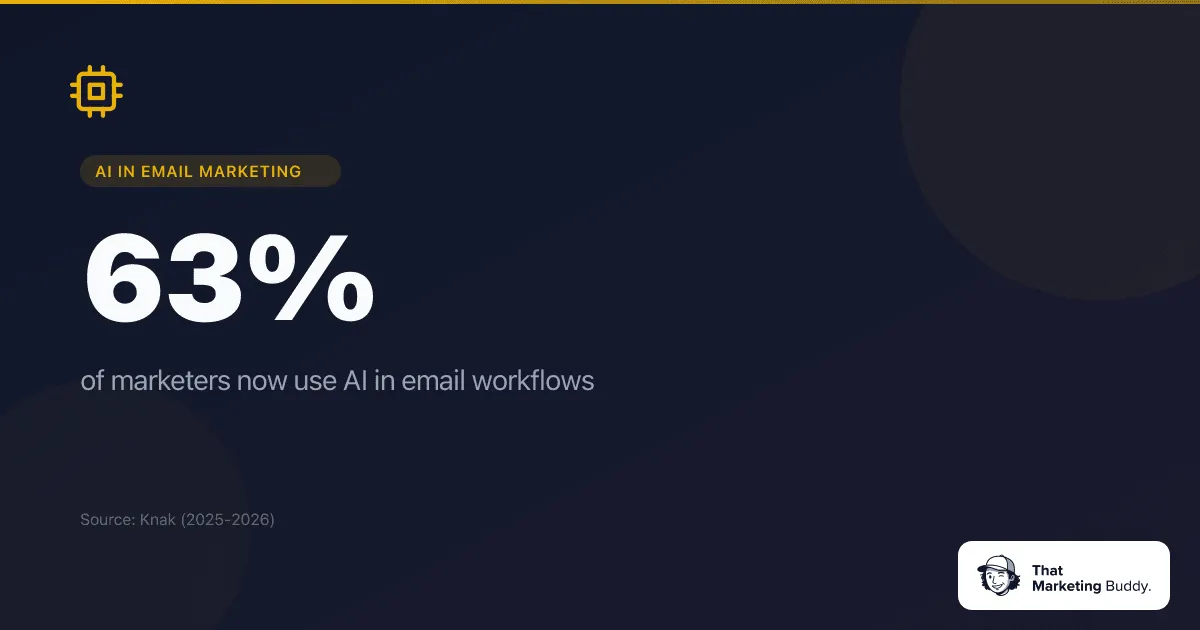
- 63% of marketers now use AI tools in their email marketing workflow. (Source: Knak)
- 7 in 10 US marketers employ generative AI tools in their marketing efforts. (Source: Omnisend)
- AI-generated subject lines increase open rates by up to 22%, with typical improvements of 5 to 10%. (Source: Knak)
- AI-driven campaigns produce 41% higher revenue and 13% higher click-through rates compared to traditional approaches. (Source: Omnisend)
- 66% of AI-adopting marketers use AI to optimize send times, making send-time optimization the most common AI application in email. (Source: Omnisend)
- 50.7% of US and EU marketers believe AI is more effective than traditional approaches for email marketing. (Source: Omnisend)
- 34% of marketers use AI specifically for email copywriting. (Source: Omnisend)
- By 2026, 89% of marketing experts expect up to 75% of email strategy operations to be AI-driven. (Source: Knak)
Deliverability and List Health
Your emails need to reach the inbox before anything else matters. These stats cover deliverability benchmarks.
- Average email bounce rate across all industries is 2.33%. A bounce rate under 2% is ideal. (Source: Instantly)
- Email lists naturally decay by about 22.5% every year due to people changing email addresses, unsubscribing, and abandoned accounts. (Source: HubSpot)
- Cold email bounce rates vary widely, with a typical sender bouncing at 1.54%. The top 25% of senders cross 3.21%, while the weakest 10% go above 6.7%. (Source: Smartlead)
- The average unsubscribe rate across industries is 0.1% to 0.3% per campaign. (Source: Mailchimp)
- 61.3% of consumers prefer email for receiving promotional messages. (Source: Omnisend)
- 75.1% prefer email for transactional communications like order confirmations and shipping updates. (Source: Omnisend)
What These Statistics Mean for Your Strategy
These numbers paint a clear picture of where email marketing is headed. Here are the key takeaways for 2026.
Automation matters for efficiency. Automated emails drive 16x more revenue per send and account for 37% of email-generated sales despite being just 2% of volume. If you are still sending only manual campaigns, you are leaving significant revenue on the table.
Segmentation compounds results. A 760% revenue increase from segmentation is not a marginal improvement. Start with basic segments (new subscribers vs. repeat buyers, active vs. inactive) and build from there.
AI is mainstream, not experimental. With 63% adoption and measurable revenue gains, AI-powered send-time optimization, subject line testing, and personalization should be part of your toolkit.
Click rates matter more than open rates. Apple Mail Privacy Protection has made open rates unreliable. Focus on click-through rates, click-to-open rates, and conversion rates as your primary engagement metrics.
Mobile optimization is essential. With 41.6% of opens on mobile, every email you send needs to look good on a phone screen. Test before you send.
Looking for the right email marketing platform to put these insights into action? Browse my comparison of the best email marketing software for 2026 or start with my picks for the best free email marketing tools.
Sources
All statistics in this article are sourced from the following organizations and their published reports:
- Omnisend: Email Marketing Statistics 2026
- Litmus: State of Email Reports
- Mailchimp: Email Marketing Benchmarks
- GetResponse: Email Marketing Benchmarks
- MailerLite: Email Marketing Benchmarks 2025
- Statista: Email Marketing Worldwide
- Straits Research: Email Marketing Market Report
- Knak: Email Creation & AI Statistics 2026
- Campaign Monitor: Email Marketing Benchmarks
- Demandsage: Email Marketing Statistics 2026
Tools in this guide


Read next

Joonas Rotko
SEO & GEO specialist, founder of That Marketing Buddy
I'm a Finnish SEO and GEO professional with 11+ years in digital marketing, including years as a co-owner of a digital marketing agency. On That Marketing Buddy I test and compare SEO and AI-visibility software for entrepreneurs, marketing professionals and agencies.