
Most "AI social media" tools are a scheduler with a "generate caption" button bolted on. That's not what this list is about. I looked at tools where AI or API-first design is the core product, not a sidebar.
That means agent-driven workflows (Zernio), content remixing pipelines (Blotato), video-to-clip automation (Bolta.ai), and developer APIs that let you ship social features without integrating six vendors (bundle.social, Ayrshare, Unipile). I kept a handful of credible traditional schedulers (Buffer, Publer, Postiz) for comparison, because not everyone needs an agent.
Sometimes you just need a scheduler that does not crash. If you want the broader picture of how AI agents are reshaping marketing tools, my guide to ranking in AI search is the place to start.
This page may contain affiliate links.
Some links on this page are affiliate links, meaning I may earn a commission if you sign up (at no extra cost to you). This never influences my ratings or recommendations.
Overview
The landscape
I track 21 tools in this category. Prices range from $1/mo (Zernio) to $149/mo (Ayrshare). The median starting price is $19/mo, so anything below that is a good deal.
10 tools offer free plans: Zernio, Publer, Unipile, Buffer, and 6 more.
This roundup covers the 17 I consider worth a serious look. Each one is ranked with real pricing data, aggregated user ratings, and my honest take.
Audience
Who is this guide for?
- ✓Solopreneurs replacing a VA with an AI agent for social posting and DMs
- ✓Creators who repurpose long-form content (podcasts, videos, blogs) into short-form posts
- ✓SaaS builders who need to add social publishing or DM features to their product
- ✓Agencies running multi-client social campaigns who want automation, not more headcount
- ✓Marketers tired of scheduler tools that pretend AI is a feature
Quick verdict
Zernio is my pick for most AI-native social automation use cases right now. Agent-first design, broad DM coverage, reasonable pricing. For content remixing specifically, Blotato has the most opinionated and effective workflow. For short-form video automation, Bolta.ai. For developers, bundle.social if you need clean modern APIs and Ayrshare if you need maximum platform breadth.
If you just want a clean scheduler without AI features, Buffer is still the safest choice and Publer is the best value.
Overview
Quick comparison
| # | Tool | Price |
|---|---|---|
| 1 | $1/mo | |
| 2 | $29/mo | |
| 3 | $12/mo | |
| 4 | $19/mo | |
| 5 | $29/mo |
Show all 17 tools
| 6 | $29/mo | |
| 7 | $19/mo | |
| 8 | $100/mo | |
| 9 | $19/mo | |
| 10 | $6/mo | |
| 11 | $5/mo per social account | |
| 12 | $29/mo | |
| 13 | $10/mo | |
| 14 | $13/mo | |
| 15 | $149/month | |
| 16 | €5.00/account/month | |
| 17 | $99/user/mo billed annually |
Rankings
My Top Picks

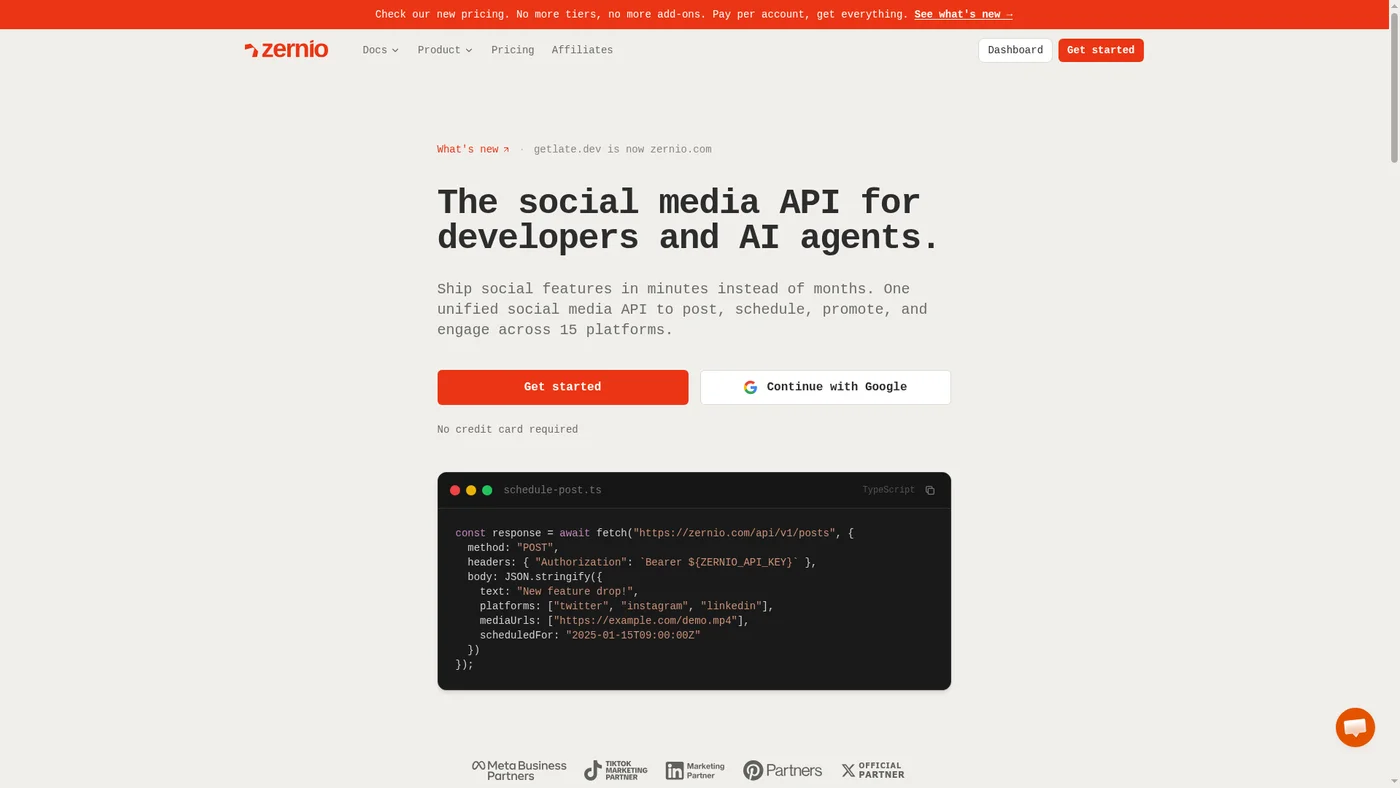
Zernio
Developer-first social and ads API with an MCP server, covering 16 social platforms and 7 ad networks.
Key Features
Moderate agent fit with a working foundation. Zernio has an official MCP server and documented public API, which covers the basics for Claude/Cursor integration. The lack of OpenAPI specs, SDKs, and structured outputs makes deeper automation workflows harder to build and maintain.
✓Pros
- Agent-first design, not a chatbot pinned to a scheduler
- Wide DM coverage including WhatsApp and Instagram
- Reasonable pricing for the breadth
✗Cons
- Young product, smaller community than Buffer or Hootsuite
- Some platforms still in beta
- Less mature analytics than Sprout

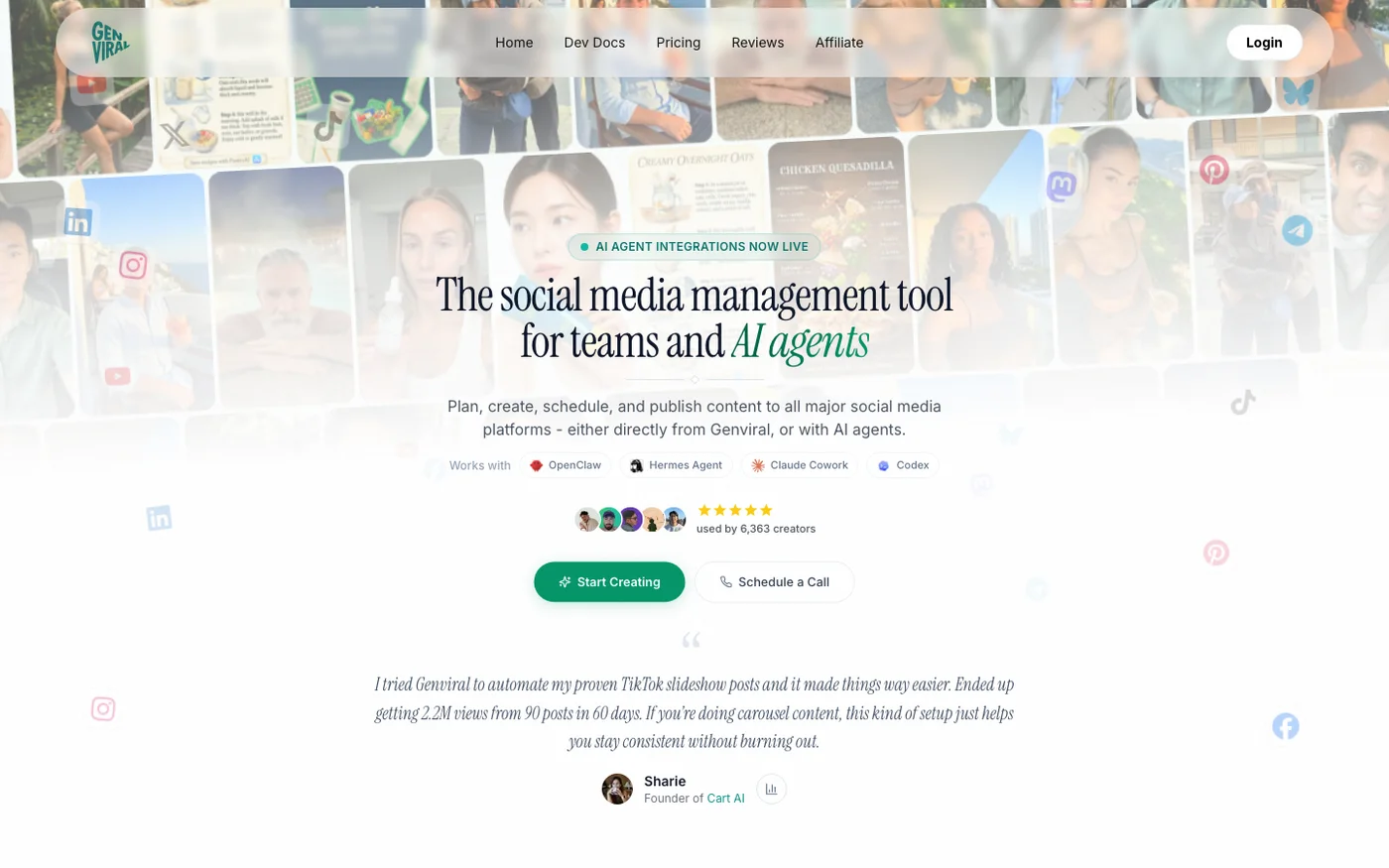
Genviral
AI social scheduler and short-form content engine with a full REST API and CLI built for AI agents.
Key Features
✓Pros
- REST API and 60-command CLI included from the $29 plan
- End-to-end generate, schedule, post and analyze loop
- Machine-readable llms.txt docs aimed at agents
✗Cons
- AI generation is credit-metered, so cost scales with output
- No SDKs and no webhooks
- Automated posting on real accounts carries ToS and ban risk

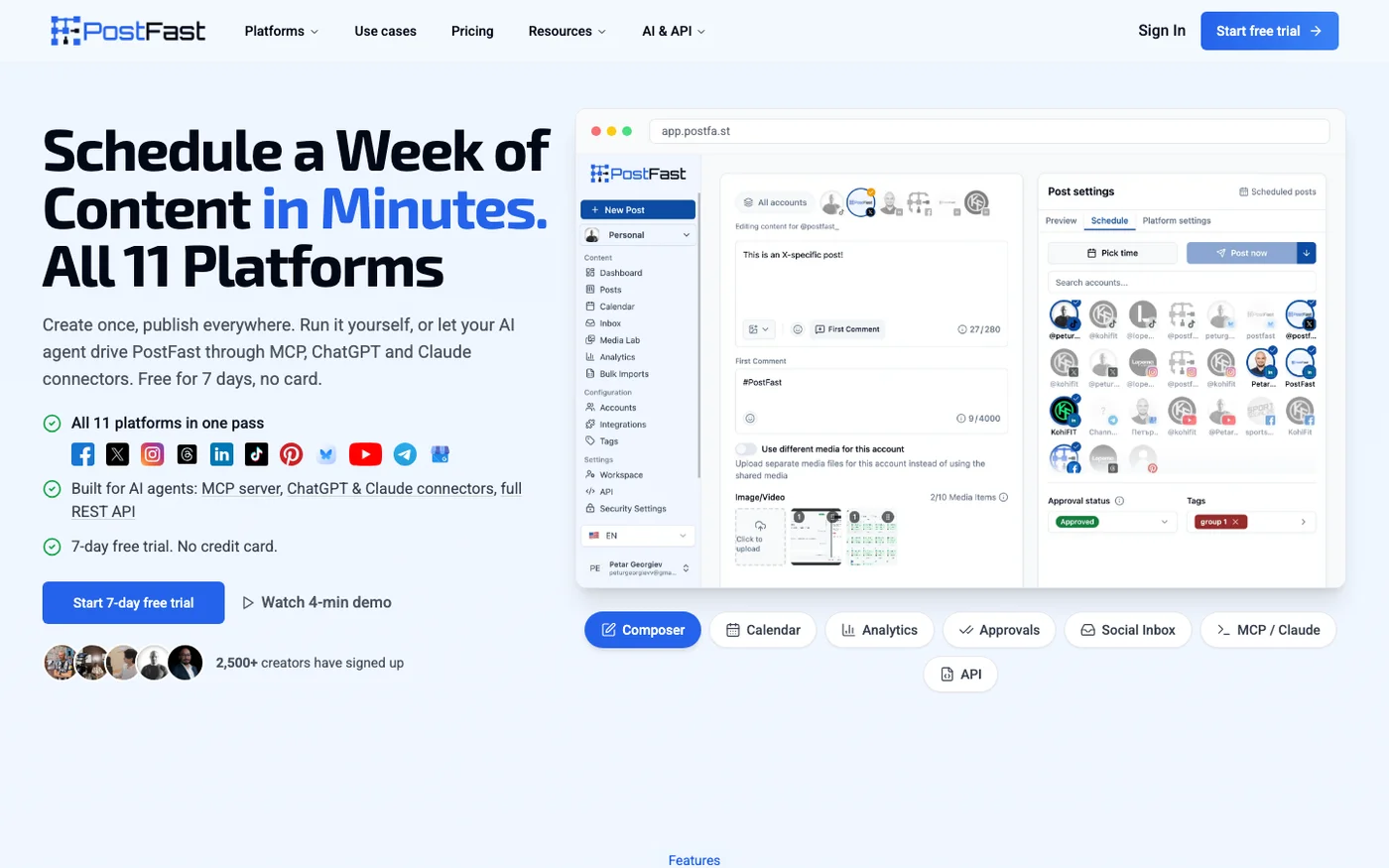
PostFast
11-platform social scheduler with MCP server and API included on every tier, starting at €12/month.
Key Features
✓Pros
- API and MCP sit on the cheapest plan instead of behind an upgrade
- Every MCP parameter is documented and errors name the exact field
- Comment inbox included on every plan with no per-conversation fee
✗Cons
- No free plan, only a 7-day trial
- X caps link posts at 14 per month on Starter, org-wide
- API key is workspace-wide with no read-only scope

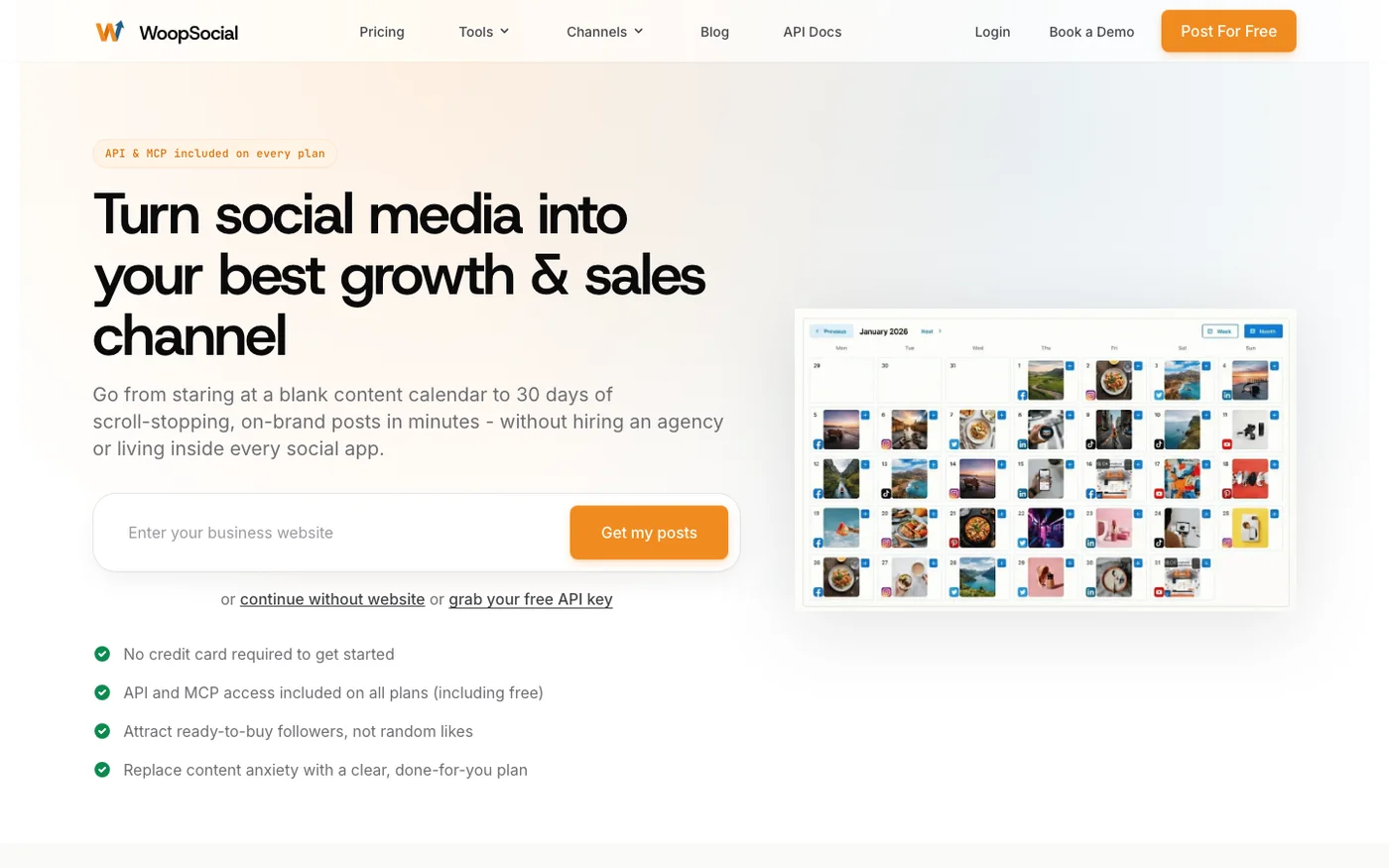
WoopSocial
AI social scheduler with a native MCP server and REST API, built to be driven by agents.
Key Features
✓Pros
- Real native MCP plus a REST API from just $19
- An agent can schedule and post for you
- Cheap entry for the agent stack on offer
✗Cons
- New (launched 2024), so its own third-party track record is still short
- AI generation is credit-metered, so heavy months cost more
- Pricing tops out at Max ($799), though Pro and Business stack for in-between plans

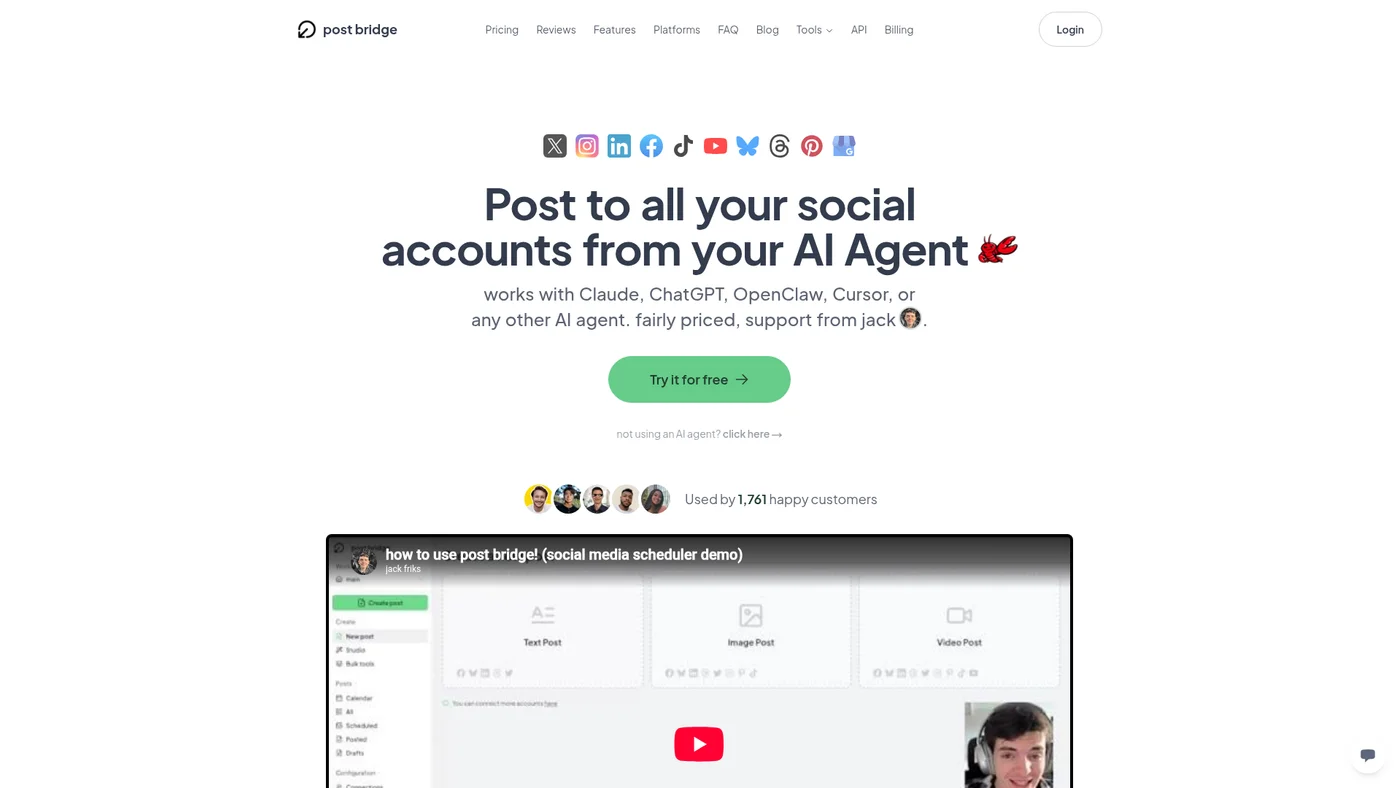
post bridge
Affordable cross-platform scheduler with MCP agent access on every plan, starting at $29/month.
Key Features
✓Pros
- MCP is included on every subscription, not gated behind an enterprise tier
- Unlimited posts and 15 connected accounts on the $29 Creator plan
- One-click connect for Claude and ChatGPT, or paste the endpoint into any MCP client
✗Cons
- No AI writing features on any plan, it schedules what you hand it
- REST API and CLI keys are a separate $5/month add-on
- Analytics are still labelled beta

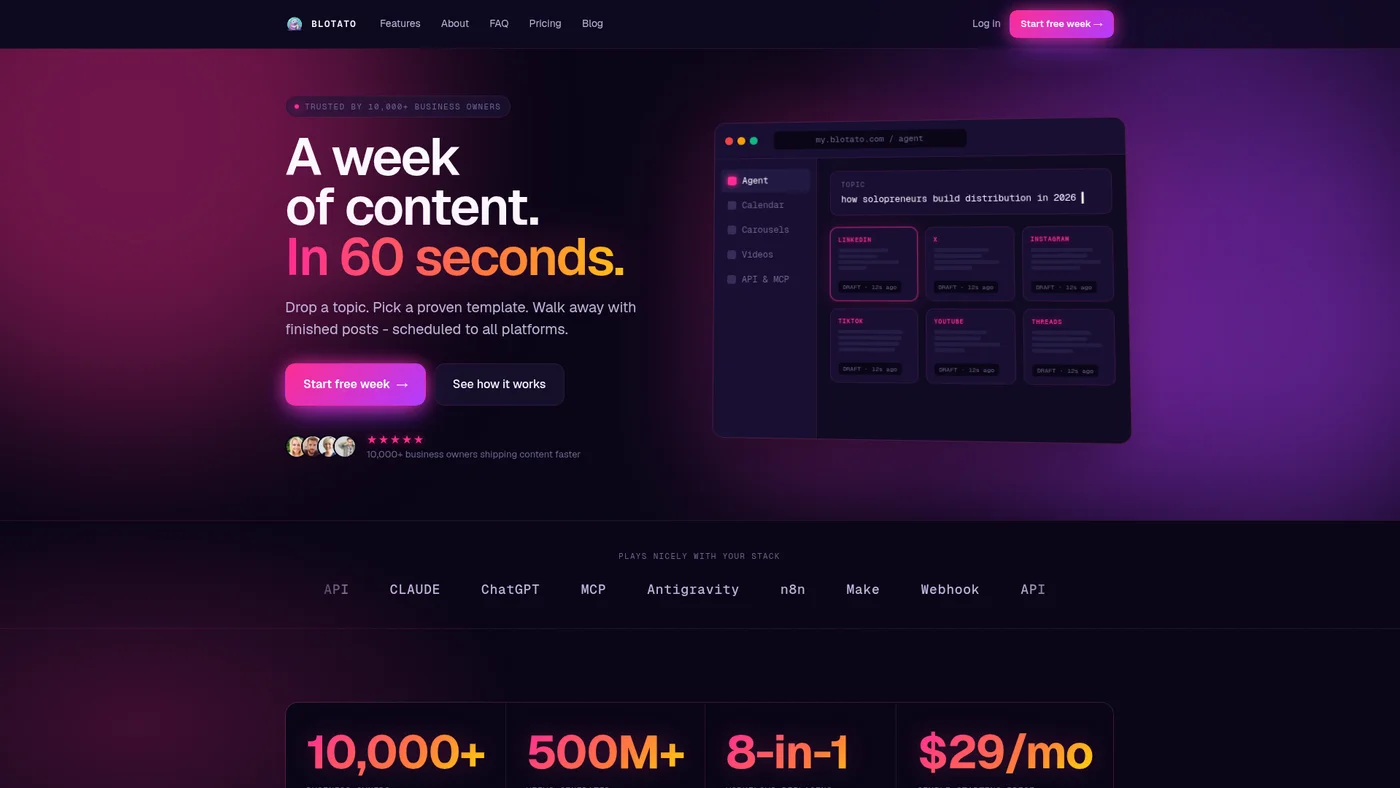
Blotato
AI-powered social media automation with viral templates and cross-platform publishing for creators.
Key Features
Strong agent fit with a first-party MCP server. Blotato ships an official MCP server at mcp.blotato.com (roughly 16 tools, OAuth or API key, for Claude, Cursor, and other clients) on top of a documented REST API with an OpenAPI spec, plus native Make and n8n nodes, across 9+ social platforms. So an agent can generate, schedule, and publish content no-code over MCP or in code over REST. The main gap is the lack of language SDKs, so deeper custom integrations parse the API directly.
✓Pros
- Strongest content-remixing workflow in the category
- Platform-native output, not just resized
- Active product, frequent updates
✗Cons
- Opinionated workflow may not fit non-creators
- Pricing scales fast with volume
- Analytics are thinner than dedicated schedulers

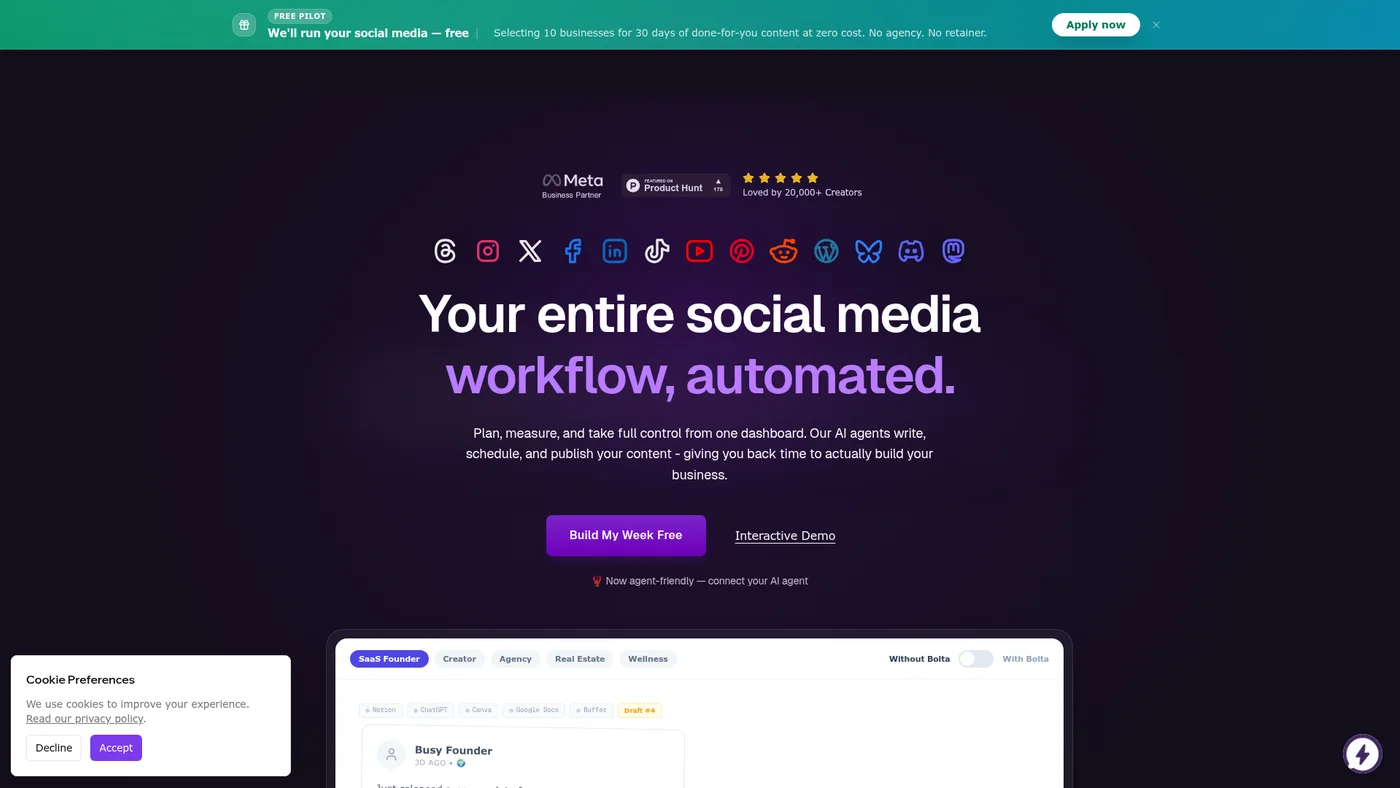
Bolta.ai
AI-powered social media automation with 28 specialist agents for content creation and cross-platform publishing
Key Features
Moderate agent-fit with official MCP support. Bolta.ai has a public API with docs and an official MCP server, which enables Claude and Cursor workflows for video-to-clips automation. The lack of OpenAPI specs, SDKs, and structured outputs means you'll need to build custom parsing logic around its API responses.
✓Pros
- Strong hook detection on transcripts
- Has a real free plan
- Pairs cleanly with any scheduler
✗Cons
- Single-use case (not a full scheduler)
- No DM or analytics features
- Quality varies on dialogue-heavy clips

bundle.social
Social media management platform with a full dashboard plus a developer API, official MCP server and CLI. Unlimited users and accounts on every plan.
Key Features
Strong agent fit. bundle.social ships an official MCP server (bundlesocial-mcp, for Claude Desktop, Claude Code, Cursor and other MCP clients), a documented REST API generated from an OpenAPI spec, a TypeScript SDK, a CLI built for agents, and webhooks. So an agent can publish, schedule and pull analytics across 14+ social platforms over MCP or plain REST with little custom integration work. Unlimited users and accounts on every plan round it out.
✓Pros
- Clean, modern REST API plus an official MCP server
- Usage-based pricing, unlimited users and accounts
- TikTok publishing supported (rare)
- A full dashboard UI as well as the API
✗Cons
- Free plan caps at 20 posts a month
- Newer and smaller than legacy players
- Hobbyist pricing is on request, not public

Outstand
Unified social media API and MCP server for 11 platforms, priced per post instead of per seat.
Key Features
Top-tier agent fit, because the API is the product rather than a feature of one. Outstand exposes the same 11 social networks (X, LinkedIn, Instagram, TikTok, Facebook, Threads, Bluesky, YouTube, Pinterest, Google Business Profile, Vimeo) through both an official remote MCP server at mcp.outstand.so/mcp and a Bearer-authenticated REST API, so an agent can do anything your own code can: post, schedule, upload media, read cross-platform analytics, manage connected accounts. One-click OAuth covers ChatGPT, Claude, Cursor and Windsurf; a Bearer key covers headless. Idempotency keys on post creation stop a retrying agent from double-posting, and five HMAC-signed webhook events (including account.token_expired) let you react to failures instead of polling for them. The gaps that keep it off a 10 are documentation rather than capability: no published OpenAPI spec, no general-purpose server SDK, no documented rate limits, and a tool count the vendor quotes as 27, 26 and 25 in three different places.
✓Pros
- Connected accounts are unlimited and free, so the bill does not grow with every client profile
- MCP and REST expose the same surface, so an agent can do anything your code can
- Idempotency keys on post creation stop agent retries from double-posting
✗Cons
- No dashboard at all, so it is useless to a team without a developer
- No free posting tier, and the 99.9% SLA is tied to a Business plan that is never priced
- X, Google Business Profile and Vimeo still require your own developer credentials

Buffer
The original social media scheduler with 11 platforms, AI assistant, and forever-free plan for 3 channels.
Key Features
Strong agent fit through a first-party MCP server. Buffer hosts an official MCP server at mcp.buffer.com with native setup docs for Claude, ChatGPT, Cursor, and Perplexity, layered on a modern GraphQL API that is now open on every plan. The gaps are real: no official OpenAPI spec or maintained SDKs, so deeper custom work leans on the GraphQL schema directly. For no-code agent posting across 11 networks, though, the MCP path is genuinely first-party.
✓Pros
- Generous free plan
- Most stable UI in the category
- Cheapest paid tier at $6/mo per channel
✗Cons
- AI features are an afterthought, not the product
- Analytics weaker than Sprout/Metricool
- No DM automation

Publer
Social scheduler with a free-forever plan, per-account pricing from $4/mo billed yearly, and an official MCP server.
Key Features
Middling agent fit, with a real API but a community MCP. Publer documents an official REST API (bulk scheduling, analytics) but gates it to Business and Enterprise plans, so cheaper tiers get no programmatic access. MCP support comes from a low-traction community server (alexkess/publer-mcp-server) wrapping that API, not a first-party endpoint, and there are no official SDKs or OpenAPI spec. It is automatable across 13 networks if you are on a Business plan and comfortable with a community bridge.
✓Pros
- Strong feature-per-dollar ratio
- Real bulk-scheduling support
- Affordable agency plans
✗Cons
- UI is denser, steeper learning curve than Buffer
- AI image generation quality is average
- Smaller community than Buffer or Later

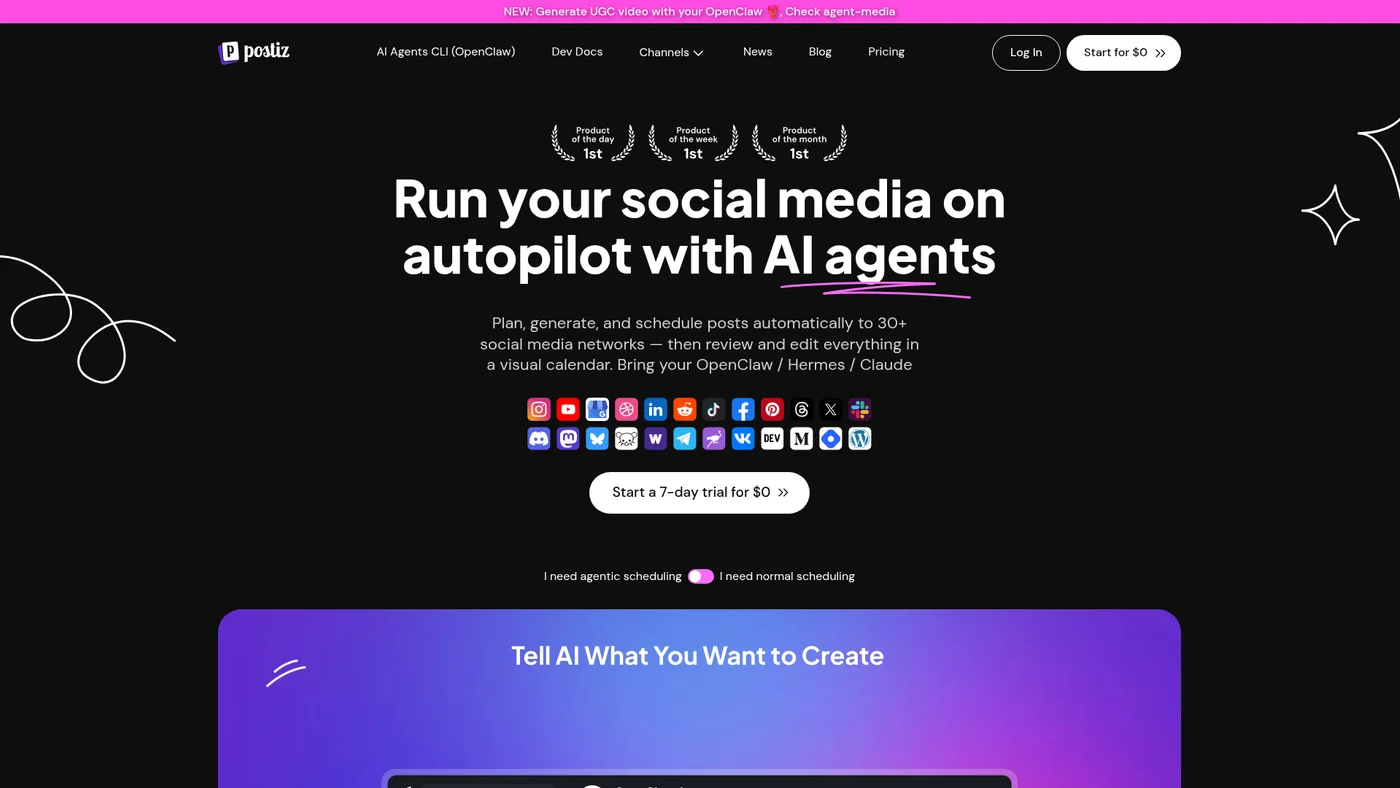
Postiz
Open-source social media scheduler for 30+ platforms with built-in AI agents and a public REST API. Self-hostable or use the hosted version.
Key Features
Strong agent fit, and unusually open for an indie tool. Postiz ships a first-party official MCP server (api.postiz.com/mcp, OAuth2) alongside a documented public REST API with a real OpenAPI 3.1 spec, an official Node SDK, webhooks, and native Zapier, Make, and n8n. An agent can publish, schedule, and pull analytics across 27 platforms over MCP or plain REST with little glue code. Being open-source, you can also self-host the whole stack, which most rivals don't allow.
✓Pros
- Open source, not "OSS-washed"
- Self-host means full data ownership
- AI is included on the free tier
✗Cons
- Younger product, fewer integrations than Buffer
- Self-hosting requires devops capacity
- Smaller community for support

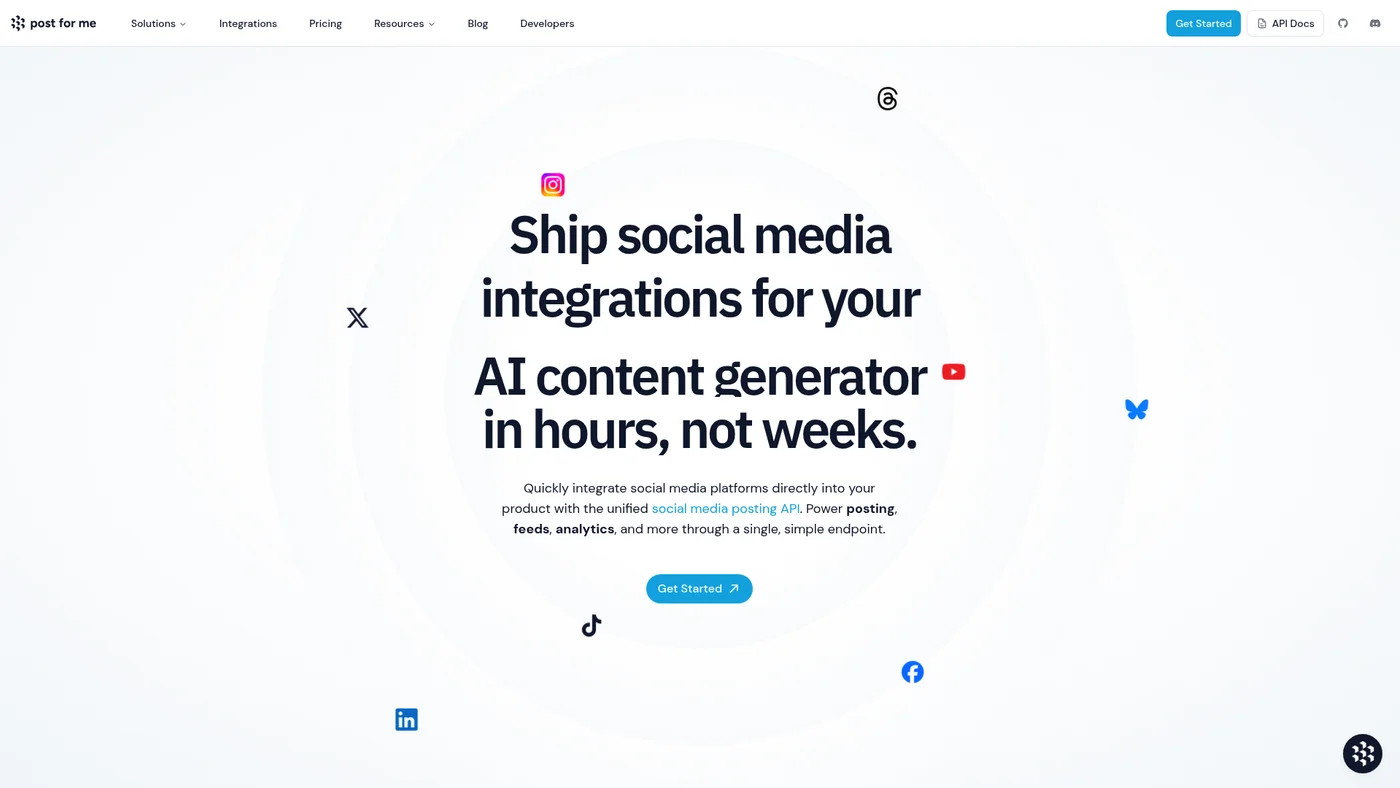
Post for Me
Unified social media posting API for developers, covering 9 platforms from $10/mo.
Key Features
✓Pros
- Lowest flat-rate entry of the posting APIs here at $10/mo for 1,000 posts, though Zernio starts free for two accounts and bundle.social and Postiz both have free tiers
- Unlimited social accounts, projects, team members and API keys on every tier
- Bring your own platform developer credentials, or use theirs
✗Cons
- No dashboard at all, a non-technical marketer cannot use it unaided
- No free tier and no trial published on the pricing page
- Small team behind it (Day Moon Development)

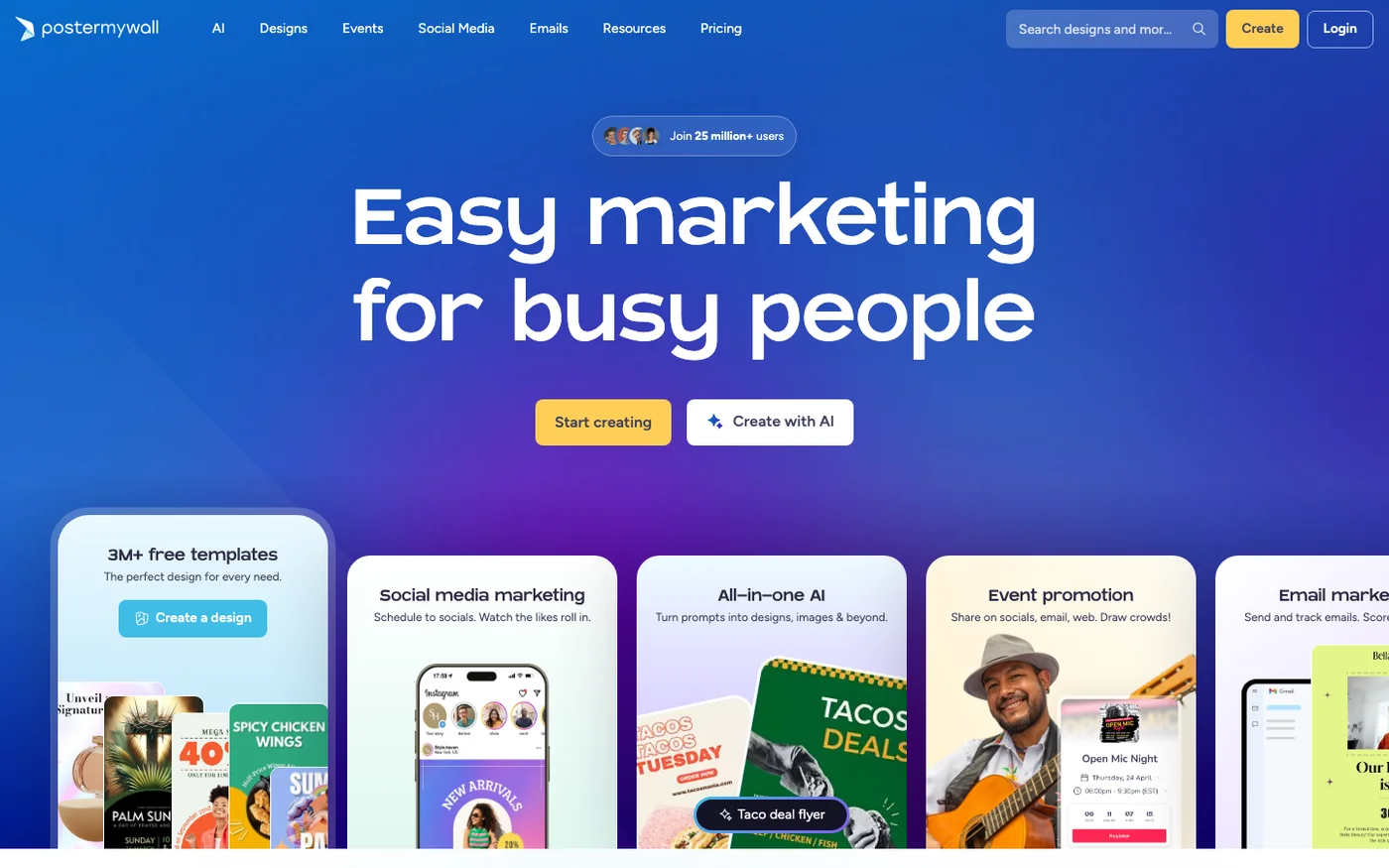
PosterMyWall
Design-first AI content creator and social scheduler. Generate the design, video, and captions with AI, then publish across 8+ networks from one place.
Key Features
✓Pros
- Generates the creative and publishes it, not just scheduling
- The AI does the creative work, not just caption rewrites
- Genuine free plan and a low $13/month entry price
✗Cons
- No native MCP server, so not yet a plug-and-play agent skill
- No Zapier or Make integrations for no-code automation chains
- Public API is design-download for signage, not social posting

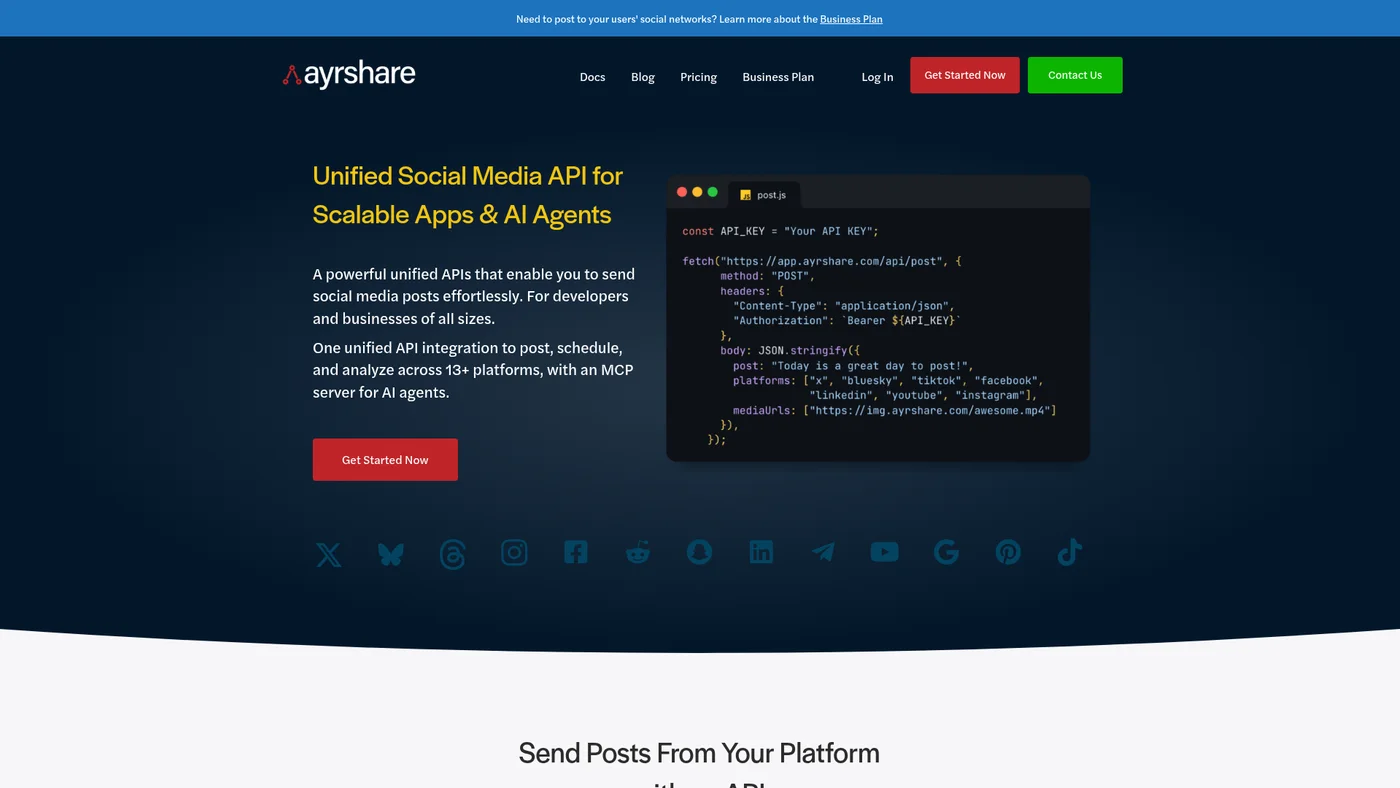
Ayrshare
Developer-focused social media API for posting to 13+ platforms. Starting at $149/month.
Key Features
Strong agent fit from an API-first company. Ayrshare runs an official action MCP server (api.ayrshare.com/mcp, 27 tools over streamable HTTP, key-authenticated) that drives the same API as REST, plus official Node, Python, and Flutter SDKs, webhooks with auto-retry, and a Claude Code plugin. So an agent can post, schedule, and read analytics across 13 networks either no-code over MCP or in code through a mature SDK. The one gap is a published OpenAPI spec, which it covers with a Postman collection instead.
✓Pros
- Widest platform coverage in any social API
- Mature analytics endpoints
- Auto-schedule lets you offload timing
✗Cons
- Per-profile pricing gets expensive at scale
- API surface is large and inconsistent in places
- TikTok permissions can be slow to provision

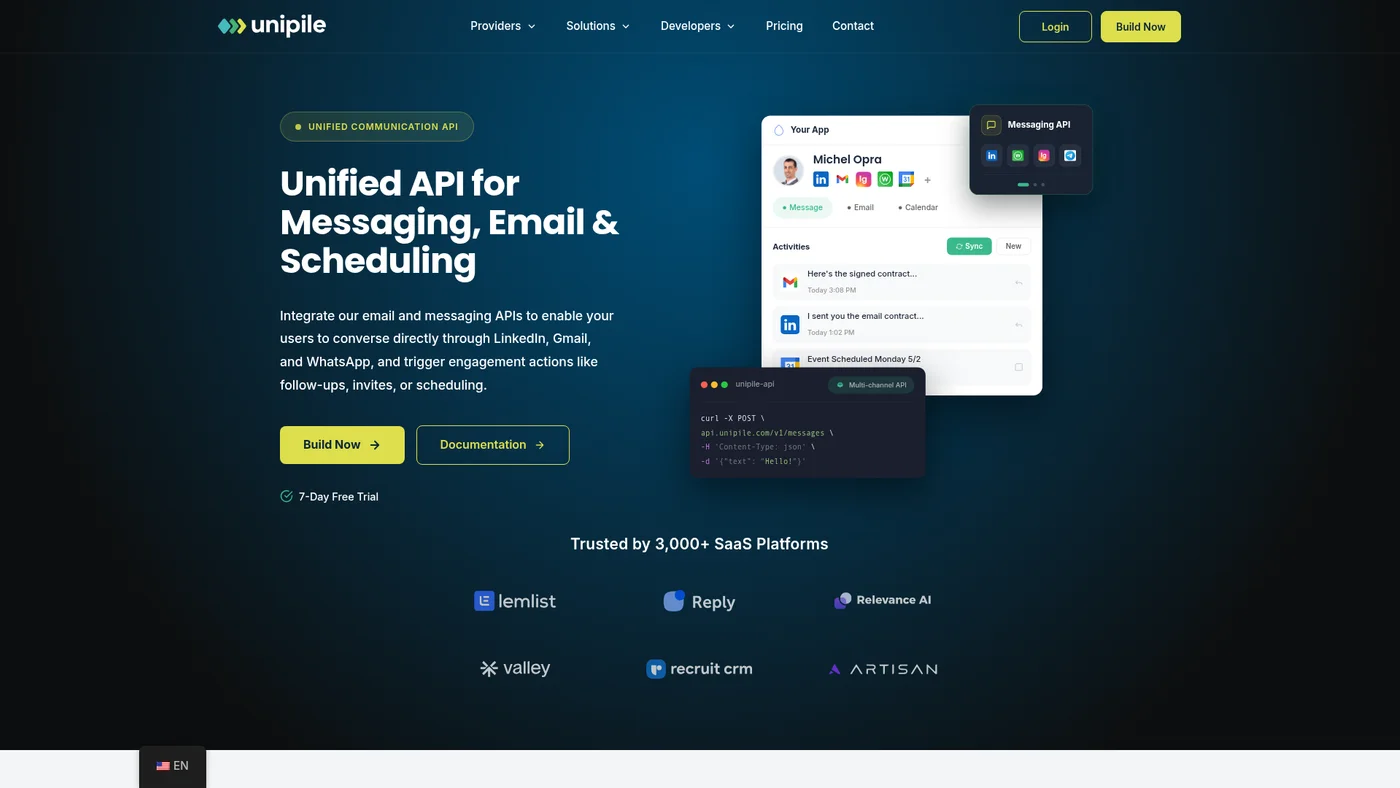
Unipile
Unified communication API for developers to integrate LinkedIn, email, messaging & calendar into apps
Key Features
Strong agent fit for multi-channel messaging. Unipile hosts an official MCP server (developer.unipile.com/mcp, X-API-KEY auth) on top of its core unified REST API, with official Node and Python SDKs, real-time webhooks (no polling), and native Make and n8n. An agent can read and send across LinkedIn, WhatsApp, Instagram, and Telegram, plus email and calendar, either no-code over MCP or in code through the SDKs. It is built as an API endpoint for your own agents rather than a dashboard product.
✓Pros
- Only mature multi-platform DM API I know of
- LinkedIn auth handled cleanly
- Webhook latency is low
✗Cons
- Pricier than posting-only APIs
- LinkedIn DM rate limits are unavoidable
- Not a scheduler, narrow scope

Hootsuite
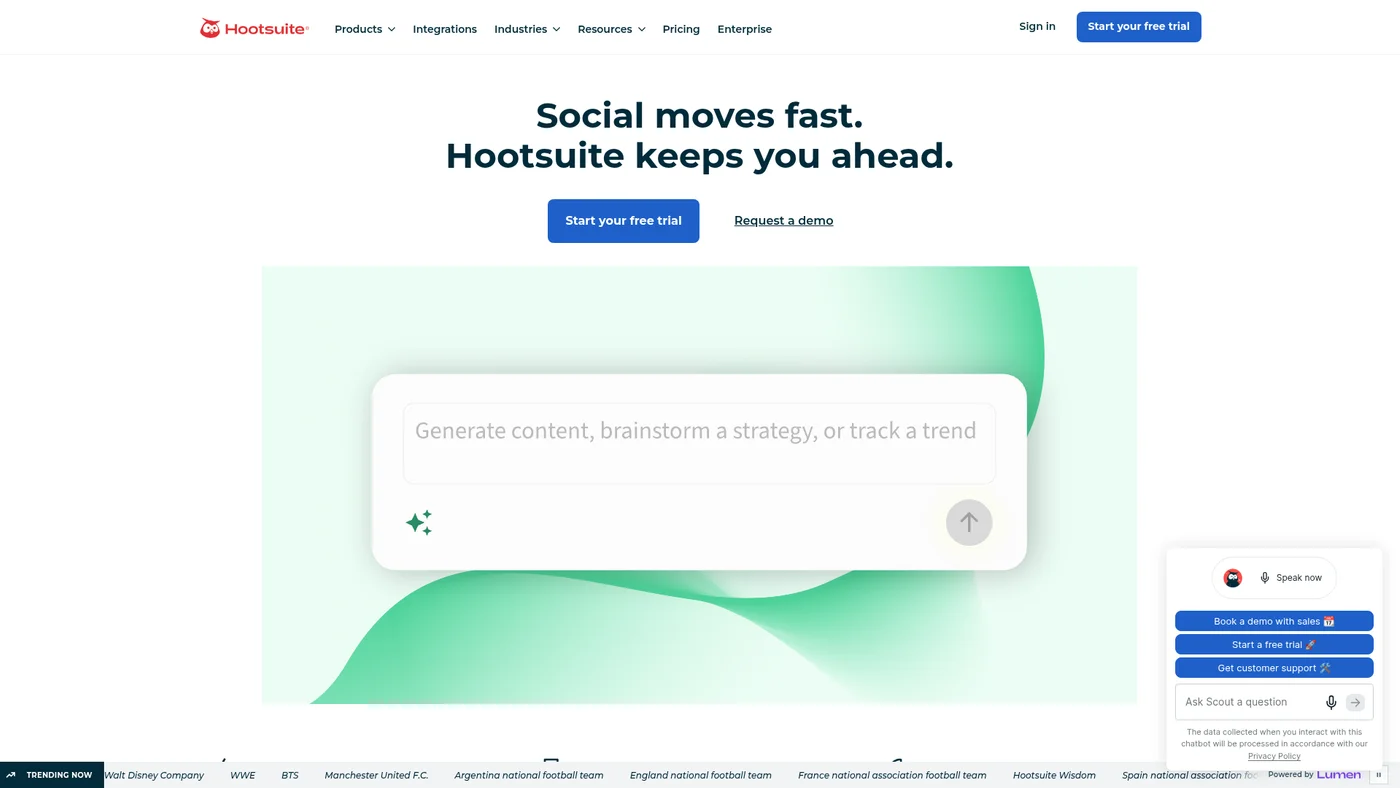
Veteran social media management suite with AI drafting, listening, and inbox tools, priced per user, per month.
Key Features
✓Pros
- Four official MCP servers (Perch, Nest, Lumen, Parliament) is the widest agent surface on this list
- Wisdom, its in-app AI agent, is included on every plan rather than sold as an add-on
- Unlimited social accounts from Professional upward
✗Cons
- Entry price is $99 per user per month billed annually, several times anything else here
- The month-to-month rate exists but Hootsuite does not publish it
- Standard caps you at 10 social accounts
Price landscape
How prices compare
Starting prices across all 21 tools in this category.


Methodology
How I chose these
I evaluated each tool on five criteria: how AI-native or API-first the architecture actually is (not just marketing claims), platform coverage (which networks and DM channels are supported), pricing clarity and predictability, integration friendliness (webhooks, MCP servers, public APIs), and how the product behaves on real workflows.
I weighted heavily against tools that label themselves "AI-powered" but use AI only for caption rewriting. I also down-weighted tools without transparent pricing pages. The compare-with list on Zernio's site (vs Buffer, Ayrshare, Blotato, Publer, Postiz, Unipile, Twilio) gave a useful map of the competitive landscape and shaped which tools I included.
FAQ
Frequently Asked Questions
Tools where AI is the primary interface or workflow, not a "rewrite this caption" sidebar. Examples: agents that draft, schedule, and reply on your behalf; pipelines that turn one long video into 10 platform-native short clips; or APIs that let your own product publish to social without writing six vendor integrations.
No. Buffer is a traditional scheduler with an AI assistant added on. I included it because for many solo creators a clean scheduler is still the right tool, and pretending otherwise would be dishonest. If you need a free plan that does the job, Buffer is fine.
Different jobs. Zernio is an agent that handles your whole social presence (scheduling, DMs, drafting, reports). Blotato is a content-remixing pipeline that turns one input into multi-platform posts. You can use both. If you only pick one, Zernio if you want one tool to run your accounts, Blotato if you want to scale content volume from existing assets.
bundle.social for a clean modern API plus an official MCP server across 14+ platforms (TikTok, Instagram, LinkedIn, X, Reddit, Bluesky and more). Ayrshare for maximum breadth. Unipile for DM functionality across LinkedIn, WhatsApp, Instagram, and Telegram. They solve different parts of the problem; you may end up using two.
Both are credible scheduling and analytics tools, but neither is AI-native or API-first in the way this list is about. They are also significantly more expensive than the tools here. If you need enterprise reporting and SOC 2 compliance, Sprout is the answer; otherwise the tools on this list cover more value at lower cost.
Continue reading






10+ years in digital marketing. I review marketing software for AI-stack fit: real pricing, MCP and API support, and how cleanly each tool drops into an AI agent workflow, cross-checked against verified data and real user feedback.