
This page may contain affiliate links.
Some links on this page are affiliate links, meaning I may earn a commission if you sign up (at no extra cost to you). This never influences my ratings or recommendations.
The Verdict
Is Substack right for you?
Substack is free to publish, but it takes 10% of every paid subscription you sell on top of Stripe's ~3% processing fees. That's the trade-off: zero upfront cost and a clean publishing tool in exchange for an ongoing cut once your newsletter starts earning. For writers who want to skip technical setup and just publish, the math often works. Here's what you actually get for that 10%.
Substack is a newsletter publishing platform that handles everything from content creation to payment processing. It's built for writers who want to monetize their audience without losing a cut to platform fees. The tradeoff is limited customization and email marketing features compared to traditional tools.
If you're a writer focused on paid subscriptions and don't need advanced email automation, Substack's zero platform fees make it compelling. But it's a publishing platform first, not a full email marketing suite.
Why I'm covering this
Substack carved out a unique position by eliminating platform fees on creator revenue while handling the technical complexity of newsletter publishing. Many writers consider it as an alternative to traditional email marketing tools, and the pricing model creates very different cost considerations.
Who It's For
Who Substack is for (and who it isn't)
✓Best for
- +Independent Writers Newsletter creators who want to monetize content without platform fees eating into revenue.
- +Content Publishers Writers switching from traditional media who need built-in payment processing and subscriber management.
- +Thought Leaders Subject matter experts building an audience around expertise who prefer writing over complex marketing funnels.
- +Media Professionals Journalists and columnists starting independent publications with subscription-based business models.
- +Independent journalists building a paid newsletter business Substack handles both free content and paid subscriptions with built-in payment processing and a reader discovery network
- +Subject matter experts wanting to monetize their expertise through weekly newsletters The platform's focus on long-form content and subscription monetization fits perfectly with expert knowledge sharing
- +Writers transitioning from traditional media to direct audience relationships Substack's social features and recommendation engine help build audience while maintaining editorial independence
- +Content creators who want to own their audience without complex marketing automation Simple publishing interface with subscriber ownership, perfect for creators who just want to write and send
✗Skip this if
- −E-commerce Businesses Online stores needing product marketing, cart abandonment sequences, and sales automation features.
- −Complex Marketers Businesses requiring advanced segmentation, A/B testing, and multi-step automation workflows.
- −Brand Customizers Companies needing full control over email design, branding, and custom landing page templates.
- −Multi-Channel Campaigns Marketers running integrated campaigns across email, SMS, social media, and other channels.
- −E-commerce businesses needing automated email sequences for cart abandonment and product promotions Substack lacks the automation and segmentation features needed for transactional email marketingTry Klaviyo →
- −SaaS companies running complex onboarding and lifecycle email campaigns No behavioral triggers or advanced automation workflows for user journey optimizationTry ActiveCampaign →
- −Marketing agencies managing email campaigns for multiple clients Single-user focused platform without agency management features or white-label optionsTry MailerLite →
Consider instead
 ActiveCampaign
 MailerLite
 Klaviyo
Features
What can Substack do?
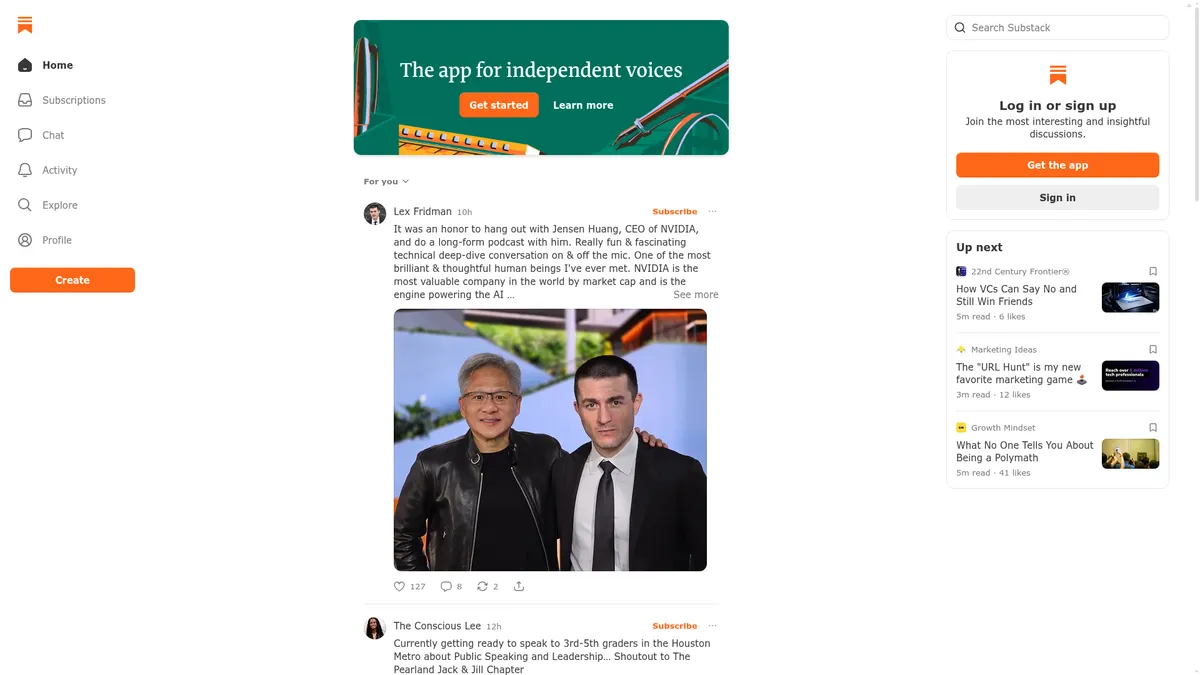
Substack's editor is designed for writers who want to focus on content rather than formatting. The interface resembles a simplified blog editor with options for text, images, and basic multimedia. Writers can schedule posts, create archives, and cross-post to other platforms directly from the dashboard.
The subscription system is Substack's core strength. Creators set their own pricing for paid tiers while offering free content to build audience. The platform handles payment processing, subscriber billing, and manages the transition between free and paid content automatically. Revenue analytics show subscription growth, churn rates, and total earnings.
Email delivery and subscriber management are handled behind the scenes. Substack manages deliverability, handles bounces and unsubscribes, and provides basic analytics like open rates and click tracking. The platform includes discovery features that help readers find new newsletters, though this depends on Substack's algorithm and reader behavior.
Analytics focus on publishing metrics rather than marketing data. Writers see which posts perform best, subscriber growth over time, and revenue trends. The reporting is straightforward but lacks the detailed segmentation and behavioral tracking found in dedicated email marketing platforms.
Content Publishing
Monetization
Audience Building
Analytics & Insights
UX & Support
Is Substack easy to use?
Based on creator feedback across review platforms, Substack's interface prioritizes simplicity over power. New users can typically publish their first newsletter within minutes of signing up. The editor avoids overwhelming writers with marketing features, focusing instead on clean content creation tools.
Support quality receives mixed reviews in community discussions. Free users rely primarily on documentation and community forums, while paid creators report better response times for technical issues. The platform's knowledge base covers basic publishing workflows but lacks the depth needed for complex monetization strategies.
User onboarding guides creators through the basics of newsletter setup and subscription pricing. However, some creators note that learning to optimize subscriber growth and retention requires trial and error, as Substack provides limited guidance on audience development strategies beyond content quality.
Pricing
How much does Substack cost?
Substack starts at Free (10% of paid revenue). A free plan is available.

Substack Pricing Analysis
vs. 36 email marketing toolsFree tool (no paid plans)

Substack is free to use with no upfront costs or monthly fees. The platform makes money by taking a 10% fee on paid subscription revenue plus standard payment processing fees (around 2.9% + 30¢ per transaction). Writers keep 100% of their subscription revenue minus these processing costs.
This pricing model means Substack only succeeds when creators succeed, aligning platform incentives with creator revenue. For writers earning $1,000/month in subscriptions, Substack's cut is $100, while payment processing adds roughly $30-35. The total platform cost is approximately 13-14% of subscription revenue.
Compared to traditional email marketing platforms that charge $50-300/month regardless of revenue, Substack's model favors creators just starting to monetize. However, successful creators earning significant revenue may find dedicated email platforms more cost-effective once their monthly subscription income exceeds typical email marketing tool costs.
| Plan | Monthly |
|---|---|
| Free | — |
| Paid subscriptions | — |
External Ratings
What 200 reviewers say
Aggregated from 1 platforms
Substack holds a 4.4/5 average rating across 200 reviews on G2.
"The simplicity is what sold me. I can write, publish, and get paid without thinking about email deliverability or payment processing."
Community"Great for getting started, but I outgrew it when I needed better subscriber segmentation and email automation features."
Community"The 10% platform fee becomes expensive once you're making good money, but it's perfect when you're starting out."
CommunityDownsides
What's wrong with Substack
No Advanced Email Automation
Lacks drip campaigns, behavioral triggers, and complex workflow builders that dedicated email marketing platforms provide
Limited Design Customization
Email templates and branding options are minimal compared to tools focused on visual email design
Platform Lock-in Concerns
Subscriber data and content are tied to Substack's platform, making migration to other tools more complex
Revenue Fee Structure
The 10% platform fee becomes expensive for successful creators earning significant subscription revenue
Basic Analytics
Reporting focuses on publishing metrics rather than detailed subscriber behavior and marketing performance data
No A/B Testing
Cannot test different subject lines, send times, or content variations to optimize newsletter performance
Buddy's Take
These limitations matter most if you need advanced email marketing features or plan to scale beyond basic newsletter publishing. For writers focused on content creation and simple monetization, Substack's constraints may actually reduce complexity rather than limit capability.
FAQ
Frequently asked questions about Substack
No. Substack is free to use and takes 10% of paid subscription revenue plus payment processing fees (around 2.9% + 30¢ per transaction).
Yes. Substack allows you to export your subscriber data, though the process requires contacting support for large lists.
Substack focuses on newsletter publishing and monetization, while email marketing tools emphasize automation, segmentation, and marketing campaigns.
Yes. Pro subscribers can use custom domains for their newsletter, though setup requires DNS configuration.
Substack manages deliverability infrastructure, but your newsletter's inbox placement depends on subscriber engagement and content quality.
No. Substack supports unlimited free and paid subscribers on all plans.
Not directly. Substack focuses on recurring subscriptions rather than one-time purchases or course sales.
You can export subscribers and content, but you'll need to set up payment processing and email delivery elsewhere.
Substack's free model is as predictable as pricing gets, with zero platform fees for newsletters.
Substack is best for: Independent journalists building a paid newsletter business; Subject matter experts wanting to monetize their expertise through weekly newsletters; Writers transitioning from traditional media to direct audience relationships; Content creators who want to own their audience without complex marketing automation.
Substack focuses on human creativity over AI integration, with limited API access and no AI writing features.
Getting in is easy, but leaving means losing the social ecosystem and subscriber discovery features.
Substack starts from Free (10% of paid revenue). A free plan is available.
Sources & References (4)
Ready to try Substack?
Start publishing your newsletter with zero upfront costs
Get Started Free →More on Substack
Read Next



Joonas Rotko
Author & founder of That Marketing Buddy
I score marketing software for AI-stack fit (MCP, API, agent-readiness), backed by 10+ years in digital marketing.
This page may contain affiliate links. I earn a commission at no extra cost to you. This never influences ratings.