
TL;DR
Affiliate marketing is a real business that takes 6-12 months to generate meaningful income. Focus on recurring commission programs, create helpful content, learn SEO, and ignore anyone promising quick results. The people who succeed treat it like a business, not a lottery ticket.
Every week I see another YouTube thumbnail promising "Make $10,000/Month With Affiliate Marketing" while someone poses next to a rented Lamborghini. Let me be direct: that is not what this guide is about.
Affiliate marketing is a legitimate business model that has been around since the late 1990s. It can generate real income. But the gap between "can" and "will" is filled with months of work that nobody in those thumbnails wants to talk about.
I have spent over a decade in digital marketing, and I have seen affiliate marketing work for people who treat it like a real business. I have also seen hundreds of people quit after three months because they expected passive income to just appear. This guide covers what affiliate marketing actually looks like without the false promises.
What Affiliate Marketing Actually Is
At its core, affiliate marketing is simple: you recommend a product or service, someone buys it through your unique tracking link, and you earn a commission. That is the entire concept.
The company gets a customer they would not have found otherwise. The customer gets a product recommendation from someone they trust. You get paid for making the connection. When done right, everyone benefits.
Here is how it works in practice:
- You join an affiliate program (free to join in most cases)
- You get a unique tracking link tied to your account
- You create content that naturally recommends the product
- Someone clicks your link and makes a purchase
- The company tracks the sale back to you via a cookie
- You receive a commission after the holding period
That is the simple version. The hard part is step 3: creating content good enough that people trust your recommendations and actually click.
The "Get Rich Quick" Problem
Before going further, I need to address the elephant in the room. The affiliate marketing space has a serious credibility problem, and it is mostly self-inflicted.
A huge portion of "affiliate marketing education" is itself an affiliate marketing scheme. Someone creates a course about making money with affiliate marketing, then recruits affiliates to sell that course, who then create content about making money with affiliate marketing. It is a loop that produces zero real value for anyone except the person at the top.
Red Flags to Watch For
- Income screenshots without context. Revenue is not profit. Someone showing $50,000 in affiliate commissions probably spent $40,000 on ads to generate it.
- "Secret methods" or "hidden strategies." There are no secrets. The methods that work are well-documented: create useful content, build trust, recommend products you understand.
- Courses that cost $997+ about "affiliate marketing." If their primary income is selling courses about making money, they are not teaching you affiliate marketing. They are using you as a customer.
- Promises about passive income. Affiliate income requires ongoing work. Content needs updating, programs change their terms, and competitors publish better content every day.
- "AI will do everything for you." AI tools can help with research and drafting, but they cannot replace genuine expertise, real testing, or the trust that comes from authentic experience.
The people who actually earn consistent income from affiliate marketing are usually too busy creating content to make YouTube videos about their income. They run niche websites, write thorough product reviews, build email lists, and treat it like the business it is.
How Affiliates Actually Make Money
Affiliate programs use different commission structures. Understanding these matters because they directly impact how much you can earn and for how long.
Recurring Commissions
You earn a percentage every month for as long as your referral stays a customer. This is the most valuable model because a single referral can pay you for years.
For example, the Moosend affiliate program pays 30-40% recurring commissions for the lifetime of the customer. If someone signs up for a $48/month plan through your link, you earn $14-19 every single month they stay subscribed.
Other programs with recurring models include ActiveCampaign (30% for 12 months), SE Ranking (30% lifetime), and beehiiv (50% for 12 months).
One-Time Commissions
You earn a flat fee or percentage once per sale. Simple, but you need a constant flow of new referrals.
Leadpages pays $100-400 per sale depending on the plan. That is a nice payout, but once it is paid, you need another referral to earn again.
Tiered Commissions
Your commission rate increases as you refer more customers. This rewards consistency and volume.
GetResponse starts at 40% and scales up to 60% as you bring in more referrals. ClickFunnels has a similar structure at 30-40%.
Which Model Is Best for Beginners?
Recurring commissions. Without question. Building a base of recurring revenue means your income grows over time even if you slow down content production temporarily. One-time payouts require constant hustle with no compounding effect.
But recurring SaaS commissions are not the only path. Plenty of successful affiliates promote physical products or single-purchase digital goods.
Single Product and Physical Product Affiliates
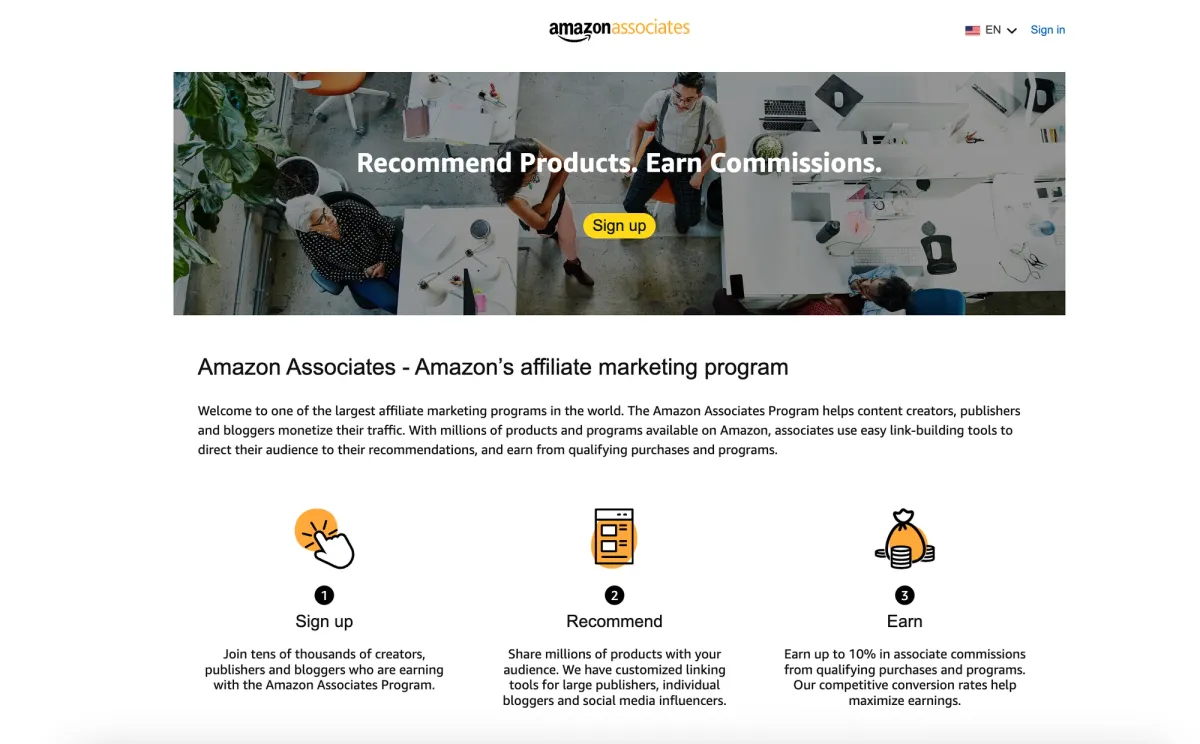
Not every affiliate marketer promotes software subscriptions. Amazon Associates is the largest affiliate program in the world, paying 1-10% commissions on physical products. The rates are low, but the volume potential is massive because Amazon sells everything.
Individual brands run their own programs too. A coffee shop owner could promote espresso machines through a manufacturer's affiliate program. A fitness coach could earn commissions on workout equipment, supplements, or athleisure brands. An interior designer could recommend furniture through affiliate partnerships with home decor retailers.
The economics are different from SaaS. Physical product commissions are usually one-time and lower percentage (3-10% is common). But the buying intent is often higher because people searching for "best espresso machine under $500" are ready to purchase. You make up for lower per-sale earnings with higher conversion rates and broader audiences.
Digital products like online courses, ebooks, and templates can offer higher commissions (often 30-50%) but come with a caveat. Be selective. The "make money online" course space is flooded with low-quality products designed to extract money from hopeful beginners. Only promote digital products you have reviewed thoroughly and would recommend to someone you know personally.
High Ticket Affiliate Programs
High ticket affiliate marketing involves promoting products or services that cost $500 or more, earning you $200-1,000+ per single conversion. Software platforms like ClickFunnels (30-40% recurring on plans up to $297/month), GoHighLevel (40% recurring), and enterprise tools like HubSpot fall into this category. The payouts are significant because the products themselves carry a high price tag.
Some expensive online courses and coaching programs also offer high ticket commissions, sometimes $500-2,000 per sale. This is where you need to be especially careful. The overlap between "high ticket affiliate program" and "overpriced product designed to extract money from hopeful beginners" is enormous. Before promoting any high-priced course or coaching program, ask yourself: would I pay this price for this product with my own money?
If the answer is no, do not promote it just because the commission is attractive. Your reputation is worth more than any single payout.
High ticket programs can work well if you have an audience that needs premium solutions. A marketing agency recommending enterprise software to other agencies is a natural fit. A business consultant recommending high-end coaching to established entrepreneurs makes sense. But a beginner affiliate pushing $2,000 courses to other beginners who cannot afford them is exactly the kind of behavior that gives this industry a bad name.
What to Look for in an Affiliate Program
Not all affiliate programs are created equal. Here is what I evaluate before recommending any program:
Commission rate and structure. Higher is better, but recurring matters more than a high one-time payout. A 30% recurring commission will outperform a $100 one-time payment within a few months if the customer sticks around.
Cookie duration. This is how long after someone clicks your link the company will still credit you for the sale. Longer is better. Some programs offer 30 days (short), while others give you 90-120 days. SE Ranking offers 120 days, which is generous. Moosend gives you 90 days, which is solid for the industry.
Product quality.This is the most important factor. If the product is bad, your audience will not stay subscribed, your commissions will disappear to refunds, and you will damage the trust you worked hard to build. Only recommend products you would suggest to a friend.
Payout terms. Check the minimum payout threshold, payment frequency, and available payment methods. Some programs pay monthly, others quarterly. Some require $50 minimum, others $100.
Tracking reliability. Use programs hosted on established affiliate platforms like PartnerStack, Impact, or ShareASale. They have reliable tracking, transparent reporting, and consistent payouts.
You can browse my full directory of affiliate programs with transparent commission details to compare programs side by side.
Building Content That Actually Converts
This is where most beginners get stuck. They join 15 affiliate programs, scatter links across random blog posts, and wonder why nothing converts. The problem is not the links. It is the content strategy.
Content Types That Work
Comparison content converts the best. When someone searches "ActiveCampaign vs Moosend" or "Leadpages vs Unbounce," they are already in buying mode. They have narrowed down their options and want help deciding. If your comparison is thorough and trustworthy, they will use your link.
"Best of" roundups capture people earlier in the decision process. Someone searching "best email marketing software" is researching options. A well-structured roundup that covers the real strengths and weaknesses of each tool can guide their decision.
Tutorial and how-to content brings in people who need to solve a problem. A post about how to build an email list from scratch naturally leads to recommending email marketing tools. A guide on how to do keyword research can recommend SEO tools.
Honest reviews build long-term trust. This means including the downsides, not just the features. If a tool has a confusing interface or expensive pricing, say so. Your readers will trust your positive recommendations more because they know you are willing to be critical.
Social Media and Video Content
Affiliate marketing is not limited to blogs and websites. YouTube, TikTok, Instagram, and even podcasts can drive affiliate sales, sometimes more effectively than written content.
YouTube reviews and tutorials are particularly powerful. A 10-minute video showing how a tool or a product works, with your affiliate link in the description, can convert at rates that blog posts struggle to match. Viewers see the product in action and trust what they can watch over what they read. A professional demonstrating how he uses a project management tool in their daily workflow is far more convincing than a written feature list.
TikTok and Instagram Reels work for product-focused content. Quick demos, "tools I use" roundups, and before/after results can go viral and drive thousands of clicks. The challenge is that social media traffic is unpredictable. A post might get 500,000 views one day and 200 the next. Treat social as a traffic supplement, not your primary strategy.
Email newsletters are an underrated affiliate channel. If you build an email list around a specific topic, your subscribers already trust your recommendations. A well-placed product mention in a valuable newsletter can convert better than any other channel because the reader opted in to hear from you.
The key difference between social media and search-based affiliate marketing: social content has a short lifespan (days to weeks), while blog posts and YouTube videos can generate traffic for years. The most sustainable approach combines both, using social media to build awareness and drive traffic while your website and search-optimized content do the long-term heavy lifting.
Content Types That Do Not Work
- Product pages that just list features copied from the company website
- "Top 10" lists where every product gets a glowing 5-star review
- Thin posts stuffed with affiliate links and no real insight
- Social media posts that are just "use my link for a discount"
The Trust Factor
Here is something the get-rich-quick crowd never mentions: affiliate marketing only works long-term if your audience trusts you. Trust takes months or years to build and seconds to destroy.
That means being honest when a product is not worth it. It means disclosing your affiliate relationships clearly. It means recommending the best option for your reader, not the one that pays you the highest commission.
Realistic Expectations: Your First 12 Months
This is the section that will make or break your decision to pursue affiliate marketing. I am going to be completely transparent about what the timeline actually looks like.
Months 1-3: Foundation (Expect $0)
You are building your website, learning your niche, and creating your first pieces of content. Nothing is ranking in search engines yet. Nobody knows you exist. This is normal. If you are expecting income during this phase, you will quit.
What you should be doing:
- Setting up a clean, fast website
- Researching keywords with real search volume (check my guide on keyword research)
- Writing 10-15 high-quality articles (reviews, comparisons, how-to guides)
- Building an email list from day one (here is how to start from scratch)
- Joining 3-5 affiliate programs that align with your content
Months 4-6: Early Traction (Expect $0-100)
Some of your content starts ranking on page 2-3 of Google. You get your first organic visitors. Maybe your first sale. The amounts are tiny and discouraging. Keep going.
What you should be doing:
- Publishing 2-4 new articles per month
- Updating existing content based on what Search Console shows
- Building a few backlinks through outreach or guest posting
- Learning what your audience actually searches for
Months 7-12: Growth Phase (Expect $100-500/month)
If you have been consistent, some articles start hitting page 1. Traffic grows. Affiliate clicks turn into regular sales. Recurring commissions start adding up. You can see the path forward, even if the numbers are still modest.
Year 2 and Beyond
This is where compound growth kicks in. More content ranking, more backlinks, higher authority, better conversion rates. Affiliates who stick it out typically see $1,000-5,000/month by the end of year 2. Some reach $10,000+, but that usually requires either a high-traffic niche or a large content library.
These timelines assume you are creating good content in a viable niche, publishing consistently, and learning from your data. If you publish five thin articles and wait for money to appear, nothing will happen. Affiliate marketing rewards effort over time, not shortcuts.
Common Mistakes Beginners Make
I have seen these patterns repeated hundreds of times. Avoiding them will save you months of wasted effort.
Promoting too many products at once. Start with 3-5 products you understand deeply. You cannot write convincing content about 50 different tools. A consulting firm owner writing about the 3 CRM tools they have actually used will always outsell someone listing 20 tools they found on Google.
Choosing programs based only on commission rate. A 50% commission on a product nobody wants is worth $0. Choose products your audience actually needs and searches for. A photography studio owner recommending editing software their clients ask about will convert better than chasing the highest-paying random program.
Ignoring SEO entirely. Organic search traffic is the engine that drives affiliate marketing. Social media posts disappear in 24 hours. A well-written blog post can generate traffic for years. Learn the basics of SEO before you start publishing.
Not disclosing affiliate relationships. Beyond being legally required in most countries, disclosure builds trust. Readers appreciate transparency. A simple note at the top of your content is all you need.
Giving up too early. The most common failure mode is quitting at month 3-4 when results have not appeared yet. The people who succeed are the ones who kept publishing through the silent months.
Copying what "gurus" tell you. If someone's primary business is teaching affiliate marketing, their advice is optimized for selling their course, not for your success. Learn from people who actually run affiliate content sites.
Getting Started: A Practical Roadmap
If you have read this far and still want to pursue affiliate marketing (good, it means you have realistic expectations), here is what I recommend:
Step 1: Pick a Niche You Can Sustain
Choose a topic where you have either genuine knowledge or strong curiosity. You will be writing about this for years. A SaaS company employee writing about marketing tools will have a natural advantage. A yoga instructor writing about fitness equipment will have credibility. Do not pick "the most profitable niche" if you have zero interest in it.
Step 2: Build Your Platform
Start a website. Use WordPress, Ghost, or any platform you are comfortable with. Make it fast, clean, and mobile-friendly. Do not spend weeks perfecting the design. Spend that time creating content.
Step 3: Create Your First 10 Pieces of Content
Write reviews, comparisons, and how-to guides. Focus on answering real questions. Each piece should address what someone is actually searching for. Use tools like Google Search Console and free keyword research options to find those questions.
Step 4: Join Relevant Affiliate Programs
Apply to 3-5 programs that match your content. Browse my affiliate program directory to compare commission rates, cookie durations, and payout terms. Start with programs that offer recurring commissions for long-term income building.
Step 5: Learn Basic SEO
Your content needs to rank in search engines to generate consistent traffic. My SEO guide covers the fundamentals, and the post on doing an SEO audit will help you catch technical issues early.
Step 6: Be Patient and Consistent
Publish regularly. Update old content. Build your email list. Track your data. Adjust your strategy based on what the numbers tell you. This is not glamorous advice, but it is what works.
Is Affiliate Marketing Worth It in 2026?
Yes, but with a massive asterisk. It is worth it if:
- You are willing to invest 6-12 months before seeing meaningful returns
- You enjoy creating content and helping people make decisions
- You treat it as a real business, not a side hustle you check once a week
- You focus on recommending products you believe in
- You accept that "passive income" still requires active, ongoing work
It is not worth it if:
- You need money in the next 3 months
- You expect to set it and forget it
- You are not willing to learn SEO and content marketing
- You plan to promote anything that pays the highest commission regardless of quality
The affiliate marketing industry will keep growing as more commerce moves online. AI tools are changing how content is created, but they are not replacing the need for genuine expertise and trustworthy recommendations. If anything, the flood of AI-generated content is making authentic, experience-based content more valuable than ever.
Build something real. Be transparent with your audience. Play the long game. That is how affiliate marketing actually works.
My Take
I see too many people burned by affiliate marketing "gurus" who are really just selling courses about selling courses. The actual model works, but only if you commit to creating content that helps real people make real decisions. Start with a few programs you believe in, publish consistently, and give it a full year before judging your results.
Mentioned in this post


Read next



Joonas Rotko
Author & founder of That Marketing Buddy
I score marketing software for AI-stack fit (MCP, API, agent-readiness), backed by 10+ years in digital marketing.