
Affiliate software for SaaS splits into two products that share a name. One is a tracking tool: it watches your Stripe account, attributes a signup to a referral link and calculates a commission. The other is a partner network: it does all of that and also brings you affiliates who are already selling software to the audience you want.
The price gap between those two is enormous, and most roundups in this category are written by the vendors themselves, so nobody says it plainly. A tracking tool costs $19 to $90 a month. A network costs $149 a month, or a quote-only contract that starts in the hundreds. I compared 12 platforms on both.
Every price here was read in a real browser on 31 July 2026 with the billing toggle pushed to monthly, because Reditus, Partnero and PromoteKit all load their pricing page on the annual view and Affonso renders its prices as animated counters that plain scraping cannot read.
Where a platform takes a cut of your affiliate payouts on top of the subscription, I have put that number next to the price, because at scale it is usually the larger of the two. The second thing I checked is the one almost no comparison covers: what your affiliates experience.
I run affiliate partnerships across PartnerStack, impact.com and Dub, and the difference between a platform that treats affiliates as people with 40 other partnerships and a platform that assumes it is the only program in the world decides whether good affiliates stay active or quietly stop.
This page may contain affiliate links.
Some links on this page are affiliate links, meaning I may earn a commission if you sign up (at no extra cost to you). This never influences my ratings or recommendations.
Audience
Who is this guide for?
- ✓SaaS founders and marketers choosing where to run an affiliate program for the first time
- ✓Teams billing through Stripe or Paddle who want a program live this week
- ✓Programs that have tracking in place but no affiliates actually promoting
- ✓Anyone weighing a cheap tracking tool against a paid partner network
- ✓Affiliates and creators who want to know which platforms respect the partner side
Quick picks
Which tool is right for you?
Skip the scroll. Pick your situation:


Quick verdict
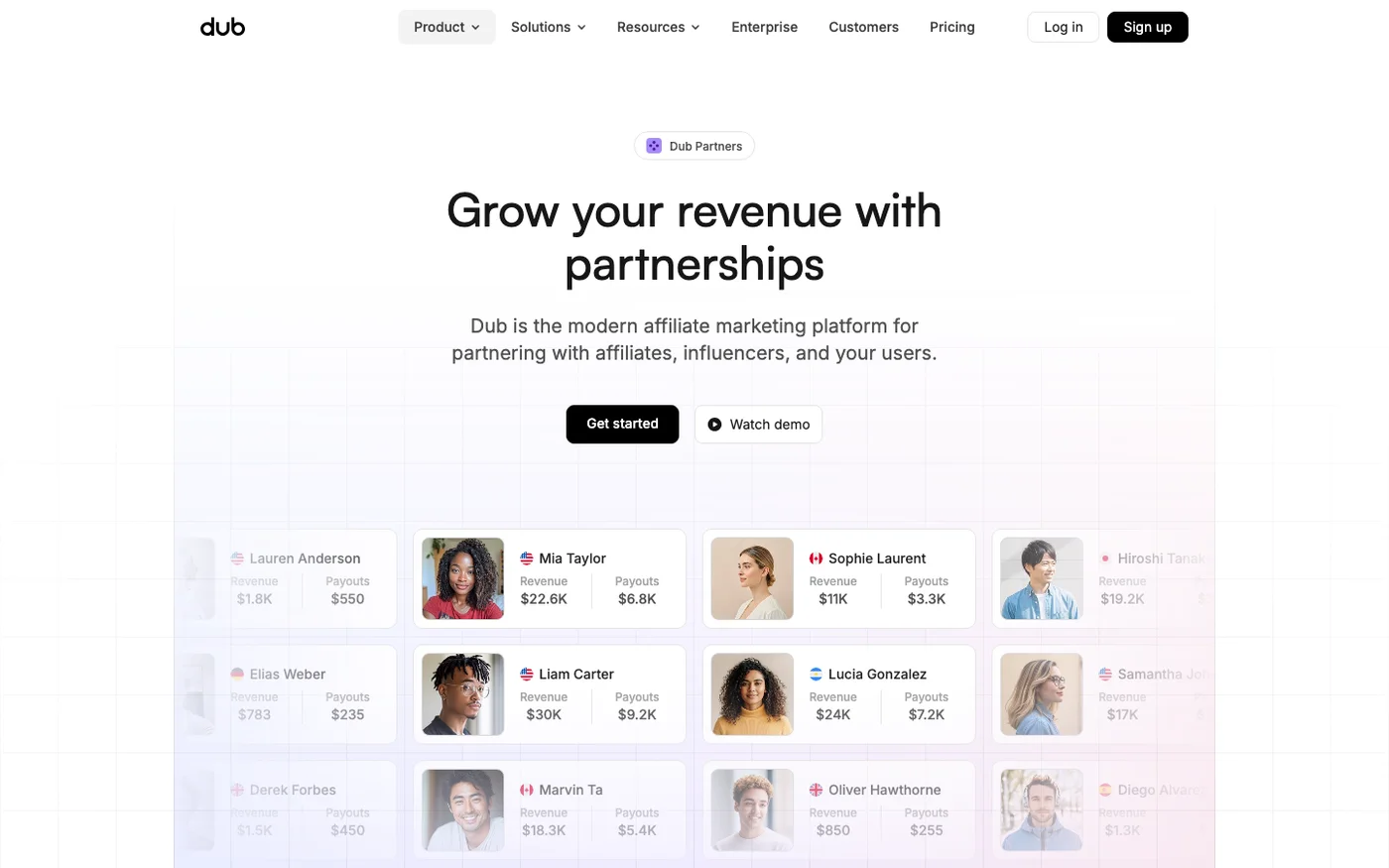
Dub Partners is my overall pick. It is the most modern infrastructure in the category, with a real API, SDKs in five languages and a partner identity that carries across every Dub-powered program, at a public $90/month. Budget for the 5% payout fee on top, because past roughly $2,000 of monthly payouts that fee costs more than the subscription.
If your problem is that nobody is promoting you, infrastructure will not fix it and PartnerStack will: 131,000+ partners and the best partner experience here, at the cost of a demo call and no published pricing. If you want to launch this week on Stripe, Rewardful at $49/month takes 0% of your affiliate revenue and includes API access on the entry plan.
Affonso at €19/month is the cheapest serious option and ships the most complete automation tooling of anyone here. With no budget at all, PromoteKit's free plan covers your first three referrals.
Tracking tool or partner network? This one question decides your shortlist
Every platform below sits on one side of a line. Knowing which side you need collapses a 12-way decision into a 4-way one.
A tracking tool attributes referrals and calculates commissions. Rewardful, Affonso, Tolt, FirstPromoter, Partnero and PromoteKit are all tracking tools. They install in under an hour, cost between $19 and $89 a month, and hand you an empty program. Filling it is your job, and that is the part founders underestimate. Software that tracks perfectly and has nine inactive affiliates in it produces exactly zero revenue.
A partner network gives you the tracking plus access to people who already promote software. PartnerStack publishes 131,000+ active partners, Reditus publishes 26,000+ B2B SaaS affiliates, and impact.com runs one of the largest publisher marketplaces in the industry. You pay for the distribution, either in subscription (Reditus at $149/month) or in a quote-only contract (PartnerStack and impact.com).
Dub Partners sits between the two, and it is my top pick precisely because of where it lands. The pricing is public at $90/month and the infrastructure is the best here, but Partner Network access and marketplace featuring are Enterprise-only, so on the Business plan you are buying tracking with excellent plumbing rather than distribution. That is the right trade for most SaaS teams, who need the program to work with their product before they need strangers selling it.
My advice: if you already have an audience, a community or existing customers who would promote you, buy a tracking tool and keep the money. If your growth plan depends on strangers deciding to sell your product, a tracking tool will not deliver that and no amount of feature comparison changes it.
Overview
Quick comparison
| # | Tool | Price |
|---|---|---|
| 1 | $90/mo + 5% | |
| 2 | Custom pricing | |
| 3 | $49/mo | |
| 4 | $149/mo | |
| 5 | €19/mo |
Show all 12 tools
| 6 | $69/mo | |
| 7 | $59/mo | |
| 8 | $49/mo | |
| 9 | Custom pricing | |
| 10 | Free | |
| 11 | $89/mo | |
| 12 | $329/mo |
Rankings
My Top Picks
Dub Partners
API-first partner platform from the Dub link infrastructure team, with programmatic payouts.
Key Features
✓Pros
- API-first, with real SDKs in five languages
- Partners reuse one profile instead of registering again
- Dual-sided incentives and bounties built in
✗Cons
- 5% payout fee gets expensive fast at scale
- Partner Network and marketplace featuring are Enterprise-only
- Its MCP server is documentation search, not program control
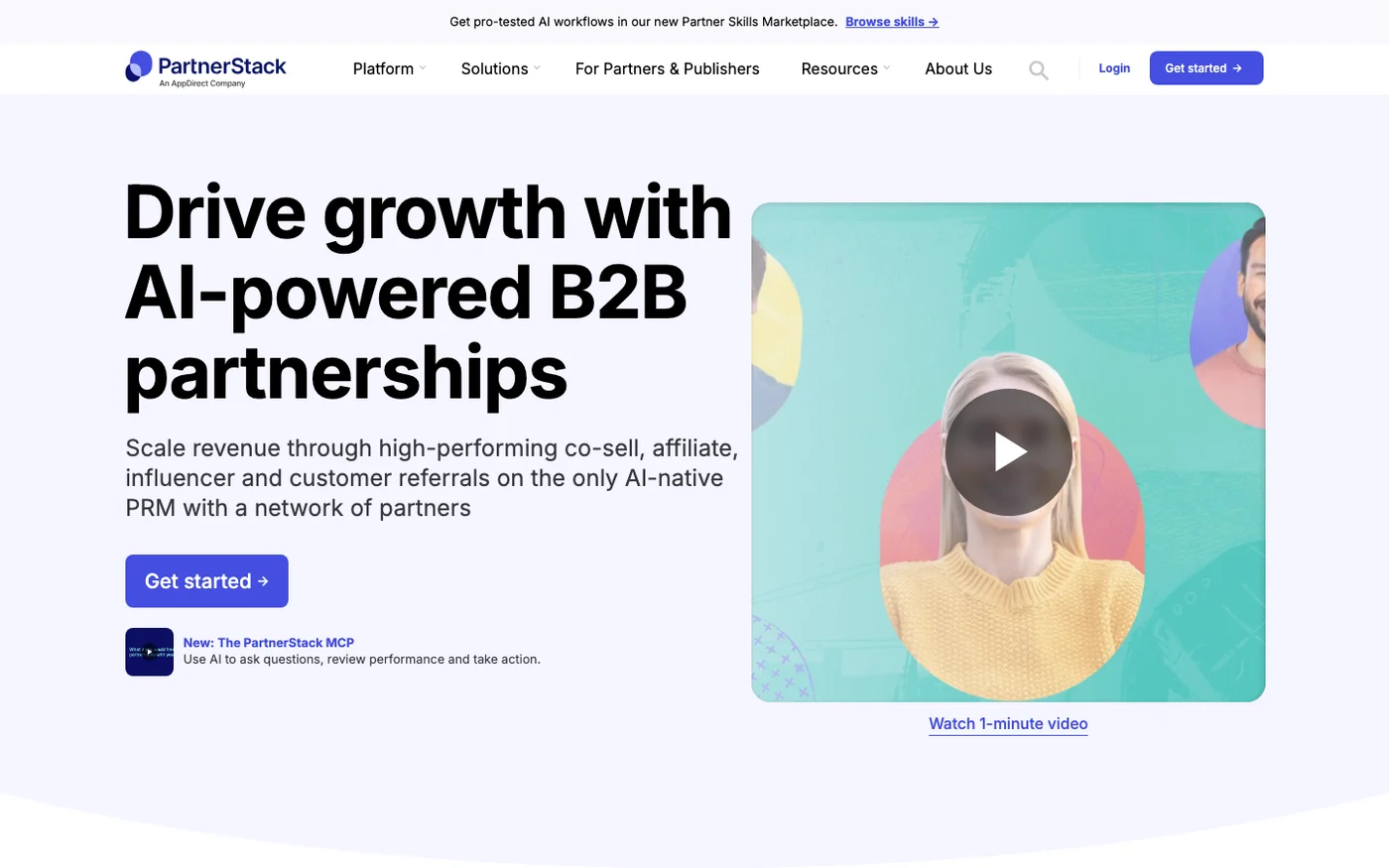
PartnerStack
B2B SaaS partner platform with a 131,000+ partner marketplace behind it.
Key Features
✓Pros
- Real recruitment channel, not just a tracking script
- The partner experience is the best of any platform here
- Built specifically for B2B SaaS motions
✗Cons
- No public pricing anywhere, every number comes from a demo call
- Overkill if you only need to track Stripe referrals
- Marketplace visibility depends on your tier
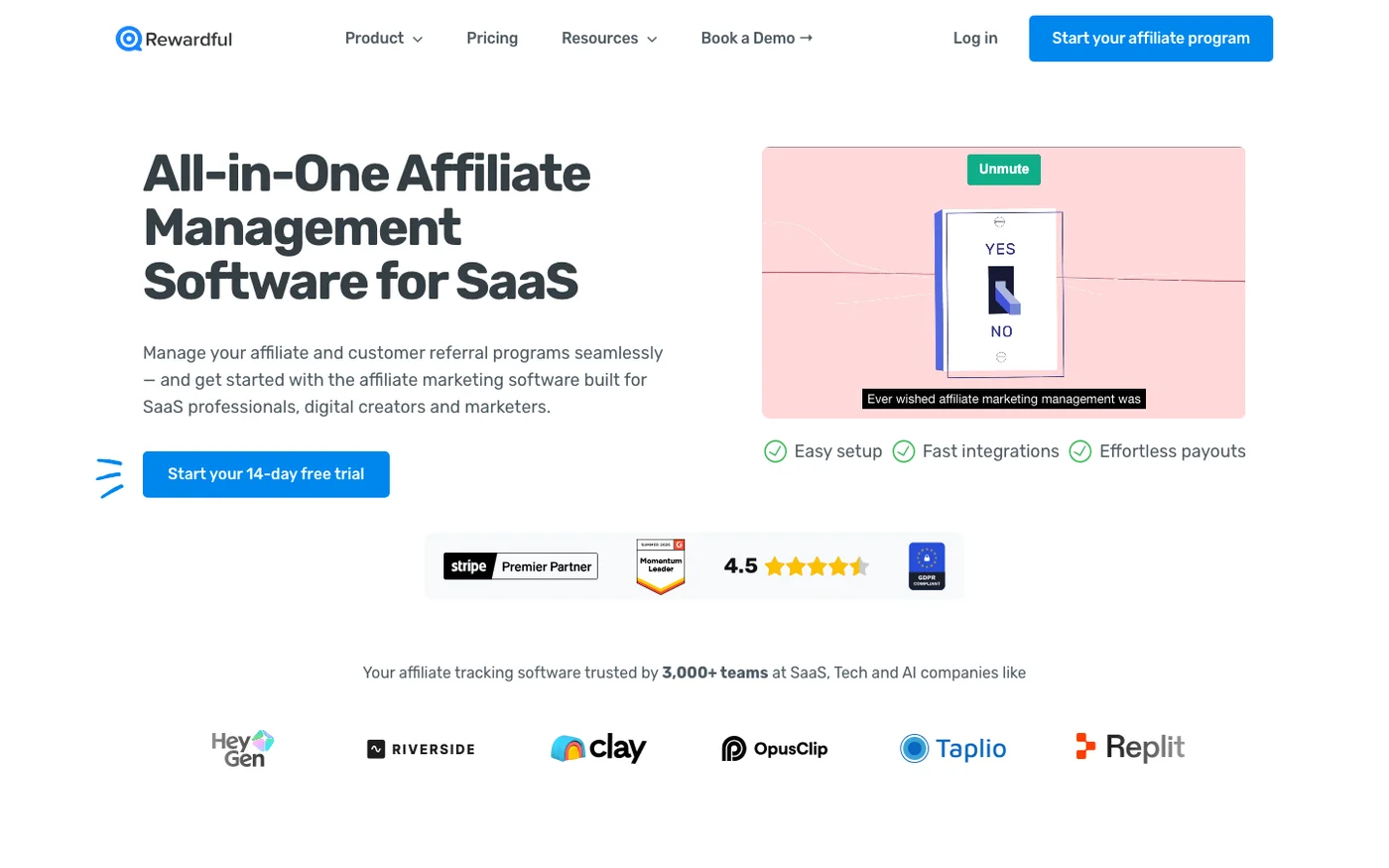
Rewardful
Stripe-native affiliate software with a two-way Stripe sync and no transaction fees.
Key Features
✓Pros
- No cut of your affiliate revenue on any plan
- API access from the cheapest plan up
- Clean setup, two scripts and you are tracking
✗Cons
- Stripe and Paddle only
- Starter caps you at 1 campaign and 2 team members
- Affiliates get a Rewardful portal per program, no cross-program view

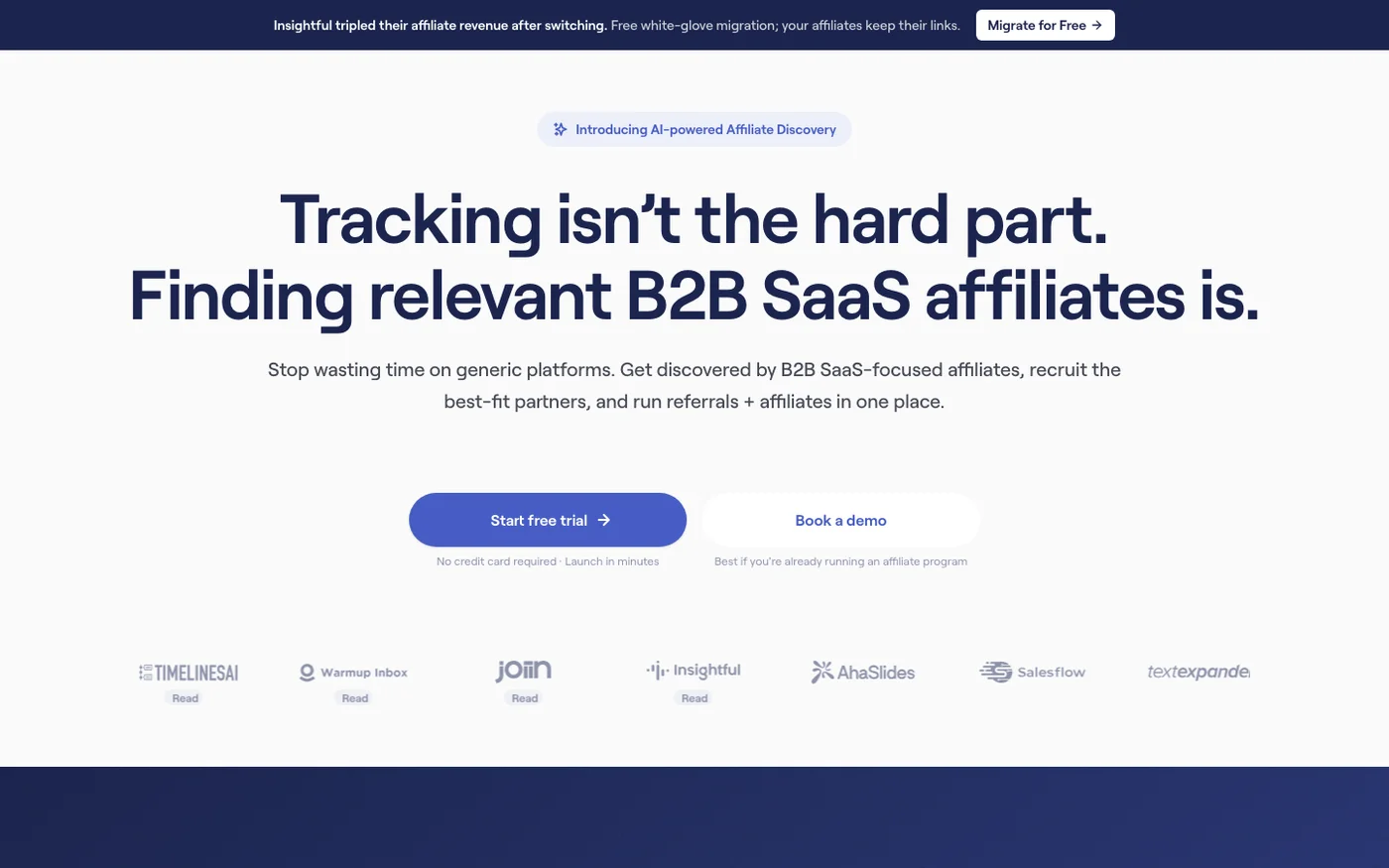
Reditus
B2B SaaS affiliate platform with a 26,000+ affiliate marketplace and AI-assisted recruitment.
Key Features
✓Pros
- Solves recruitment, not just measurement
- Focused purely on B2B SaaS rather than ecommerce
- Free migration and affiliates keep their links
✗Cons
- Marketplace listing needs Scale Up at $399/mo on a 12-month commitment
- Pricing page defaults to annual, hiding the $149 real monthly rate
- Scale Up and Enterprise are annual-only, no monthly option
Affonso
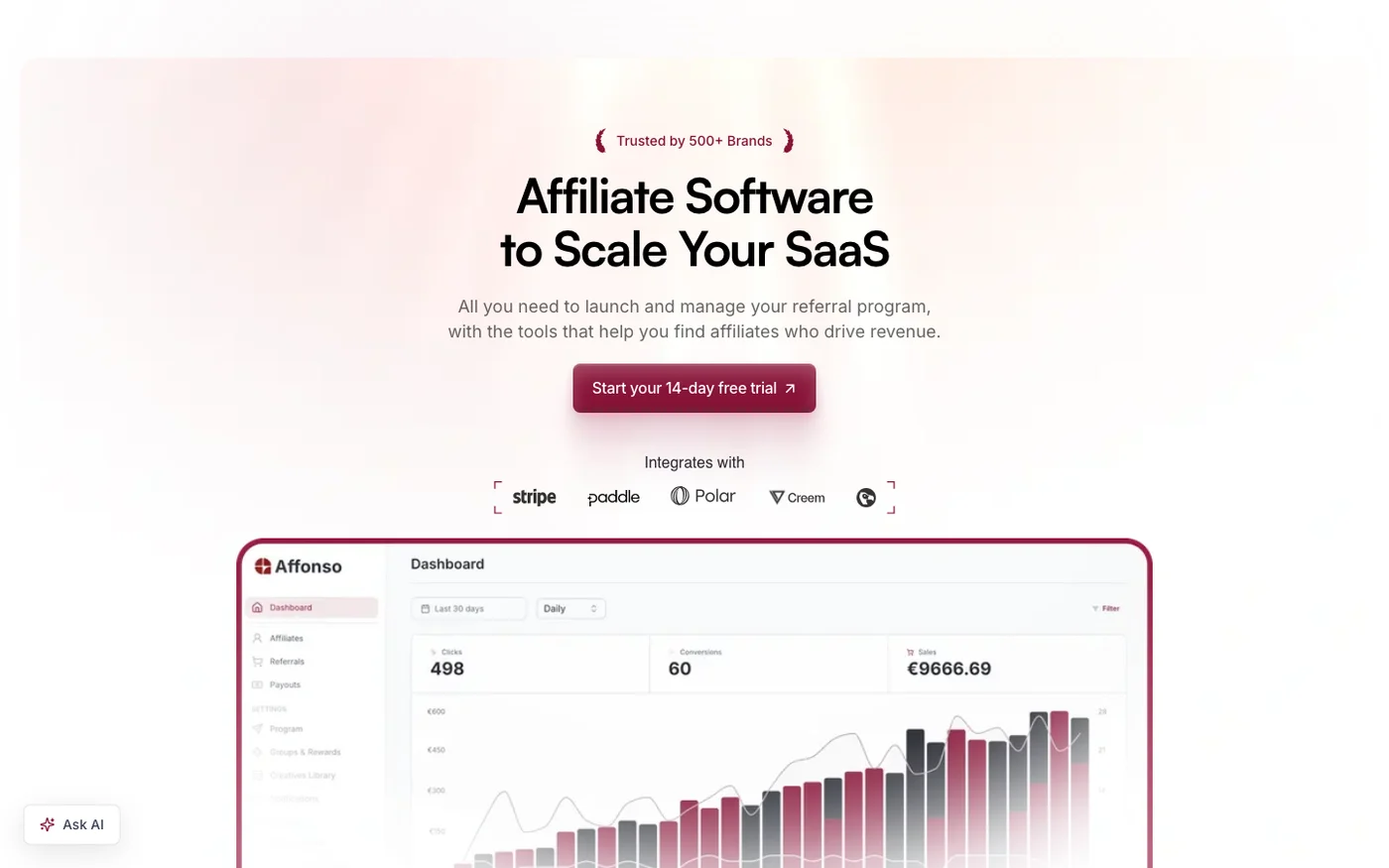
Cheapest serious option here, and the only one shipping an MCP server, SDK and CLI together.
Key Features
✓Pros
- Lowest paid entry price of any platform here
- The most complete agent tooling in the category
- Revenue caps are tracking limits, not sales limits
✗Cons
- Priced in euros, so USD budgets move with the exchange rate
- Managed payouts and private programs need the Growth tier
- No partner network, each program is its own island

Tolt
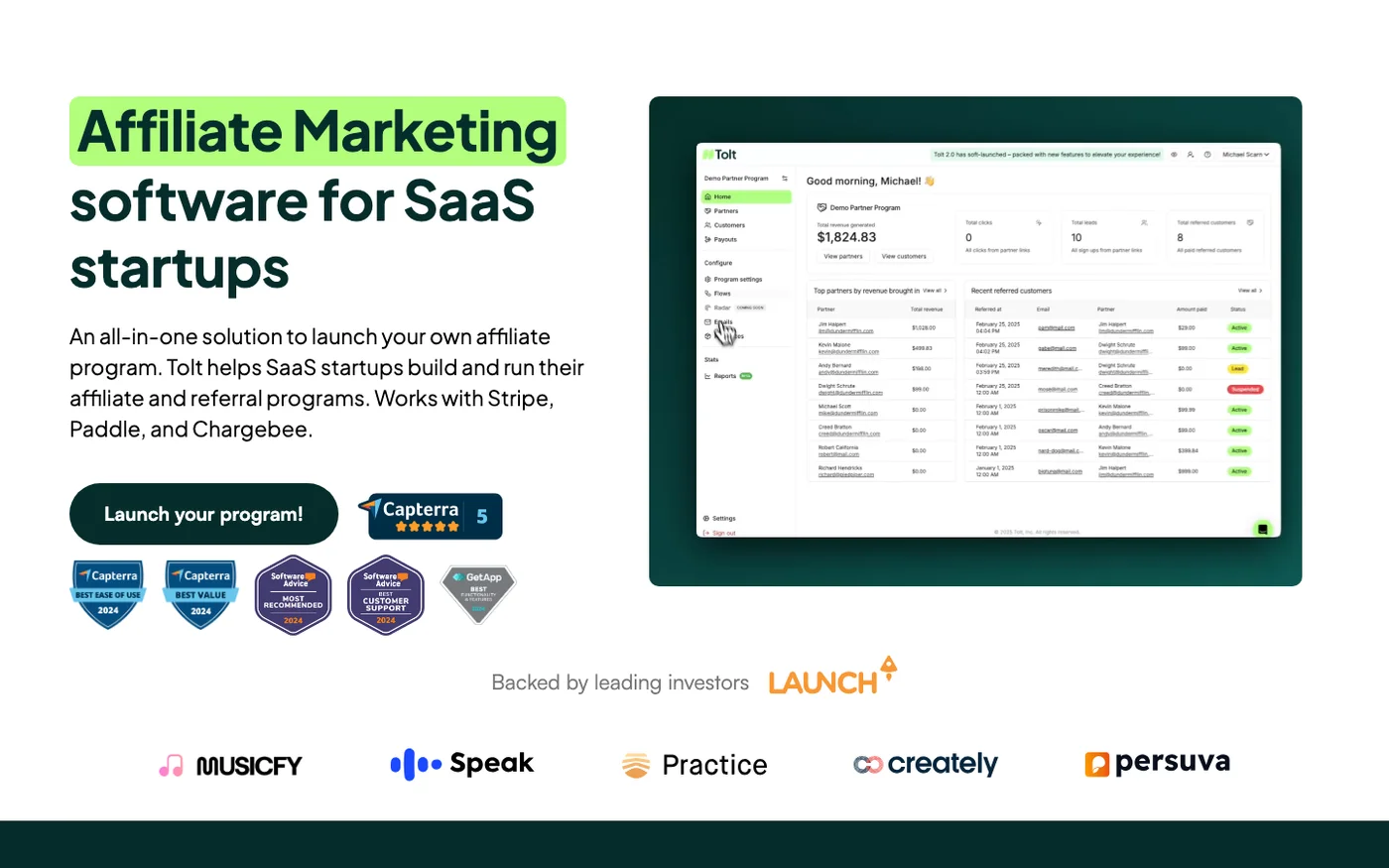
Stripe, Paddle and Chargebee affiliate software with multiple programs from the entry plan.
Key Features
✓Pros
- Two programs on the entry plan
- Widest set of payout rails in this price bracket
- Tax form collection handled for US programs
✗Cons
- 2% fee on automated payouts
- Stripe, Paddle and Chargebee only
- No API detail published on the pricing page

Partnero
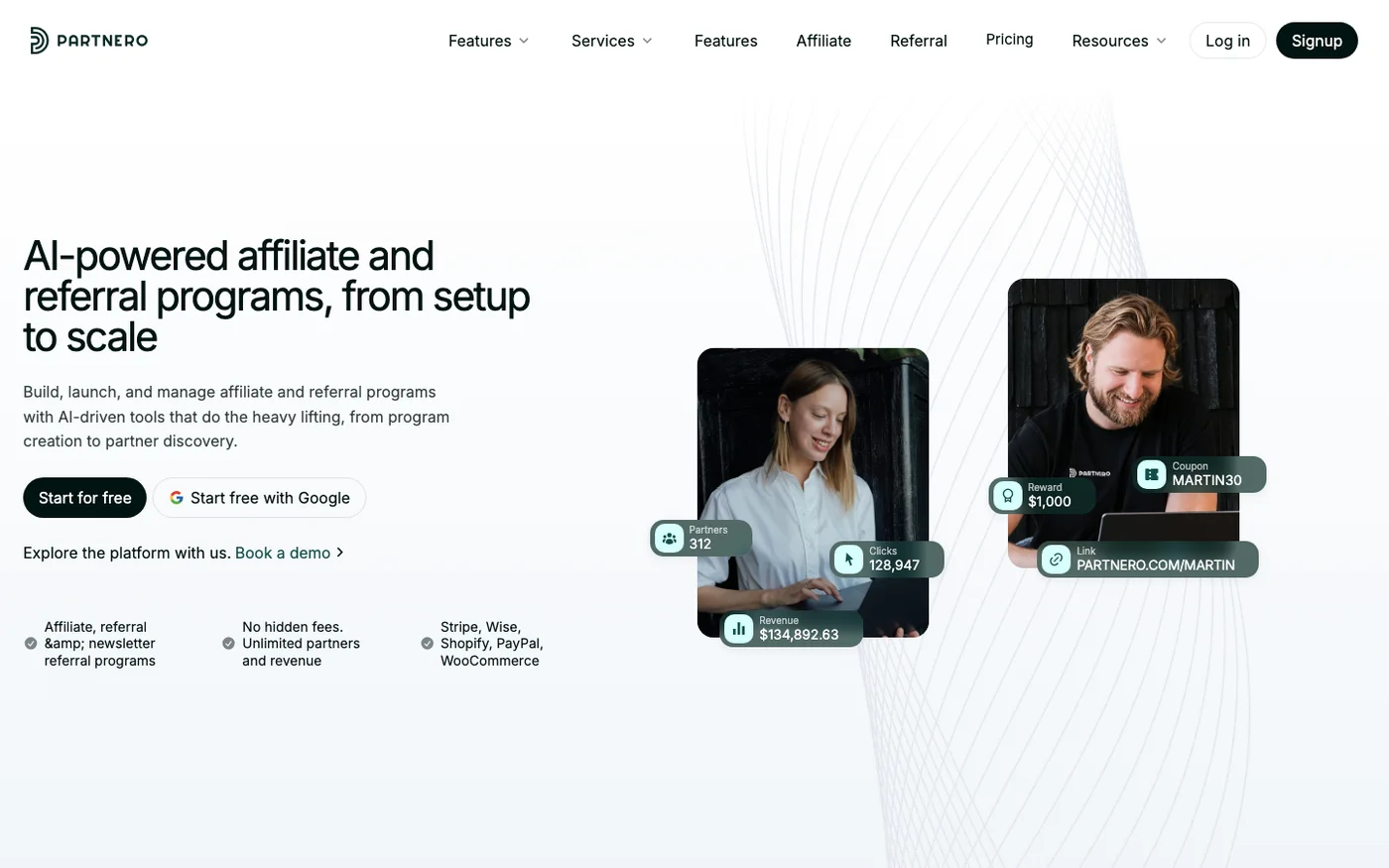
Runs affiliate and customer-referral programs side by side, with an MCP server on every plan.
Key Features
✓Pros
- No revenue caps at any tier
- Agent access included rather than sold as an upgrade
- Newsletter-only plan at $10/mo for publishers
✗Cons
- 1 team member on Starter and Partner, extra seats $29/mo
- Starter is limited to 1 program
- Pricing page defaults to annual

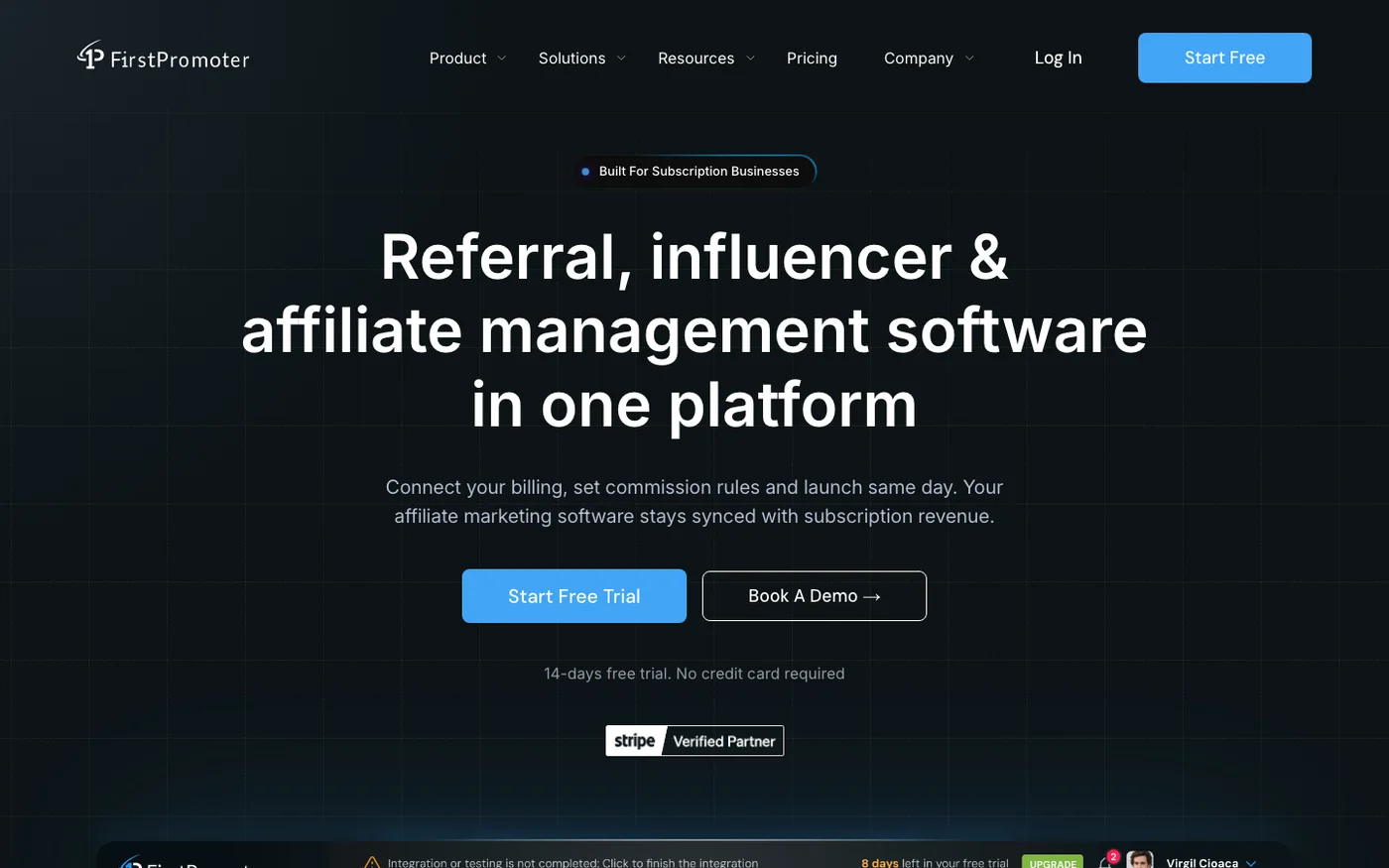
FirstPromoter
Established SaaS affiliate platform with built-in email automation and broadcasts.
Key Features
✓Pros
- Activation tooling built in rather than bolted on
- Embeddable affiliate dashboard inside your own app
- Long track record in the SaaS category
✗Cons
- Starter caps affiliates at 1,000 and campaigns at 3
- Revenue cap of $5,000/mo on the entry plan is the lowest of the $49 tier
- No cross-program view for your affiliates

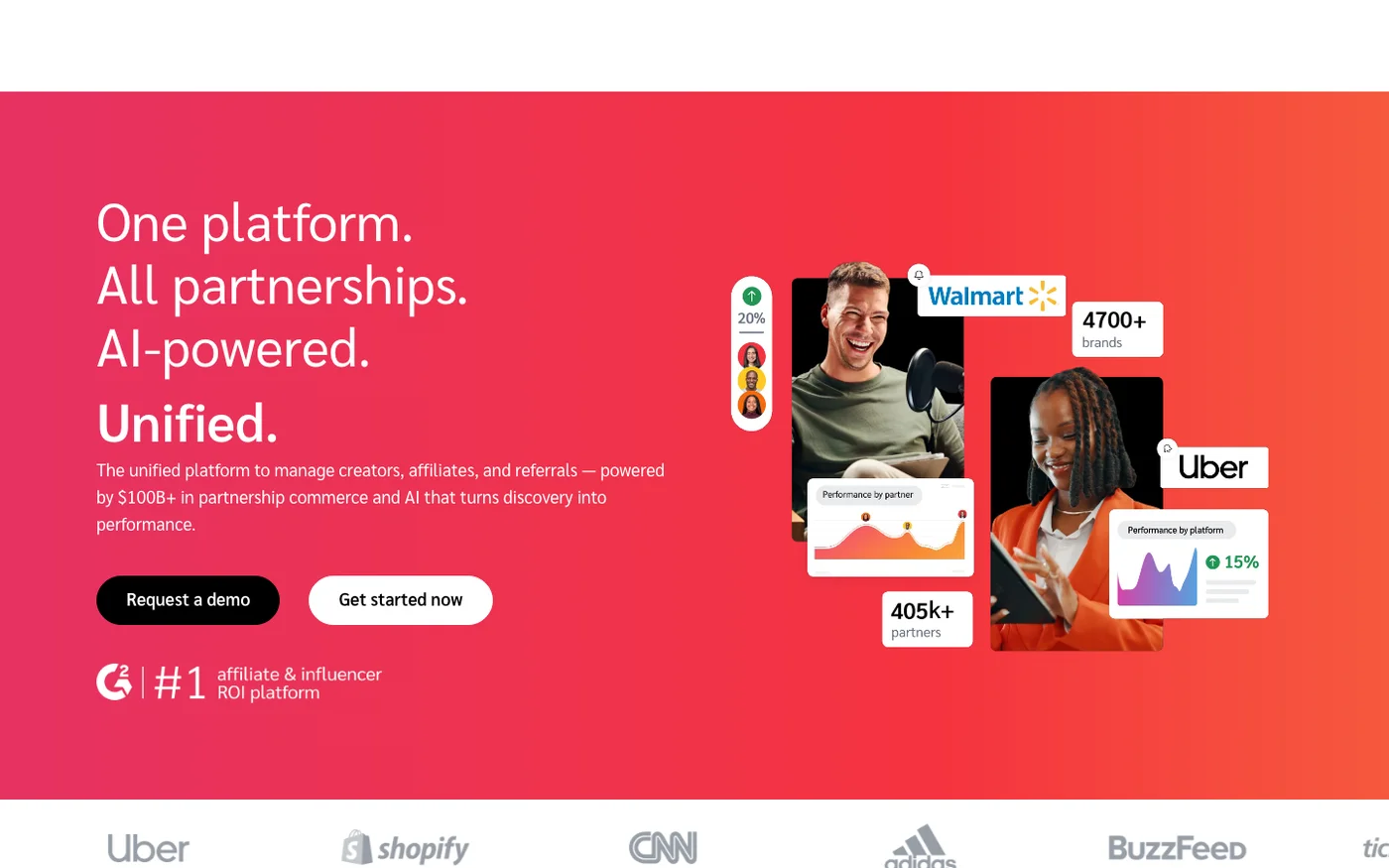
impact.com
Enterprise partnership platform with a large publisher marketplace and per-brand contracts.
Key Features
✓Pros
- The widest partner reach of anything on this list
- Handles complex partnership types beyond affiliates
- Mature tracking and attribution
✗Cons
- No public pricing, quote only
- Setup and day-to-day operation need a dedicated owner
- Per-brand contracts make the partner side feel fragmented
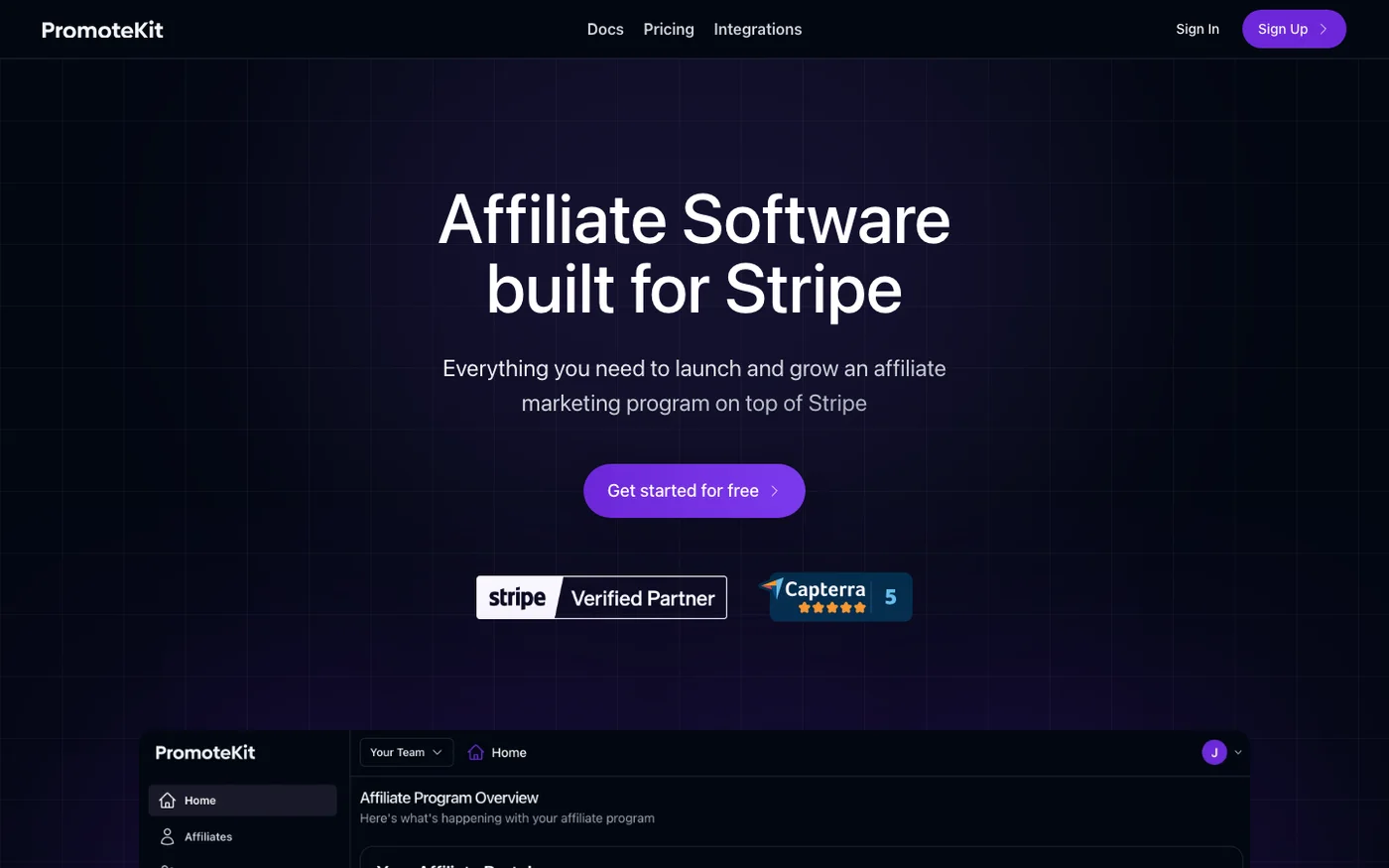
PromoteKit
Stripe-only affiliate software with a genuine free tier and no transaction fees.
Key Features
✓Pros
- Free to start, no card required
- No cut of affiliate revenue at any tier
- Setup in under ten minutes on Stripe
✗Cons
- Stripe only, no Paddle or Chargebee
- Free tier stops at 3 referrals
- Pricing toggle defaults to yearly
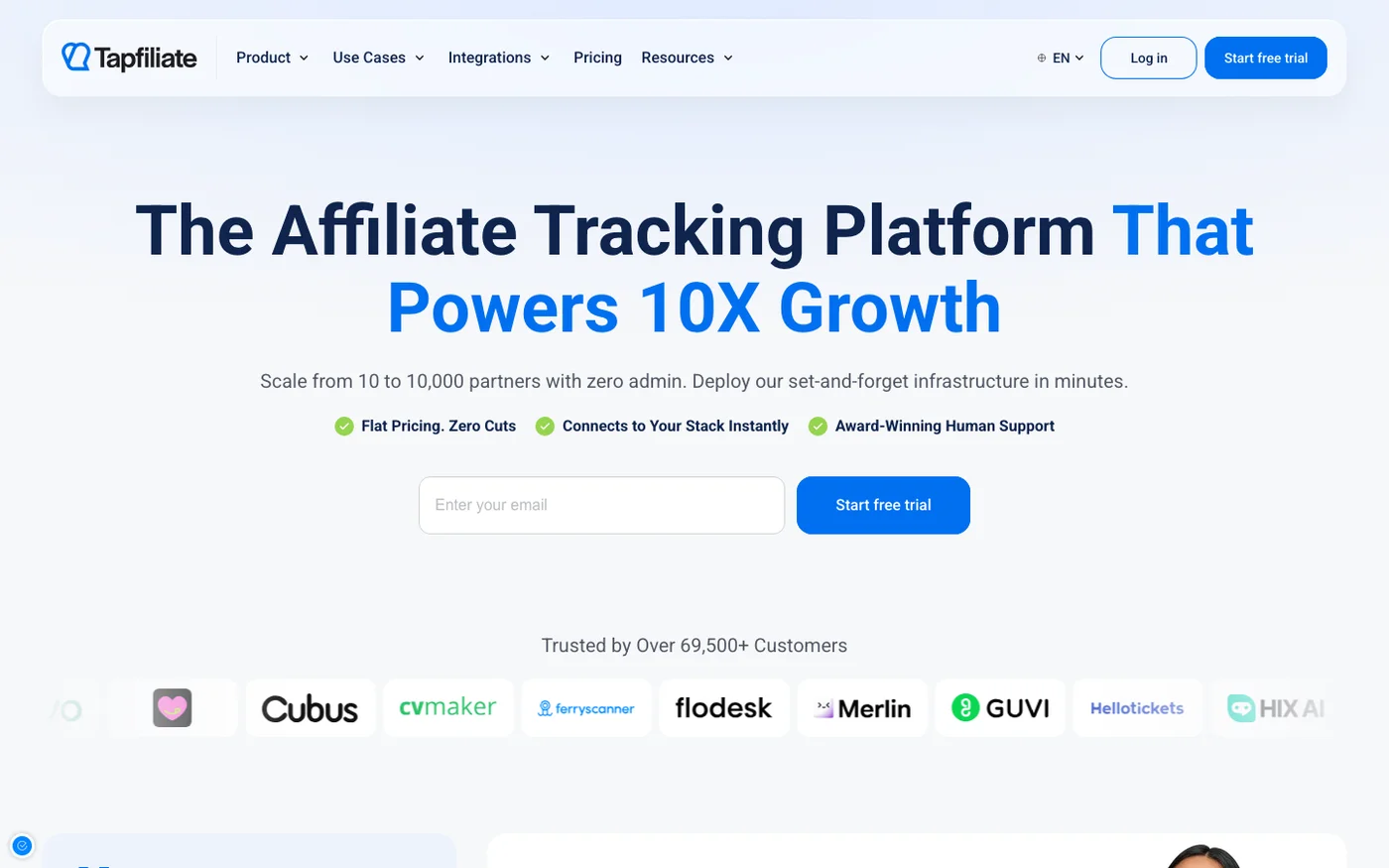
Tapfiliate
Affiliate platform covering both SaaS billing and ecommerce carts, with 30+ integrations.
Key Features
✓Pros
- Handles software and physical-product programs equally
- Deep integration list beyond payment processors
- 7-day trial on Launch, 30 days on Enterprise
✗Cons
- Launch allows only 50 affiliates and 1 program
- Conversion overages billed at $15 per 1,000 on Launch
- Priciest entry point of the self-serve tools

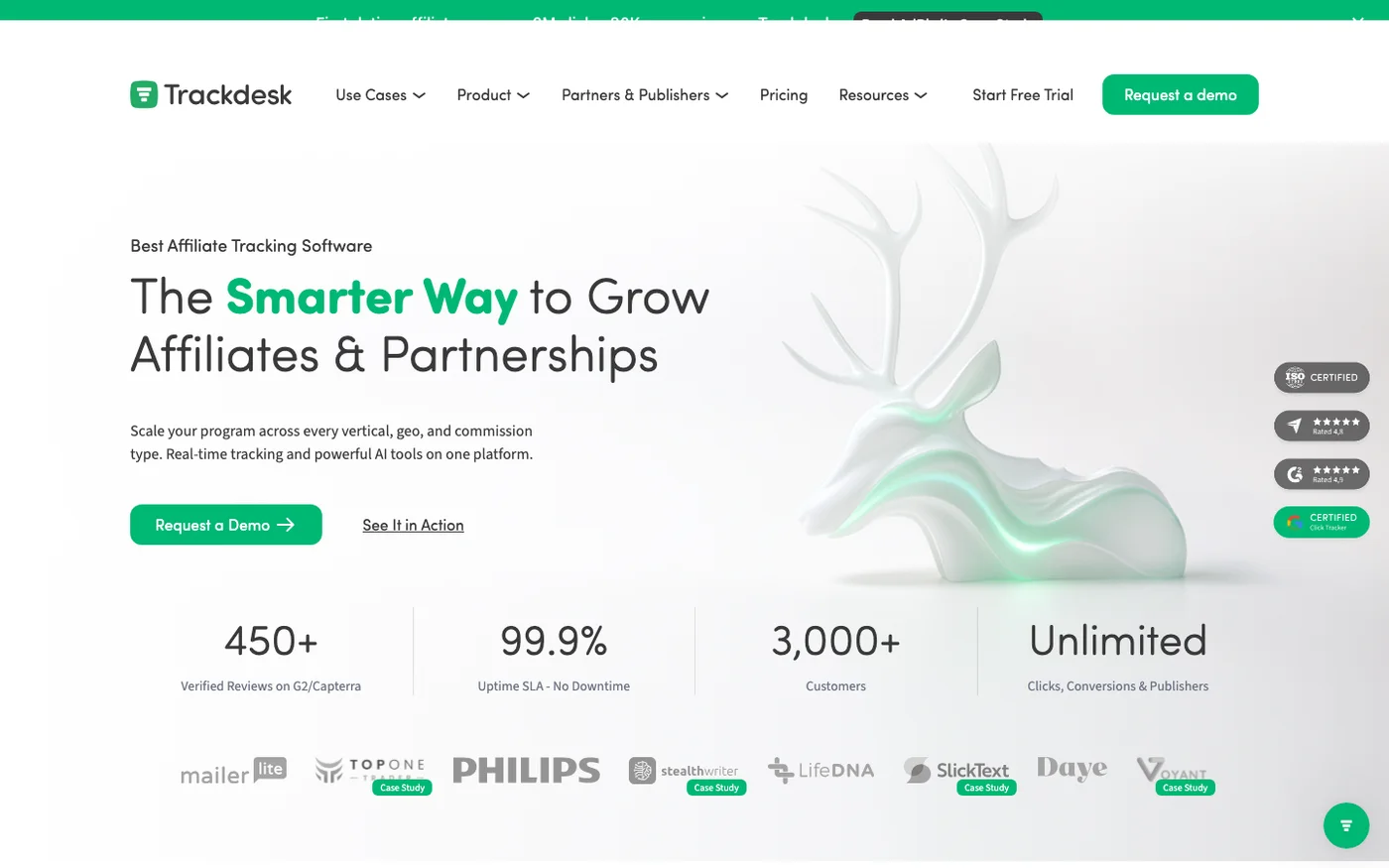
Trackdesk
Network-grade tracking with a hosted MCP server and unlimited clicks on every plan.
Key Features
✓Pros
- Built for volume that breaks lighter tools
- The most capable MCP server of any platform here
- Runs affiliate-network structures, not just single programs
✗Cons
- $329/mo entry price is seven times the cheapest options
- Full API access is gated to Enterprise at $499/mo
- Affiliate marketplace is still marked coming soon
The side of the table nobody writes about: what your affiliates experience
I promote software for a living, so I sit on the affiliate side of dozens of programs. That perspective changes which platform I would buy as a vendor, and it is missing from every other comparison in this category.
Here is the reality of a working affiliate. I am not in your program. I am in forty programs. Each one that runs on a single-tenant tool gives me a separate portal, a separate login, a separate payout threshold and a separate email address to chase when something breaks. There is no combined view of what I earned this month, so reconciling income means opening a dozen tabs.
Platforms that solve this: PartnerStack gives me one account across every program in its network, so new programs are two clicks and payouts arrive together. impact.com gives me one login across every brand, though each brand stays a separate contract with its own terms and payout, so it is one door into many rooms rather than one room. Dub gives partners a single identity that carries across every Dub-powered program, which is the cleanest technical model of the three. Reditus runs a marketplace where affiliates apply to programs directly from their dashboard.
Platforms that do not: Rewardful, Affonso, Tolt, FirstPromoter, Partnero, PromoteKit and Tapfiliate all give each program its own portal. That is not a criticism of the software, it is the architecture. A tool that installs on your domain in ten minutes cannot also be a network.
What this means if you are a vendor: choosing a single-tenant tool is completely reasonable, but understand that you have taken on the recruitment and activation work yourself. Your affiliates will not stumble across you in a marketplace, and they will not think about your program unless you remind them. That is why FirstPromoter's built-in email automation and Partnero's messaging centre matter more than their feature lists suggest. Silence is what kills affiliate programs, and the fix is the least technical part of the whole decision.
If you want to see what a partner-facing page looks like from the other side, I keep 33 affiliate program breakdowns on this site, and my beginner's guide to affiliate marketing covers how commissions, cookie windows and payout thresholds actually work before you commit to a platform.
If you are on the affiliate side and that single-identity model appeals to you, you can join the Dub Network here. One profile, and it carries into every program on Dub rather than starting from scratch each time. That is a referral link, so I earn a share of Dub's fees if you join through it, which costs you nothing.
Which of these an AI agent can operate end to end
Affiliate management is repetitive work: approving conversions, checking for self-referrals, adjusting commission rates, chasing payout batches. It is well suited to an agent, and three platforms here have built for that properly.
Affonso publishes an MCP server at api.affonso.io/mcp using streamable HTTP with OAuth 2.1 authentication, exposing 18 tools across affiliates, referrals, commissions and payouts. It also ships a TypeScript SDK and a CLI. For a small SaaS at €19/month, that is the most automation-ready package in the category by a distance.
Trackdesk hosts an MCP server authenticated with a personal access token, exposing search and execute tools over its public API, and the vendor states it is available across plans on the same API. Its documentation describes approving conversions, updating affiliate statuses, adjusting commissions and investigating fraud patterns from a prompt.
Partnero includes MCP access on every plan with read and write coverage of partners, customers, transactions, leads and rewards, authenticated with an API key.
Worth separating carefully: Dub does publish something at dub.co/docs/mcp, but it is a documentation-search server that reads Dub's published docs. It is read-only and scoped to site content, so it will answer questions about the API without touching your program. Dub's real programmatic strength is its REST API and SDKs in TypeScript, Python, Ruby, PHP and Go, which is a strong offering, just a different one.
Rewardful and Tapfiliate expose REST APIs but no MCP server (both /mcp URLs return 404). Tolt and FirstPromoter publish no MCP endpoint either, though FirstPromoter offers webhooks plus Zapier, Make and Albato. PartnerStack and impact.com have enterprise APIs available under contract.
Methodology
How I chose these
I compared each platform on five things: the real month-to-month price, any percentage taken from affiliate payouts, which billing systems it supports, what an affiliate managing many programs experiences, and whether the platform can be operated programmatically.
Pricing was verified on 31 July 2026 by loading each vendor's pricing page in a real browser and switching the billing toggle to monthly. This matters more than it sounds. Reditus displays $99/month on load when the month-to-month price is $149, Partnero displays $49 when it is $59, and PromoteKit displays $29 when it is $39.
Affonso renders prices as animated counters that do not appear in the page source at all. Feature claims come from vendor documentation rather than marketing pages.
Every MCP server listed was checked against the vendor's own docs for endpoint, authentication method and plan availability, which is how Dub's docs-search MCP got separated from the three platforms whose MCP servers actually control the program. None of these platforms is a paying partner of this site, and no vendor was contacted before publication.
Three pricing traps I hit while checking these platforms
The annual-default toggle. Reditus, Partnero and PromoteKit all load their pricing pages on the annual view. Reditus shows $99/month when month-to-month is $149, Partnero shows $49 when it is $59, and PromoteKit shows $29 when it is $39. If you budget from the first number you see, you will be 30% to 50% short. Every price in this comparison is the month-to-month rate for exactly that reason.
The payout cut hiding behind a low subscription. Dub charges $90/month plus 5% of partner payouts. At $15,000 of monthly payouts that fee is $750, which is more than eight times the subscription. Tolt takes 2% on automated payouts, and Reditus takes 5% on card payouts and 2% on invoice. Rewardful, Partnero and PromoteKit take 0%. Compare total cost at your expected payout volume, not at the sticker price.
The revenue cap ratchet. Most of these tools price by how much affiliate revenue you generate, so success moves you up a tier automatically. Rewardful's Starter stops at $7,500/month, FirstPromoter's at $5,000 and Affonso's Launch at $1,000. Partnero is the exception with unlimited revenue on every plan, charging by programs and seats instead. If your program works, model the tier you will be on in a year, not the one you start on.
The same annual-default trick shows up across marketing software generally. I flag it on every pricing page I publish, including the email marketing software roundup and the all-in-one marketing platform comparison, where per-month figures often assume a year paid upfront.
FAQ
Frequently Asked Questions
For a Stripe-billed SaaS launching a first program, Rewardful at $49/month is the safest pick: it takes 0% of affiliate revenue, includes REST API access on the entry plan and syncs both ways with Stripe. If budget is the constraint, Affonso starts at €19/month month-to-month, and PromoteKit has a free plan covering your first three referrals. All three install in under an hour.
Self-serve platforms run from free to $329/month. As of 31 July 2026, PromoteKit is free for three referrals then $39/month, Affonso is €19/month, FirstPromoter and Rewardful are $49/month, Partnero is $59, Tolt is $69, Dub Partners is $90, Tapfiliate is $89, Reditus is $149 and Trackdesk is $329. All are month-to-month rates. PartnerStack and impact.com publish no pricing and quote after a demo.
Some take a percentage of payouts rather than revenue, and it is easy to miss. Dub charges 5% of partner payouts (3% on Enterprise), Tolt charges 2% on automated payouts, and Reditus charges 5% on card payouts and 2% on invoice. Rewardful, Partnero and PromoteKit advertise no transaction fees. At high payout volume this fee usually exceeds the subscription, so compare total cost at your expected volume.
Affiliate software tracks referrals and calculates commissions for your own program, and you recruit the affiliates yourself. An affiliate network adds a marketplace of existing affiliates who can discover and join your program. PartnerStack (131,000+ partners), Reditus (26,000+ B2B SaaS affiliates) and impact.com are networks. Rewardful, Affonso, Tolt, FirstPromoter, Partnero, PromoteKit and Tapfiliate are software. Networks cost considerably more, and you are paying for distribution.
Several of the cheaper tools are Stripe-first. PromoteKit is Stripe-only. Rewardful supports Stripe and Paddle. Tolt supports Stripe, Paddle and Chargebee. Tapfiliate covers 30+ integrations including Shopify, WooCommerce, BigCommerce and Magento alongside Stripe, which makes it the pick for mixed software and physical-product businesses. Trackdesk lists 900+ integrations, and PartnerStack and impact.com integrate on a per-contract basis.
Three platforms here ship MCP servers that control the program: Affonso (api.affonso.io/mcp, OAuth 2.1, 18 tools across affiliates, referrals, commissions and payouts), Trackdesk (hosted, personal access token, search and execute tools) and Partnero (included on every plan, read and write on partners, customers, transactions and leads). Dub publishes an MCP server too, but it searches documentation rather than operating your program. Dub's programmatic strength is its REST API with SDKs in five languages.
Recurring commission is the norm in SaaS, typically 20% to 30% of subscription revenue for a defined window rather than a one-off payment. Programs on this list commonly run 20% to 30% recurring for 12 months. Recurring beats a large one-time bounty for attracting affiliates who build content, because it compounds with the customer's lifetime rather than paying once and going quiet.

10+ years in digital marketing. I review SEO and AI visibility software for small business owners and solo operators: what each plan really costs, which one actually covers the job, and where a tool stops being worth it. Checked against vendor documentation and real user feedback, and against my own use where I have it.