
That Marketing Buddy

Buying guide

Best all-in-one marketing software for small businesses

By Joonas Rotko, ex-agency co-owner, 10+ years spending real marketing budgets

Prices verified · How I choose, and how I earn from this page

For one small business that wants email, sales funnels and a contact list in one login, I'd start with Systeme.io. Its free plan already holds 2,000 contacts, and Startup, where automation gets room to work, is $14.17/month billed annually. If your sales run on deals and follow-ups, HubSpot's CRM is the better base. Prices checked 14 Oct 2026.

Every price on this page is for one business emailing about a thousand contacts, run by one person.

  • 1 business
  • about 1,000 contacts
  • 1 user

Who this is for. Owners of a small business and solo marketers who are tired of paying for an email tool, a page builder and a CRM separately, and who will set the platform up themselves. Every tool here covers email plus some mix of landing pages, funnels and contact management, but they lean in different directions: some are funnel builders with email attached, some are CRMs with email attached, and some are email tools that grew outward. The expensive mistake is buying the one whose center of gravity doesn't match how you actually win customers.

Looking for something else?

Different job, different guide.

My picks for different needs

Find the line that sounds like you. Each pick links to the full reasoning below.

  1. One low-priced subscription for email, funnels and a contact list

    A free plan that holds the whole list, and a first paid plan with unlimited email sends.

    Why this one
    Systeme.io logo

    Systeme.io

    My default

    $14.17/moannual

    See Systeme.io plansAffiliate link
  2. My sales depend on deals, calls and follow-ups

    The CRM is the core of the product, and email and pages sit on top of it.

    Why this one
    HubSpot logo

    HubSpot

    $7/moannual

    See HubSpot plansAffiliate link
  3. The smallest monthly bill for email plus a CRM

    Priced by emails sent, so a list you mail a few times a month stays cheap.

    Why this one
    Brevo logo

    Brevo

    $15.25/moannual

    See Brevo plansAffiliate link
  4. Landing pages and email for a small team on the entry plan

    The entry plan includes several user seats, and a free version stays open after the trial.

    Why this one
    GetResponse logo

    GetResponse

    $15.58/moannual

    See GetResponse plansAffiliate link
  5. Automation that reacts to what each contact does

    Automation is what it is known for, with a CRM add-on from Plus.

    Why this one
    ActiveCampaign logo

    ActiveCampaign

    $15/moannual

  6. I sell online courses or digital products to an audience

    A large free list allowance, product sales built in and a small platform fee.

    Why this one
    Kit logo

    Kit

    $33/moannual

    See Kit plansAffiliate link
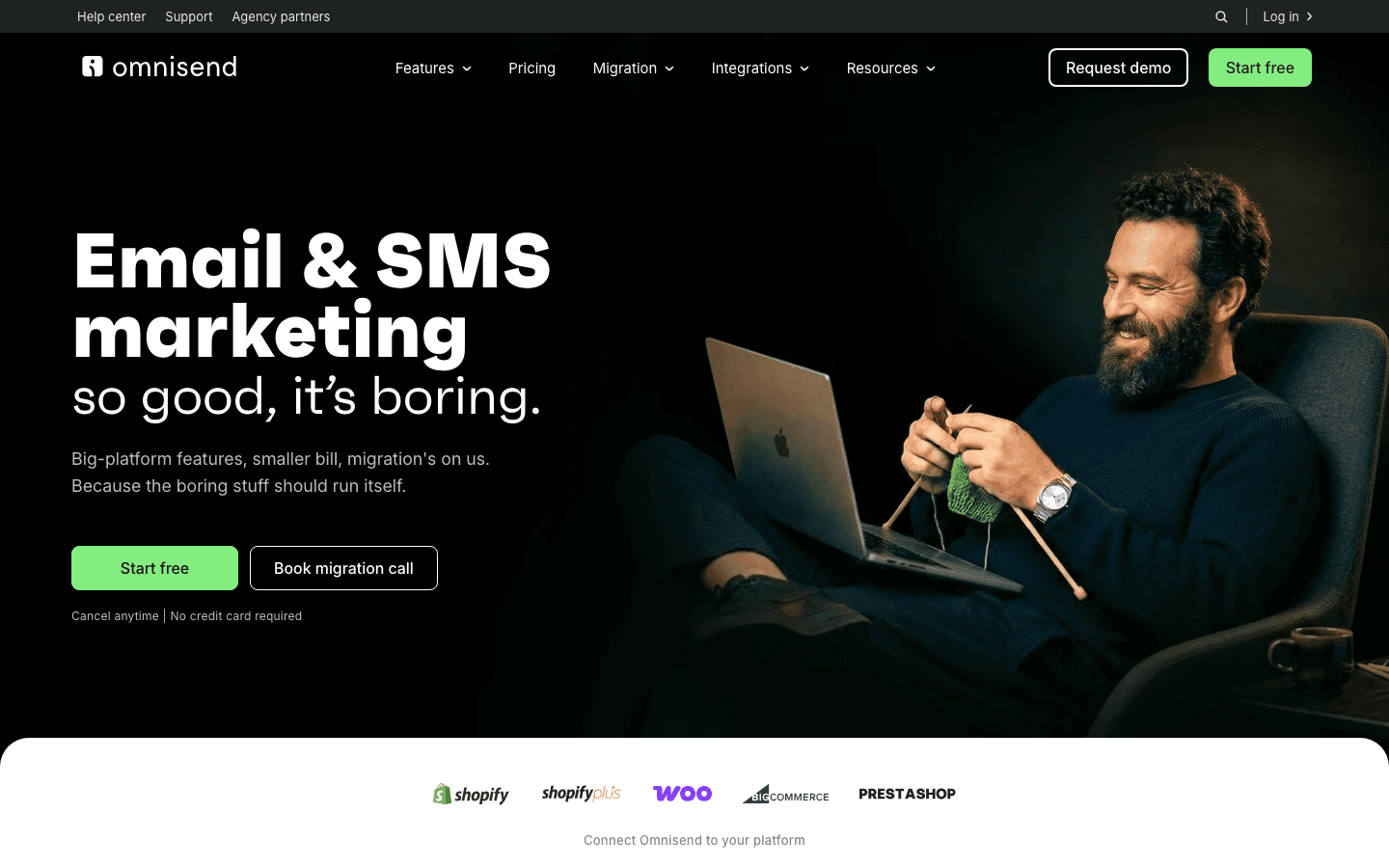
  7. I run an online store

    Email and SMS built around store events like abandoned carts.

    Why this one
    Omnisend logo

    Omnisend

    $20/momonthly

    See Omnisend plansAffiliate link

The tools side by side

Each row is the plan I priced for about a thousand contacts and one user. For Systeme.io and Kit that is the first paid plan, because their free plans hold the list but keep automation small. Brevo's row is its entry sending band, and HubSpot's row is a limited-time offer.

Systeme.io: I priced Startup. The free plan holds this list but allows 1 automation rule.

HubSpot: I priced Starter. A limited-time offer for new customers; the list price is $20/user per month billed monthly.

Kit: I priced Creator. The free plan covers this list; Creator is where Kit lists unlimited visual automations.

one business and about a thousand contacts: plan priced, monthly and annual cost, Users included, Automation on this plan, Free start
Tool and planCost per monthUsers includedAutomation on this planFree start
Systeme.ioStartup

$14.17annual

$17 monthly

unlimitedYesFree plan
HubSpotStarter

$7annual

$10 monthly

1Not publishedFree plan
BrevoStarter

$15.25annual

$17 monthly

1Not publishedFree plan
GetResponseStarter

$15.58annual

$19 monthly

3YesFree account and a 14-day trial
ActiveCampaignStarter

$15annual

Not sold monthly

15 actions per automation14-day trial
KitCreator

$33annual

$39 monthly

2YesFree plan and a 14-day trial
OmnisendStandard

Not sold annually

$20 monthly

1YesFree plan
KeapPro

Not sold annually

$299 monthly

2YesTrial not published
MailchimpEssentials

Not sold annually

$26.50 monthly

3Up to 4 flow stepsFree plan and a 14-day trial

Nine picks, in the order I'd consider them

Each one says who it is for, what it costs for one small business with about a thousand contacts, and what you give up.

Systeme.io logo

Systeme.io

Best value: email, funnels and courses in one plan

Hands-on

Choose it if

You sell a service, a course or a digital product online and want sign-up pages, email follow-ups and checkout in one place without paying per email.

Consider HubSpot instead if

Your sales happen on calls and in meetings, and you need deal stages and a sales pipeline. Systeme.io keeps contacts and tags, not a sales CRM.

Why it fits one small business with about a thousand contacts

Most tools here charge separately for the pieces Systeme.io bundles. Startup covers 5,000 contacts, 10 sales funnels and unlimited email sends, so a list of about a thousand has plenty of room before the price moves. Systeme.io charges 0% transaction fees on what you sell through it, which matters once the funnels start taking payments.

The plan I priced

Startup is $17/month billed monthly, or $14.17/month billed annually, paid as $170/year. The free plan holds this list too, but it allows 1 automation rule and 1 workflow, so I priced the first paid plan, which raises that to 10 rules and 5 workflows.

Closest alternative

Kit becomes the better choice when your business is a newsletter or an audience you sell products to, and you want a larger free allowance before you pay anything.
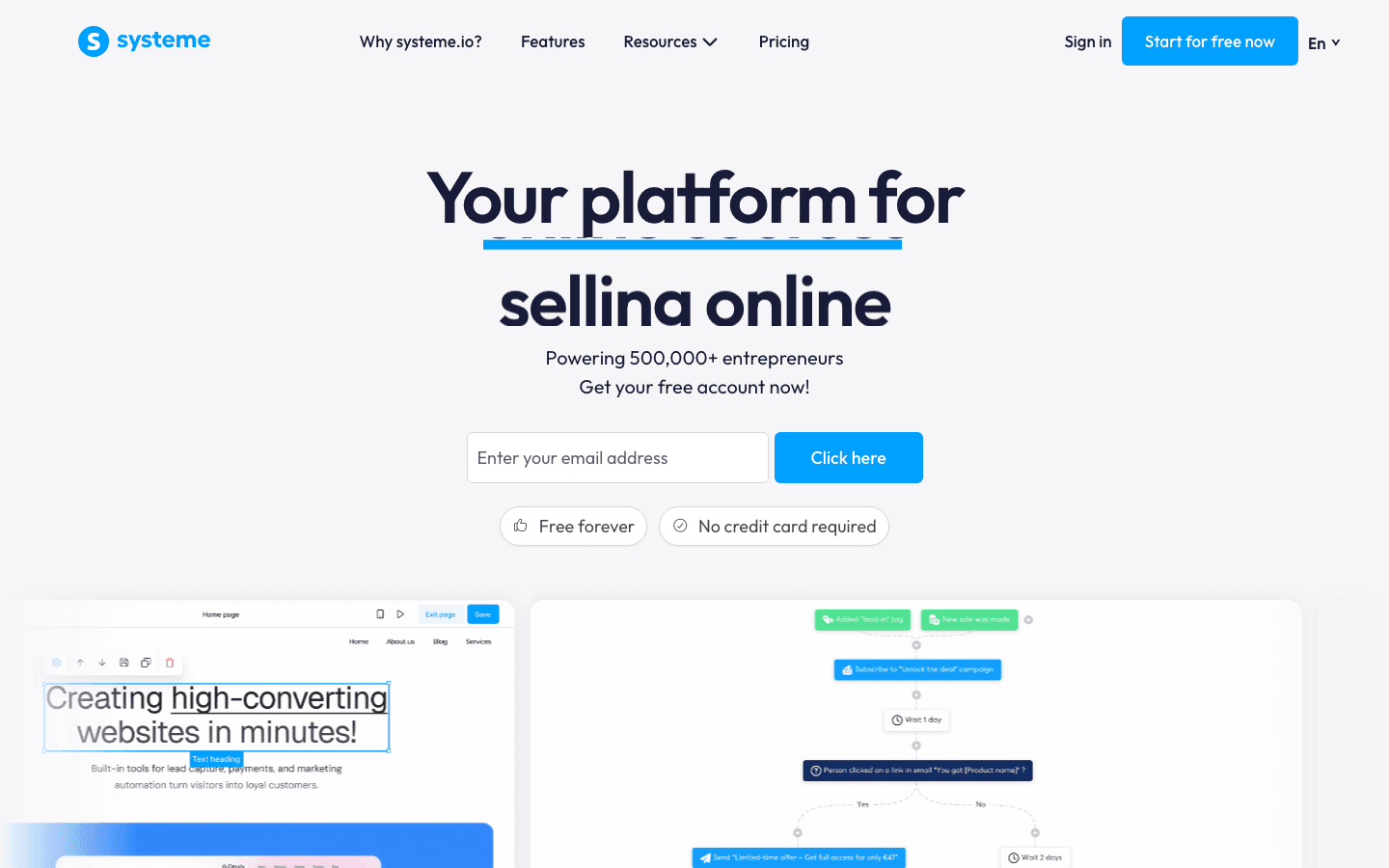
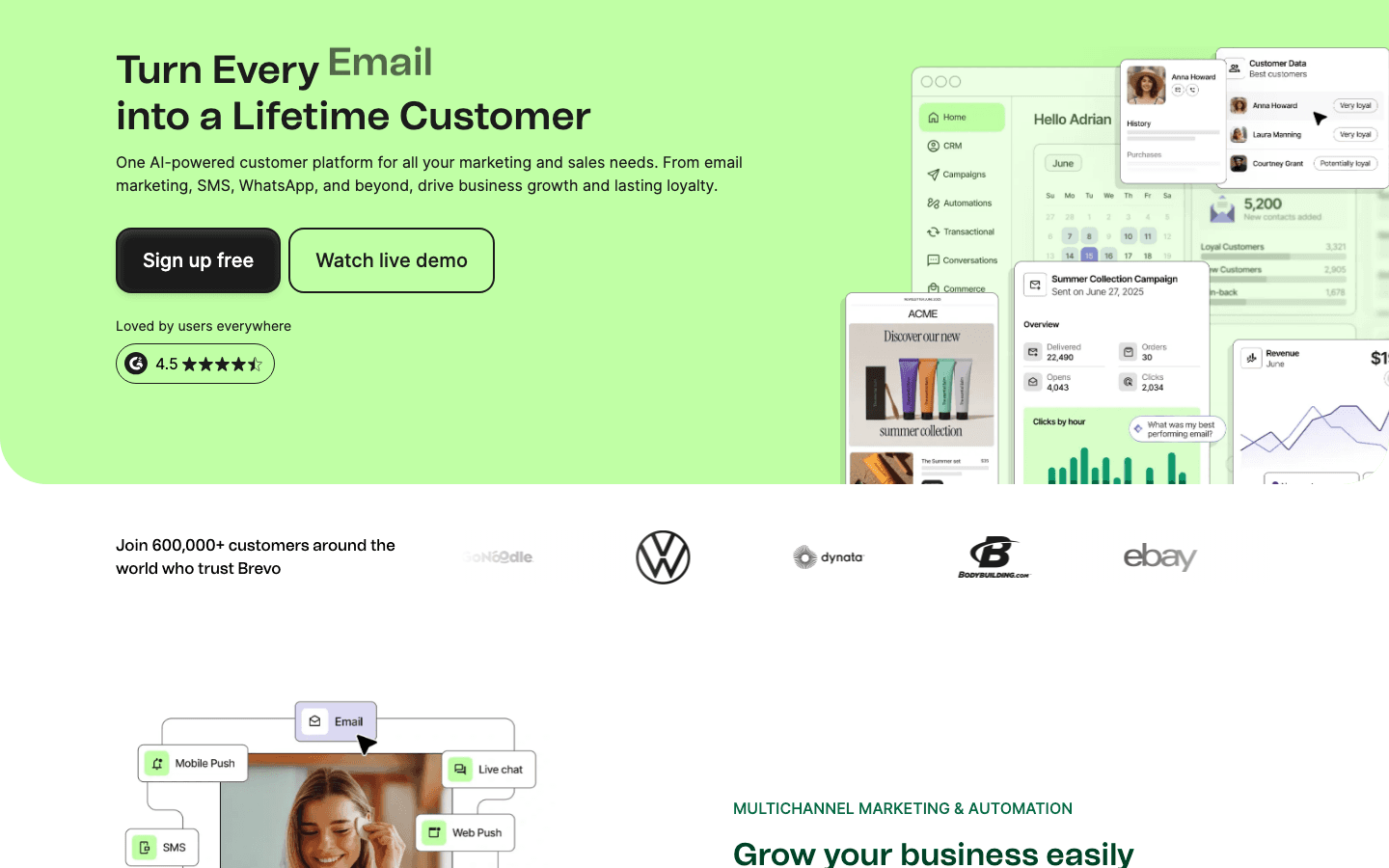
Systeme.io homepageSee Systeme.io plans
Systeme.io homepage, captured

One small business with about a thousand contacts: Startup

Billed annually

$14.17/mo

Billed monthly

$17/mo

The trade-off

The contact side is a list with tags, not a CRM with deals and pipelines, and email is one part of a broad bundle rather than the focus. If deliverability tuning or fine-grained segmentation is the core of your marketing, a dedicated email tool goes deeper.
What my review says

Best for: A small business owner or solo marketer who sells online and wants funnels, email and checkout under one low price.

Skip it if you need a sales pipeline with deal stages, or email deliverability is the main thing you are paying for.

Strengths

  • The free plan holds 2,000 contacts with no time limit and no card.
  • Email sends are unlimited on every plan, so the bill follows contacts, not how often you mail.
  • Yearly billing on Startup comes to $170/year.

Limits

  • Contacts are a tagged list, not a CRM with deals.
  • The free plan allows 1 automation rule, so real automation starts on Startup.
  • Startup stops at 5,000 contacts; the next plan is Webinar at $47/month billed monthly.
Best all-in-one marketing software for small businesses
HubSpot logo

HubSpot

Best CRM at the center, with email and pages on top

Hands-on

Choose it if

You close sales through conversations and need to see every contact's emails, calls and deal stage in one record.

Consider Systeme.io instead if

You sell online through funnels and checkout pages, and a contact list with tags is all the CRM you need.

Why it fits one small business with about a thousand contacts

HubSpot is the only pick here that started as a CRM, and it shows: contacts, companies and deals sit under everything else. The free tools cover 2 users and include 2,000 email sends per calendar month, with HubSpot branding, which is enough to learn the system before paying. Starter includes 1,000 marketing contacts, and only contacts you mark for marketing count toward that, so leads you only call can sit in the CRM for free.

The plan I priced

Starter is a new-customer offer at $10/month billed monthly per seat, or $7/month billed annually. The regular price is $20/user per month billed monthly. It includes 1,000 marketing contacts and needs no onboarding package.

Closest alternative

Brevo becomes the better choice when you want email and a basic sales CRM for less, and you'd rather pay for emails sent than for marketing contacts.
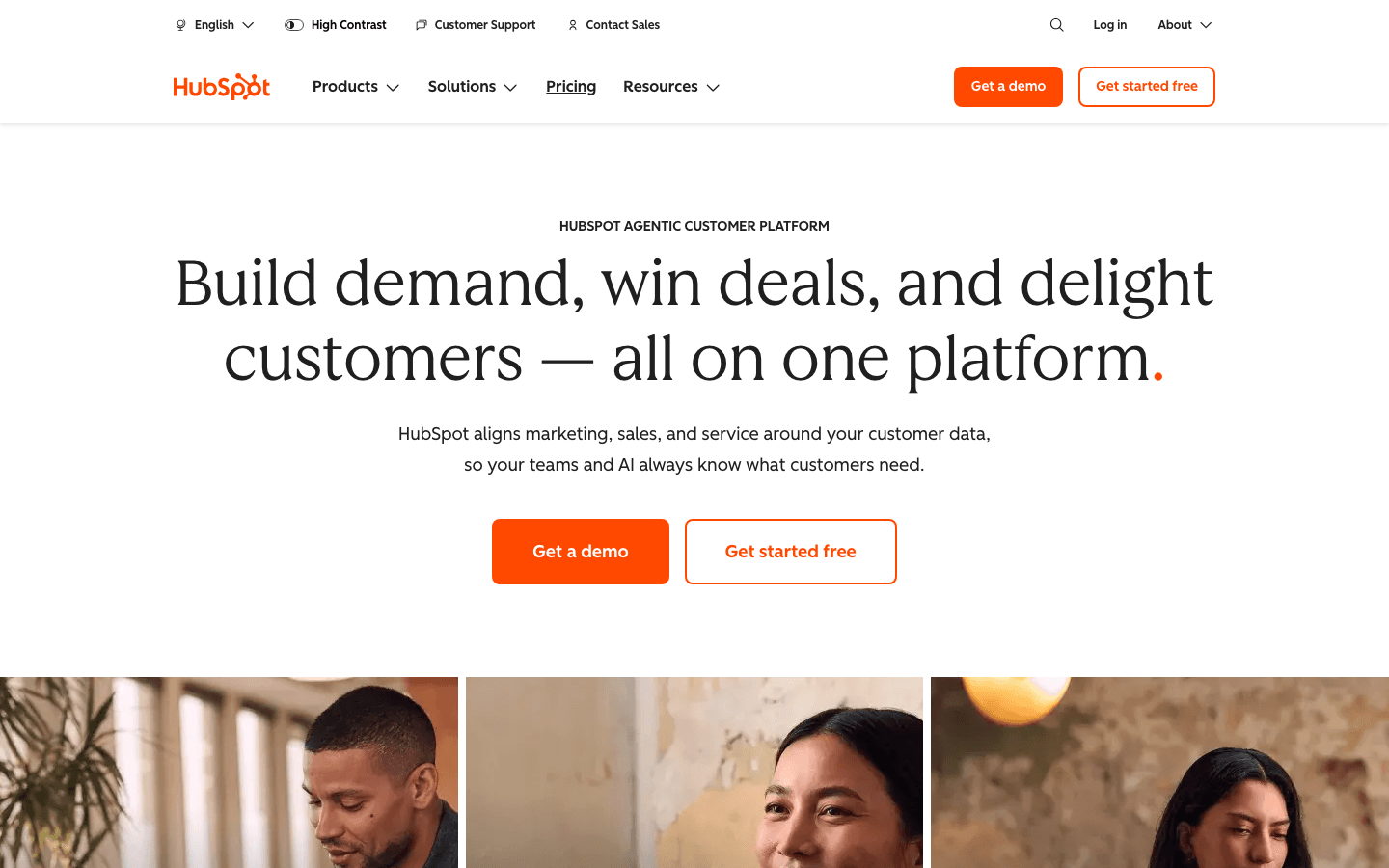
HubSpot homepageSee HubSpot plans
HubSpot homepage, captured

One small business with about a thousand contacts: Starter

Billed annually

$7/mo

Billed monthly

$10/mo

The trade-off

The low Starter price is a limited-time offer for new customers, and the list price is $20/user per month billed monthly. Growth is where HubSpot gets expensive. Additional marketing contacts are sold in increments of 1,000 from $50/month. Professional is $800/month billed annually plus a $3,000 one-time onboarding fee.
What my review says

Best for: A small business that sells through conversations and wants its email, forms and pages tied to a real CRM.

Skip it if you only need a newsletter and a sign-up page, or you can't absorb a bill that climbs with every block of marketing contacts.

Strengths

  • Free tools for 2 users, CRM included.
  • Only marketing contacts count toward the paid tier, so the CRM can hold everyone else for free.
  • Starter needs no onboarding package.

Limits

  • The Starter price is a limited-time offer; the list price is $20/user per month billed monthly.
  • Extra marketing contacts are sold in blocks, so a growing list raises the bill quickly.
  • Professional adds a $3,000 one-time onboarding fee on top of an annual commitment.
Best all-in-one marketing software for small businesses
Brevo logo

Brevo

Lowest bill for email plus a sales CRM

Hands-on

Choose it if

You mail your list a few times a month, want a CRM to track deals next to it, and care most about a small monthly bill.

Consider GetResponse instead if

You want landing pages and email on one entry plan with more than one user seat. Brevo's Starter includes 1 user.

Why it fits one small business with about a thousand contacts

Brevo turns the usual pricing around: you pay for sending volume, so a business that emails monthly or weekly doesn't pay for contacts sitting quietly in the database. A sales CRM comes with the account, which makes it the cheapest way here to keep email and deals in the same place. Standard adds unlimited multi-step automation workflows at $18/month billed monthly for its entry band.

The plan I priced

Starter: $17/month billed monthly, or $15.25/month billed annually. Brevo prices by emails sent, and each sending band includes a set number of contacts, so about a thousand contacts needs the band above the entry one. The free plan sends up to 300 emails a day.

Closest alternative

HubSpot becomes the better choice when the CRM matters more than the email bill, and you want deal records, forms and pages all tied to one contact history.
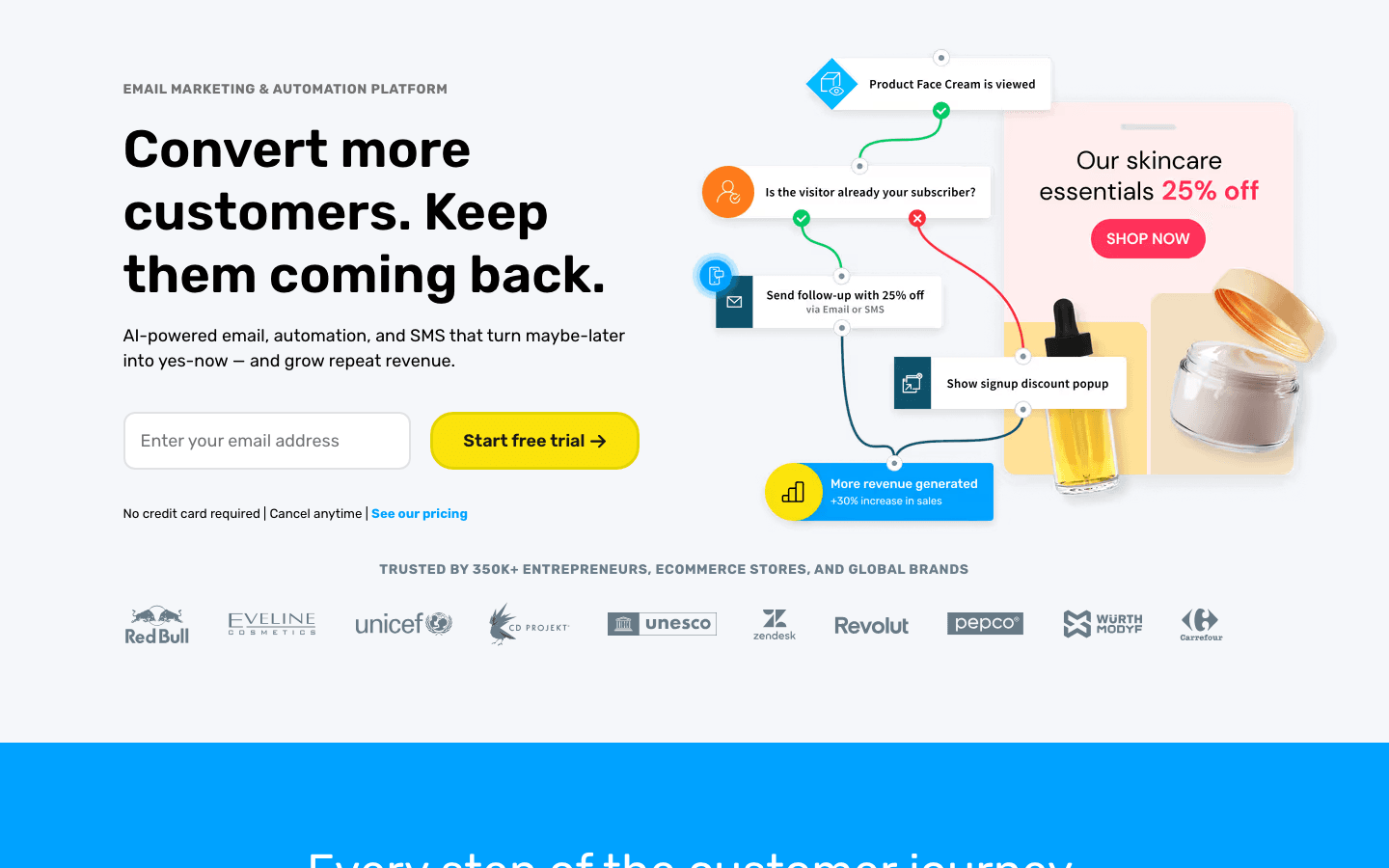
Brevo homepageSee Brevo plans
Brevo homepage, captured

One small business with about a thousand contacts: Starter

Billed annually

$15.25/mo

Billed monthly

$17/mo

Above 500,000 subscribers: Professional (+$433.83/mo billed annually).

The trade-off

Sending volume is harder to predict than a contact count, and each sending band caps how many contacts you can store. Brevo's funnel and page tools are thinner than Systeme.io's, and the step from Standard to Professional is steep: $499/month billed monthly.
What my review says

Best for: A small business that emails a few times a month and wants a CRM beside its email for the smallest bill.

Skip it if you send to a large list every day, or you want funnels and checkout pages as part of the same plan.

Strengths

  • Priced by emails sent, so contacts you rarely mail don't raise the bill.
  • A free plan with 500 contacts and no card.
  • Standard includes unlimited multi-step automation workflows.

Limits

  • Each sending band caps the contacts you can store, so check the band that fits your list.
  • Professional at $499/month billed monthly is a large step up from Standard.
  • The pricing page states no money-back guarantee.
Best all-in-one marketing software for small businesses
GetResponse logo

GetResponse

Landing pages and email for a small team

Desk research

Choose it if

Two or three people share the marketing, you want landing pages and email from one vendor, and you prefer a contact-based price you can predict.

Consider ActiveCampaign instead if

Automation is the reason you're buying, and you want branching workflows with a CRM add-on later.

Why it fits one small business with about a thousand contacts

Starter includes 3 user seats, where most entry plans here include one, so a small team doesn't pay extra to share the account. The 14-day trial needs no card, and the account drops to a limited free version afterwards instead of closing, which takes the pressure off the first month.

The plan I priced

Starter for about a thousand contacts is $19/month billed monthly, or $15.58/month billed annually. Marketer, with 5 seats and more automation, is $48.38/month billed annually.

Closest alternative

Brevo becomes the better choice when you want a sales CRM in the same account and a smaller bill, and one user seat is enough.
GetResponse homepageSee GetResponse plans
GetResponse homepage, captured

One small business with about a thousand contacts: Starter

Billed annually

$15.58/mo

Billed monthly

$19/mo

Above 100,000 subscribers: no bigger plan is published.

The trade-off

The free version left after the trial puts a GetResponse badge on every message and doesn't publish a contact limit on the pricing page, so treat it as a fallback, not a plan to grow on. The contact side is a list with tags and segments, not a sales CRM with deals.
What my review says

Best for: A small business where two or three people share email and landing pages and want one predictable contact-based price.

Skip it if you need deal stages and a sales pipeline, or you want a free plan with a published contact limit to grow on.

Strengths

  • 3 user seats on Starter.
  • A 14-day trial with no card, then a free version instead of a closed account.
  • Prices are published at each list size, so the cost of growth is visible up front.

Limits

  • The free version adds a GetResponse badge to every message.
  • The free version's contact limit is not on the pricing page.
  • Contacts are a marketing list, not a sales CRM.
Best all-in-one marketing software for small businesses
ActiveCampaign logo

ActiveCampaign

Deepest automation, with a CRM add-on from Plus

Desk research

Choose it if

You want follow-ups that change depending on what a contact opens, clicks or buys, and you're willing to pay yearly.

Consider GetResponse instead if

You want a monthly price you can see on the page and more than one user seat on the entry plan.

Why it fits one small business with about a thousand contacts

If the job is automation, ActiveCampaign goes further than the email tools around it, and Zapier and API access come on every plan, so it connects to the rest of a small business stack without an upgrade. The 14-day trial needs no card, and a 30-day money-back guarantee covers the first paid subscription.

The plan I priced

Starter for about a thousand contacts is $15/month billed annually. Plus, where the CRM add-on becomes available and the automation cap goes away, is $49/month billed annually.

Closest alternative

HubSpot becomes the better choice when the CRM is the center of your sales and automation is a supporting act.
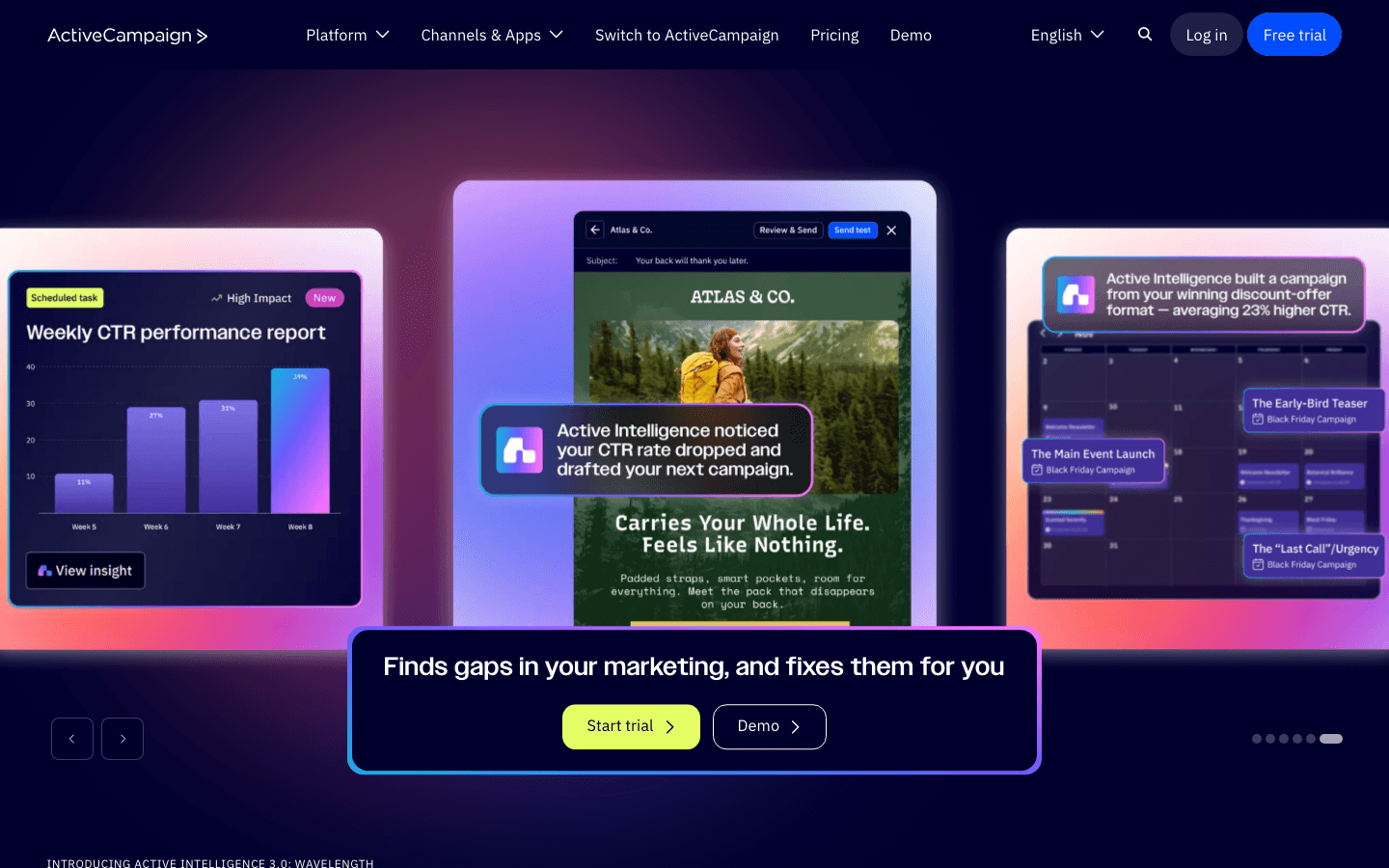
ActiveCampaign homepageSee ActiveCampaign plans
ActiveCampaign homepage, captured

One small business with about a thousand contacts: Starter

Billed annually

$15/mo

Above 25,000 subscribers: Plus (+$434/mo billed annually).

The trade-off

Starter is the cheap way in, but its automation limit is 5 actions per automation, and the CRM add-on with pipelines isn't offered on Starter at all. The pricing page shows yearly rates only, so there is no monthly price to compare.
What my review says

Best for: A small business whose marketing depends on follow-ups that change with each contact's behavior.

Skip it if you want a CRM on the entry plan, or you need a published monthly price.

Strengths

  • Zapier and API access on every plan.
  • A 14-day trial with no card.
  • A 30-day money-back guarantee on the first paid subscription.

Limits

  • Starter allows 5 actions per automation.
  • The CRM add-on starts at Plus.
  • Only yearly prices are published.
Best all-in-one marketing software for small businesses
Kit logo

Kit

Best for selling to an audience you're building

Desk research

Choose it if

Your business is content, courses or digital products, and growing a list matters more to you than a CRM.

Consider Systeme.io instead if

You want full sales funnels, a website and courses in the same account, and unlimited email sends on the first paid plan.

Why it fits one small business with about a thousand contacts

Kit's free plan holds 10,000 subscribers with landing pages and a custom domain, which is the largest free allowance here. When automation matters, Creator adds unlimited visual automations and sequences, and product sales and paid subscriptions are built in, with Kit keeping 0.6% of each sale inside its transaction fee.

The plan I priced

Creator for about a thousand subscribers is $39/month billed monthly, or $33/month billed annually. The free plan covers the list on its own; I priced Creator because it is where Kit lists unlimited visual automations. The 14-day trial needs no card, and Kit refunds within 30 days of signing up.

Closest alternative

Systeme.io becomes the better choice when you need checkout pages and multi-step funnels, not only sign-up pages.
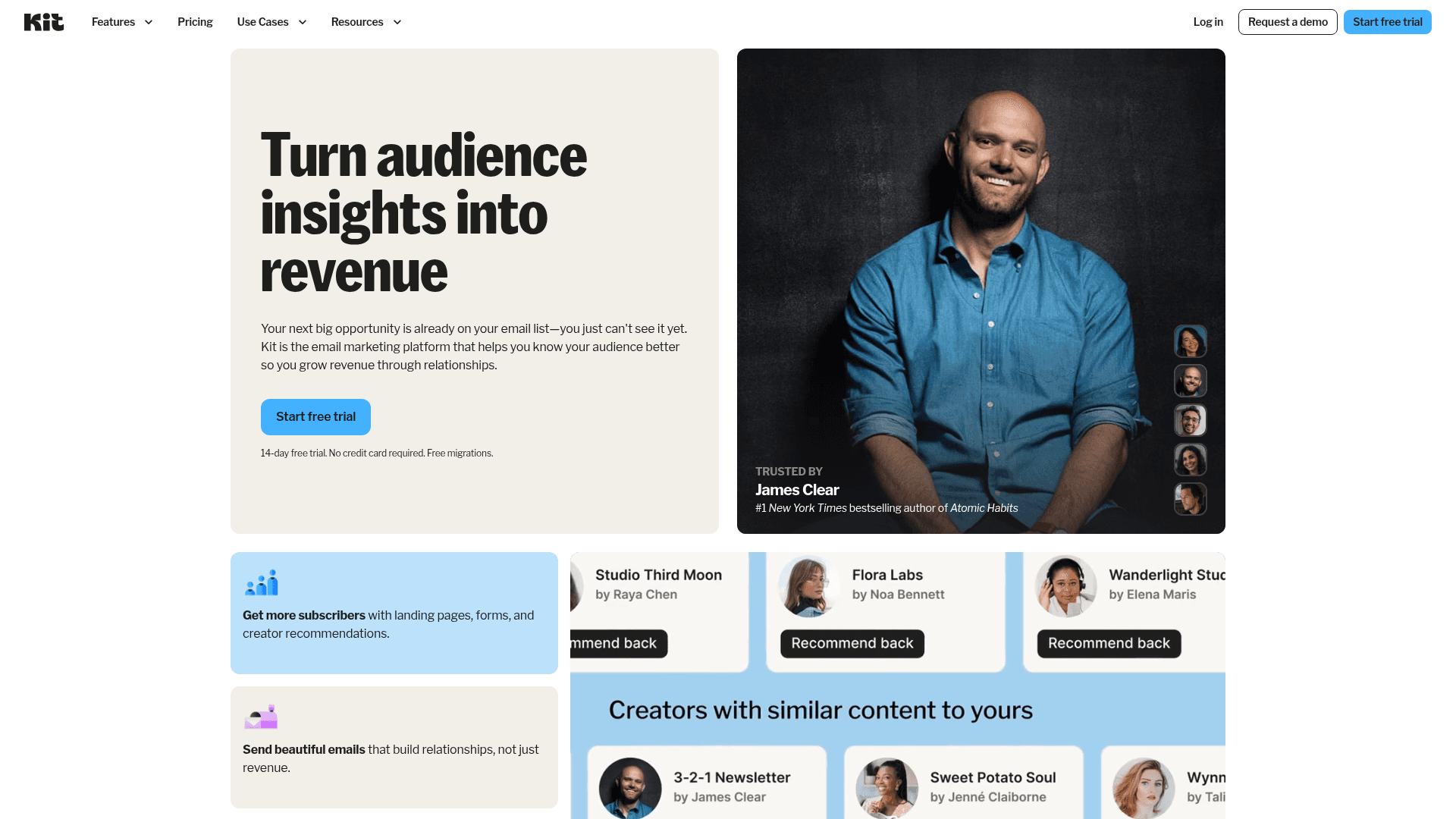
Kit homepageSee Kit plans
Kit homepage, captured

One small business with about a thousand contacts: Creator

Billed annually

$33/mo

Billed monthly

$39/mo

The trade-off

There is no CRM in the sales sense: subscribers are tagged and segmented, but there are no deals or pipelines. Creator includes 2 users, and unlimited users only come with Pro.
What my review says

Best for: A creator or small online business selling courses, memberships or digital products to its own list.

Skip it if you need deal tracking and a sales pipeline, or more than 2 users without moving to Pro.

Strengths

  • A free plan for up to 10,000 subscribers.
  • Product sales and paid subscriptions built in, with Kit keeping 0.6% of each sale.
  • A 30-day refund window on monthly and yearly plans.

Limits

  • No sales CRM with deals or pipelines.
  • Creator includes 2 users.
Best all-in-one marketing software for small businesses
Omnisend logo

Omnisend

For online stores: email and SMS built around orders

Desk research

Choose it if

You run a Shopify, WooCommerce or similar store and want abandoned-cart and post-purchase emails working on day one.

Consider Brevo instead if

You don't run a store and want a sales CRM alongside your email.

Why it fits one small business with about a thousand contacts

For a store, Omnisend fits better than a general all-in-one because its automations start from orders, carts and product views. When volume grows, Pro removes the email send cap for $59/month billed monthly.

The plan I priced

Standard for about a thousand contacts is $20/month billed monthly. The free plan covers 250 contacts and 500 emails a month, so a real list moves to Standard quickly.

Closest alternative

Kit becomes the better choice when you sell digital products rather than physical stock and want a larger free plan.
Omnisend homepageSee Omnisend plans
Omnisend homepage, captured

One small business with about a thousand contacts: Standard

Billed monthly

$20/mo

Above 150,000 subscribers: no bigger plan is published.

The trade-off

Outside ecommerce it has little to offer: no sales CRM and no funnel builder. Every plan includes one user, and billing is monthly with no annual price.
What my review says

Best for: A small online store that wants email and SMS driven by carts, orders and browsing.

Skip it if you don't sell through an online store, or you need a CRM to track deals.

Strengths

  • Automations built around store events.
  • Email and SMS in one account.
  • Pro removes the monthly email send cap.

Limits

  • One user on every plan.
  • Monthly billing only, with no annual price.
  • The free plan covers 250 contacts.
Best all-in-one marketing software for small businesses
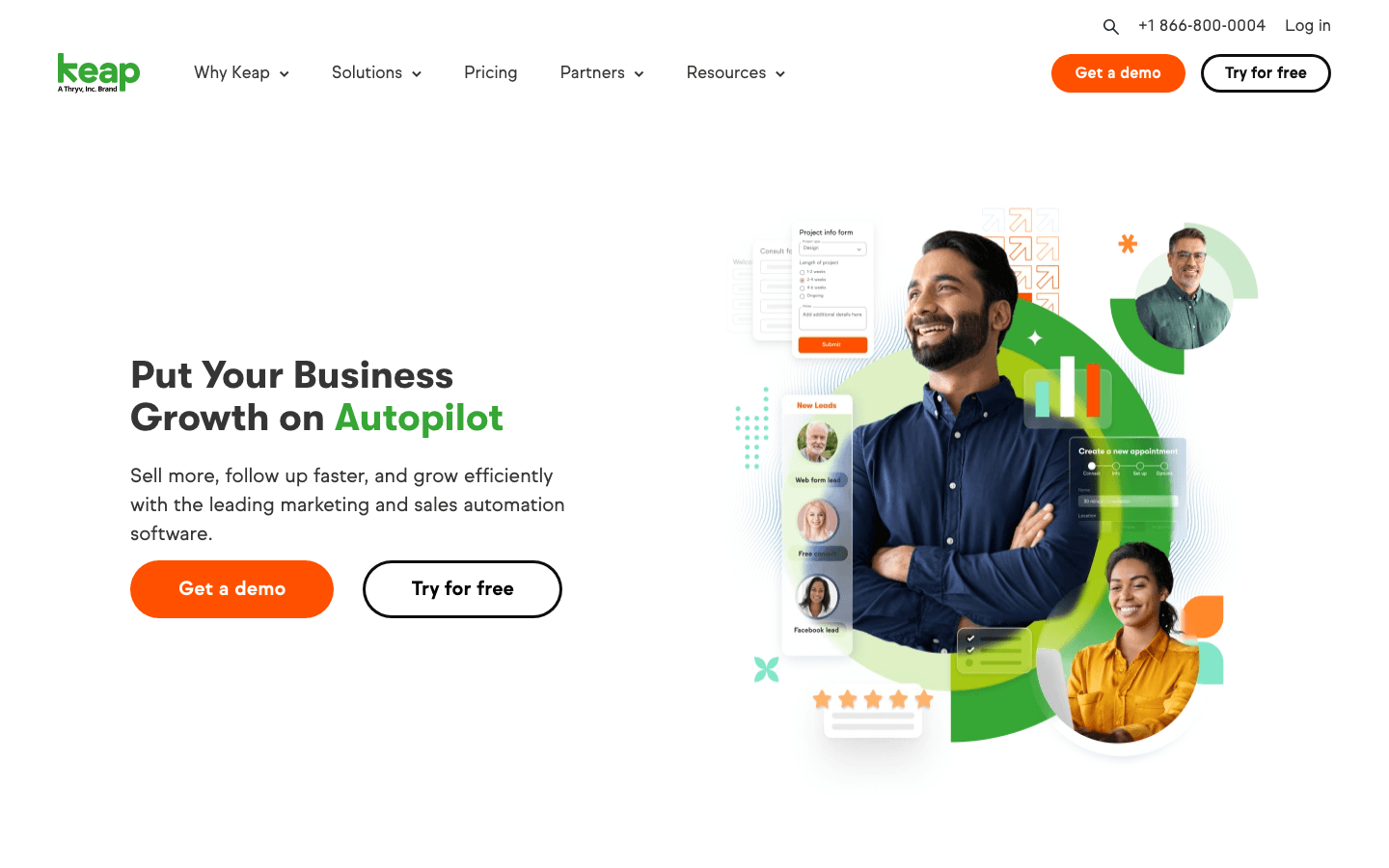
Keap logo

Keap

CRM, automation and payments for a service business with budget

Desk research

Choose it if

You run a service business with a small team, want sales, scheduling and payments in the same system as your email, and the budget is there.

Consider HubSpot instead if

You want a CRM with email for a fraction of the price and are happy to set it up yourself.

Why it fits one small business with about a thousand contacts

Keap is the most complete package for a service business: one plan covers CRM, automation, email, text messages, landing pages, payments and appointment booking, so there are no feature tiers to compare. The price includes 1,500 contacts and 2 users.

The plan I priced

Keap's one plan is $299/month billed monthly for 1,500 contacts, with the required implementation package on top as a one-time fee. The pricing page shows monthly billing only.

Closest alternative

ActiveCampaign becomes the better choice when automation is the main need and you can live without built-in payments and appointment booking.
Keap homepageSee Keap plans
Keap homepage, captured

One small business with about a thousand contacts: Pro

Billed monthly

$299/mo

Above 49,900 subscribers: no bigger plan is published.

The trade-off

It costs several times more than every other pick here before you add anything, a paid implementation package is required at signup, and extra users are $39/user per month billed monthly. The pricing page publishes no trial length and no money-back guarantee.
What my review says

Best for: A service business with a small team that wants CRM, payments, scheduling and email in one system and can pay for setup help.

Skip it if your budget is closer to the other picks here, or you want to start free and set it up yourself.

Strengths

  • One plan with no feature tiers to choose between.
  • Payments and appointment booking sit next to CRM and email.
  • 2 users included.

Limits

  • A paid implementation package is required at signup.
  • No free plan, and no published trial length or money-back guarantee.
  • Each extra user is $39/user per month billed monthly.
Best all-in-one marketing software for small businesses
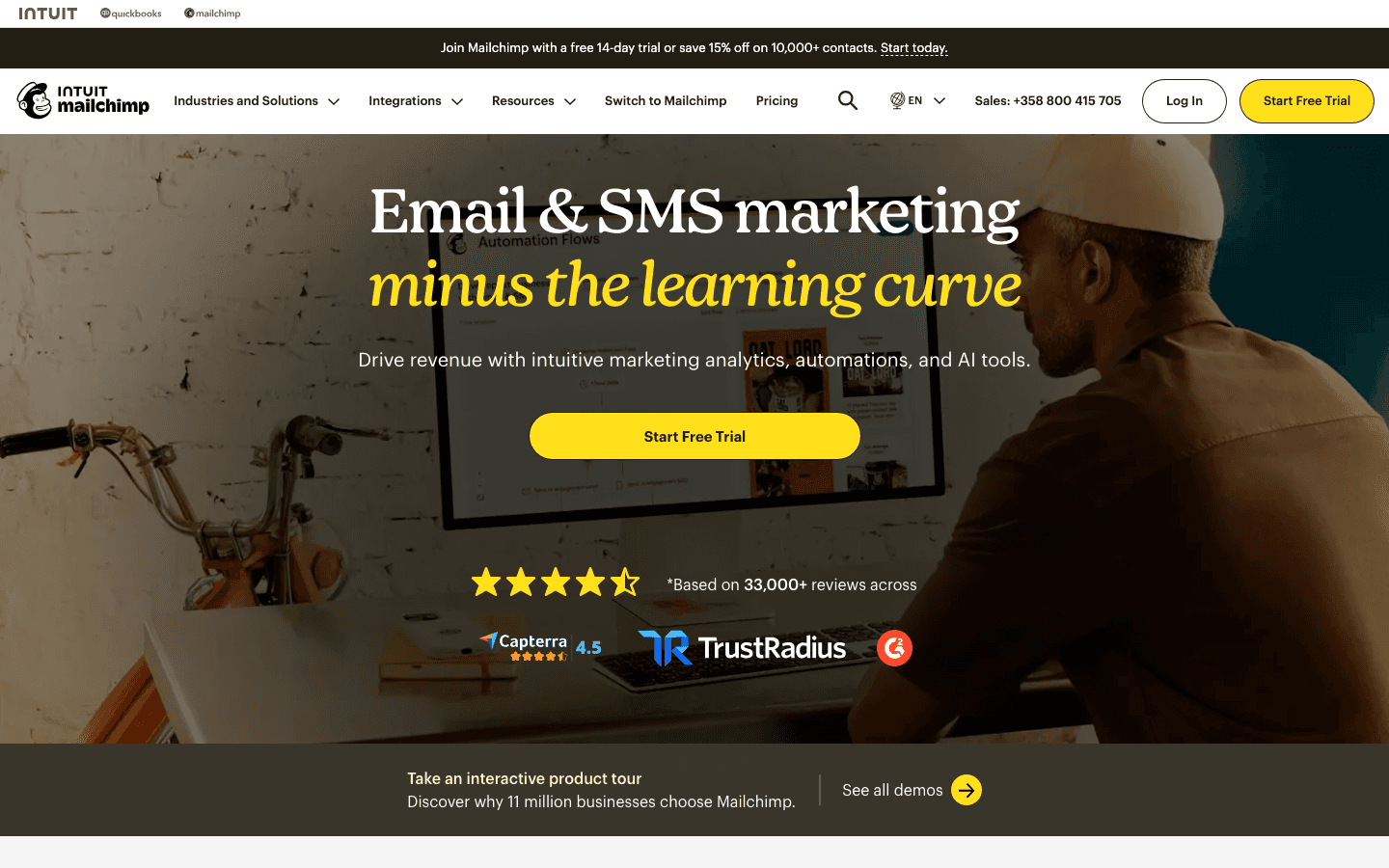
Mailchimp logo

Mailchimp

The familiar name, but cheaper picks cover more

Hands-on

Choose it if

You or your team already know Mailchimp and the switching effort outweighs the savings.

Consider Brevo instead if

You want email plus a sales CRM for less. Systeme.io and Kit also start free with far larger lists than Mailchimp's free plan.

Why it fits one small business with about a thousand contacts

Mailchimp is easy to start with and includes 3 users on Essentials. For this guide's buyer it is the fallback rather than the pick: Essentials for about a thousand contacts is $26.50/month billed monthly, and Essentials keeps automation to short flows (Up to 4 flow steps). Systeme.io, Brevo and GetResponse all cost less for a similar list and include more automation.

The plan I priced

Essentials for about a thousand contacts is $26.50/month billed monthly. Standard, with longer automation flows, starts at $20/month billed monthly for the smallest list and rises from there.

Closest alternative

GetResponse becomes the better choice when you want landing pages and email with a lower entry price for the same list and a free fallback after the trial.
Mailchimp homepageSee Mailchimp plans
Mailchimp homepage, captured

One small business with about a thousand contacts: Essentials

Billed monthly

$26.50/mo

Above 50,000 subscribers: Standard (+$603.50/mo billed monthly).

The trade-off

The free plan stops at 250 contacts, real automation and AI features start on Standard, and the trial needs a card. There is no sales CRM.
What my review says

Best for: Someone who already knows Mailchimp well and values familiarity over price.

Skip it if you are choosing fresh: Systeme.io, Brevo and GetResponse cover email with more automation for less, and Kit starts free with a much larger list.

Strengths

  • Familiar and quick to start.
  • 3 users on Essentials.
  • WordPress and Zapier integrations on every paid plan.

Limits

  • Essentials keeps automation to short flows (Up to 4 flow steps).
  • The free plan stops at 250 contacts.
  • No sales CRM, and the trial needs a card.
Best all-in-one marketing software for small businesses

What one small business with about a thousand contacts really costs

The bars are the plan that covers about a thousand contacts for one user, on yearly billing where the vendor sells it and monthly where it doesn't. I left HubSpot off because its price is a limited-time offer, and Brevo because its entry band holds fewer contacts than this workload.

Systeme.io: priced on Startup. The free plan holds this list but allows 1 automation rule.

HubSpot: priced on Starter. A limited-time offer for new customers; the list price is $20/user per month billed monthly.

Kit: priced on Creator. The free plan covers this list; Creator is where Kit lists unlimited visual automations.

Dollar prices, per month (billed annually where sold)

Pay monthly or yearly?

What yearly billing saves on the same plan.

  • Systeme.io$17 monthly, $14.17 yearly: 17% less
  • HubSpot$10 monthly, $7 yearly: 30% less
  • Brevo$17 monthly, $15.25 yearly: 10% less
  • GetResponse$19 monthly, $15.58 yearly: 18% less
  • Kit$39 monthly, $33 yearly: 15% less

When you'll outgrow the plan

The first limit you hit, and the next plan up.

  • Brevo: above 500,000 subscribers, Professional (+$433.83/mo)
  • GetResponse: above 100,000 subscribers, no bigger plan is published
  • ActiveCampaign: above 25,000 subscribers, Plus (+$434/mo)
  • Omnisend: above 150,000 subscribers, no bigger plan is published
  • Keap: above 49,900 subscribers, no bigger plan is published
  • Mailchimp: above 50,000 subscribers, Standard (+$603.50/mo)
How I calculated this

Workload: 1 business, about 1,000 contacts, 1 user.

Most of these tools price by how many contacts you store. Brevo prices by how many emails you send instead, so its card shows its entry sending band and says what that band holds. Limited-time offers are labelled where they apply.

    Other options, and why they missed the list

    To make this list a tool had to sell email marketing together with landing pages or funnels and some kind of contact management, under one subscription a small business can buy without a sales call. Email-only tools and CRMs that need a separate email product are left out.

    • MailerLite logo

      MailerLite

      A low-priced email tool with landing pages and automation. It has no CRM, so it sits in email territory rather than all-in-one.

    • Moosend logo

      Moosend

      A budget email and automation tool with landing pages. Like MailerLite, it stops short of contact management beyond lists.

    • Zoho Campaigns logo

      Zoho Campaigns

      Email marketing that becomes an all-in-one only when combined with other Zoho apps, each sold separately.

    How I chose, and how I earn from this page

    Joonas Rotko

    Who is behind this guide

    Joonas Rotko

    I co-ran a marketing agency in Finland and spent more than ten years buying SEO and marketing software with real client budgets. I write these guides for the person who has to pay for the tool and use it.

    More about me and how I review

    Affiliate disclosure

    Most links on this page are affiliate links: if you buy through one, I may earn a commission and you pay the same price. Systeme.io, HubSpot, Brevo, GetResponse, ActiveCampaign, Kit, Omnisend and Keap have affiliate links on this site. I have no affiliate link for Mailchimp, and it sits last because cheaper tools on this list cover more of what a small business needs, not because of the missing link. The order follows how well each tool covers email, pages and contacts for one small business, and a commission never changes a price or a verdict here.

    How this guide was prepared

    What I did

    • I priced one small business with about a thousand contacts and one user, from each vendor's own pricing page, on the date shown beside each source.
    • For tools priced by contacts, the price is the plan that covers that list on monthly and yearly billing separately. Where a free plan holds the list but keeps automation very small, I priced the first paid plan and said so on the card.
    • Brevo prices by emails sent, so its card shows the entry sending band and explains what that band includes instead of pretending to compare like with like.
    • Limited-time offers are labelled as offers, with the list price beside them, and never used as the basis for a ranking.
    • The order follows fit for a small business that wants email, pages and contacts in one place. Price matters, but a cheap tool that lacks the part you need ranks lower.

    What to keep in mind

    • Contact-based ladders change often, and several vendors run new-customer offers. Read every price as true on its source date.
    • Landing page, funnel and CRM depth differ in ways a pricing page doesn't show, so the cards describe what each vendor documents rather than scoring it.
    • GetResponse doesn't publish its free version's contact limit on the pricing page, and Keap doesn't publish a trial length or refund terms.
    • HubSpot's Starter price is a new-customer offer. When it ends, Starter costs its list price.
    Sources and verification dates

    Prices and limits checked on 14 vendor pages. Oldest check: 30 Sep 2026.

    • : Rebuilt the guide for small business owners: the same nine tools, priced for one business with about a thousand contacts from each vendor's own pricing page, and reordered by fit for email, landing pages or funnels and a CRM in one subscription.
    Spot something out of date?Vendors and readers, send me the correct fact.

    Software sites change almost every week, and I want every claim on this page to be factually correct. If you are a vendor or a reader, send me the correct fact and a link to the official page. I will check it and update the page. The opinions and rankings stay mine.

    I only change a fact when the official page shows it.

    Free. I use your details only to follow up. Privacy

    Questions people ask

    What is the best all-in-one marketing software for a small business?

    For most small businesses I'd start with Systeme.io: its free plan holds 2,000 contacts, and Startup, with funnels, unlimited email sends and more automation, is $14.17/month billed annually. If your sales depend on calls and deals, HubSpot is the better base because the CRM is the core of the product. If the lowest bill matters most, Brevo prices by emails sent and includes a sales CRM.

    What makes a marketing platform "all-in-one"?

    An all-in-one marketing platform combines email marketing, a way to capture leads such as landing pages or funnels, and a contact database or CRM, under one login and one bill. Some also add websites, courses, payments or SMS. None of them replaces every tool a business uses, so check that the part you depend on most is strong, not just present.

    Which free all-in-one marketing platform is best?

    Systeme.io's free plan is the most complete: 2,000 contacts, 3 sales funnels and unlimited email sends, with automation kept to 1 rule. Kit's free plan holds the most subscribers, 10,000, with landing pages. HubSpot's free tools include the CRM for 2 users. GetResponse, Kit and ActiveCampaign also let you trial their paid plans without a card.

    Is it better to use one all-in-one platform or several specialized tools?

    For a small business run by one or two people, one platform usually wins: one bill, one contact list and no integrations to break. Specialized tools win when one job is central to your revenue, for example heavy automation or a sales team that lives in its CRM. A common middle path is an all-in-one platform for email and pages, with a dedicated tool only for the one job it does poorly.

    How much should I budget for all-in-one marketing software?

    For about a thousand contacts and one user, most of these tools land in a similar range: Systeme.io Startup is $14.17/month billed annually, GetResponse Starter is $15.58/month billed annually, ActiveCampaign Starter is $15/month billed annually and Kit Creator is $33/month billed annually. Keap is the outlier at $299/month billed monthly plus a required implementation package. Watch for what raises the bill later: contact-based ladders, extra users, onboarding fees and new-customer offers that expire.

    What is the best all-in-one marketing platform for course creators?

    Systeme.io, if you want courses, sales funnels, checkout and email in one account; it charges 0% transaction fees. Kit, if your audience is the business and you sell digital products or paid newsletters; product sales are built in and its free plan holds 10,000 subscribers.

    Which platform is best for e-commerce businesses?

    Omnisend, if you run an online store: its automations start from carts, orders and product views, and Standard for about a thousand contacts is $20/month billed monthly. If you sell digital products rather than physical stock, Systeme.io or Kit fit better, because their checkout and product sales are built in.

    WEEKLY NEWSLETTER

    The SEO and AI visibility software worth your money, and the ones that are not

    Every week: which SEO and AI visibility tools actually move the needle, what they really cost when the intro discount ends, and which ones to skip. Written for people running their own marketing, not for engineers. No fluff, no daily spam.

    Join for free. One email a week, unsubscribe anytime. I use your email only for this. Privacy policy